You're running standard extractions and see expensive glass or quartz thimbles. You wonder if you're overspending or using the wrong tool for simple, everyday lab work.
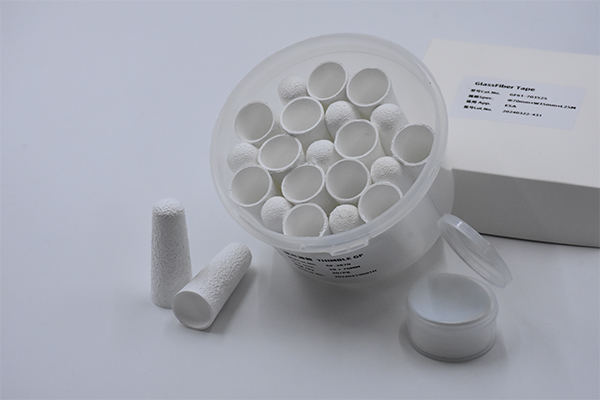
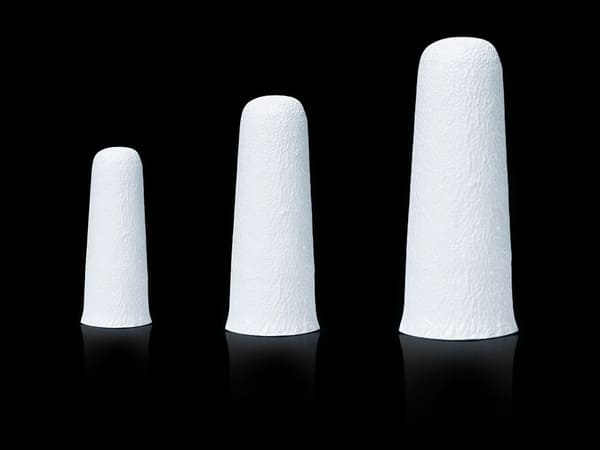
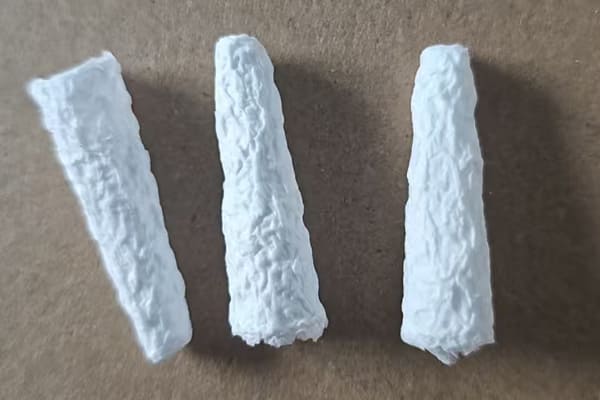
[Cellulose thimbles][^1] are used almost exclusively for [Soxhlet extractions][^2] at temperatures below 120°C. They are the industry standard for [food analysis][^3], like measuring [fat content][^4], and other routine extractions that don't involve extreme heat or harsh chemicals.Cellulose Extraction Thimbles
As a manufacturer of lab consumables for over two decades, I've seen how different industries use our products. While high-tech materials get a lot of attention, the simple cellulose thimble is the quiet workhorse in thousands of labs. It's designed for a specific job, and it does that job perfectly. It is made from high-quality alpha-cellulose cotton linter, which makes it pure and reliable for high-performance use. But using it outside of its intended purpose can cause problems. Let's look at when you should use a cellulose thimble and when you should choose something else.
When should you choose cellulose over a [glass fiber thimble][^5]?
You need thimbles for your lab, but the choice between cellulose and glass fiber is confusing. Picking the wrong one could mean failed tests or unnecessary costs.
Choose a cellulose thimble for applications below 120°C, like [food analysis][^3]. Choose a [glass fiber thimble][^5] for [high-temperature work][^6] (up to 500°C) or when using strong acids, which are common in environmental testing.Cellulose Thimble vs. Glass Fiber Thimble
I often get questions from lab managers about this exact choice. The decision is actually very simple and comes down to your application's temperature and chemical environment. In our factory, we produce both types, and I can tell you that their costs are quite similar. This means your decision should be based purely on technical needs, not budget.
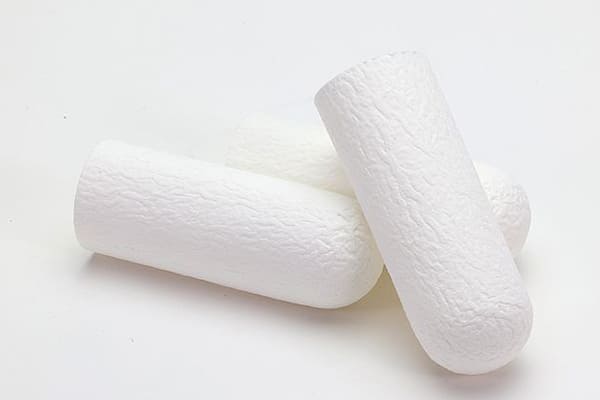
The main difference is heat resistance. A cellulose thimble is essentially made of [high-purity paper][^7]. It works great for extracting fats from food with solvents like hexane, but it will char and fall apart if you use it in a hot smokestack sampler. That's where a glass microfiber thimble is necessary. It looks similar but is made of borosilicate glass fibers, allowing it to withstand intense heat. Glass fiber is also more chemically resistant to acids. For this reason, cellulose thimbles are rarely used in [environmental monitoring][^8]. That field belongs to glass fiber and quartz.
Cellulose vs. Glass Fiber
Feature
Cellulose Thimble
Glass Microfiber Thimble
Max Temperature
120°C (250°F)
500°C (932°F)
Primary Application
Food & agricultural extraction
Environmental monitoring, high-temp analysis
Chemical Resistance
Good with most organic solvents
Excellent, including acidic solutions
Main Advantage
Cost-effective for routine extractions
High-temperature and chemical stability
What are the most common applications for cellulose thimbles?
You know cellulose thimbles are for standard extractions, but what does that really mean? Using them for the wrong test can still lead to inaccurate results.
The most common use for cellulose thimbles is in the food and agricultural industries for determining the content of fat, oil, and grease. They are the standard for official [food analysis][^3] methods.Cellulose Thimble in Food Analysis
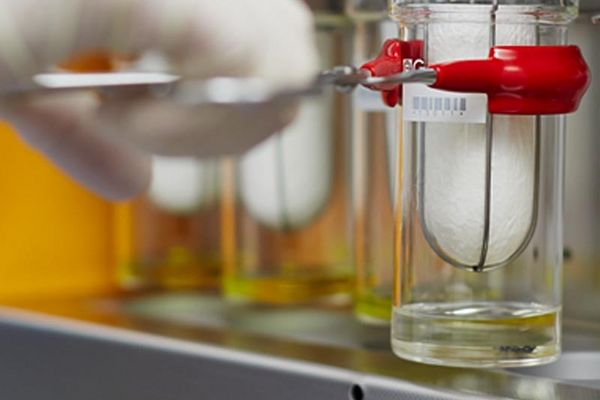
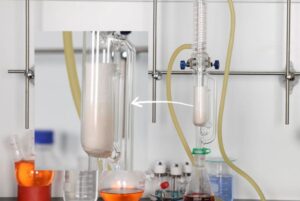
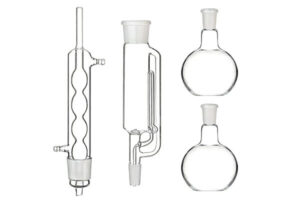
When you see "[fat content][^4]" on a food label, there's a good chance a cellulose thimble was involved in testing it. This is their number one job. The process is a classic Soxhlet extraction. A ground-up food sample, like potato chips or animal feed, is placed inside the cellulose thimble. The thimble is then placed in the Soxhlet extractor. A solvent, usually hexane, continuously washes over the sample, dissolving the fat. The thimble's job is crucial here. It keeps the solid food particles contained while allowing the solvent and dissolved fat to pass through freely. Because the cellulose is made from pure cotton linter, it does not release any impurities that could interfere with the final measurement. This makes it a reliable and essential tool for [quality control][^9] in the food industry. Beyond food, they are also used in similar extractions, such as analyzing oils in soil or certain additives in polymers, as long as the temperature and chemicals are compatible.
What is the biggest limitation of a cellulose thimble?
You are setting up a new extraction protocol and plan to use your standard cellulose thimbles. Not knowing their limits could cause a serious failure mid-experiment.
The biggest limitation of a cellulose thimble is its low [temperature resistance][^10] of 120°C. It cannot be used for high-temperature applications like air quality monitoring, where glass or quartz thimbles are required.Damaged Cellulose Thimble from Heat
I cannot stress this point enough. While cellulose thimbles are fantastic for their specific purpose, they have a clear limit. They are made of organic material, and like paper, they will burn. In China, there is a huge focus on [environmental monitoring][^8], and we see a massive demand for glass microfiber and quartz thimbles for this reason. These labs are testing emissions from factory smokestacks, where temperatures can be several hundred degrees. If you put a cellulose thimble in that environment, it would be destroyed instantly, ruining the sample and potentially damaging the sampling equipment. The thimble would turn to ash. That is why cellulose thimbles are almost never used in environmental testing. Their use is strictly limited to the extraction field, in controlled lab settings where temperatures are kept low. This specialization is their strength, but you must respect its boundaries to avoid experimental failure.
Conclusion
[Cellulose thimbles][^1] are the go-to choice for routine [Soxhlet extractions][^2] below 120°C, especially for fat analysis in the food industry, offering a perfect blend of performance and value.
[^1]: Explore the versatility and applications of cellulose thimbles in lab work, especially in food analysis.
[^2]: Learn about the Soxhlet extraction process and its significance in obtaining accurate results in various analyses.
[^3]: Discover the techniques and standards used in food analysis, particularly for measuring fat content.
[^4]: Delve into the methods used to measure fat content in food, highlighting the role of cellulose thimbles.
[^5]: Understand the benefits of glass fiber thimbles for high-temperature and chemical resistance in lab work.
[^6]: Explore the complexities and requirements of conducting high-temperature experiments in labs.
[^7]: Discover the significance of high-purity paper in lab applications and its benefits for accurate results.
[^8]: Learn about the importance of thimbles in environmental monitoring and the types used for accurate testing.
[^9]: Explore the practices and standards for quality control in food analysis to ensure accurate results.
[^10]: Learn about the temperature resistance of various thimbles to choose the right one for your applications.
Share this article
Related Articles
Discover more insights about laboratory filtration solutions and industry best practices.
好的,已经按照您提供的顺序,将图片链接替换到文章中。 --- [Soxhlet extraction](https://arxiv.org/pdf/2011.05279)[^1] is a common method used to separate compounds from solid samples, but what exactly makes it...
[Soxhlet extraction](https://huaenv.com/what-is-extraction-thimble/)[^1], a staple in labs for decades, remains indispensable due to its historical reliability and matured apparatus in the...
Changing the [BAM Glass Fiber Filter Tape Roll](https://huaenv.com/how-do-high-performance-soxhlet-thimbles-ensure-precise-analysis/)[^1] is crucial for maintaining accurate environmental monitoring results. It's generally replaced every...
To provide the best experiences, we use technologies like cookies to store and/or access device information. Consenting to these technologies will allow us to process data such as browsing behavior or unique IDs on this site. Not consenting or withdrawing consent, may adversely affect certain features and functions.
Functional
Always active
The technical storage or access is strictly necessary for the legitimate purpose of enabling the use of a specific service explicitly requested by the subscriber or user, or for the sole purpose of carrying out the transmission of a communication over an electronic communications network.
Preferences
The technical storage or access is necessary for the legitimate purpose of storing preferences that are not requested by the subscriber or user.
Statistics
The technical storage or access that is used exclusively for statistical purposes.The technical storage or access that is used exclusively for anonymous statistical purposes. Without a subpoena, voluntary compliance on the part of your Internet Service Provider, or additional records from a third party, information stored or retrieved for this purpose alone cannot usually be used to identify you.
Marketing
The technical storage or access is required to create user profiles to send advertising, or to track the user on a website or across several websites for similar marketing purposes.