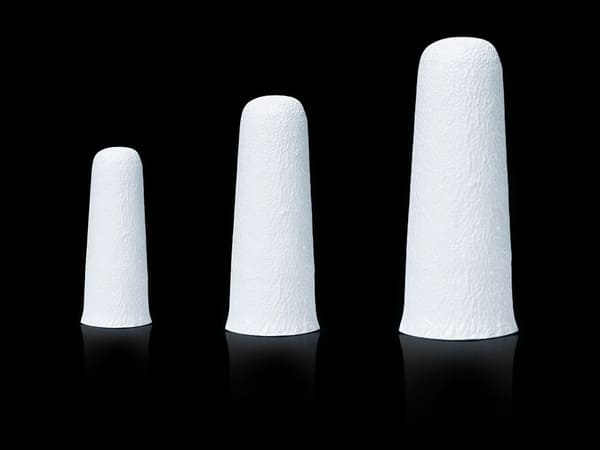
You're trying to extract a compound, but solid particles from your sample keep falling into your solvent. This contaminates your results, making your entire experiment useless.
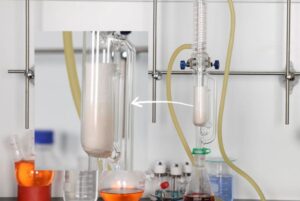
The thimble's main job in Soxhlet extraction[^1] is to hold the solid sample. It acts as a filter, allowing the solvent to pass through and extract the desired compounds, while preventing any solid material from contaminating the final liquid extract.
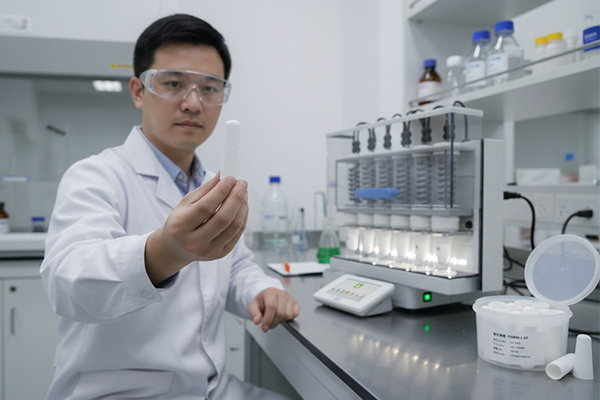
As someone who has been manufacturing laboratory filter materials for over 20 years, I can tell you that this simple-looking cup is the key to a clean and successful extraction. Without it, you wouldn't be able to separate your solid sample from the liquid extract. But the thimble is more than just a container. The material it is made from is critically important, and choosing the right one can make the difference between success and failure. Let's look at the different types of thimbles and what they are used for.
What are the different types of extraction thimbles[^2]?
You picked the wrong thimble for your high-temperature analysis[^3]. Now it's falling apart inside the extractor, ruining your sample and clogging your equipment.
Extraction thimbles are made from three main materials: cellulose for standard extractions, glass microfiber for high temperatures and environmental testing[^4], and quartz for extreme heat and ultra-pure analysis. Each material has a specific purpose and temperature limit[^5].
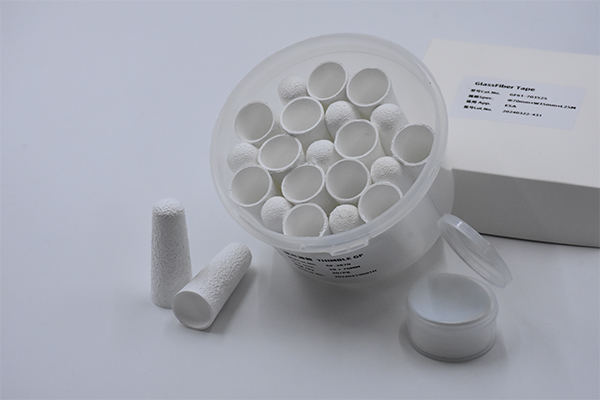
In our factory, we produce all three types of thimbles, and I see firsthand how labs use them for very different tasks. The material you choose depends completely on your application. A thimble that works perfectly for food analysis will fail completely in a smokestack sampler. Understanding the difference is crucial.
The most common type is the cellulose thimble[^6]. It's made from high-quality alpha-cellulose cotton and is great for many standard Soxhlet extraction[^1]s. It's primarily used for applications like determining the fat content in food. However, its main limitation is temperature; it can only handle up to about 120°C.
For higher temperatures, you need a glass microfiber thimble[^7]. These can withstand temperatures up to 500°C. Here in China, we've seen a huge increase in demand for these due to the country's focus on environmental protection. They are the go-to choice for monitoring emissions from smokestacks and measuring dust in the air.
For the most extreme conditions, there are quartz thimbles[^8]. These can handle temperatures over 800°C and have extremely low levels of heavy metals, making them incredibly pure. They are used for the most sensitive environmental tests but are also the most expensive.
How do you choose the right thimble for your application?
You're facing a list of thimble options, confused by the different materials. Picking the wrong one could mean wasting time and money on a failed experiment.
To choose the right thimble, consider three things: the temperature of your analysis, the chemicals you are using, and your budget. Match these needs to the properties of cellulose, glass fiber, or quartz to ensure a successful extraction.
I often talk to lab managers who are trying to optimize their costs without sacrificing quality. The key is to match the thimble to the job precisely. You don't need to pay for a high-performance thimble if a standard one will do the job perfectly well. Here's a simple way to think about it.
First, consider your temperature. If your application is below 120°C, like most food or agricultural extractions, a cellulose thimble[^6] is your most cost-effective and reliable choice. It's designed specifically for these classic Soxhlet applications.
Second, think about your application. If you are doing environmental analysis, especially monitoring air quality or stack emissions, you will need a thimble that can handle high heat. A glass microfiber thimble[^7] is the most common choice here, as it provides a great balance of performance and cost. It’s perfect for testing dust, soil contaminants, and pesticide residues. If your analysis requires extreme purity and you are testing for trace metals at very high temperatures, then you must invest in a quartz thimble.
Finally, consider the cost. As a manufacturer, I can tell you that quartz thimbles[^8] are the most expensive due to the purity of the raw material. The costs for glass microfiber and cellulose thimble[^6]s are quite similar, so the choice between them should be based on temperature and chemical resistance, not price.
Thimble Selection Guide
| Material | Max Temperature | Primary Use | Relative Cost |
|---|---|---|---|
| Cellulose | ~120°C | Standard Soxhlet extraction[^1] (e.g., fats in food) | Low |
| Glass Microfiber | ~500°C | Environmental testing (air, smoke), acidic conditions | Medium |
| Quartz | >800°C | High-purity, high-temp analysis (trace metals) | High |
Conclusion
The thimble is essential in Soxhlet extraction[^1] for containing the sample. Choose cellulose for standard use, glass fiber for heat and environmental tests, and quartz for extreme purity and temperature.
[^1]: Understanding Soxhlet extraction is crucial for effective laboratory practices and achieving accurate results. [^2]: Learn about extraction thimbles to optimize your extraction processes and ensure sample purity. [^3]: Gain insights into high-temperature analysis and the importance of selecting the right thimble. [^4]: Learn how thimbles play a role in environmental testing and ensuring accurate results. [^5]: Understanding temperature limits helps in selecting the right thimble for your specific application. [^6]: Discover the benefits of cellulose thimbles for standard Soxhlet extractions and their applications. [^7]: Explore the advantages of glass microfiber thimbles for high-temperature and environmental testing. [^8]: Find out when to use quartz thimbles for high-purity analyses and extreme conditions.