

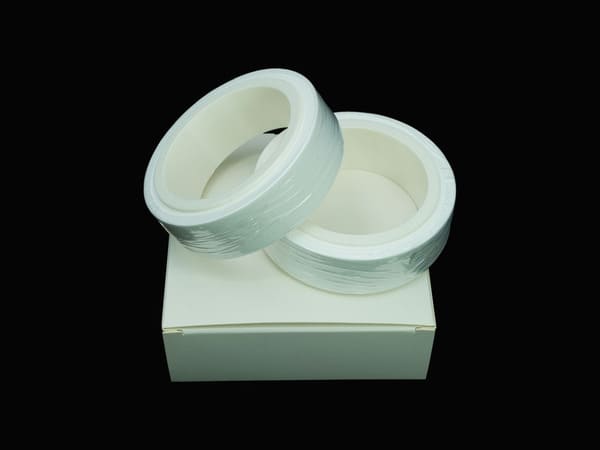
PTFE filter tape[^1] might seem like a straightforward product, but its applications in XRF analysis reveal its critical role in achieving precise results. Are you maximizing its potential in your lab?
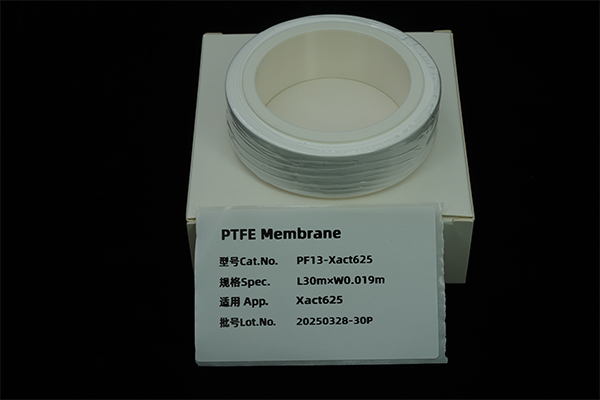
PTFE filter tape is essential in XRF analysis for continuous sampling and accurate elemental analysis[^2]. A 30-meter roll can support up to 45 days of continuous operation[^3], ensuring reliable data collection across extended experiments.
Understanding the specifications and applications of PTFE filter tape can help you optimize your setup, minimize interruptions, and achieve consistent results. Let’s dive into the details.
Why is PTFE Filter Tape Ideal for XRF Analysis?
When it comes to XRF analysis, precision is everything. Even minor inconsistencies in materials can compromise the reliability of the results[^4]. Is your lab using the right tools?
PTFE filter tape is ideal for XRF analysis due to its chemical resistance, consistent thickness, and excellent durability. These properties ensure the tape remains stable under extreme conditions, making it highly effective for extended experimental setups.

Key Properties of PTFE Filter Tape
-
Chemical Resistance PTFE is non-reactive to most chemicals[^5], ensuring it doesn’t interfere with your results. It can withstand aggressive solvents, acids, and bases[^6].
-
Thermal Stability The material remains stable across a wide temperature range[^7], ensuring consistent performance even in challenging environments.
-
Durability With excellent tensile strength and resistance to wear[^8], PTFE tape can handle continuous operation without tearing or degrading.
These attributes make PTFE filter tape an unmatched choice for XRF applications, especially when extended operation is required.
What Makes the 30-Meter Roll Stand Out?
The length of PTFE filter tape might seem like a minor detail, but it has significant implications for your lab’s efficiency. Is your setup ready for long-term use?
The 30-meter PTFE filter tape roll minimizes the need for frequent replacements, enabling up to 45 days of uninterrupted operation in XRF analysis. This length is perfect for labs requiring consistent sampling over extended periods.

Advantages of the 30-Meter Roll
- Reduced Downtime: Fewer replacements mean less disruption to your experiments.
- Cost-Effective: Longer rolls reduce the need for frequent purchases and shipping.
- Environmentally Friendly: Minimizing waste aligns with sustainable lab practices.
By choosing a 30-meter roll, labs can focus on research without worrying about running out of supplies.
How Does PTFE Tape Support 45 Days of Continuous Operation?
Extended experiments demand reliable materials. PTFE tape offers the consistency needed for accurate and repeatable results. How does it achieve this?
PTFE filter tape’s durability and low-friction surface allow for smooth, continuous operation[^9]. Its resistance to wear ensures it remains effective throughout the 45-day period, even under high-stress conditions.

Key Considerations for Long-Term Use
- Proper Storage: Keep the tape in a cool, dry place to maintain its properties.
- Correct Installation: Ensure the tape is aligned properly to avoid uneven wear.
- Regular Monitoring: Check for any signs of damage during extended use.
These steps can help you maximize the lifespan and efficiency of your PTFE filter tape.
Conclusion
PTFE filter tape is an indispensable tool in XRF analysis, offering unmatched chemical resistance, thermal stability, and durability. A 30-meter roll supports up to 45 days of continuous operation, making it a cost-effective and efficient choice for labs. Whether you’re conducting atmospheric research or analyzing complex samples, this tape ensures your experiments run smoothly and deliver reliable results.
[^1]: "[PDF] Guideline on Speciated Particulate Monitoring", https://www3.epa.gov/ttnamti1/files/ambient/pm25/spec/drispec.pdf. A source describing continuous XRF particulate monitors that collect aerosol deposits on PTFE/Teflon filter tape and analyze the deposits by X-ray fluorescence would substantiate the use of PTFE filter tape for continuous sampling and elemental analysis. Evidence role: general_support; source type: paper. Supports: PTFE filter tape is essential in XRF analysis for continuous sampling and accurate elemental analysis.. Scope note: The source may support the general use of PTFE filter tape in XRF-based continuous sampling, but the specific claim that a 30-meter roll lasts up to 45 days may require instrument- or product-specific documentation.
[^2]: "[PDF] Standard Operating Procedure for the X-Ray Fluorescence Analysis ...", https://www3.epa.gov/ttnamti1/files/ambient/pm25/spec/pmxrfsop.pdf. An EPA method or peer-reviewed aerosol-analysis source documenting XRF determination of elements on PTFE/Teflon filter media would support the use of PTFE filter substrates in particulate elemental analysis; it would not establish that PTFE tape is required for every XRF application. Evidence role: general_support; source type: government. Supports: PTFE filter tape is important for continuous sampling and accurate elemental analysis in XRF workflows.. Scope note: Support is likely contextual because XRF methods vary by sample type and instrument design.
[^3]: "[PDF] California Environmental Protection Agency", https://ww2.arb.ca.gov/sites/default/files/2018-12/SOP450%20for%20XACT625I%20XRF_e.pdf. An instrument specification, validation report, or public agency evaluation describing tape length, advance rate, and sampling cadence would support the stated 30-meter-to-45-day operating estimate; the estimate remains conditional on the specific sampler and operating protocol. Evidence role: statistic; source type: institution. Supports: A 30-meter roll of PTFE filter tape can provide up to 45 days of continuous operation under defined XRF sampling conditions.. Scope note: Runtime is not an inherent material property and depends on instrument design, tape advancement interval, and sampling schedule.
[^4]: "[PDF] Method 6200: Field Portable X-Ray Fluorescence Spectrometry for ...", https://www.epa.gov/sites/default/files/2015-12/documents/6200.pdf. An XRF methods reference discussing sample homogeneity, substrate effects, and matrix effects would support the claim that material inconsistencies can affect XRF analytical reliability; it would be contextual unless it specifically evaluates PTFE filter tape variation. Evidence role: expert_consensus; source type: government. Supports: Material inconsistencies can reduce the reliability of XRF analytical results.. Scope note: The evidence may establish XRF sensitivity to sample and substrate variation generally rather than quantify the effect of PTFE tape inconsistency specifically.
[^5]: "Polytetrafluoroethylene - Wikipedia", https://en.wikipedia.org/wiki/Polytetrafluoroethylene. A polymer chemistry reference or materials database documenting PTFE’s chemical inertness would support the statement that PTFE is non-reactive toward many chemicals under ordinary laboratory conditions; it would not cover every reagent, temperature, or pressure condition. Evidence role: definition; source type: encyclopedia. Supports: PTFE is broadly chemically inert and non-reactive to many chemicals.. Scope note: Chemical resistance can vary under extreme temperature, pressure, radiation, or exposure to specific reactive species.
[^6]: "[PDF] Materials Compatability", https://scs.illinois.edu/system/files/inline-files/MaterialsCompatability.pdf. A chemical compatibility reference listing PTFE resistance to acids, bases, and common organic solvents would support the claim that PTFE withstands many aggressive laboratory reagents; exceptions should be noted for substances known to attack PTFE under particular conditions. Evidence role: general_support; source type: education. Supports: PTFE can resist many aggressive solvents, acids, and bases used in laboratory environments.. Scope note: Compatibility tables usually report general resistance categories and may not account for all concentrations, temperatures, or exposure durations.
[^7]: "[PDF] Factors Affecting the Thermal Stability' of Polytetrafluoroethylene 1", https://nvlpubs.nist.gov/nistpubs/jres/53/jresv53n2p121_A1b.pdf. A materials science reference reporting PTFE’s melting point, service-temperature range, and thermal decomposition behavior would support the statement that PTFE has broad thermal stability; it would not prove performance in every XRF instrument environment. Evidence role: mechanism; source type: paper. Supports: PTFE remains thermally stable across a wide temperature range relevant to many laboratory uses.. Scope note: Thermal stability data describe material behavior, while actual filter-tape performance also depends on mechanical load, airflow, and contamination.
[^8]: "Mechanical and Tribological Properties of Polytetrafluoroethylene ...", https://pmc.ncbi.nlm.nih.gov/articles/PMC6359236/. A materials data sheet from a neutral database or a polymer engineering reference reporting PTFE tensile properties and wear behavior would support the claim that PTFE has durability characteristics relevant to moving tape systems; it would not directly prove uninterrupted operation in a particular sampler. Evidence role: mechanism; source type: research. Supports: PTFE filter tape has mechanical durability characteristics, including tensile strength and wear resistance, that can support continuous operation.. Scope note: Mechanical-property data are material-level evidence and may not reflect the performance of a specific tape thickness, backing, or instrument feed mechanism.
[^9]: "Study of Tribological Properties and Evolution of Morphological ...", https://pmc.ncbi.nlm.nih.gov/articles/PMC10490335/. A tribology or materials reference documenting PTFE’s low coefficient of friction would support the material-property basis for smooth movement in tape-driven systems; it would not alone verify continuous operation for a specific XRF sampler. Evidence role: mechanism; source type: paper. Supports: PTFE’s low-friction surface can help support smooth tape movement during continuous operation.. Scope note: Low friction supports the mechanism, but operational smoothness also depends on rollers, tension control, humidity, and instrument maintenance.

