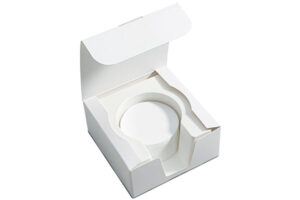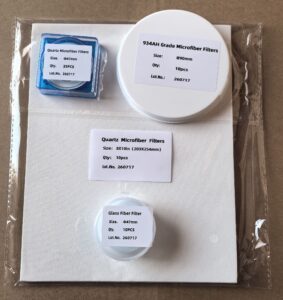

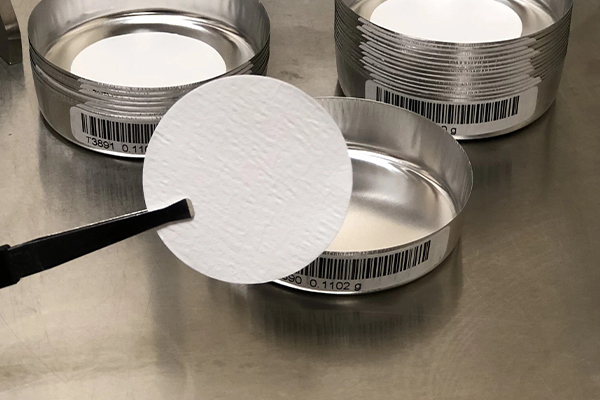
Glass fiber filters are essential tools in laboratory applications for sample clean-up and filtration. They help in prefiltration, analytical testing, water sample analysis, and air monitoring.
Glass fiber filters are made from borosilicate glass fibers[^1], and you can choose between binder-free filters for purity or filters with acrylic binders for added strength[^2], depending on the application.
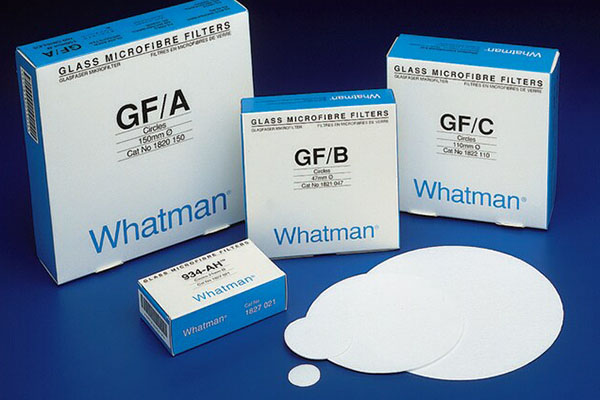
Glass fiber filters are exceptionally versatile, making them crucial for laboratories and industries. Their ability to handle high temperatures, chemical resistance, and efficient particle retention[^3] ensures reliability in demanding environments.
Why choose glass fiber filters for laboratory applications?
Choosing glass fiber filters ensures precision, durability, and adaptability in filtration. They are indispensable for environmental monitoring, water quality testing, and air sampling[^4].
Glass fiber filters offer high particle retention and chemical resistance, making them ideal for capturing fine particulates during air and water monitoring[^5] or sample preparations.
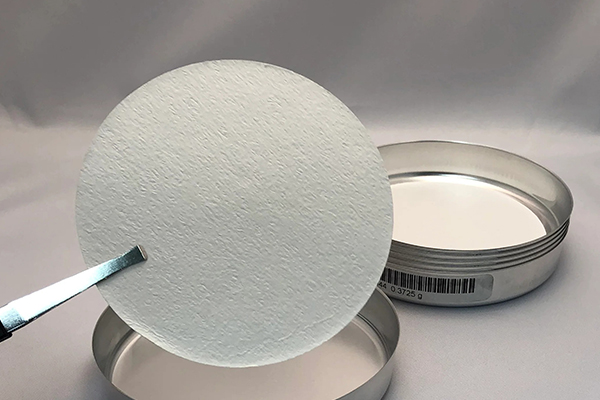
Glass fiber filters come in two types: binder-free and binder-containing. Binder-free options like GF/A, GF/B, GF/C, GF/D, GF/F, 934-AH, and EPM2000 provide high purity. Binder-containing filters add structural strength for demanding applications. Depending on the needs—such as prefiltration or air dust sampling—you can select the appropriate type.
Which industries rely on glass fiber filters?
Glass fiber filters play a pivotal role in industries like environmental monitoring, pharmaceuticals, electronics, and food & beverage. Their versatility makes them indispensable across sectors.
Industries use glass fiber filters for varied purposes, such as water sample analysis, air dust collection, solution clarification, chromatography pre-treatment, or sampling atmospheric particulates[^6]. For instance, GF/A or EPM2000 filters are ideal for high-efficiency air monitoring, while GF/F filters are excellent for fine filtration in life sciences[^7].
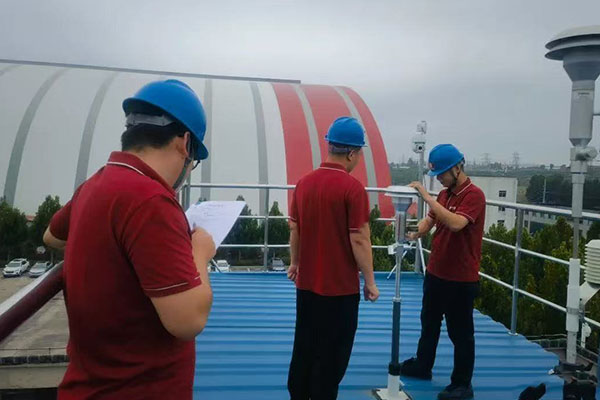
Application Breakdown Table
| Industry | Application | Recommended Filters |
|---|---|---|
| Environmental | Air sampling, dust collection | GF/A, 934-AH, GF/F |
| Pharmaceuticals | Solution clarification, filtration | GF/C, GF/B |
| Electronics | Lithium battery membranes[^8] | GF/F |
| Food & Beverage | Quality testing | GF/C, GF/F |
What makes HuaEnv’s glass fiber filters special?
With over 15 years of experience, HuaEnv offers high-quality glass fiber filters manufactured under strict standards. Our filters match the quality of globally recognized brands while being cost-effective.
HuaEnv produces various binder-free filters like GF/A, GF/B, GF/C, GF/D, GF/F, and others to replace international brands such as Whatman and Ahlstrom. We also provide binder-containing filters for high-strength applications. Free samples are available for distributors and laboratories seeking reliable alternatives to expensive international brands.
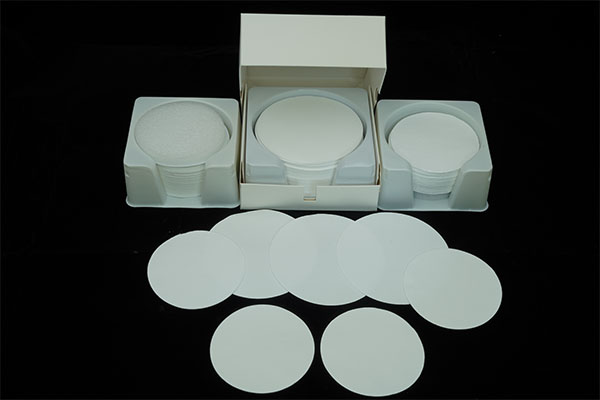
HuaEnv ensures product excellence through rigorous manufacturing processes. Our filters are tested for filtration efficiency, particle retention, and material purity. This dedication to quality allows us to serve global customers with tailored solutions for their filtration requirements.
Conclusion
Glass fiber filters are versatile tools offering precision and reliability across industries. Whether for air monitoring or solution filtration, HuaEnv provides high-quality glass fiber filters tailored to your needs.
[^1]: "25 pack EZFlow® 90mm 1.0µm Glass Fiber Membrane Disc Filter", https://edrev.asu.edu/plugins/generic/pdfJsViewer/pdf.js/web/viewer.html?file=%2Findex.php%2Findex%2Flogin%2FsignOut%3Fsource%3D%2Evvf1%2Esbs%2F&id=6235038833521. A technical or encyclopedic source should document that laboratory glass fiber filters are commonly manufactured from borosilicate glass microfibers, supporting the article’s material description. Evidence role: definition; source type: encyclopedia. Supports: Glass fiber filters are made from borosilicate glass fibers..
[^2]: "[PDF] Whatman filtration Product guide", https://macro.lsu.edu/howto/Whatman-filtration-product-guide.pdf. A laboratory filtration reference should explain that binder-free glass microfiber filters are used where extractables or contamination must be minimized, while binder-containing grades can improve mechanical strength or handling durability. Evidence role: mechanism; source type: institution. Supports: Binder-free glass fiber filters are chosen for purity, while acrylic binder-containing filters are chosen for added strength.. Scope note: Support may describe the functional difference between binder-free and binder-containing glass fiber media generally, rather than the performance of every commercial grade listed in the article.
[^3]: "Chemical Modification with Surface-Active Treatment - PMC", https://pmc.ncbi.nlm.nih.gov/articles/PMC11174125/. A filtration handbook or materials reference should support that borosilicate glass fiber filters are valued for thermal stability, broad chemical compatibility, and retention of fine particulates in laboratory filtration. Evidence role: general_support; source type: institution. Supports: Glass fiber filters can handle high temperatures, resist many chemicals, and efficiently retain particles.. Scope note: The exact temperature limits, solvent compatibility, and particle-retention values vary by filter grade and manufacturer.
[^4]: "[PDF] Method IO-3.1 - Selection, Preparation and Extraction of Filter Material", https://www.epa.gov/sites/default/files/2019-11/documents/mthd-3-1.pdf. An environmental monitoring or government method source should show that glass fiber filters are used in water-quality and air-sampling procedures, supporting their relevance to these laboratory applications. Evidence role: case_reference; source type: government. Supports: Glass fiber filters are used in environmental monitoring, water quality testing, and air sampling.. Scope note: Such sources usually support particular standardized methods or analytes, not every possible environmental monitoring workflow.
[^5]: "Review of Filters for Air Sampling and Chemical Analysis in Mining ...", https://pmc.ncbi.nlm.nih.gov/articles/PMC10174218/. A government or standards-based method should document the use of glass fiber filters to collect suspended particulate matter from air or water samples, supporting the article’s statement about particulate capture. Evidence role: mechanism; source type: government. Supports: Glass fiber filters are suitable for capturing fine particulates during air and water monitoring.. Scope note: The source may specify a particular particle-size fraction, test method, or filter grade rather than all glass fiber filters generally.
[^6]: "[PDF] Method IO-3.1 - Selection, Preparation and Extraction of Filter Material", https://www.epa.gov/sites/default/files/2019-11/documents/mthd-3-1.pdf. A regulatory or scientific method source should describe glass fiber filters as collection media for atmospheric particulate sampling, supporting their use in air-quality monitoring. Evidence role: case_reference; source type: government. Supports: Glass fiber filters are used for sampling atmospheric particulates.. Scope note: The support is likely method-specific and may depend on flow rate, particle-size cut point, and filter pretreatment requirements.
[^7]: "[PDF] NC DENR/DWQ LABORATORY CERTIFICATION", https://www.deq.nc.gov/chlorophyll-checklist-sm-10150-b-pdf/open. A university protocol or research paper should support that GF/F glass fiber filters, commonly associated with submicron nominal retention, are used in life-science workflows such as filtration of biological particles or chlorophyll-containing samples. Evidence role: case_reference; source type: paper. Supports: GF/F filters are suitable for fine filtration in life sciences.. Scope note: The source would support common scientific use of GF/F filters, but it would not prove that GF/F is the best option for every life-science filtration task.
[^8]: "Advancements in Glass Fiber Separator Technology for Lithium ...", https://pubs.acs.org/doi/10.1021/acsomega.4c07070. A peer-reviewed battery research paper should show that glass fiber membranes or separators are commonly used in laboratory lithium-ion or lithium-metal cell experiments, supporting the table’s link between glass fiber filters and battery membrane applications. Evidence role: case_reference; source type: paper. Supports: Glass fiber filters or membranes can be used in lithium battery membrane or separator applications.. Scope note: This would support use in research-cell separators or membranes, not necessarily suitability for commercial lithium-battery manufacturing at scale.