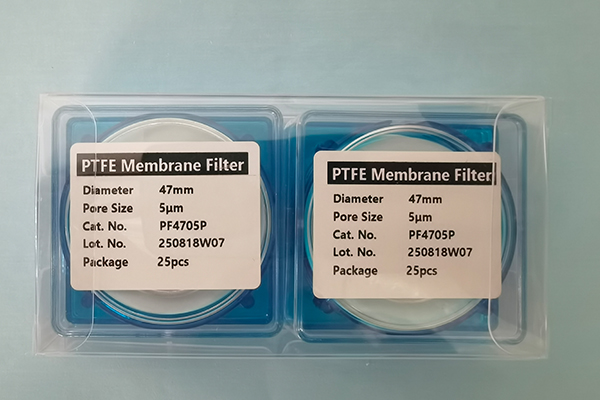
The demand for precise air quality monitoring has grown worldwide[^1], but the cost of high-quality filters often burdens end users. Could there be an efficient, cost-effective solution?
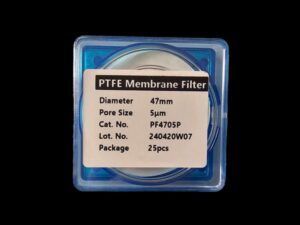
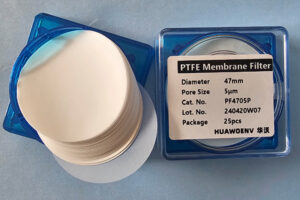
A hydrophobic PTFE membrane[^2] is a specialized filter designed to measure particulate matter concentrations such as PM10 and PM2.5 by preventing water interference while allowing air particles to pass through[^3], enabling accurate air quality monitoring.
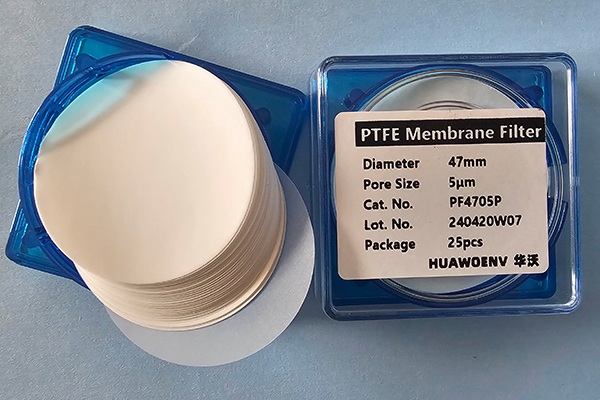
Many turn to expensive brands for reliability, but alternatives exist that combine cost-effectiveness and quality, opening the door to more accessible air monitoring solutions.
How does a hydrophobic PTFE membrane help in air quality monitoring?
Accurately measuring air quality is critical for environmental and public health. However, water in the air can interfere with precise data collection[^4]. How does the PTFE membrane solve this?
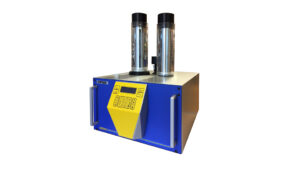
The hydrophobic PTFE membrane repels water while collecting particulate matter on its surface, ensuring accurate measurement of PM concentrations. The particles are weighed after sampling, and their weight is combined with total airflow data to determine the average concentration[^5].
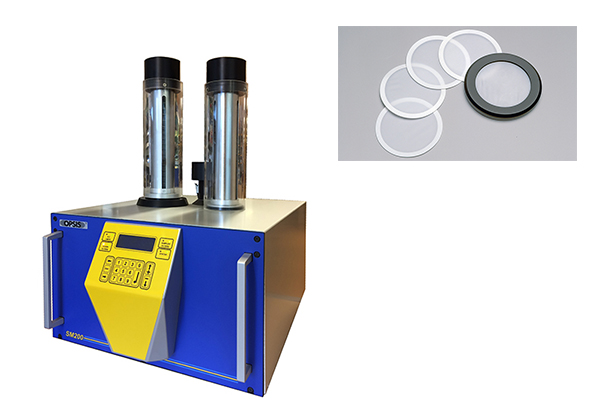
To illustrate, during sampling, air enters through an inlet and passes through the PTFE filter. The filter traps particles like PM10 and PM2.5 while rejecting water. After sampling, high-precision methods such as the beta absorption method[^6] weigh the particles to determine their concentration.
| Measurement Process | Description |
|---|---|
| Air Intake | Air passes through a 47 mm PTFE membrane. |
| Particle Accumulation | Particles accumulate on the membrane surface. |
| Post-Sampling Analysis | Particles are weighed, and concentration is calculated using airflow data. |
This process is integral to environmental monitoring, offering reliable results essential for compliance with air quality standards[^7].
Why is cost a challenge in PTFE membrane use?
Top-tier brands like Millipore offer high-quality membranes, but their price tags often deter widespread use. What impact does this have on users?
The high cost of premium PTFE membranes[^8], such as the Millipore LSWP04700 filter, increases operational expenses, especially for organizations conducting frequent air quality assessments.
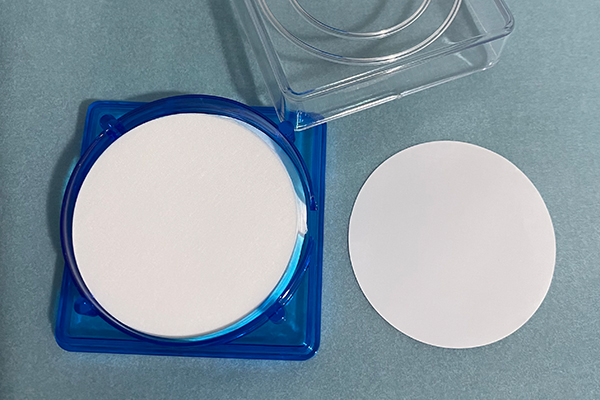
For example, laboratories and environmental monitoring services must purchase these membranes in bulk, significantly raising their costs. However, alternative options are emerging that offer comparable quality at a fraction of the cost, addressing financial barriers while maintaining high performance.
| Brand | Pore Size (μm) | Price ($) | Feature |
|---|---|---|---|
| Millipore LSWP04700 | 5.0 | High | Reliable, widely used. |
| HuaEnv PTFE Membranes | Variable | Affordable | High-quality, cost-efficient. |
Adopting cost-effective solutions can help labs maintain accuracy while staying within budget, making air monitoring more sustainable.
How does HuaEnv provide a viable alternative?
Global demand for air quality monitoring filters has led to increased interest in alternative suppliers. What makes HuaEnv a strong contender?
HuaEnv offers high-quality hydrophobic PTFE membranes and other air monitoring filters at competitive prices, aiming to support global environmental monitoring services and labs with affordable, reliable solutions.
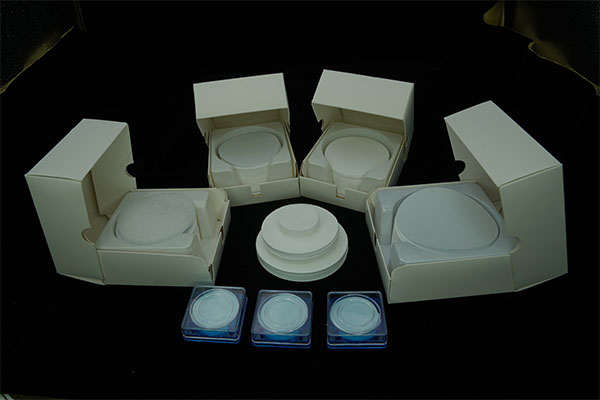
Our products are designed to meet international standards, ensuring accuracy and consistency. We also offer free samples to distributors, allowing them to test the quality firsthand. This approach ensures that our solutions are both accessible and dependable for end users globally.
| HuaEnv Advantages | Description |
|---|---|
| Competitive Pricing | Cost-effective alternative to premium brands. |
| Wide Product Range | Includes air sampling filters, quartz filter paper, and PM2.5 membranes. |
| Global Reach | Supports environmental monitoring services worldwide. |
| Free Samples for Testing | Allows potential customers to verify quality. |
By choosing HuaEnv, environmental monitoring organizations can reduce costs without compromising on the quality of their data.
Conclusion
Hydrophobic PTFE membranes play a vital role in accurate air quality monitoring. While premium brands dominate the market, HuaEnv provides a cost-effective, high-quality alternative, ensuring accessibility for global environmental monitoring needs.
[^1]: "AirData: Air Quality Data Collected at Outdoor Monitors Across the US", https://www.epa.gov/outdoor-air-quality-data. International public-health and environmental agencies document rising attention to ambient air pollution measurement and the expansion of monitoring networks as part of air-quality management. Evidence role: general_support; source type: institution. Supports: The demand for precise air quality monitoring has grown worldwide.. Scope note: Such sources support the broader global trend, not the article’s specific market-demand framing.
[^2]: "[PDF] Ambient Air Monitoring Reference and Equivalent Methods", https://public-inspection.federalregister.gov/2015-13800.pdf?1433422020. Regulatory and technical references for particulate-matter sampling identify PTFE membrane filters as standard filter media for PM collection and describe PTFE as chemically resistant and hydrophobic. Evidence role: definition; source type: government. Supports: A hydrophobic PTFE membrane is a specialized filter used in particulate matter monitoring such as PM10 and PM2.5.. Scope note: This supports the general suitability of PTFE membranes for PM sampling, not the performance of any particular product.
[^3]: "Influence of environmental conditions, operational procedures, and ...", https://pmc.ncbi.nlm.nih.gov/articles/PMC13039807/. Studies of aerosol sampling and filter media report that humidity and water uptake can affect particulate-matter mass measurements, while hydrophobic filter materials reduce liquid-water interaction during sampling. Evidence role: mechanism; source type: paper. Supports: Hydrophobic PTFE membranes help reduce water interference while enabling particle collection during air sampling.. Scope note: The source would support the physical rationale; actual water rejection depends on membrane pore size, pressure, and sampling conditions.
[^4]: "Innovative Air-Preconditioning Method for Accurate Particulate ...", https://pmc.ncbi.nlm.nih.gov/articles/PMC11398164/. Peer-reviewed aerosol measurement literature shows that relative humidity and particle hygroscopic growth can bias particulate-matter measurements by changing collected particle mass or optical response. Evidence role: mechanism; source type: paper. Supports: Water in the air can interfere with precise air-quality data collection.. Scope note: The degree of interference varies by instrument type, aerosol composition, and humidity-control procedures.
[^5]: "Appendix L to Part 50, Title 40 -- Reference Method for the ... - eCFR", https://www.ecfr.gov/current/title-40/chapter-I/subchapter-C/part-50/appendix-Appendix%20L%20to%20Part%2050. The U.S. EPA PM2.5 reference method defines gravimetric mass concentration as the net mass collected on a conditioned filter divided by the total volume of air sampled. Evidence role: definition; source type: government. Supports: Particles collected on a filter are weighed after sampling, and mass is combined with sampled air volume to calculate average PM concentration..
[^6]: "[PDF] Method IO-1.1 - Determination of PM10 in Ambient Air Using ... - EPA", https://www.epa.gov/sites/default/files/2019-11/documents/mthd-1-1.pdf. Technical descriptions of beta attenuation monitors state that particulate mass is estimated from the attenuation of beta radiation through a particle deposit on filter material during sampled-air flow. Evidence role: mechanism; source type: government. Supports: The beta absorption or beta attenuation method can be used to determine particulate-matter concentration from collected particles.. Scope note: This supports beta-attenuation measurement generally; it does not support wording that the method literally weighs particles in the same way as gravimetric filter weighing.
[^7]: "Monitoring Regulations | US EPA", https://www.epa.gov/amtic/monitoring-regulations. Air-quality regulations and reference-method documents link standardized particulate-matter measurement methods to determining whether ambient PM concentrations meet legally defined air-quality standards. Evidence role: historical_context; source type: government. Supports: Reliable particulate-matter monitoring is essential for compliance with air-quality standards.. Scope note: The source supports the regulatory role of standardized monitoring; it does not demonstrate that every PTFE membrane or monitoring setup is compliant.
[^8]: "PTFE membranes—OPSIS particle monitor SM200, what makes ...", https://huaenv.com/ptfe-membranes-opsis-particle-monitor-sm200-what-makes-them-essential-for-sampled-air/. Public laboratory-supply catalogues and procurement listings can document the listed price of named PTFE membrane filters and provide context for recurring consumable costs in repeated sampling programs. Evidence role: case_reference; source type: other. Supports: Premium PTFE membranes can impose high recurring costs for organizations conducting frequent air-quality assessments.. Scope note: Catalogue prices fluctuate and establish cost context rather than proving that all users experience a financial burden.