
When conducting environmental monitoring[^1] or sample preparation, the right filter paper[^2] can make all the difference. Struggling with inconsistent results or high costs? You're not alone.
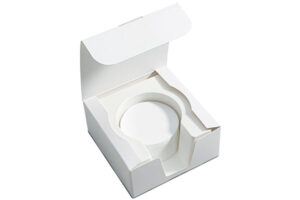
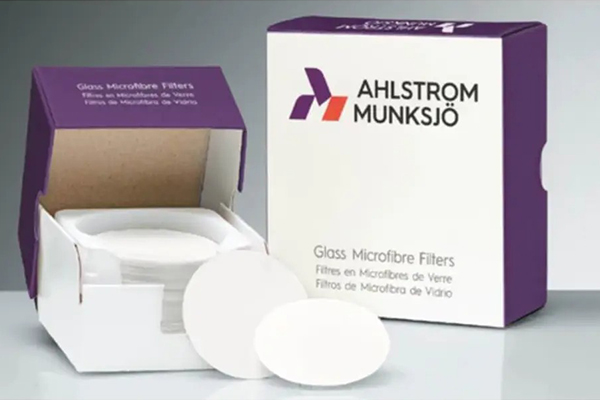
Ahlstrom 131 Glass Microfiber Filter Papers[^3] are widely used for water and air monitoring, pre-filtration, biochemical sample preparation, and PM10 sampling[^4]. Their performance is reliable, and they offer compatibility with Whatman alternatives.
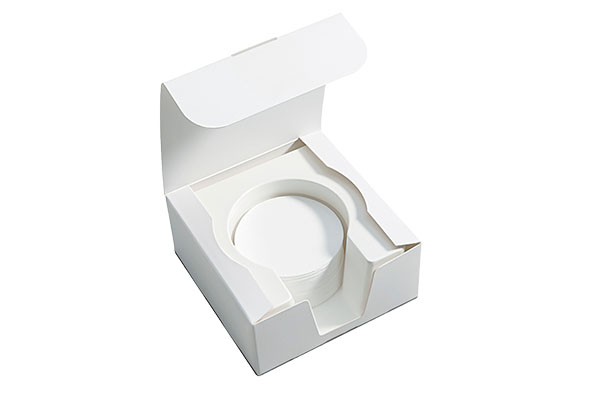
Glass microfiber filter papers like Ahlstrom 131 are essential for laboratories and industries requiring precision filtration. Let's explore their features and alternatives to help you find the perfect solution.
What are the common grades of Ahlstrom Glass Microfiber Filter Papers?
Choosing the right grade can feel overwhelming, especially when each grade serves different purposes. Confusion between brands like Ahlstrom and Whatman adds to the challenge.
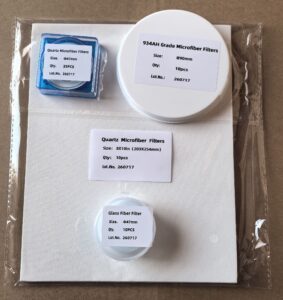
Grade 161 (1.1 μm) matches Whatman 934-AH[^5], Grade 151 (0.7 μm) aligns with Whatman GF/F[^6], Grade 111 (1.6 μm) corresponds to Whatman GF/A[^7], and MGA (1.6 μm) is equivalent to Whatman GF/D[^8]. Each grade serves specific filtration needs like water monitoring, pre-filtration, or air sampling.
These grades are tailored for precise applications. For example, Grade 161 is ideal for water and air monitoring, while Grade 151 excels in fine pre-filtration tasks. If you're looking for a versatile option, Grade 111 can handle general pre-filtration effectively. Additionally, MGA is designed for high-speed, high-load filtration.
To simplify, here's a comparison table of grades and their equivalents:
| Ahlstrom Grade | Whatman Equivalent | Pore Size | Application Example |
|---|---|---|---|
| 161 | 934-AH | 1.1 μm | Water/Air Monitoring |
| 151 | GF/F | 0.7 μm | Fine Pre-filtration |
| 111 | GF/A | 1.6 μm | General Pre-filtration |
| MGA | GF/D | 1.6 μm | High-Speed, High-Load Filtration |
Can HuaEnv provide alternatives to Ahlstrom and Whatman filters?
Ahlstrom and Whatman filters are renowned but often come with high costs or supply issues. What if there was a more affordable yet reliable alternative?
HuaEnv, a China-based manufacturer, offers glass fiber filters compatible with Ahlstrom and Whatman grades, including GF/A, GF/B, GF/C, GF/D, GF/F, 934-AH, and EPM2000. These filters are cost-effective and customizable for various needs. Free samples are available for testing.
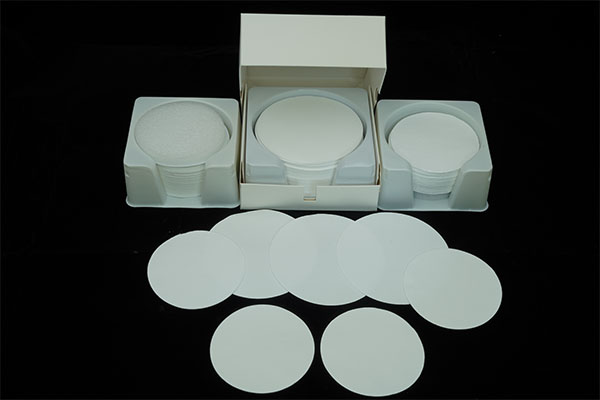
HuaEnv specializes in producing high-quality glass fiber filters that align with international standards. Their products are extensively tested for filtration efficiency, resistance to chemicals, and physical durability. By offering small-batch customization, HuaEnv ensures that you get tailored solutions for your specific application, whether it's laboratory analysis or industrial monitoring.
What are the applications for glass microfiber filters?
If you're not sure where or how to use glass microfiber filters, you might be underutilizing these powerful tools. They are versatile, but clarity on applications is key.
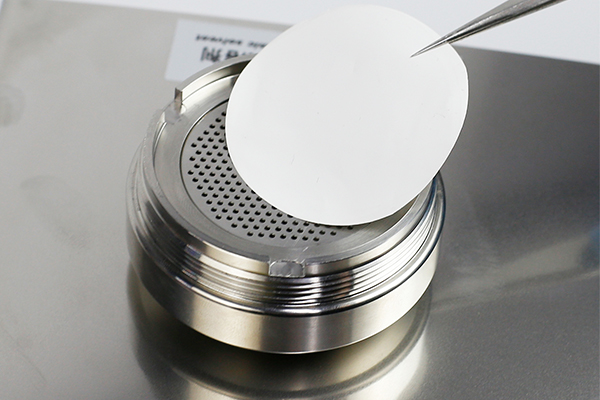
Here are some notable application examples:
- Environmental Monitoring: Filters like GF/A and EPM2000 are ideal for PM10, TSP, and PM2.5 sampling[^10].
- Pre-filtration: They help protect analytical instruments by removing particulates beforehand[^11].
- Biochemical Analysis: In labs, GF/F-grade filters are used for sample preparation and biochemical studies[^12].
- Atmospheric Studies: High-temperature environments like flue gas monitoring require specialized filters such as quartz or glass microfiber options[^13].
- Food, Beverage & Life Sciences: They assist in fat content testing or solution clarification in industries.
These filters are indispensable for labs, environmental monitoring agencies, and research institutions.
How does filter quality impact your results?
Ever faced inconsistent lab results or missed regulatory standards? Poor-quality filters could be the culprit. Quality matters.
High-performance filters ensure sample integrity, consistent results, and compliance with regulatory standards. Better quality also reduces the need for repeat tests, saving time and resources.
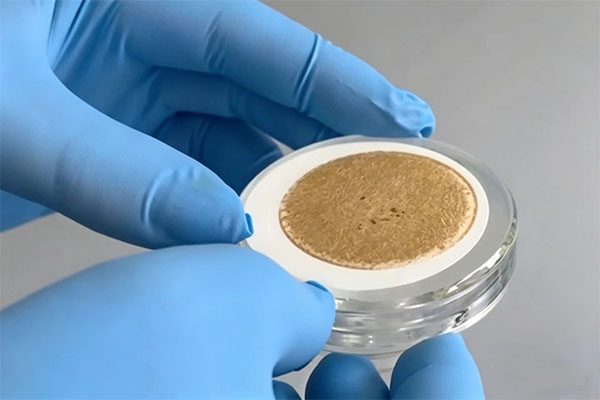
HuaEnv ensures all their filters meet international quality standards, conducting rigorous testing for filtration efficiency, chemical resistance, and physical strength. By choosing trusted suppliers, you can avoid disruptions like delayed shipments or subpar performance.
Conclusion
Whether you're using Ahlstrom, Whatman, or HuaEnv alternatives, the choice of glass microfiber filters significantly impacts your work. Make sure to choose the right grade and a reliable supplier to meet your specific needs. Experiment with free samples and explore cost-effective options like HuaEnv to enhance your filtration solutions.
[^1]: "Quality Assurance Guidance 2.12 - Monitoring PM2.5 In ...", https://www.epa.gov/sites/default/files/2021-03/documents/p100oi8x.pdf. Environmental monitoring methods for water and air commonly specify filter media characteristics and handling procedures, indicating that filter-paper selection is integral to obtaining reliable analytical samples. Evidence role: general_support; source type: government. Supports: When conducting environmental monitoring or sample preparation, the right filter paper can make all the difference.. Scope note: This supports the importance of appropriate filter selection in monitoring workflows, but does not endorse any specific commercial filter brand or grade.
[^2]: "[PDF] Method IO-3.1 - Selection, Preparation and Extraction of Filter Material", https://www.epa.gov/sites/default/files/2019-11/documents/mthd-3-1.pdf. Authoritative laboratory and environmental methods describe filter media selection—such as material, pore size, retention, and compatibility—as a methodological factor affecting sample preparation and particulate measurements. Evidence role: general_support; source type: institution. Supports: Choosing the right filter paper is important in environmental monitoring and sample preparation because filter characteristics can affect analytical results.. Scope note: This supports the general importance of selecting appropriate filter paper; it does not validate any specific commercial grade or brand comparison in the article.
[^3]: "QC of Filters for PM2.5, PM10 and Low Volume Pb | US EPA", https://www.epa.gov/amtic/qc-filters-pm25-pm10-and-low-volume-pb. An EPA or standards-based filtration method documenting the use of glass-fiber or glass-microfiber filters in water analysis and particulate air sampling supports the claim that these filters are used in environmental monitoring, sample preparation, and PM10-related applications. Evidence role: general_support; source type: government. Supports: Ahlstrom 131 Glass Microfiber Filter Papers are widely used for water and air monitoring, pre-filtration, biochemical sample preparation, and PM10 sampling.. Scope note: Such a source may support the general uses of glass microfiber filters but may not independently verify Ahlstrom 131-specific performance or equivalence to Whatman grades unless paired with a manufacturer specification or cross-reference table.
[^4]: "[PDF] METHOD 201A—DETERMINATION OF PM10 AND PM2.5 ... - EPA", https://www.epa.gov/sites/default/files/2019-08/documents/method_201a_0.pdf. Standard methods and technical specifications for environmental sampling describe glass microfiber or glass fiber filters as media used in suspended solids analysis, air particulate collection, and related sample-preparation workflows. Evidence role: general_support; source type: institution. Supports: Ahlstrom 131 Glass Microfiber Filter Papers are used for water and air monitoring, pre-filtration, biochemical sample preparation, and PM10 sampling.. Scope note: This supports the general application categories rather than proving the market prevalence of Ahlstrom 131 specifically.
[^5]: "F13614-15 : Glass Microfiber Filters, Grade 161, Ahlstrom, Closely ...", https://www.espchemicals.com/F13614-15-Glass-Microfiber-Filters-Grade-161-Ahlstrom-Closely-equivalent-to-Grade-934AH-Whatman-Water-Analysis-110cm-PN-1610-1100-100PK-P13635.aspx. Manufacturer specification tables can document the nominal retention rating and intended applications of Ahlstrom Grade 161 and Whatman 934-AH, allowing a like-for-like comparison of stated filter characteristics. Evidence role: definition; source type: other. Supports: Ahlstrom Grade 161 has a 1.1 μm rating and is positioned as comparable to Whatman 934-AH.. Scope note: Such sources establish stated specifications and comparability, not independent equivalence in every analytical method.
[^6]: "[PDF] Filter Paper Cross Reference Guide - APS Water", https://www.apswater.com/images/ahlstrom-filter-grades.pdf. Published filter-grade specification sheets list nominal particle retention values for Ahlstrom Grade 151 and Whatman GF/F, providing a basis for comparing their stated filtration ratings. Evidence role: definition; source type: other. Supports: Ahlstrom Grade 151 has a 0.7 μm rating and is comparable in use to Whatman GF/F.. Scope note: Nominal retention values do not alone prove identical performance across all sample matrices or protocols.
[^7]: "Whatman/GE/Cytiva Cross-Reference Guide - Lab Filtration Papers", https://labfiltrationpapers.com/pages/distributor-brand-cross-reference-guide. Filter catalog data can substantiate that Ahlstrom Grade 111 and Whatman GF/A share similar nominal retention ratings and are described for comparable general filtration applications. Evidence role: definition; source type: other. Supports: Ahlstrom Grade 111 has a 1.6 μm rating and corresponds to Whatman GF/A for general filtration use.. Scope note: Catalog data support specification similarity, but independent validation would be required for method-specific substitution.
[^8]: "Whatman/GE/Cytiva Cross-Reference Guide - Lab Filtration Papers", https://labfiltrationpapers.com/pages/distributor-brand-cross-reference-guide. Technical specifications for Ahlstrom MGA and Whatman GF/D can be used to compare nominal retention, thickness, and loading characteristics relevant to high-throughput glass microfiber filtration. Evidence role: definition; source type: other. Supports: Ahlstrom MGA has a 1.6 μm rating and is equivalent or comparable to Whatman GF/D.. Scope note: The evidence would support specification-based equivalence, not necessarily interchangeability under accredited methods.
[^9]: "Review of Filters for Air Sampling and Chemical Analysis in Mining ...", https://pmc.ncbi.nlm.nih.gov/articles/PMC10174218/. Laboratory filtration references and environmental sampling methods describe glass microfiber filters as depth filters used for liquid clarification, suspended particulate collection, and air-monitoring sample capture. Evidence role: general_support; source type: education. Supports: Glass microfiber filters are commonly used across pre-filtration, water analysis, air particulate sampling, clarification, chromatography preparation, and atmospheric or flue-gas particulate collection.. Scope note: This supports common categories of use for glass microfiber filters broadly, not the suitability of every grade for every listed application.
[^10]: "QC of Filters for PM2.5, PM10 and Low Volume Pb", https://www.epa.gov/amtic/qc-filters-pm25-pm10-and-low-volume-pb. Air-quality monitoring methods from environmental agencies specify filter-based collection for particulate matter fractions such as PM10, PM2.5, and total suspended particulates, often using glass fiber, quartz, or comparable filter media depending on the method. Evidence role: expert_consensus; source type: government. Supports: Glass fiber or glass microfiber filters are used in environmental monitoring for PM10, TSP, and PM2.5 sampling.. Scope note: Specific filter media requirements vary by jurisdiction, sampler design, and analytical method.
[^11]: "Analytical Chromatography - fSEC", https://cmi.hms.harvard.edu/analytical-chromatography-fsec. Analytical chemistry and chromatography guidance describes sample filtration or pre-filtration as a means of removing particulates that can clog columns, valves, tubing, or detector flow paths. Evidence role: mechanism; source type: education. Supports: Pre-filtration helps protect analytical instruments by removing particulates before analysis.. Scope note: The support is mechanistic and general; the degree of protection depends on the instrument, sample matrix, and filtration protocol.
[^12]: "[PDF] Whatman filtration Product guide", https://macro.lsu.edu/HowTo/Whatman-filtration-product-guide.pdf. Method papers and laboratory protocols report the use of GF/F glass fiber filters in biological and biochemical workflows, including particulate capture, chlorophyll analysis, and preparation of aqueous samples. Evidence role: case_reference; source type: paper. Supports: GF/F-grade filters are used in sample preparation and biochemical or biological studies.. Scope note: Published protocols show established use cases but do not imply GF/F is optimal for all biochemical analyses.
[^13]: "[PDF] Method 5 - Determination of Particulate Matter Emissions from ... - EPA", https://www.epa.gov/sites/default/files/2021-05/documents/method_5_-_2020_12_07_0.pdf. Stack and stationary-source sampling methods describe heated sampling trains and filter media selected for particulate capture under elevated-temperature or chemically demanding conditions, including quartz fiber or glass fiber filters in specified methods. Evidence role: expert_consensus; source type: government. Supports: Flue gas monitoring may require specialized filter media such as quartz or glass microfiber filters.. Scope note: Exact media requirements depend on the pollutant, temperature, and reference method; glass microfiber is not universally suitable for all flue-gas measurements.