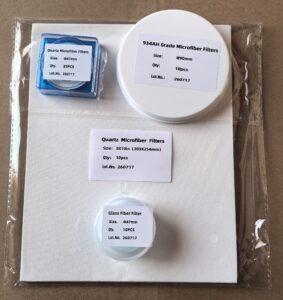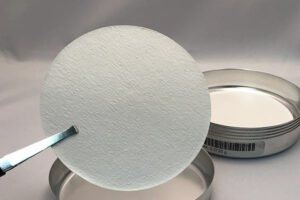

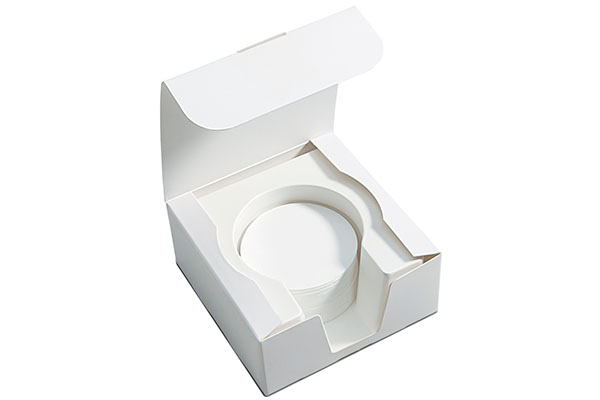
Binderless glass microfiber filters are essential for laboratories and industrial applications requiring efficient filtration and precision. They capture tiny particles and allow high flow rates without compromising filtration performance.[^1]
Binderless glass microfiber filters are used in various analytical applications, including air monitoring, water filtration, and high-purity sample preparation[^2]. Their uniform fibers ensure exceptional particle retention and high load capacity.[^1]
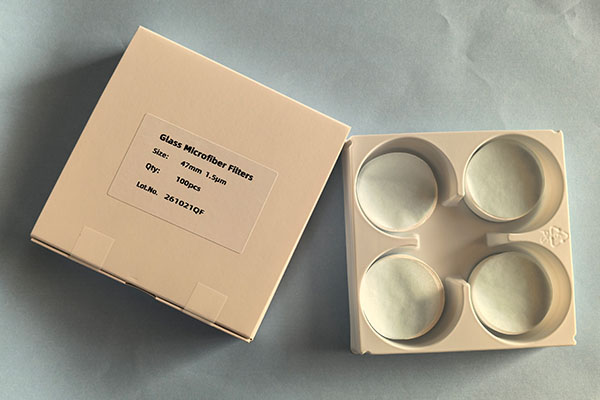
Binderless design eliminates the risks of contamination from binders[^3] making these filters ideal for environments requiring high purity and sample integrity. But what specific areas benefit from their use? Let’s explore.
Why are binderless glass microfiber filters preferred for air monitoring?
Air monitoring requires filters that can capture fine particulate matter efficiently. Binderless glass microfiber filters are designed for this purpose[^2], ensuring reliable performance in environmental monitoring projects.
Binderless glass microfiber filters are preferred for air monitoring because they retain fine particles like PM2.5 and PM10 while maintaining high flow rates[^4]. This makes them ideal for atmospheric studies and pollutant analysis.
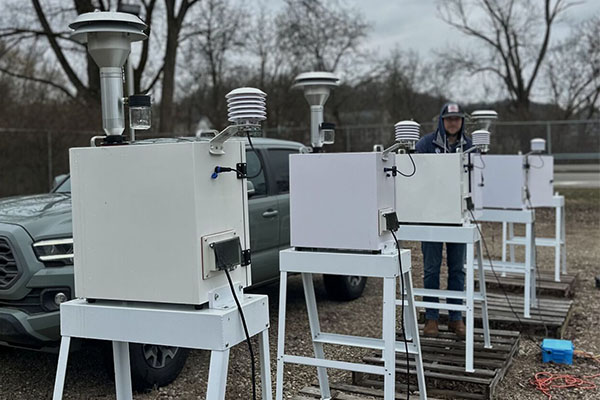
In air monitoring, filters like GF/A and QM-A provide accurate mass concentration measurements for particulate matter[^5]. These filters are critical in studies of organic and elemental carbon[^6], heavy metals, and pollutants such as dioxins and polycyclic aromatic hydrocarbons[^7]. Their ability to withstand high temperatures makes them suitable for use in volatile environments[^3], ensuring consistent results across various conditions.
How do binderless glass microfiber filters enhance water filtration?
Water filtration requires filters capable of removing impurities while maintaining the water's chemical composition.[^4] Binderless filters excel here due to their purity and efficient particle retention.
Binderless glass microfiber filters enhance water filtration by effectively removing suspended solids, microorganisms, and particulate contaminants[^5] while preserving the water's original chemical properties.
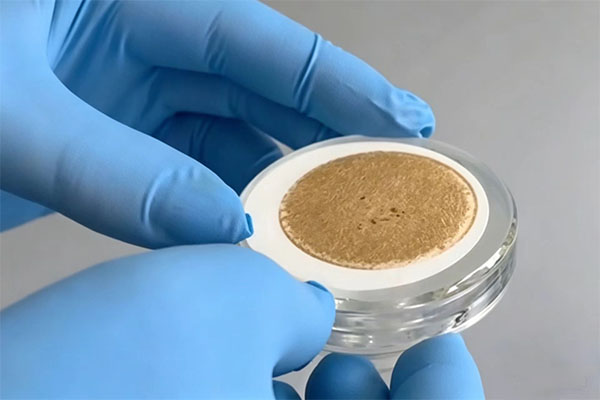
These filters are widely used in analyzing water quality for industrial and environmental applications. Their smooth, uniform fibers allow for high flow rates, which speeds up filtration processes.[^6] Moreover, their binder-free design ensures no leaching of contaminants into the filtered water[^8]. Examples include GF/C filters, which are great for fine particle retention, and GF/F filters, which are designed for ultra-fine filtration.[^7]
What role do binderless glass microfiber filters play in sample preparation?
Sample preparation often involves separating impurities or concentrating analytes. Binderless filters ensure sample purity and integrity, making them indispensable in laboratory settings.
Binderless glass microfiber filters play a crucial role in sample preparation by maintaining sample purity while efficiently concentrating analytes or removing impurities.
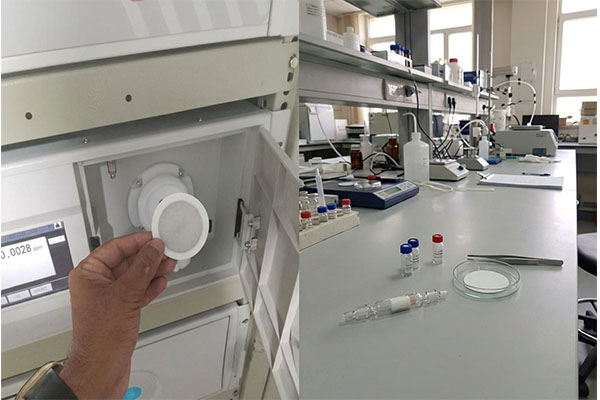
Consider their usage in high-purity applications such as pharmaceutical and cosmetic testing. These filters are available in multiple grades like GF/F for ultrafine filtration and 934-AH for high particle load scenarios. Their depth filtration capabilities allow them to handle gelatinous substances and high particulate concentrations effectively.[^8] This adaptability ensures accurate and reproducible results in varied laboratory conditions.
Are binderless filters suitable for high-temperature applications?
High-temperature environments require filters that remain stable under thermal stress. Binderless glass microfiber filters meet this need with their robust design and heat resistance.
Binderless filters are suitable for high-temperature applications due to their capacity to withstand thermal stress without contamination or structural degradation[^9].
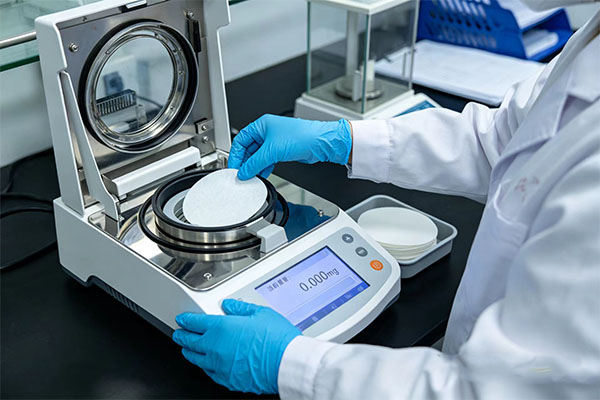
Industries such as power generation and chemical processing benefit from these filters. For example, glass microfiber filters like QM-A, designed for high-temperature resistance, prove essential for analyzing emissions from fixed pollution sources. Their ability to function effectively in extreme conditions ensures reliable data collection and compliance with environmental regulations.
Conclusion
Binderless glass microfiber filters are versatile tools used in air monitoring, water filtration, sample preparation, and high-temperature applications. Their purity, efficiency, and adaptability make them indispensable for laboratories and industries.
[^1]: "Whatman filtration Product guide", https://macro.lsu.edu/HowTo/Whatman-filtration-product-guide.pdf. A filtration engineering source or standards-based description should support that glass microfiber media act as depth filters whose fiber matrix can retain particles throughout the medium and accommodate higher particulate loading than surface-only membranes. Evidence role: mechanism; source type: education. Supports: Uniform glass microfiber structure contributes to particle retention and high loading capacity.. Scope note: This would support the general mechanism of glass microfiber depth filtration, not necessarily the performance of every binderless grade.
[^2]: "Selection, Preparation and Extraction of Filter Material", https://www.epa.gov/sites/default/files/2019-11/documents/mthd-3-1.pdf. A standards or agency method describing glass fiber or quartz fiber filters in particulate air sampling would support the contextual use of binderless glass microfiber-type media for collecting airborne particles. Evidence role: case_reference; source type: government. Supports: Binderless glass microfiber filters are designed or used for air particulate monitoring.. Scope note: Government methods may refer broadly to glass fiber or quartz fiber filters and may not use the exact commercial term “binderless glass microfiber filters.”
[^3]: "Filtration Characteristics of Glass Fiber Filter at Elevated ...", https://nepis.epa.gov/Exe/ZyPURL.cgi?Dockey=91015XO6.TXT. A materials or air-sampling method source should document that glass or quartz fiber filter media tolerate elevated temperatures used in combustion, emission, or thermal analysis sampling. Evidence role: mechanism; source type: government. Supports: Glass microfiber filters can withstand elevated temperatures relevant to some air and emissions sampling applications.. Scope note: Thermal tolerance depends on the exact glass composition and grade, so a general source would not establish the maximum temperature of each named filter.
[^4]: "Superfund Ground Water Issue", https://www.epa.gov/sites/default/files/2015-06/documents/groundwater_samp.pdf. A water-quality analytical method should support that filtration in water analysis is used to separate particulate matter while minimizing chemical alteration of the sample or analytes of interest. Evidence role: general_support; source type: government. Supports: Water filtration for analysis should remove particulates without materially changing the chemical composition being measured.. Scope note: The source may address sample filtration principles rather than binderless glass microfiber filters specifically.
[^5]: "Filtration Characteristics of Glass Fiber Filter at Elevated ...", https://nepis.epa.gov/Exe/ZyPURL.cgi?Dockey=91015XO6.TXT. A water-analysis standard or technical source should show that glass fiber filtration is used to separate suspended solids and particulate material from water samples, with some microorganisms retained when associated with particles or larger than the filter retention range. Evidence role: general_support; source type: government. Supports: Binderless glass microfiber filters can remove suspended solids and particulate contaminants from water samples.. Scope note: Support for microorganism removal should be treated cautiously because retention depends on organism size, filter grade, and whether the application is analytical filtration rather than sterilization.
[^6]: "Performance factors for filtration of air using cellulosic fiber ...", https://bioresources.cnr.ncsu.edu/resources/performance-factors-for-filtration-of-air-using-cellulosic-fiber-based-media-a-review/. A filtration mechanics or laboratory filtration source should support the relationship between porous fibrous filter structure, permeability, and higher flow rates under comparable pressure conditions. Evidence role: mechanism; source type: education. Supports: The fibrous structure of glass microfiber filters can permit high flow rates and faster filtration.. Scope note: The source would support the physical mechanism, while actual flow rate varies with grade, pore structure, sample viscosity, and particulate loading.
[^7]: "Whatman ® circles ,borosilicate glass grade GF/F filter ...", https://www.sigmaaldrich.com/US/en/product/aldrich/wha1825047?srsltid=AYCX9vKm9MMP9gnkARex7K5gcweeQA4XAOLFXi1eQtnR8tf7eWhEIaSS. A method or specification source should document the nominal particle retention range of GF/F-type glass fiber filters and their use where very fine particulate collection is required. Evidence role: definition; source type: institution. Supports: GF/F filters are used for very fine or ultra-fine particle retention in filtration applications.. Scope note: GF/F is a grade designation associated with specific manufacturers, so neutral sources may only corroborate the nominal retention and common analytical use rather than endorsing a product.
[^8]: "Selection, Preparation and Extraction of Filter Material", https://www.epa.gov/sites/default/files/2019-11/documents/mthd-3-1.pdf. A filtration reference should explain that depth filters capture particles within a three-dimensional porous matrix, which can improve handling of high-solids or deformable particulate samples compared with surface sieving alone. Evidence role: mechanism; source type: education. Supports: Depth filtration enables glass microfiber filters to handle gelatinous or high-particulate samples.. Scope note: This supports the general depth-filtration principle and does not quantify performance for every gelatinous sample or filter grade.
[^9]: "Filtration Characteristics of Glass Fiber Filter at Elevated ...", https://nepis.epa.gov/Exe/ZyPURL.cgi?Dockey=91015XO6.TXT. A materials or emissions-testing source should support that binderless glass or quartz fiber filters are selected for high-temperature sampling because they resist thermal degradation and avoid binder-derived contamination. Evidence role: mechanism; source type: government. Supports: Binderless glass microfiber filters can withstand thermal stress with reduced risk of binder-related contamination or degradation.. Scope note: Specific temperature limits and contamination risks vary by filter composition, pretreatment, and analytical method.