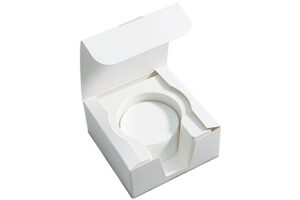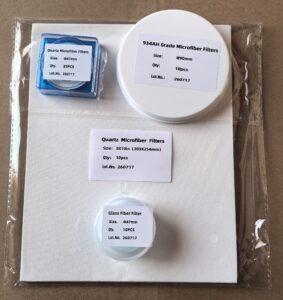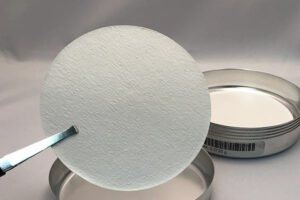


Binderless glass microfiber filters are a high-performance filtering material designed for precision applications. They are made from 100% borosilicate glass fibers[^1], and manufactured without binders or any strengthening agents[^2]. This unique composition allows them to excel in specialized scenarios.
Binderless glass microfiber filters are made from pure borosilicate glass fibers, ensuring high flow rates, exceptional particle retention, and high load capacity[^3] without compromising filtration efficiency.
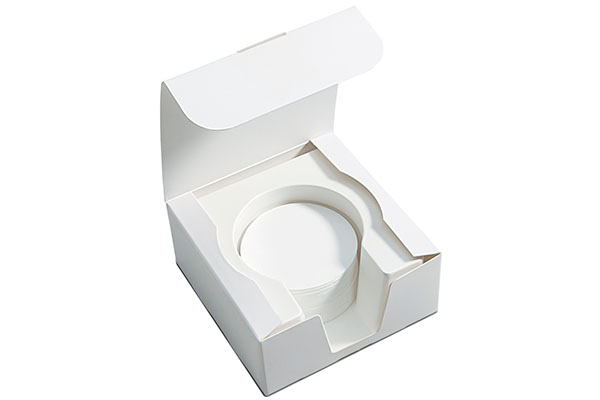
Binderless glass microfiber filters cater to demanding environments where precision and reliability are critical. Because they are made without binders, they avoid the risk of contamination or interference with the filtered sample[^4]. This makes them ideal for a wide range of applications, including environmental monitoring, life sciences, and industrial processes[^5].
How are binderless glass microfiber filters made?
The production of binderless glass microfiber filters involves a carefully controlled process that ensures consistency and purity. The fibers used are entirely made of borosilicate glass, which provides the filter with its remarkable properties.
Binderless glass microfiber filters are crafted through a process where smooth, uniform borosilicate glass fibers are formed into mats[^6] using advanced techniques without adding binders or adhesives.
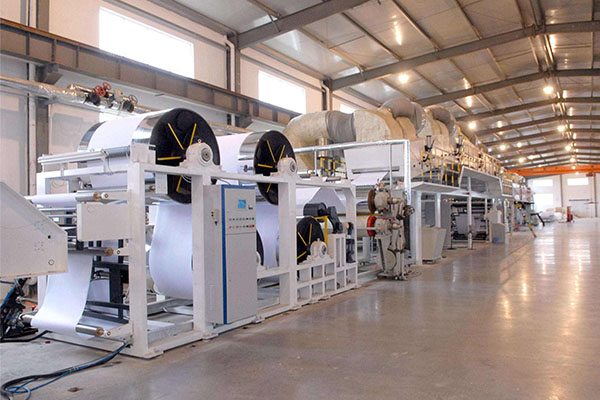
During manufacturing, the borosilicate fibers are arranged to form a depth filter. This type of filter captures particles throughout the matrix, unlike surface filters that only trap particles on the surface[^7]. The resulting product is lightweight, durable, and capable of handling high flow rates. The absence of binders ensures that the filters do not release impurities during filtration[^8], making them suitable for applications requiring high purity.
Why is the binderless design important?
The binderless design of these filters is more than just a feature; it’s what makes them superior in specific applications. But why does the lack of binders matter?
The absence of binders in glass microfiber filters ensures contamination-free filtration and enhances their ability to retain tiny particles without compromising sample integrity.

Binders, often used in other filters, can release unwanted chemicals or particles into the sample[^9], which can interfere with sensitive analyses, especially in environmental and life science applications. Binderless filters avoid this risk, offering unmatched purity. Additionally, the strong glass fibers maintain their structure even under high flow rates, ensuring consistent performance in demanding conditions.
What are the key applications of binderless glass microfiber filters?
Binderless glass microfiber filters shine in applications that demand high purity, high flow rates, and exceptional particle retention. These characteristics make them invaluable across diverse industries.
Binderless microfiber filters are commonly used for environmental monitoring, life sciences research, industrial filtration, and processes involving high particulate concentrations or gelatinous substances.

For example, in environmental monitoring, they are essential for sampling airborne particles such as PM2.5 or PM10 for subsequent analysis. They are equally vital in life sciences for sample preparation, such as DNA extraction or protein concentration[^10]. Industrial applications, like filtering high-load fluids with suspended solids, benefit from their exceptional retention and high-flow-rate capabilities.
Breakdown of applications:
| Application | Filter Benefits | Examples |
|---|---|---|
| Environmental monitoring | High particle retention, suitable for small particles | PM2.5/PM10 air sampling, dioxin and heavy metal analysis |
| Life Sciences | High purity ensures no sample contamination | DNA purification, microbiological analysis |
| Industrial processes | High load capacity and flow rates | Filtering gelatinous substances, chemical analysis |
| Food and Beverage | Retains particulate and ensures filtration efficiency | Quality control in food and drinks |
How to select the right binderless glass microfiber filter?
Choosing the right filter depends on the specific requirements of your application. Factors like particle size, flow rate, and material concentration play a significant role.
Pick a binderless glass microfiber filter based on material type, particle size, desired flow rate, and load capacity for optimal filtration results.

For high particulate or gelatinous substances, select filters with a high load capacity. If you’re working with extremely small particles, prioritize filters with finer retention capabilities. The physical form and concentration of the material being filtered should guide your selection. Consulting with your supplier can provide insights into the best filter for your needs.
Comparison Table: Important Parameters to Consider
| Filter Parameter | Recommended Use | Notes |
|---|---|---|
| Particle Retention | For small particulate filtration | Lower micron ratings are more effective |
| Flow Rate | For high-speed filtering | Larger pore sizes allow faster flow |
| Load Capacity | For high particulate concentrations | Choose filters designed for high loads |
| Chemical Resistance | For aggressive chemical environments | Borosilicate ensures stability |
| Thickness and Size | Based on filtration setup requirements | Customizable options available |
Are binderless glass microfiber filters cost-effective?
While binderless glass microfiber filters may seem like premium products, they provide excellent value for their price. Their performance and reliability often outweigh initial costs.
Binderless microfiber filters are cost-effective due to their high efficiency, durability, and ability to avoid sample contamination, reducing long-term experimental costs.
Investing in high-quality filters reduces the risk of sample loss and failed experiments due to contamination or inefficient filtration. They are particularly economical in settings where precision is crucial, as they deliver reliable performance and require fewer replacements compared to lower-quality alternatives. This combination of quality and durability can significantly lower the overall cost of ownership over time.
Conclusion
Binderless glass microfiber filters are engineered for precision and reliability. They offer high flow rates, exceptional particle retention, and purity, making them indispensable in various analytical applications.
[^1]: "Borosilicate glass", https://en.wikipedia.org/wiki/Borosilicate_glass. A materials reference on borosilicate glass can substantiate that borosilicate compositions are widely used where chemical resistance and thermal stability are required. Evidence role: definition; source type: encyclopedia. Supports: Binderless glass microfiber filters are described as being made from borosilicate glass fibers.. Scope note: This supports the material properties of borosilicate glass generally, not the exact composition of any specific commercial filter grade.
[^2]: "Whatman-filtration-product-guide.pdf", https://macro.lsu.edu/HowTo/Whatman-filtration-product-guide.pdf. A laboratory filtration reference that distinguishes binder-free glass fiber media from resin- or binder-containing media would support the definition of binderless filters. Evidence role: definition; source type: institution. Supports: Binderless glass microfiber filters are manufactured without binders or strengthening agents.. Scope note: Many detailed descriptions of binderless filter construction are found in manufacturer literature; a neutral source may only establish the general category rather than a specific product formulation.
[^3]: "Chemical Modification with Surface-Active Treatment - PMC", https://pmc.ncbi.nlm.nih.gov/articles/PMC11174125/. Filtration literature on glass fiber depth media can support that fibrous depth filters typically combine high permeability with particle retention through the filter matrix and relatively high dirt-holding capacity. Evidence role: mechanism; source type: paper. Supports: Binderless glass microfiber filters provide high flow rates, particle retention, and high load capacity.. Scope note: The source would support these as general characteristics of glass-fiber depth filtration, not guarantee performance for every binderless grade or pore size.
[^4]: "Q3E Guideline for Extractables and Leachables", https://www.fda.gov/media/189890/download. Analytical filtration guidance on filter extractables and leachables can support that filter materials may introduce contaminants that interfere with downstream analyses. Evidence role: mechanism; source type: institution. Supports: Binderless filters reduce the risk of contamination or interference with filtered samples.. Scope note: Such evidence supports the rationale for minimizing additives in analytical filters but may not prove that all binderless filters are contamination-free in every application.
[^5]: "Glass Fiber Filters and Prefilters", https://www.fishersci.com/us/en/browse/90179025/glass-fiber-filters-and-prefilters. A laboratory or environmental sampling manual describing glass-fiber filters in air sampling, biological sample preparation, and particulate-laden liquid filtration would provide contextual support for these application areas. Evidence role: general_support; source type: institution. Supports: Binderless glass microfiber filters are used in environmental monitoring, life sciences, and industrial processes.. Scope note: The support is likely contextual across several filter types and may not address binderless glass microfiber filters as a distinct category in each application.
[^6]: "Alternative High-Performance Fibers for Nonwoven HEPA Filter Media", https://pmc.ncbi.nlm.nih.gov/articles/PMC9579614/. A technical source on glass-fiber filter manufacture can support that glass microfibers are produced and arranged into nonwoven mats for filtration media. Evidence role: mechanism; source type: research. Supports: Binderless glass microfiber filters are made by forming borosilicate glass fibers into mats.. Scope note: The exact forming process may differ among manufacturers and may not be fully documented in neutral public sources.
[^7]: "Filtration", https://en.wikipedia.org/wiki/Filtration. A filtration textbook or encyclopedia entry on depth filtration can substantiate that depth filters retain particles within the porous matrix, whereas surface filtration primarily retains particles at the upstream surface. Evidence role: definition; source type: encyclopedia. Supports: Depth filters capture particles throughout the filter matrix, unlike surface filters..
[^8]: "Whatman-filtration-product-guide.pdf", https://macro.lsu.edu/HowTo/Whatman-filtration-product-guide.pdf. Sources discussing binder-free or low-extractable filter media can support that avoiding binders reduces one potential source of extractable impurities during filtration. Evidence role: mechanism; source type: paper. Supports: The absence of binders helps reduce impurity release during filtration.. Scope note: The claim should be framed as reduced risk rather than absolute absence of impurities, because glass fibers themselves and processing residues can still contribute extractables depending on conditions.
[^9]: "Filtration membranes - Scavengers for leachables?", https://pubmed.ncbi.nlm.nih.gov/29719239/. Analytical chemistry literature on filter-derived contaminants can support that components of filter media, including additives or binders, may leach or shed into samples and create analytical artifacts. Evidence role: mechanism; source type: paper. Supports: Binders or additives in filters can release unwanted chemicals or particles into samples.. Scope note: Evidence may describe filter extractables broadly and not isolate binders as the only source of contamination.
[^10]: "viral nucleic acid extraction method based on glass fiber ...", https://patentscope.wipo.int/search/en/WO2021164396. Biochemical sample-preparation literature can support that glass or silica-based matrices are used to bind nucleic acids and that filtration media are used in protein concentration workflows. Evidence role: case_reference; source type: paper. Supports: Glass microfiber or glass-based filtration materials may be used in life-science sample preparation such as DNA extraction or protein-related workflows.. Scope note: This supports related life-science uses of glass or filter matrices, but it may not demonstrate that every binderless glass microfiber filter is suitable for DNA extraction or protein concentration without validation.
如需进一步美化、调整图片说明,或补充图表说明欢迎继续提出。