
Air pollution affects everyone[^1], and testing is vital to understand its impact. But how do we collect air samples reliably? This is where air monitoring filters play a crucial role.
Air monitoring filters work by trapping airborne particulate matter (PM) from sampled air for analysis[^2]. They allow air to pass through while capturing PM, enabling gravimetric and chemical tests to determine its composition and concentration[^3].
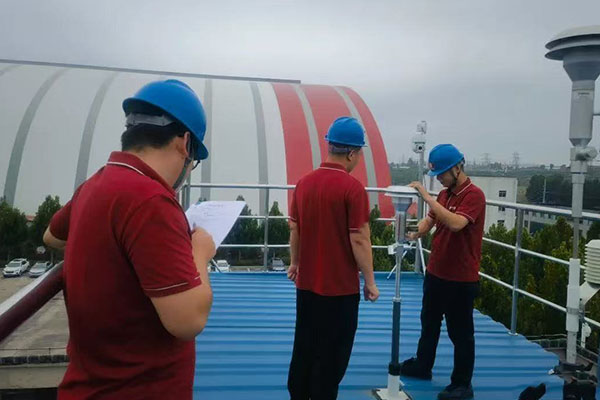
Choosing the right filter ensures accurate results. Air testing is complex, and selecting filters that match the environment, like high temperatures or chemical exposure, is critical for reliable data[^4].
What is particulate matter (PM), and why is it measured?
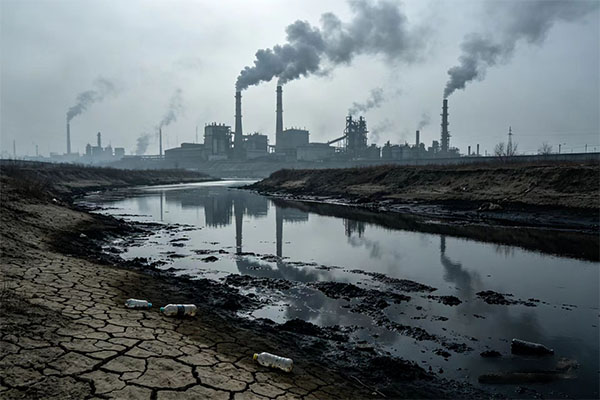
Particulate matter, or PM, is a mix of tiny solids and liquids floating in the air[^5]. It's harmful and comes from sources like car exhaust, industrial emissions, or natural events like wildfires[^6].
PM measurement matters because it tells us air quality and potential health risks[^7]. Gravimetric methods weigh PM in a certain volume of air, helping labs break it down into specific components for detailed analysis.
PM is measured using gravimetric methods that involve weighing trapped particles from a known air volume[^8]. Results show pollutant levels, often expressed in parts per million (PPM)[^9].
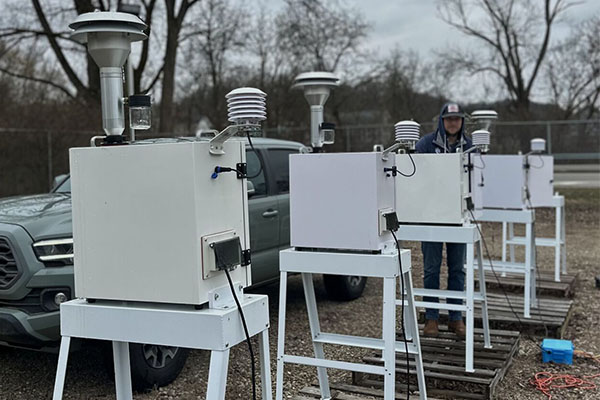
Understanding PM's composition helps identify pollution sources[^10] and create solutions to reduce exposure, making the right filter even more important.
How do air monitoring filters work?
Air monitoring filters capture PM by letting air pass through while trapping particles on their surface. They are a critical first step in air quality testing.
Filters trap particles from sampled air, letting laboratories assess PM concentration and composition for regulatory compliance or research purposes.
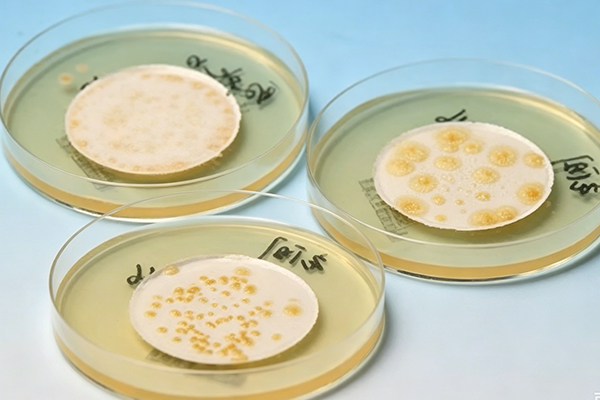
Gravimetric methods weigh these particles and specific tests identify pollutants. Filters must perform in diverse conditions, from urban environments to industrial stacks, requiring durability and exact design.
What types of filters are used for air monitoring?
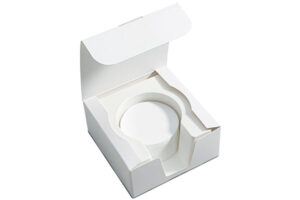
Filters vary based on their composition and specific use cases. Glass fiber filters are widely used for their high efficiency and heat resistance.
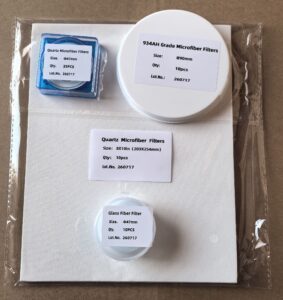
Glass fiber filters, like GF/A, GF/B, and EPM2000, are popular choices for air monitoring due to their ability to trap particles effectively and withstand extreme conditions.
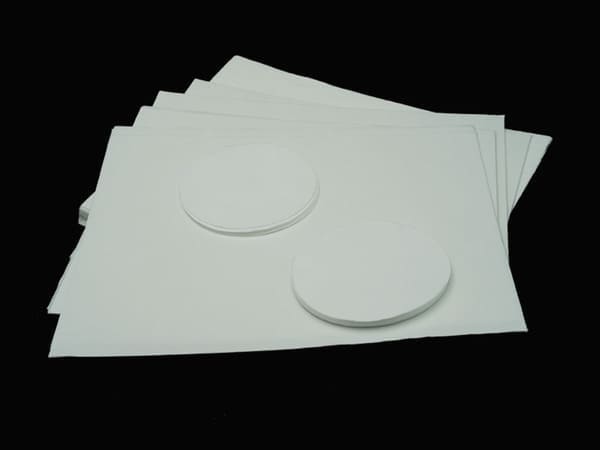
HuaEnv produces a range of glass fiber filters, offering alternatives to brands like Whatman and Ahlstrom. We provide samples to distributors and labs and specialize in pre-filtration, water sample tests, and air dust collection.
Common air monitoring filters and their applications
| Filter Type | Applications | Key Features |
|---|---|---|
| GF/A | PM collection, air dust sampling | Wide particle retention |
| GF/C | Environmental testing | Chemical resistance |
| 934-AH | Aerosol studies and gravimetric tests | High-temperature stability |
| EPM2000 | Atmospheric particulate sampling | Exceptional durability |
These options ensure compatibility with diverse testing environments, keeping results accurate and reliable.
What should you consider when selecting an air monitoring filter?
Choosing the right filter depends on your application. Factors like temperature, chemical exposure, and particle size must be accounted for.
Consider filter material, pore size, and environmental conditions to ensure the filter meets your specific air sampling needs.
Stack emissions often need filters capable of withstanding high heat and aggressive chemicals. For lab-based analysis, filters like GF/A or GF/F provide robust PM trapping.
How can HuaEnv support your air monitoring needs?
At HuaEnv, we manufacture glass fiber filters tailored to air quality testing needs. Our filters match the quality of Whatman and other international brands and are cost-effective.
Our filters are suitable for pre-filtration, water sample testing, air dust collection, solution clarification, and chromatographic pre-treatment.
We offer free samples to distributors and labs and ensure consistent supply with reliable performance. Whether you're monitoring atmospheric PM or industrial emissions, our filters are up to the task.
Conclusion
Air monitoring filters are essential for accurate air quality testing. They trap particulate matter for analysis, helping labs measure pollution levels and determine its composition. Choosing the right filter ensures reliable results and protects public health. At HuaEnv, we provide glass fiber filters tailored to diverse applications, ensuring high performance under harsh conditions.
[^1]: "Billions of people still breathe unhealthy air: new WHO data", https://www.who.int/news/item/04-04-2022-billions-of-people-still-breathe-unhealthy-air-new-who-data. The World Health Organization reports that almost the entire global population breathes air exceeding its guideline limits, supporting the broad public relevance of air pollution exposure. Evidence role: statistic; source type: institution. Supports: Air pollution affects everyone.. Scope note: This supports population-level exposure globally, not equal exposure or equal health burden for every individual.
[^2]: "[PDF] Method 5 - Determination of Particulate Matter Emissions from ... - EPA", https://www.epa.gov/sites/default/files/2021-05/documents/method_5_-_2020_12_07_0.pdf. EPA and air-monitoring method documents describe filter-based sampling as drawing a measured volume of air through a filter that collects particulate matter for subsequent mass or composition analysis. Evidence role: mechanism; source type: government. Supports: Air monitoring filters work by trapping airborne particulate matter (PM) from sampled air for analysis.. Scope note: Specific collection efficiency depends on the filter medium, sampler design, flow rate, and target particle size.
[^3]: "[PDF] Determination of Particulate Matter (PM) Gravimetric Mass for the ...", https://www.epa.gov/sites/default/files/2018-10/documents/glm3180-009_csn-pm_r2_053018-508comp-wood.pdf. Reference methods for particulate matter monitoring specify filter collection followed by gravimetric mass determination, while subsequent laboratory analyses may characterize chemical constituents of the collected particles. Evidence role: mechanism; source type: government. Supports: Filters enable gravimetric and chemical tests to determine particulate matter composition and concentration.. Scope note: The source may describe gravimetric determination directly and chemical speciation as a related analytical step rather than as part of every monitoring protocol.
[^4]: "[PDF] Method IO-3.1 - Selection, Preparation and Extraction of Filter Material", https://www.epa.gov/sites/default/files/2019-11/documents/mthd-3-1.pdf. Standard sampling guidance notes that filter media must be compatible with sampling conditions and analytical objectives, including temperature, chemical background, and potential contamination effects. Evidence role: expert_consensus; source type: government. Supports: Selecting filters that match environmental conditions such as high temperature or chemical exposure is critical for reliable air-monitoring data.. Scope note: General guidance supports the principle of media selection, but exact requirements vary by method and sampling environment.
[^5]: "Particulate matter - Wikipedia", https://en.wikipedia.org/wiki/Particulate_matter. EPA defines particulate matter as a mixture of solid particles and liquid droplets found in air, supporting the article's basic definition of PM. Evidence role: definition; source type: government. Supports: Particulate matter, or PM, is a mix of tiny solids and liquids floating in the air..
[^6]: "Particulate Matter (PM) Pollution | US EPA", https://www.epa.gov/pm-pollution. EPA identifies particulate matter sources including combustion processes, industrial activity, motor vehicles, and smoke from fires, supporting the listed anthropogenic and natural source examples. Evidence role: general_support; source type: government. Supports: Particulate matter comes from sources like car exhaust, industrial emissions, or natural events like wildfires.. Scope note: The relative contribution of each source differs by location, season, and particle-size fraction.
[^7]: "Particulate Matter Air Pollution: Effects on the Cardiovascular System", https://pmc.ncbi.nlm.nih.gov/articles/PMC6250783/. WHO summarizes epidemiological evidence linking particulate matter exposure with adverse health outcomes, including cardiopulmonary disease and premature mortality, supporting the use of PM measurements to assess health risk. Evidence role: expert_consensus; source type: institution. Supports: PM measurement helps indicate potential health risks.. Scope note: Monitoring data indicate exposure conditions and risk potential; they do not by themselves diagnose individual health outcomes.
[^8]: "[PDF] Standard Operating Procedure for Particulate Matter (PM ...", https://www3.epa.gov/ttnamti1/files/ambient/pm25/spec/RTIGravMassSOPFINAL.pdf. Gravimetric PM reference methods determine particulate concentration by weighing filter mass before and after sampling and relating the collected mass to the volume of air sampled. Evidence role: mechanism; source type: government. Supports: PM is measured using gravimetric methods that involve weighing trapped particles from a known air volume.. Scope note: Method details such as conditioning, balance precision, and flow calibration differ between PM10, PM2.5, occupational, and stack-sampling protocols.
[^9]: "[PDF] The National Ambient Air Quality Standards for Particle Pollution - EPA", https://www.epa.gov/sites/default/files/2016-04/documents/2012_aqi_factsheet.pdf. EPA particulate-matter standards and monitoring materials report PM as mass concentration, commonly micrograms per cubic meter, which provides the relevant unit convention and indicates that ppm is generally used for gases rather than particulate mass. Evidence role: definition; source type: government. Supports: Results show pollutant levels, often expressed in parts per million (PPM).. Scope note: This evidence would likely require revising the article text because it contextualizes or contradicts the stated ppm unit for PM rather than directly supporting it.
[^10]: "Global review of recent source apportionments for airborne ... - PMC", https://pmc.ncbi.nlm.nih.gov/articles/PMC7456793/. Source-apportionment literature uses the chemical composition of particulate matter to infer or quantify contributing emission sources, supporting the claim that composition analysis can aid source identification. Evidence role: mechanism; source type: paper. Supports: Understanding PM's composition helps identify pollution sources.. Scope note: Chemical composition helps identify sources probabilistically; robust attribution usually requires receptor modeling, emission inventories, or supporting meteorological data.