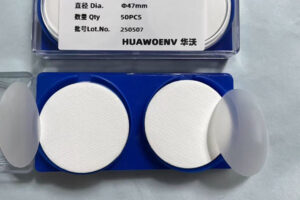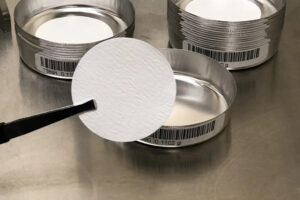

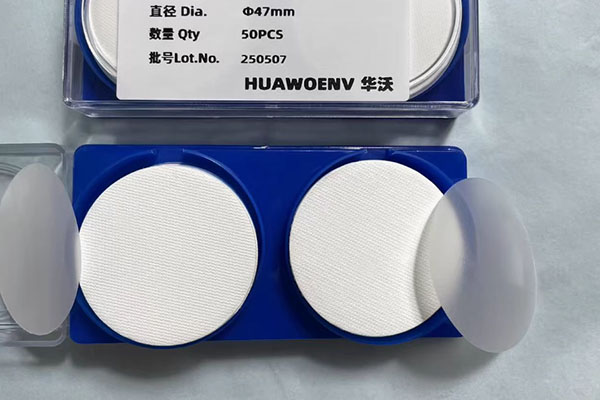
Glass microfiber prefilters are essential for many laboratory and industrial processes. But with so many options available, what makes Grade GF/D filters unique and why are they highly recommended?
Grade GF/D glass microfiber prefilters are thick, binder-free borosilicate glass filters with a particle retention rate of 2.7 µm[^1]. They offer increased flow rates, high loading capacities[^2], and excellent protection for finely retentive membranes[^3], making them ideal for air filtration and gravimetric analysis involving ignition[^4].
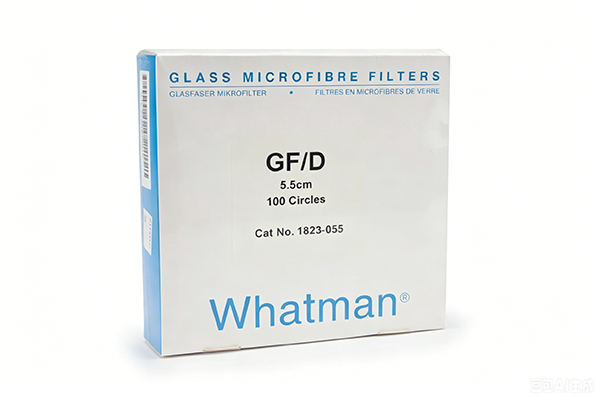
If you’re considering GF/D prefilters for your applications, stick around. I'll break down everything you need to know about their specifications, performance advantages, and common uses. Let’s dive in.
Why are Grade GF/D Glass Microfiber PreFilters ideal for filtration needs?
Having the right prefilter can make a significant difference in filtration efficiency. But what makes GF/D stand out?
GF/D prefilters are designed to handle high particle loads while maintaining fast filtration speeds. Their thick structure increases loading capacity, and they are able to withstand temperatures up to 550°C[^5], which is crucial for processes involving ignition.
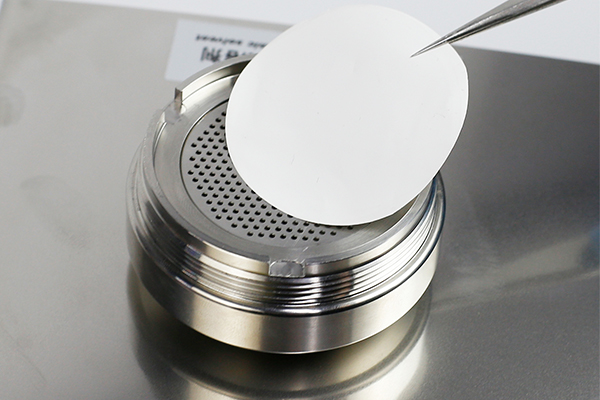
The combination of efficiency and durability makes these filters perfect for air filtration and volatile material analysis. Below, I’ll provide more details about their unique properties and performance.
Material Composition and Design
GF/D prefilters are made of binder-free borosilicate glass microfiber. This means they are free of added adhesives or binders, ensuring they won’t interfere with analytical results[^6]. Their 90mm circle diameter and 675 µm thickness[^7] provide a robust design, capable of handling demanding filtration tasks.
| Specification | Details |
|---|---|
| Material | Borosilicate glass |
| Particle Retention Rate | 2.7 µm |
| Diameter | 90 mm |
| Thickness | 675 µm |
| Maximum Temperature | 550°C |
| [Air Flow Rate | 2.6 s/100 ml/in²](https://macro.lsu.edu/howto/Whatman-filtration-product-guide.pdf)[^8] |
| [Water Flow Rate | 681 ml/min](https://macro.lsu.edu/howto/Whatman-filtration-product-guide.pdf)[^9] |
These specifications highlight why GF/D filters are reliable for laboratory and industrial settings.
Performance Benefits
GF/D prefilters are highly efficient due to their enhanced flow rate and high loading capacity. These features are particularly valuable when dealing with solutions that contain a high concentration of particulate matter. Additionally, they offer protection to more delicate, finely retentive membranes by acting as a buffer.
For even better efficiency, GF/D filters can be used in combination with GF/B filters[^10]. This layered approach ensures longer operational life for the membranes and more effective particle capture.
How do GF/D prefilters perform in specific applications?
When choosing a filter, it’s crucial to consider its intended application. What specific roles do GF/D filters excel in?
GF/D glass microfiber prefilters are commonly used for air filtration, water sample testing, solution clarification, and gravimetric analysis of volatile materials[^11]. They are also highly effective in prefiltering processes for chromatography.
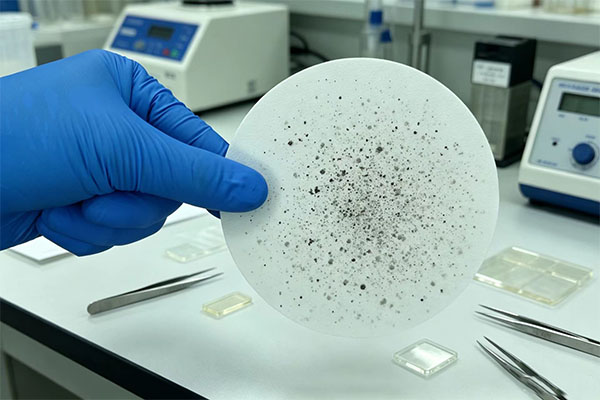
Applications in Air Filtration and Gravimetric Analysis
GF/D filters are widely used in air filtration tasks, such as the collection of dust particles or airborne contaminants. Their high heat resistance (up to 550°C) makes them suitable for gravimetric analysis involving ignition, where volatile materials need to be measured precisely.
For example, in environmental monitoring, GF/D filters can capture airborne particulates like PM10 and TSP for mass concentration and elemental analysis[^12]. Their high particle retention rate ensures accuracy and reliability during these critical tasks.
Applications in Water Testing and Solution Clarification
In the context of water sample testing, GF/D filters are excellent for prefiltering suspended solids or sediment from samples. Their fast water flow rate of 681 ml/min ensures a quick and efficient filtration process.
They are also widely used in solution clarification, especially in laboratories conducting chromatographic analysis. The thick glass microfiber design helps remove impurities, ensuring sample clarity and consistency before further testing or processing.
Enhancing Efficiency with Layered Filtration
For demanding filtration tasks, GF/D filters can be paired with GF/B filters to create a multilayer filtration system. This layered method extends filter life and improves the overall efficiency of particle removal. By strategically combining these filters, users can achieve optimal filtration performance while reducing operational costs.
Why choose HuaEnv as your supplier for glass microfiber filters?
If you’re exploring cost-effective alternatives to premium brands like Whatman or Ahlstrom, HuaEnv offers an excellent solution.
HuaEnv is a leading manufacturer of glass microfiber filters in China, specializing in producing high-quality alternatives to brands like GF/A, GF/B, GF/C, GF/D, GF/F, 934-AH, and EPM2000. They provide free samples and are actively seeking distributors in the lab filtration market.
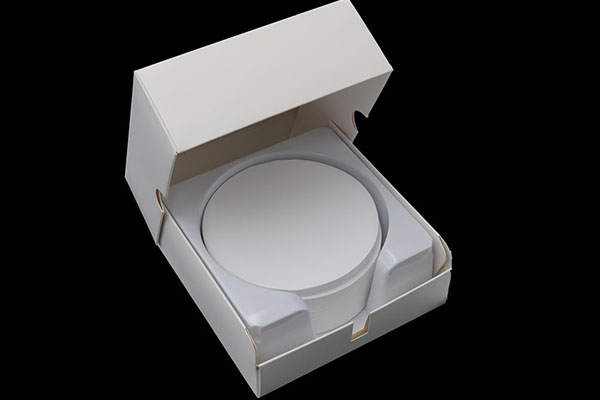
HuaEnv ensures that their filters, including GF/D equivalents, adhere to strict quality standards. Whether you need prefilters for air monitoring, water testing, or environmental analysis, HuaEnv can provide customizable solutions at competitive prices. Their ability to offer small-batch orders and free samples makes them an ideal choice for distributors and laboratories.
Conclusion
Grade GF/D glass microfiber prefilters are versatile, efficient, and durable, making them ideal for various filtration needs. With specifications that include a particle retention rate of 2.7 µm and heat resistance of up to 550°C, they stand out as reliable tools for air filtration, water testing, and gravimetric analysis. When you pair their performance with HuaEnv’s expertise in manufacturing, it’s clear why GF/D filters are a go-to choice for laboratories worldwide.
[^1]: "[PDF] Whatman filtration Product guide", https://macro.lsu.edu/howto/Whatman-filtration-product-guide.pdf. A technical data sheet for Grade GF/D glass microfiber filters lists the material as binder-free borosilicate glass microfiber and reports a nominal particle retention of 2.7 µm. Evidence role: definition; source type: other. Supports: Grade GF/D filters are thick, binder-free borosilicate glass filters with a particle retention rate of 2.7 µm..
[^2]: "Grade GF/D Glass Microfiber PreFilters, 47mm Circle 100/Pk", https://huaenv.com/grade-gf-d-glass-microfiber-prefilters-47mm-circle-100-pk-what-makes-them-stand-out/. Manufacturer and laboratory filtration references describe Grade GF/D as a relatively thick glass microfiber prefilter intended for high loading and comparatively rapid flow in particulate-rich samples. Evidence role: general_support; source type: other. Supports: GF/D filters offer increased flow rates and high loading capacities.. Scope note: Such sources typically support comparative performance within a product family rather than proving superior performance in every application matrix.
[^3]: "A Novel Empirical Fractional Approach for Modeling the Clogging of ...", https://pmc.ncbi.nlm.nih.gov/articles/PMC12029217/. Filtration guidance explains that a coarse prefilter can intercept larger particulates before they reach a finer membrane, thereby reducing membrane clogging and extending useful filtration time. Evidence role: mechanism; source type: education. Supports: GF/D prefilters protect finely retentive membranes by removing larger particles before the final membrane stage.. Scope note: This supports the general prefiltration mechanism; it does not quantify the degree of protection provided by GF/D in a specific workflow.
[^4]: "[PDF] Method IO-3.1 - Selection, Preparation and Extraction of Filter Material", https://www.epa.gov/sites/default/files/2019-11/documents/mthd-3-1.pdf. Air-monitoring and gravimetric-analysis methods commonly use glass-fiber or glass-microfiber filters because they can collect particulate matter and tolerate high-temperature conditioning or ignition steps. Evidence role: general_support; source type: government. Supports: GF/D filters are suitable for air filtration and gravimetric analysis involving ignition.. Scope note: This provides contextual support for glass-fiber filters in such applications; it may not establish that GF/D is uniquely ideal for all air or ignition-based gravimetric methods.
[^5]: "Glass Fiber Filters and Prefilters - Fisher Scientific", https://www.fishersci.com/us/en/browse/90179025/glass-fiber-filters-and-prefilters. Technical specifications for binder-free glass microfiber filters report maximum operating or ignition temperatures around 500–550°C, supporting their use in high-temperature gravimetric preparation. Evidence role: statistic; source type: other. Supports: GF/D filters can withstand temperatures up to 550°C.. Scope note: The cited temperature limit should be checked for the exact Grade GF/D product and supplier because limits can vary by manufacturer or test condition.
[^6]: "[PDF] Method IO-3.1 - Selection, Preparation and Extraction of Filter Material", https://www.epa.gov/sites/default/files/2019-11/documents/mthd-3-1.pdf. Analytical filtration references note that binder-free glass microfiber media are used where added binders or extractables could affect gravimetric or chemical measurements. Evidence role: mechanism; source type: research. Supports: Binder-free glass microfiber filters reduce the risk that binders or additives will interfere with analytical results.. Scope note: This supports the rationale for binder-free media generally; it does not prove absence of interference for every analyte or method.
[^7]: "Grade GF/D Glass Microfiber PreFilters, 90mm Circle, 25 ...", https://www.tischscientific.com/filter-papers-glass-microfiber-filters-1823-090?srsltid=AfmBOopfNlW8azNZKwCPa-C3lOy2tyzPRDmi4fqby17HOHzfDR46Trka. A Grade GF/D product specification table lists available circular diameters, including 90 mm, and gives the nominal filter thickness as about 675 µm. Evidence role: statistic; source type: other. Supports: The discussed GF/D filter format has a 90 mm diameter and a nominal thickness of 675 µm.. Scope note: Diameter is usually an ordering format rather than an intrinsic grade property, so the source should match the exact product size discussed.
[^8]: "[PDF] Whatman filtration Product guide", https://macro.lsu.edu/howto/Whatman-filtration-product-guide.pdf. Grade GF/D technical specifications report an air-flow measure in seconds per 100 mL per square inch, which can verify the stated 2.6 s/100 mL/in² value if the same test method is used. Evidence role: statistic; source type: other. Supports: The GF/D filter has an air flow rate of 2.6 s/100 mL/in² under the cited specification method.. Scope note: Air-flow values depend on the test pressure and method, so the citation should identify the measurement convention used by the specification sheet.
[^9]: "[PDF] Whatman filtration Product guide", https://macro.lsu.edu/howto/Whatman-filtration-product-guide.pdf. A product specification source should be used to confirm the reported water-flow value for Grade GF/D and clarify the correct units, which are commonly reported as mL/min under specified conditions rather than as squared units. Evidence role: statistic; source type: other. Supports: The GF/D filter has a reported water-flow rate of 681 in the relevant specification units.. Scope note: The article’s unit notation appears unusual; the citation may reveal that the value or unit needs correction.
[^10]: "What is a Whatman GF/ D filter?", https://huaenv.com/what-is-a-whatman-gf-d-filter/. Filtration product guidance describes using coarser glass microfiber prefilters in series with finer glass microfiber filters to stage particle removal and reduce premature clogging. Evidence role: mechanism; source type: other. Supports: GF/D filters can be paired with GF/B filters in a layered filtration approach.. Scope note: This supports the general staged-filtration practice; the specific GF/D–GF/B pairing should be confirmed in a source that names both grades.
[^11]: "Review of Filters for Air Sampling and Chemical Analysis in Mining ...", https://pmc.ncbi.nlm.nih.gov/articles/PMC10174218/. Laboratory filtration references and glass-microfiber filter specifications list air monitoring, liquid clarification, water-sample preparation, and gravimetric methods among common applications for glass-fiber filter media. Evidence role: general_support; source type: institution. Supports: GF/D glass microfiber prefilters are used in air filtration, water sample testing, solution clarification, and gravimetric analysis of volatile materials.. Scope note: The support is partly contextual unless the source specifically lists Grade GF/D for each named application.
[^12]: "[PDF] Determination PM2.5 Mass and PM Coarse Mass by Gravimetric ...", https://ww2.arb.ca.gov/sites/default/files/2019-02/mld055.pdf. Government and peer-reviewed air-monitoring methods describe collection of PM10 or total suspended particulates on filters for gravimetric mass determination and subsequent elemental analysis. Evidence role: case_reference; source type: government. Supports: Filter media can be used to collect PM10 and TSP for mass concentration and elemental analysis.. Scope note: These methods support filter-based PM10 and TSP analysis generally; they may specify filter materials and handling requirements rather than GF/D specifically.