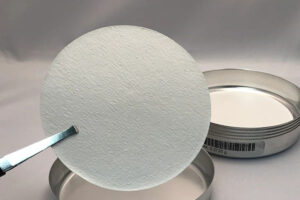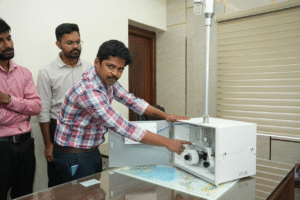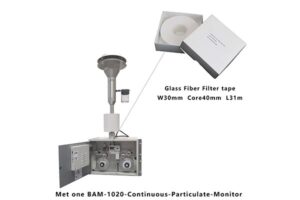


Continuous particulate monitoring is a challenge for many industries.[^1] Finding the right materials, like reliable filter tapes, can make or break air quality assessments.
The Envea Fibreglass Tape, used in suspended particulate monitors, ensures accuracy and long-term performance by leveraging beta ray attenuation measurement techniques. Its 35mm x 30m x 70mm dimensions offer three years of autonomy for daily sampling[^2].
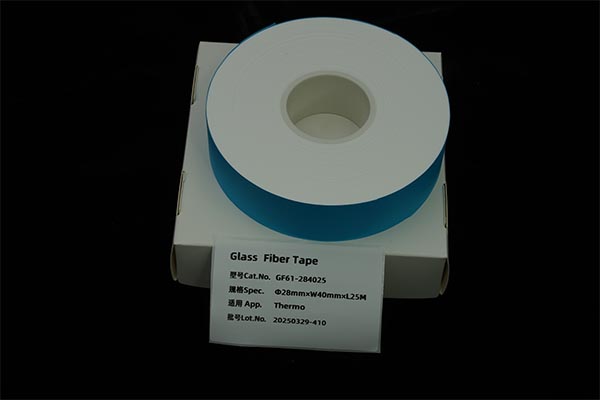
This article dives into the critical features of this filter tape, its applications, and how HuaEnv ensures it meets industry standards.
What is the principle behind beta ray attenuation measurement in particulate monitoring?
Continuous monitoring requires precision, and beta ray attenuation provides a proven method for measuring particulate concentration[^3].
Beta rays are attenuated based on the mass of the particulate sample collected on the fibreglass tape.[^4] Radiation absorption corresponds directly to sample density[^5], ensuring reliable fine dust concentration measurement.
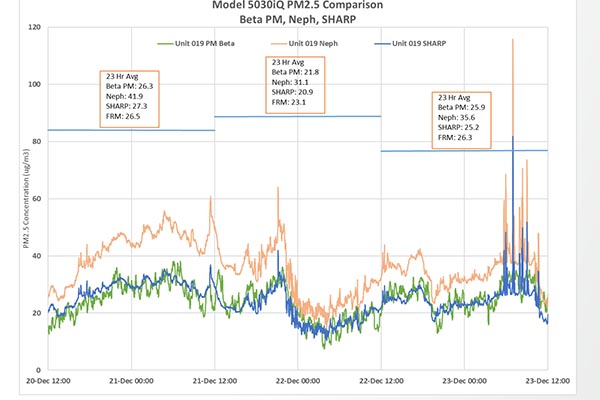
The fibreglass tape serves as the collection medium. When exposed to the radiation source, the tape absorbs low-energy beta rays proportionally to the particulate matter it holds. This makes it independent of the physical or chemical composition of the sample[^6]—a crucial feature in environmental monitoring.
How does HuaEnv's fibreglass tape ensure compatibility with standard systems?
Choosing the wrong filter tape can disrupt monitoring systems. HuaEnv's tapes are specifically crafted for seamless compatibility with leading systems.
HuaEnv offers filter tapes that precisely match the dimensions and operational requirements of devices like the Metone BAM1020, Thermo Scientific 5014i, Envea MP101M, and HORIBA PM sampling monitors[^7].
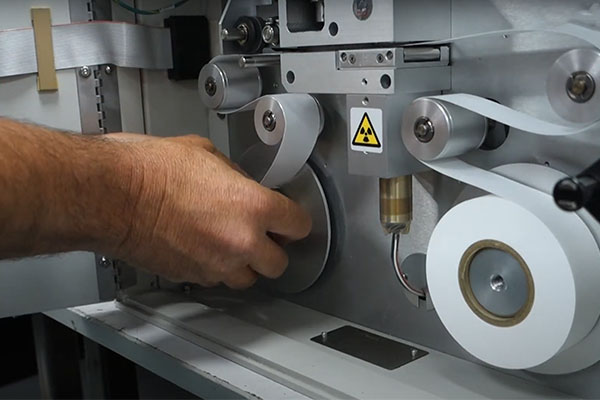
For example, HuaEnv's tape measures width 35mm, length 30m, with a core of 70mm diameter, aligning perfectly with Envea monitors. Compatibility ensures smooth operation without requiring adjustments or risking inaccurate readings.[^8] This adaptability also extends to PM sampling filters and PTFE membranes for low-concentration weight measurements.
Comparing HuaEnv filter tape specifications to common industry standards:
| Feature | HuaEnv Tape | Metone BAM1020 Filter Tape | Thermo Scientific 5014i Tape |
|---|---|---|---|
| Width | 35mm | 30mm | 28mm |
| Length | 30m | 30m | 17m |
| Core Diameter | 70mm | 40mm | 40mm |
| Material | Fibreglass | Fibreglass | Fibreglass |
| Sampling Autonomy | 3 years | Varies | Varies |
Why is durability important for continuous particulate monitors?
Continuous sampling demands materials that withstand daily use over long periods.
HuaEnv fibreglass tapes provide three years of autonomy for uninterrupted daily sampling, reducing downtime and maintenance costs[^9].
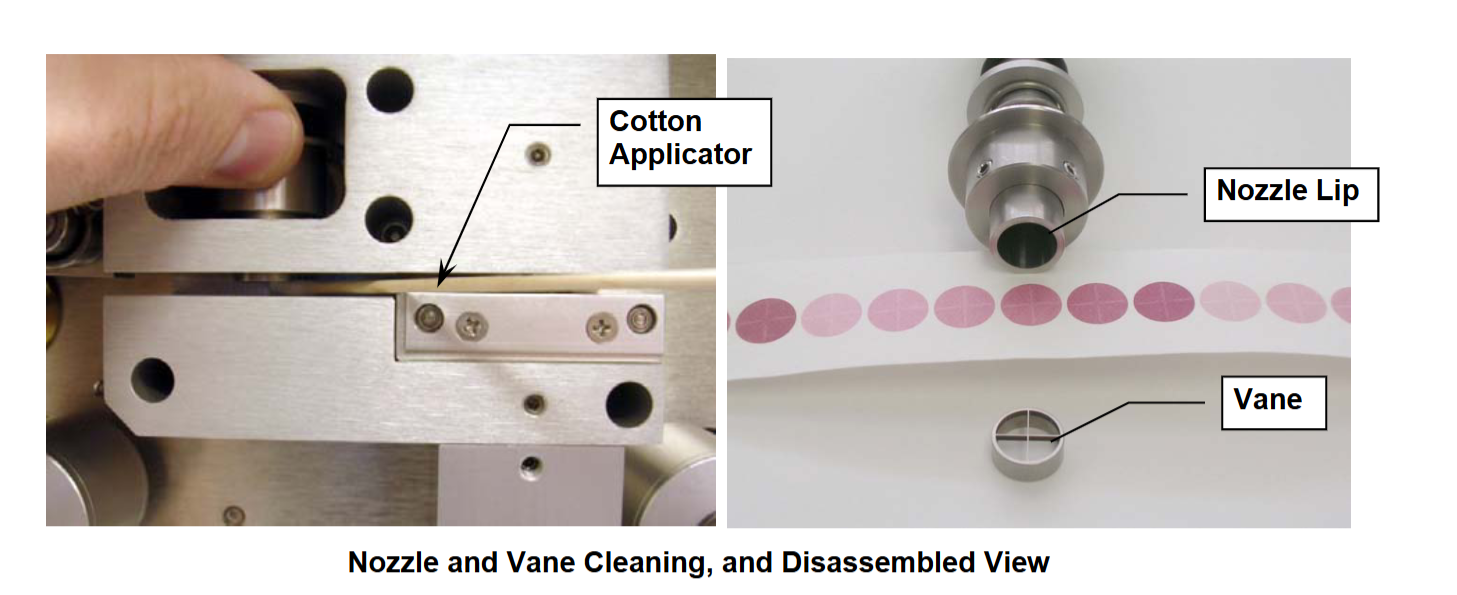
Durability ensures consistent performance under challenging environmental conditions, preventing interruptions in air quality monitoring. This long lifespan is particularly significant for devices operating in remote areas where frequent maintenance is not practical[^10].
HuaEnv’s advanced manufacturing processes, including precision cutting and strict quality control, ensure that each tape roll maintains structural integrity despite constant use.
How does HuaEnv provide added value to distributors and clients?
The quality of the fibreglass tape is not the only advantage. HuaEnv goes beyond product manufacturing to support distributors and clients.
HuaEnv actively seeks distributors worldwide, providing free samples for testing and offering technical guidance to ensure optimal application of its products.

This approach helps clients verify the compatibility of HuaEnv products with their systems before committing to bulk orders, minimizing risks and enabling informed procurement decisions. HuaEnv also ensures compliance with international standards, offering full certification and traceable documentation.
Distributors benefit from flexible solutions tailored to regional market demands, ensuring they deliver cost-effective, high-performance monitoring materials to their customers.
Conclusion
HuaEnv's fibreglass tape for continuous particulate monitors combines cutting-edge technology, durability, and compatibility with standard systems. Backed by robust support for distributors, these tapes ensure reliable environmental monitoring while reducing operational costs.
[^1]: "Quality Assurance Guidance 2.12 - Monitoring PM2.5 In ...", https://www.epa.gov/sites/default/files/2021-03/documents/p100oi8x.pdf. A government or standards-based air-monitoring source can document that particulate monitoring is used across regulated industrial and environmental contexts and that continuous operation involves instrument, calibration, and maintenance constraints. Evidence role: general_support; source type: government. Supports: Continuous particulate monitoring presents practical challenges across multiple industries.. Scope note: Such a source would support the general monitoring challenge, not the specific performance of any HuaEnv product.
[^2]: "[PDF] MP101M - Envea", https://envea.global/design/pdf/envea_mp101m_pm2.5_pm10_suspended-particulate-monitor_en.pdf. A product specification or instrument consumables document can substantiate the tape dimensions and stated operational autonomy for the specified Envea particulate monitor configuration. Evidence role: case_reference; source type: other. Supports: The specified 35 mm × 30 m × 70 mm tape configuration provides approximately three years of autonomy for daily sampling in the referenced monitor setup.. Scope note: Autonomy depends on the monitor model, tape-advance interval, sampling schedule, and operating conditions; the source would not necessarily generalize to all daily sampling programs.
[^3]: "[PDF] Method IO-1.1 - Determination of PM10 in Ambient Air Using ... - EPA", https://www.epa.gov/sites/default/files/2019-11/documents/mthd-1-1.pdf. An air-monitoring reference or regulatory method description can support that beta attenuation monitors estimate particulate mass concentration by measuring beta-ray transmission through collected aerosol deposits. Evidence role: definition; source type: government. Supports: Beta ray attenuation is an established method for measuring particulate concentration.. Scope note: This supports the measurement principle and regulatory use of the method, not the accuracy of a particular filter tape brand.
[^4]: "[PDF] Met One BAM 1020 Operating Procedure", https://apps.ecology.wa.gov/publications/documents/1702005.pdf. A technical paper or reference on beta attenuation monitoring can support that attenuation of beta radiation through a filter deposit is related to the areal mass of particulate matter collected on the filter medium. Evidence role: mechanism; source type: paper. Supports: Beta-ray attenuation depends on the mass of particulate matter collected on the filter tape.. Scope note: The relationship is instrument-specific and requires calibration and correction for background filter attenuation and environmental effects.
[^5]: "[PDF] Met One BAM 1020 Operating Procedure", https://apps.ecology.wa.gov/publications/documents/1702005.pdf. A physics or instrumentation source can show that beta attenuation is correlated with mass loading or areal density on a filter, forming the basis for particulate mass estimation. Evidence role: mechanism; source type: research. Supports: Radiation absorption in beta attenuation monitoring is correlated with particulate sample density or mass loading.. Scope note: The word “directly” should be treated carefully because practical instruments use calibration curves and corrections rather than a perfectly direct uncorrected relationship.
[^6]: "Beta attenuation monitoring", https://en.wikipedia.org/wiki/Beta_attenuation_monitoring. A technical source can support that beta attenuation primarily measures collected mass and is less dependent on aerosol optical properties or particle composition than some other methods. Evidence role: mechanism; source type: paper. Supports: Beta attenuation measurement is relatively independent of the physical or chemical composition of particulate samples.. Scope note: This is contextual support only; beta attenuation can still be affected by factors such as particle composition, water content, filter loading, and instrument calibration.
[^7]: "Met One BAM 1020 Operating Procedure", https://apps.ecology.wa.gov/publications/documents/1702005.pdf. Instrument manuals or official specifications can verify the listed monitor models and their filter-tape or sampling-media requirements, providing context for dimensional compatibility claims. Evidence role: case_reference; source type: other. Supports: The named particulate monitors have defined consumable-media requirements relevant to filter-tape compatibility.. Scope note: Such sources would verify the requirements of the named monitors but would not independently prove that HuaEnv tapes perform equivalently in those instruments.
[^8]: "[PDF] PARTICULATE MONITOR OPERATION MANUAL", https://www.env.nm.gov/wp-content/uploads/sites/2/2018/02/E-BAM_Manual_RevL.pdf. A metrology or instrument-manual source can support that particulate monitors require consumables meeting specified dimensions and material properties to maintain proper tape advance, sampling geometry, and measurement validity. Evidence role: mechanism; source type: government. Supports: Using consumables that match instrument specifications helps prevent operational problems and measurement errors in particulate monitors.. Scope note: The source would support the general importance of compatible consumables, not confirm that any specific third-party tape eliminates operational or accuracy risks.
[^9]: "[PDF] Met One BAM 1020 Operating Procedure", https://apps.ecology.wa.gov/publications/documents/1702005.pdf. An instrument specification or air-monitoring operations guide can support that longer consumable autonomy reduces the frequency of site visits and routine consumable replacement in continuous monitoring systems. Evidence role: general_support; source type: institution. Supports: Longer filter-tape autonomy can reduce routine maintenance interventions and downtime in continuous particulate monitoring.. Scope note: The reduction in maintenance cost is an inferred operational benefit and would depend on labor rates, site access, sampling frequency, and failure rates.
[^10]: "Importance of Punctual Monitoring to Evaluate the Health ...", https://pmc.ncbi.nlm.nih.gov/articles/PMC9518414/. A government, university, or research-institution source on remote air-quality monitoring can document that remote monitoring sites face logistical constraints such as travel, power, servicing, and calibration access. Evidence role: general_support; source type: research. Supports: Remote particulate-monitoring sites benefit from equipment and consumables that reduce the need for frequent maintenance visits.. Scope note: This supports the general relevance of long service intervals at remote sites, not the specific durability of HuaEnv tape.