

High-volume air sampling is crucial for accurate environmental monitoring.[^1] But are you using the right filters for your sampling needs?
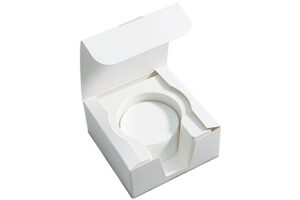
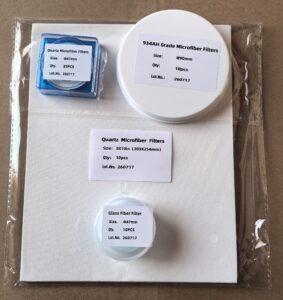
EPM2000 glass fiber filters are designed specifically for high-volume TSP/PM10 sampling, offering high purity and stable filtration performance. These filters are produced without adhesive, making them a reliable choice for environmental monitoring.

Finding the right filter can be challenging. With various brands available, it's essential to choose one that meets your specific requirements. I have seen firsthand how well EPM2000 filters perform in demanding environments. Their rapid availability from Hua Env ensures that you won't face delays in your projects.
Why Choose EPM2000 for High-Volume Sampling?
High-volume air sampling requires filters that can handle large volumes without compromising quality. EPM2000 filters meet these needs effectively. They are made from borosilicate glass fiber, which provides excellent filtration without any adhesive. This means you get a pure sample without contamination.[^2]
The EPM2000 filter is designed to meet EPA standards for TSP/PM10 sampling.[^3] Its unique construction allows for high dirt-holding capacity and low pressure drop[^4]. This means that even during extended sampling periods, you can count on reliable results.

Using the EPM2000 filter can be a game-changer in your sampling process. Its efficiency allows you to capture significant amounts of particulate matter, making it ideal for air quality studies and environmental assessments. The absence of adhesives further enhances its reliability, ensuring that your samples remain uncontaminated.
Advantages of EPM2000 Filters
- High Filtration Efficiency: EPM2000 filters capture fine particles effectively.
- Durability: These filters are designed to withstand high-volume sampling without breaking down.
- Cost-Effective: Compared to other high-end brands like Whatman, EPM2000 offers a more budget-friendly option without sacrificing performance.
When I switched to EPM2000 filters, I noticed a significant improvement in the clarity of my samples. The filters are easy to handle and set up, which saves time in the field.
Conclusion
EPM2000 glass fiber filters are an excellent choice for high-volume sampling. Their unique design offers many advantages, making them ideal for environmental monitoring.
[^1]: "Appendix J to Part 50, Title 40 -- Reference Method for the ...", https://www.ecfr.gov/current/title-40/chapter-I/subchapter-C/part-50/appendix-Appendix%20J%20to%20Part%2050. EPA reference-method documentation for suspended particulate matter describes high-volume air samplers as established instruments for collecting ambient particulate matter on filters for subsequent mass determination, supporting the role of this approach in air-quality monitoring. Evidence role: general_support; source type: government. Supports: High-volume air sampling is important for accurate environmental monitoring.. Scope note: This supports the monitoring relevance of high-volume sampling generally, not the performance of any specific filter brand.
[^2]: "Review of Filters for Air Sampling and Chemical Analysis in ...", https://pmc.ncbi.nlm.nih.gov/articles/PMC10174218/. Air-sampling and analytical-method guidance commonly emphasizes minimizing filter blanks and extraneous materials because contaminants from the filter medium can bias gravimetric or chemical measurements. Evidence role: mechanism; source type: government. Supports: Avoiding adhesive or binder materials can reduce potential contamination in particulate-matter sampling filters.. Scope note: This supports the rationale for avoiding contaminating filter constituents in general, but it does not prove that adhesive-free EPM2000 filters always produce uncontaminated samples.
[^3]: "Appendix J to Part 50, Title 40 -- Reference Method for the ... - eCFR", https://www.ecfr.gov/current/title-40/chapter-I/subchapter-C/part-50/appendix-Appendix%20J%20to%20Part%2050. EPA reference-method regulations for particulate matter specify performance and operational requirements for samplers and filter media used in ambient TSP/PM10 measurement, providing the relevant standards framework for evaluating filter suitability. Evidence role: definition; source type: government. Supports: EPA standards exist for TSP/PM10 sampling and provide criteria against which filters can be evaluated.. Scope note: Such sources define EPA requirements but would not, by themselves, verify that EPM2000 filters comply without product-specific test data or certification.
[^4]: "Characteristics of Air Filters - PMC - NIH", https://pmc.ncbi.nlm.nih.gov/articles/PMC7498932/. Filtration literature describes particle loading as increasing pressure drop across a filter, while higher dust-holding capacity and lower resistance help maintain airflow during sampling. Evidence role: mechanism; source type: paper. Supports: High dirt-holding capacity and low pressure drop are desirable filter properties for extended high-volume sampling.. Scope note: This supports the filtration principle behind the claim, not the specific dirt-holding capacity or pressure-drop values of EPM2000 filters.