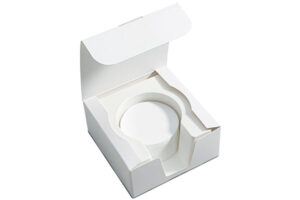

When it comes to laboratory filtration, selecting the right filter paper can be a challenge. With so many options, how do you know which one fits your needs? Let’s explore the GF/C filter paper, a popular choice for high-efficiency filtration.
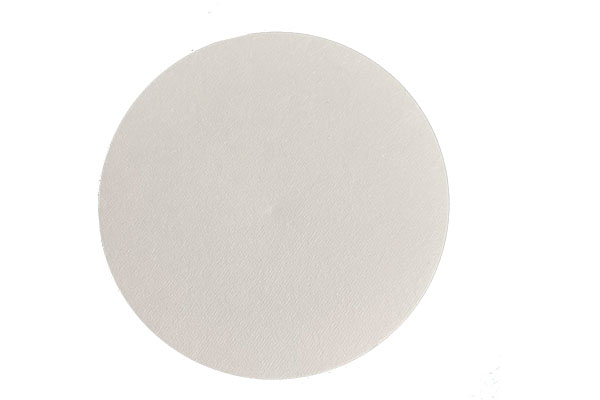
GF/C filter paper is a 47mm glass microfiber filter made from 100% borosilicate glass fibers[^1]. It is binder-free[^2], making it suitable for applications requiring high particle retention down to 1.2 µm[^3]. With a nominal thickness of 260 µm and a water flow rate of 105 ml/min[^4], it is widely used for suspended solids analysis in water testing[^5].
GF/C filters offer a combination of high performance and versatility. Their depth structure provides a large surface area[^6], ensuring excellent impurity retention while maintaining low filtration resistance. Let’s dive deeper into why these filters are so effective.
Why Are Glass Microfiber Filters So Unique?
Laboratory filtration often requires materials that can handle fine particles effectively. But not all filters are up to the task. Glass microfiber filters like GF/C stand out for their unique properties.
Glass microfiber filters are made from borosilicate glass fibers, offering exceptional retention capacity for particles as small as 1 µm in liquids and <1 µm in air[^7]. They are temperature-resistant up to 500°C[^8], making them suitable for a wide range of applications.

Unlike traditional filters, glass microfiber filters use the electrostatic interaction between the glass fibers and particles[^9]. This enhances their ability to trap even aerosols with particle diameters <1 µm. Additionally, the absence of binders ensures no interference with sensitive analytical methods[^10]. This makes GF/C filters a favored choice for both potable and waste water testing.
| Feature | GF/C Specifications |
|---|---|
| Particle Retention | 1.2 µm |
| Nominal Thickness | 260 µm |
| Max Temperature | 550°C |
| Basis Weight | 53 g/m² |
| Water Flow Rate | 105 ml/min |
| Air Flow Rate | 6.7 s/100 ml/in² |
How Does GF/C Compare to Other Grades?
When choosing a glass microfiber filter, it’s important to understand the differences between grades. How does GF/C compare to similar options like GF/A, GF/B, and GF/D?
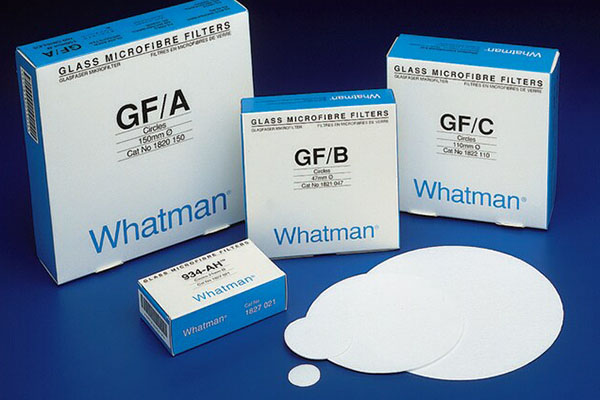
GF/C offers a balance between flow rate and particle retention[^11], making it ideal for applications like suspended solids analysis. GF/A provides higher retention for smaller particles, while GF/B and GF/D cater to specific flow and retention needs.
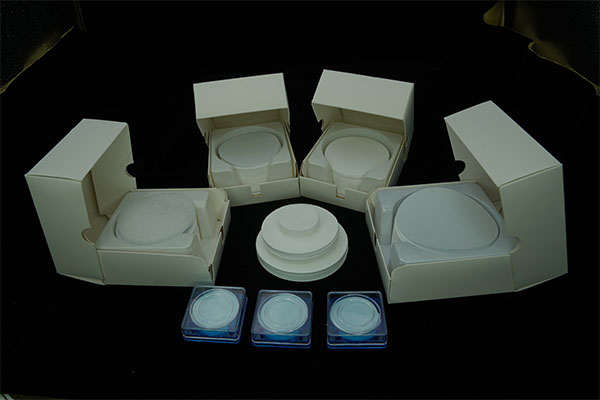
For instance, GF/A has a finer retention capacity than GF/C, which might be more suitable for very fine particulate analysis. On the other hand, GF/B and GF/D have slightly coarser retention properties, making them better suited for applications requiring faster filtration rates.
| Grade | Retention Capacity | Applications |
|---|---|---|
| GF/A | 1.6 µm | Fine particulate analysis |
| GF/B | 4.7 µm | High-flow filtration |
| GF/C | 1.2 µm | Suspended solids in water testing |
| GF/D | 2.7 µm | Pre-filtration for liquids |
Can GF/C Filters Replace Leading Brands Like Whatman?
When considering alternatives to well-known brands, the question remains: Can a different supplier provide the same quality at a better price? The answer is yes.
HuaEnv manufactures glass fiber filters equivalent to Whatman’s GF/C filters, offering the same high quality and performance. With customizable options and free samples, HuaEnv filters are a cost-effective alternative with excellent reliability.
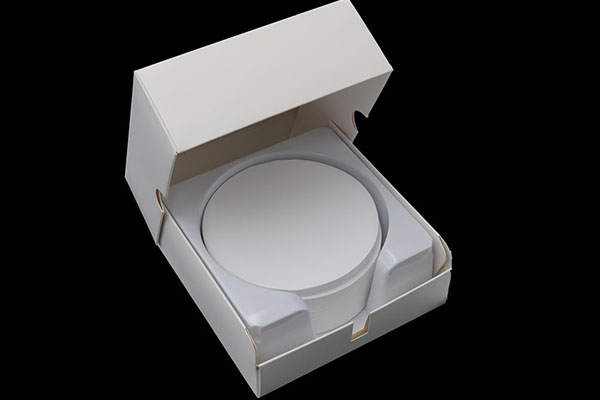
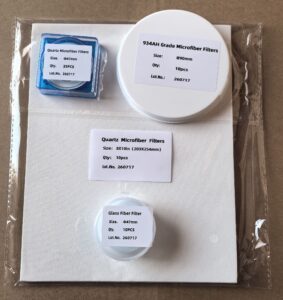
HuaEnv specializes in producing filters that meet industry standards while providing flexibility. You can order GF/C filters in both circle and sheet formats, and select from various sizes. Plus, HuaEnv offers other glass microfiber filters like GF/A, GF/B, GF/D, 934-AH, and EPM2000. This range ensures a solution for almost any filtration need, whether it’s air quality monitoring, water testing, or laboratory applications.
What Are the Key Applications of GF/C Filters?
Filters like GF/C find utility across various fields, especially where precision and reliability are critical. Here are some common applications:
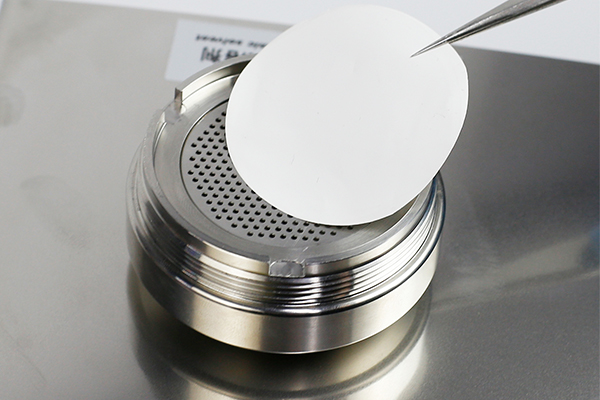
GF/C filters are widely used in total suspended solids analysis for both potable and waste water, as well as in applications requiring high-temperature resistance and fine particle retention.
Environmental Monitoring
GF/C filters are essential in air quality and water testing. For instance:
- Air Monitoring: Capture fine particulate matter in air samples for environmental studies.
- Water Testing: Analyze total suspended solids in potable and waste water.
Industrial and Scientific Use
Industries like pharmaceuticals and electronics rely on GF/C filters to maintain product quality. Examples include:
- Pharmaceuticals: Filter out particles in drug formulations.
- Electronics: Ensure purity in production processes.
Other Specialized Uses
GF/C filters also shine in high-temperature applications and aerosol studies. Their borosilicate glass construction ensures durability under extreme conditions.
| Application | Filter Role |
|---|---|
| Air Quality Monitoring | Capture PM2.5 and smaller particles[^12] |
| Water Testing | Analyze suspended solids |
| High-Temperature Filtration | Operate at up to 500°C |
| Aerosol Studies | Separate fine aerosols |
Conclusion
GF/C filter paper offers exceptional filtration performance, especially in applications requiring fine particle retention and high-temperature resistance. With alternatives like HuaEnv, you can enjoy the same quality as leading brands like Whatman, but with added customization and cost savings. Whether you’re testing water quality, monitoring air, or conducting complex lab experiments, GF/C filters are a reliable choice.
[^1]: "Whatman glass microfiber filters, binder free, Grade GF/C ...", https://www.sigmaaldrich.com/US/en/product/aldrich/wha1822110?srsltid=AfmBOooCgcpGY2wiSjhZ5aauEDDrzuARo6EoUxhgZ0BhZ0JfCrZ0QfkU. A technical specification for GF/C glass microfiber filters identifies the medium as borosilicate glass microfiber, supporting the material-composition claim; the source would not by itself verify equivalence among different manufacturers. Evidence role: definition; source type: other. Supports: GF/C filter paper is made from borosilicate glass fibers.. Scope note: Supports the stated material for a specified GF/C product line, not all products marketed as GF/C by every supplier.
[^2]: "Whatman™ Filter Paper Grade GF/C Microfiber Glass Filter, Binder ...", https://www.cytivalifesciences.com/en/us/products/items/whatman-filter-paper-grade-gf-c-microfiber-glass-filter-binder-free-p-09618. A GF/C filter specification that states the filter is manufactured without binders would support the claim that the medium is binder-free; it would not demonstrate performance in every analytical method. Evidence role: definition; source type: other. Supports: GF/C filter paper is binder-free.. Scope note: Directly supports binder-free construction only for the documented filter grade or product line.
[^3]: "Grade GF/C Glass Microfiber Filter Papers, 1.2um, 50mm Dia ...", https://scientificfilters.com/filter-papers-glass-microfiber-filters-1822-050. A manufacturer or standards-based technical data sheet listing GF/C nominal particle retention as 1.2 µm would support the stated retention rating; nominal retention values are method-dependent and should not be read as an absolute cutoff. Evidence role: definition; source type: other. Supports: GF/C filters have nominal particle retention down to 1.2 µm.. Scope note: Nominal particle retention is not equivalent to complete exclusion of all particles below or above that size.
[^4]: "Grade GF/C Glass Microfiber Filter Papers, Rinse Dry, 4.7 cm, (100/Pk)", https://scientificfilters.com/glass-microfibre-filters-2822-047. A GF/C product specification reporting nominal thickness and water-flow rate would support these numerical values; such values may vary with test method, filter diameter, and manufacturing tolerance. Evidence role: statistic; source type: other. Supports: GF/C filters have a nominal thickness of about 260 µm and a water flow rate of about 105 ml/min.. Scope note: The figures are product- and method-specific and may not apply to all GF/C-format filters.
[^5]: "Method 160.2", https://www.uvm.edu/bwrl/lab_docs/protocols/106.2_TSS_by_gravimetry_(EPA_1971).pdf. A water-quality method or laboratory guidance document specifying glass-fiber filters for suspended-solids determination would support the contextual use of GF/C-type filters in water testing; it may not identify GF/C as the only acceptable grade. Evidence role: case_reference; source type: government. Supports: Glass microfiber filters such as GF/C are used in suspended-solids analysis for water testing.. Scope note: Supports use of glass-fiber filters in suspended-solids methods generally, not exclusive preference for GF/C.
[^6]: "Glass Fiber Filter Discs: Essential Guide & Top Uses", https://cs.grinnell.edu/lunar-note/glass-fiber-filter-discs-essential-guide-and-top-uses-1764800813. A filtration science reference explaining depth filtration in fibrous media would support the statement that glass microfiber filters provide internal surface area for particle capture; it would be contextual rather than a measurement of this specific GF/C filter. Evidence role: mechanism; source type: paper. Supports: The depth structure of glass microfiber filters provides a large surface area for particle capture.. Scope note: Explains the filtration mechanism generally and does not quantify surface area for the named product.
[^7]: "Fabrication of a multi-walled carbon nanotube-deposited glass fiber ...", https://pubmed.ncbi.nlm.nih.gov/21767869/. A technical reference on glass microfiber filter retention in liquid and air sampling would support the stated size range; retention depends on face velocity, particle type, and test protocol. Evidence role: statistic; source type: research. Supports: Glass microfiber filters can retain particles around 1 µm in liquids and submicron particles in air under specified conditions.. Scope note: The size values should be interpreted as nominal or method-dependent retention, not universal capture efficiency.
[^8]: "[PDF] Whatman filtration Product guide", https://macro.lsu.edu/HowTo/Whatman-filtration-product-guide.pdf. A technical datasheet or materials reference for borosilicate glass microfiber filters reporting maximum operating or ignition temperature would support the stated heat resistance; the rating may differ by binder status, filter format, and exposure duration. Evidence role: statistic; source type: other. Supports: Glass microfiber filters can withstand temperatures up to approximately 500°C.. Scope note: Temperature ratings are product-specific and may not imply chemical or mechanical stability under all high-temperature conditions.
[^9]: "Filtration Mechanism of Fine Particle - PMC - NIH", https://pmc.ncbi.nlm.nih.gov/articles/PMC7498895/. A filtration or aerosol-science source describing electrostatic and mechanical capture mechanisms in fibrous filters would support the general mechanism claim; it would not prove the magnitude of electrostatic capture for this GF/C product under all conditions. Evidence role: mechanism; source type: paper. Supports: Electrostatic interactions can contribute to particle capture in glass fiber filtration media.. Scope note: Provides mechanism-level support rather than direct performance data for a specific filter grade.
[^10]: "What Are Glass Microfiber Filters without Binder?", https://huaenv.com/what-are-glass-microfiber-filters-without-binder/. An analytical-method or filter-material reference noting that binder-free glass-fiber filters reduce extractables or chemical interference would support the rationale for using binder-free media; it would not guarantee absence of interference in every assay. Evidence role: mechanism; source type: institution. Supports: Binder-free glass microfiber filters are preferred when binders could interfere with sensitive analytical methods.. Scope note: Supports reduced risk of interference, not absolute noninterference across all sensitive analytical methods.
[^11]: "[PDF] Whatman filtration Product guide", https://macro.lsu.edu/HowTo/Whatman-filtration-product-guide.pdf. A comparative specification table for GF/A, GF/B, GF/C, and GF/D filters would support the statement that GF/C occupies an intermediate position among grades in retention and flow; this is a comparative product-specification claim rather than independent proof of suitability for every application. Evidence role: general_support; source type: other. Supports: GF/C balances particle retention and flow rate relative to other glass microfiber grades.. Scope note: Supports relative specifications among filter grades, not performance in all sample matrices.
[^12]: "[PDF] Method IO-3.1 - Selection, Preparation and Extraction of Filter Material", https://www.epa.gov/sites/default/files/2019-11/documents/mthd-3-1.pdf. An air-monitoring method or aerosol-filtration study describing glass-fiber or quartz-fiber filters for fine particulate sampling would support the contextual use of fibrous filters in PM2.5 collection; it would not necessarily establish that GF/C is the specified filter for regulatory PM2.5 monitoring. Evidence role: case_reference; source type: government. Supports: Fibrous filter media can be used to collect fine particulate matter in air-monitoring applications.. Scope note: Supports the general role of fibrous filters in fine particulate sampling, but regulatory PM2.5 methods may specify different filter materials and performance criteria.