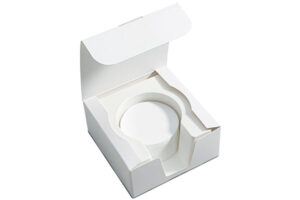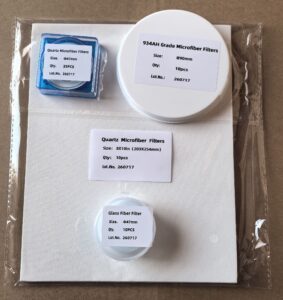


When precision matters, choosing the right filter is essential. But how do you ensure the accuracy of your analytical or gravimetric analysis? The answer lies in binder-free glass microfiber filters.
Glass microfiber filters[^1] without binder are ideal for analytical and gravimetric analyses[^2] as well as prefilters[^3]. They offer fast flow rates, high load capacity, fine particle retention, and chemical resistance[^4] while withstanding temperatures up to 500°C[^5] (grade 550-HA up to 550°C[^6]).
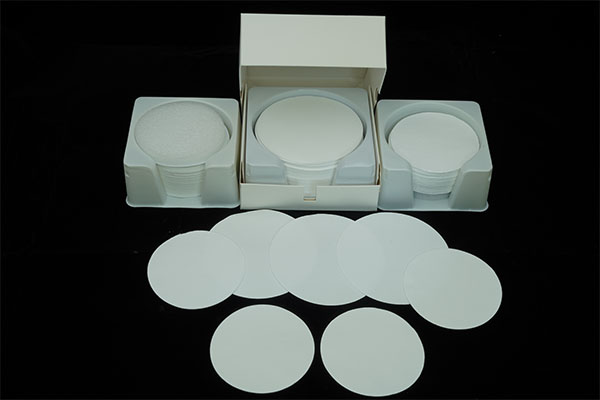
Have you ever struggled with finding filters that don't compromise your results or degrade under harsh conditions? Let's explore how binder-free glass microfiber filters solve this problem.
Why Choose Binder-Free Glass Microfiber Filters?
Filters with binder additives can interfere with sensitive analyses.[^7] This can be frustrating when precision is your top priority.
Binder-free glass microfiber filters are free from chemical additives, making them biologically inert and resistant to most chemicals[^8]. Their unique composition ensures unaltered analytical results and high reliability under extreme conditions[^9].
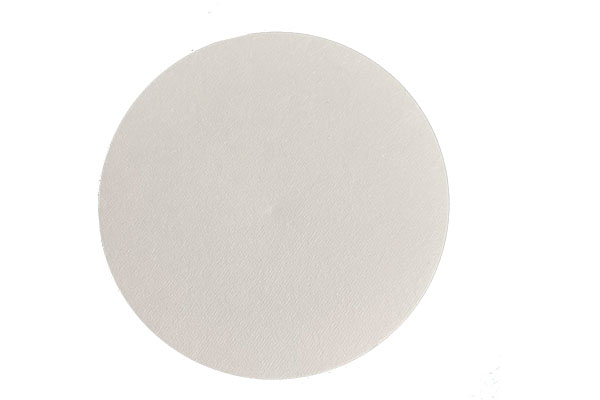
In addition to their purity, these filters have a combination of features that make them versatile, including high temperature resistance and the ability to retain fine particles. Let's dive deeper to understand their unique properties.
Key Features of Binder-Free Glass Microfiber Filters
Binder-free glass microfiber filters stand out due to their distinct advantages. Here's a closer look:
| Feature | Benefit |
|---|---|
| Biologically Inert | Ensures no interference in sensitive biological or chemical analyses. |
| Chemical Resistance | Performs reliably in harsh chemical environments. |
| High Temperature Stability | Withstands up to 500°C (and up to 550°C for grade 550-HA). |
| High Load Capacity | Handles large volumes of particles or contaminants. |
| Fine Particle Retention | Captures even the smallest particles with precision. |
| Fast Flow Rates | Increases efficiency in filtration processes. |
Because of these qualities, binder-free glass microfiber filters are often the first choice for laboratories and industries requiring high performance and reliability.
How Do Glass Microfiber Filters Work?
Understanding the structure and functionality of these filters can help you better appreciate their value.
Binder-free glass microfiber filters are made from fine borosilicate glass fibers[^10]. Their porous structure allows for efficient filtration of fine particles while maintaining fast flow rates and high load capacities[^11].
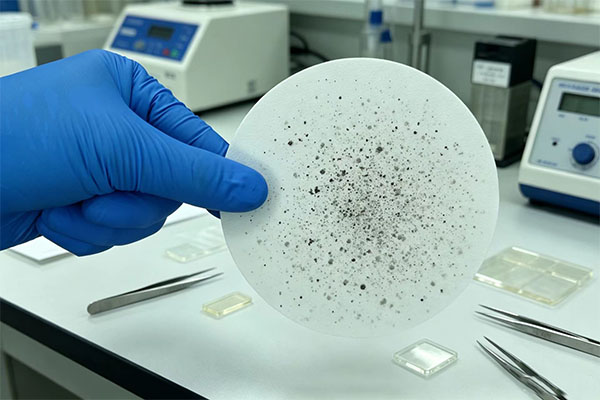
The absence of binders eliminates the risk of contamination[^12], making these filters suitable for a wide range of applications. The next section explores their uses in detail.
What Are the Applications of Binder-Free Glass Microfiber Filters?
Binder-free glass microfiber filters are used in diverse industries, thanks to their unique properties. Here are some common applications:
1. Analytical and Gravimetric Analysis
In analyses where precision is paramount, these filters provide reliable results without compromising on accuracy.
2. Prefiltration
By acting as a prefilter, they enhance the performance of downstream filtration processes.
3. Environmental Monitoring
Used in air and water quality testing[^13], these filters retain fine particulates essential for accurate monitoring.
4. High-Temperature Filtration
Their ability to withstand high temperatures makes them suitable for applications involving hot gases or liquids.
5. Chemical Processing
Their resistance to chemicals ensures durability and reliability in aggressive environments.
| Application | Example Use Case |
|---|---|
| Analytical Analysis | Gravimetric determination of suspended solids in water. |
| Environmental Testing | Airborne particle sampling in pollution monitoring. |
| High-Temp Filtration | Filtration of flue gases at elevated temperatures. |
| Chemical Resistance | Filtration in corrosive chemical reactions. |
Knowing how and where to use these filters can help you achieve better outcomes, whether in research, industrial processes, or environmental monitoring.
How to Choose the Right Grade of Glass Microfiber Filter?
Different applications require different grades of filters. Choosing the right one ensures optimal performance.
For applications requiring higher temperature resistance, grades like 550-HA, capable of withstanding up to 550°C, are recommended. For general filtration needs, other grades may suffice depending on the material and particle size.
Consider the following factors when selecting a grade:
- Temperature requirements.
- Chemical compatibility.
- Particle retention size.
- Flow rate and load capacity.
Choosing the right grade ensures precision, efficiency, and reliability in your specific application.
Conclusion
Binder-free glass microfiber filters are a game-changer for those needing precision, reliability, and versatility. Their unique properties make them indispensable in analytical and gravimetric analyses, environmental monitoring, and beyond. Whether you need fine particle retention or high-temperature resistance, these filters deliver uncompromised performance.
[^1]: "[PDF] Method IO-3.1 - Selection, Preparation and Extraction of Filter Material", https://www.epa.gov/sites/default/files/2019-11/documents/mthd-3-1.pdf. A standards or government analytical-method source should document that glass microfiber/glass-fiber filters are used for gravimetric suspended-solids or particulate analyses and prefiltration because of their fine particle retention, flow characteristics, and inert glass composition. Evidence role: general_support; source type: government. Supports: Glass microfiber filters without binder are ideal for analytical and gravimetric analyses as well as prefilters. They offer fast flow rates, high load capacity, fine particle retention, and chemical resistance while withstanding temperatures up to 500°C (grade 550-HA up to 550°C).. Scope note: General standards sources can support common analytical and gravimetric uses, but exact maximum temperature ratings such as 500°C or 550°C are typically grade- and manufacturer-specific and may require a technical datasheet.
[^2]: "[PDF] TOTAL SUSPENDED SOLIDS (TSS) EPA Method 160.2 ...", https://19january2017snapshot.epa.gov/sites/production/files/2015-06/documents/160_2.pdf. A government analytical method for total suspended solids specifies filtration through a glass-fiber filter followed by drying and weighing, supporting the use of glass-fiber filters in gravimetric water analysis. Evidence role: case_reference; source type: government. Supports: Binder-free glass microfiber filters are suitable for analytical and gravimetric analyses.. Scope note: This supports a specific gravimetric water-analysis use rather than every analytical or gravimetric application.
[^3]: "Depth Filters Containing Diatomite Achieve More Efficient ...", https://pmc.ncbi.nlm.nih.gov/articles/PMC4685141/. Filtration references describe prefiltration as a preliminary depth-filtration step used to remove larger particulate loads before final filtration, supporting the role of glass microfiber media as prefilters. Evidence role: definition; source type: education. Supports: Binder-free glass microfiber filters can be used as prefilters.. Scope note: The source would support the general function of prefiltration, not the superiority of any particular filter grade.
[^4]: "Chemical Modification with Surface-Active Treatment - PMC", https://pmc.ncbi.nlm.nih.gov/articles/PMC11174125/. Technical filtration literature on glass-fiber depth media describes their porous fiber network as enabling relatively high flow, particulate loading, and retention while the glass composition provides broad chemical compatibility. Evidence role: general_support; source type: research. Supports: Binder-free glass microfiber filters offer fast flow rates, high load capacity, fine particle retention, and chemical resistance.. Scope note: Performance varies by grade, pore structure, fluid, and test method, so the source would provide contextual support rather than universal specifications.
[^5]: "[PDF] Whatman filtration Product guide", https://macro.lsu.edu/HowTo/Whatman-filtration-product-guide.pdf. A technical specification for binder-free borosilicate glass microfiber filter media reporting maximum operating or ignition temperatures around 500°C would support the stated thermal-resistance range. Evidence role: statistic; source type: other. Supports: Binder-free glass microfiber filters can withstand temperatures up to 500°C.. Scope note: Temperature limits are grade- and manufacturer-specific; a source should be matched to the exact filter grade discussed.
[^6]: "Glass Microfiber Filters / Grade MG 550-HA - Sartorius eShop", https://shop.sartorius.com/ww/p/glass-microfiber-filters-grade-mg-550-ha/FT-3-01147-125. A grade-specific technical datasheet identifying 550-HA as a binder-free glass microfiber filter rated to 550°C would support this numerical grade claim. Evidence role: statistic; source type: other. Supports: The 550-HA grade can withstand temperatures up to 550°C.. Scope note: This is likely a product-grade specification, so support may need to come from a technical datasheet rather than a general scientific source.
[^7]: "Analysis and evaluation of filter cartridge extractables for validation ...", https://pubmed.ncbi.nlm.nih.gov/9038087/. Studies of filter extractables and sample contamination show that filter materials and additives can introduce analytes or background residues, supporting concern that binders may interfere with sensitive measurements. Evidence role: mechanism; source type: paper. Supports: Binder additives in filters can interfere with sensitive analyses.. Scope note: The source may document contamination risk from filter materials generally; it may not test every binder chemistry or analytical method.
[^8]: "Borosilicate glass - Wikipedia", https://en.wikipedia.org/wiki/Borosilicate_glass. Materials references on borosilicate glass describe its low chemical reactivity and broad resistance to many aqueous and chemical environments, supporting the characterization of glass microfiber media as generally inert and chemically resistant. Evidence role: mechanism; source type: education. Supports: Binder-free glass microfiber filters are biologically inert and resistant to most chemicals.. Scope note: Resistance depends on the specific reagent, concentration, temperature, and exposure time; borosilicate glass is not resistant to all chemicals.
[^9]: "[PDF] Method IO-3.1 - Selection, Preparation and Extraction of Filter Material", https://www.epa.gov/sites/default/files/2019-11/documents/mthd-3-1.pdf. Evidence on low-extractable or binder-free glass fiber media would support the narrower point that removing binders can reduce potential contamination in analytical filtration under demanding conditions. Evidence role: general_support; source type: paper. Supports: Binder-free composition helps preserve analytical results and reliability under demanding conditions.. Scope note: Such evidence would not prove that results are always unaltered or that reliability is high in every extreme condition.
[^10]: "Glass fiber - Wikipedia", https://en.wikipedia.org/wiki/Glass_fiber. A neutral filtration or materials reference defining glass microfiber filters as mats of fine borosilicate glass fibers would support the article's description of their composition. Evidence role: definition; source type: institution. Supports: Binder-free glass microfiber filters are made from fine borosilicate glass fibers..
[^11]: "Characterization of Dirt Holding Capacity of Microfiber-Based Filter ...", https://pubmed.ncbi.nlm.nih.gov/32142611/. Filtration theory sources on fibrous depth filters explain that an open porous fiber matrix captures particles throughout the filter depth while preserving flow paths and solids-holding capacity. Evidence role: mechanism; source type: research. Supports: The porous structure of glass microfiber filters enables fine-particle filtration with fast flow and high loading capacity.. Scope note: The mechanism supports the general design principle; actual flow rate and capacity must be verified for each filter grade and fluid system.
[^12]: "Assessment of Filter Subsampling and Extrapolation for Quantifying ...", https://pmc.ncbi.nlm.nih.gov/articles/PMC10368175/. Analytical-filtration literature on extractables can support the narrower conclusion that omitting binders reduces one potential source of chemical contamination in filtered samples. Evidence role: mechanism; source type: paper. Supports: The absence of binders reduces contamination risk in analytical filtration.. Scope note: The evidence would not justify the absolute term "eliminates," because contamination can also arise from the glass media, handling, containers, or the sample matrix.
[^13]: "[PDF] Method IO-3.1 - Selection, Preparation and Extraction of Filter Material", https://www.epa.gov/sites/default/files/2019-11/documents/mthd-3-1.pdf. Environmental monitoring methods for particulate matter and suspended solids include filter-based collection and gravimetric or chemical analysis, supporting the use of glass-fiber-type filters in air and water quality testing contexts. Evidence role: case_reference; source type: government. Supports: Binder-free glass microfiber filters are used in air and water quality testing.. Scope note: Specific methods may require particular filter materials, conditioning steps, or performance specifications rather than any binder-free glass microfiber filter.