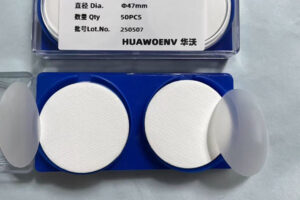

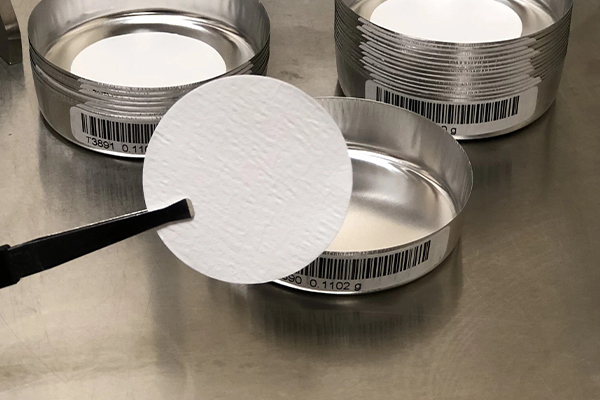
The cost of glass fiber filters[^1] can seem unpredictable and overwhelming. Prices vary depending on size, quantity, and supplier.[^2] Choosing the right factory ensures fair pricing and top quality.
Glass fiber filter prices are determined by multiple factors, including size, order quantity, and custom requirements. Bulk purchases often lead to lower unit costs[^3], making them more economical.
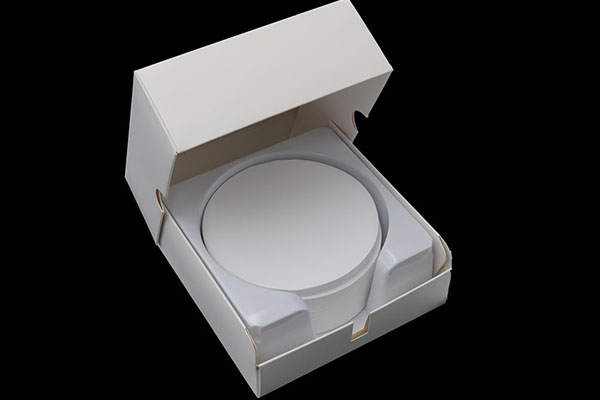
Understanding the pricing structure and sourcing filters directly from a reliable manufacturer helps reduce costs[^4]. Let's explore how these factors impact pricing and what you should focus on when buying.
Why does order quantity affect glass fiber filter price?
Buying glass fiber filters in small quantities might be convenient, but it often comes with a higher cost per unit. Bulk orders can deliver better value for your investment.
Larger orders allow manufacturers to streamline production and reduce overhead costs[^5], directly lowering the price per unit for customers. It's a win-win for both parties.

When ordering from HuaEnv, we ensure cost efficiency without compromising quality. With over 15 years of manufacturing expertise, we focus on providing affordable options for labs worldwide. We also offer free samples for testing to guarantee suitability.
Key benefits of bulk purchasing:
| Factor | Impact | Description |
|---|---|---|
| Lower Production Costs | Reduced Per-Unit Price | Bulk orders optimize manufacturing expenses. |
| Streamlined Logistics | More Efficient Distribution | Shipping costs decrease with consolidated packaging.[^6] |
| Consistent Product Quality | High-Volume Testing Standards | Larger runs ensure identical quality across batches.[^7] |
How does filter size impact pricing?
The size of a glass fiber filter directly affects material usage, manufacturing complexity, and the final price.[^8] Larger filters naturally require more raw material and time.[^9]
Smaller filters tend to be less expensive, but customization of size and shape may lead to higher costs depending on requirements. Balancing size with lab needs is essential for cost efficiency.
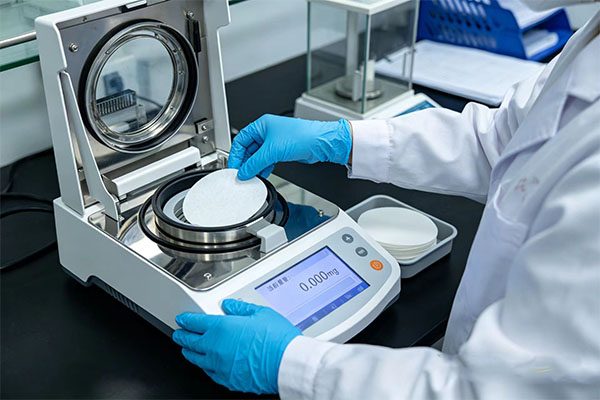
HuaEnv offers precision cutting services for all filter sizes, ensuring you get the exact dimensions required for your application. Our advanced equipment achieves cutting accuracy within ±0.1mm, delivering filters that meet your specifications reliably.
Examples of filter size pricing:
| Filter Size | Price Range | Applications |
|---|---|---|
| 25mm Diameter | Budget-Friendly | Ideal for small-scale experiments and sampling. |
| 90mm Diameter | Medium Cost | Commonly used for environmental monitoring tasks[^10]. |
| Custom Sizes | Variable | Tailored for specialized industrial applications. |
Why should you source from original manufacturers?
Sourcing glass fiber filters directly from manufacturers like HuaEnv can drastically lower costs and guarantee quality. Middlemen often inflate prices, making your purchase unnecessarily expensive.
Manufacturers offer competitive pricing due to direct production control and quality assurance processes, cutting out intermediary costs. This ensures value and reliability.
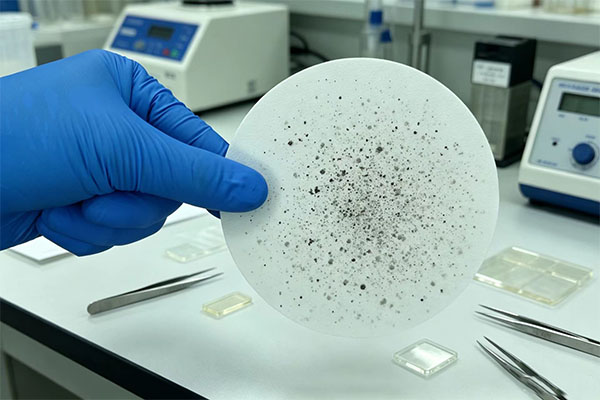
At HuaEnv, we handle everything from material selection to precision cutting in-house. With five production lines and ISO-certified processes, we deliver consistent quality, backed by thorough testing and free samples.
Advantages of sourcing directly:
- Cost Savings: Avoid added margins from distributors.
- Quality Control: Products undergo stringent tests for filtration efficiency, strength, and durability[^11].
- Customization Options: Tailor-fit filters for specific applications and industries.
- Global Reach: Reliable supply chains ensuring timely delivery worldwide.
How does HuaEnv stand out as a reliable manufacturer?
HuaEnv has built a reputation for delivering high-quality, custom glass fiber filters to clients globally. With over 15 years of OEM/ODM experience, we offer unmatched precision and competitive pricing.
Our filters meet international standards, such as RoHS and REACH[^12], and come with detailed performance certifications. Customers benefit from stable supply chains and tailored solutions for their needs.
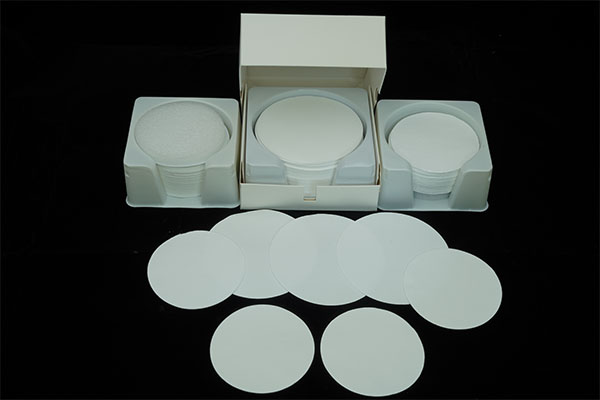
Whether you need filters for environmental monitoring, food testing, or scientific research[^13], we've got you covered. Our free sample testing allows you to evaluate product compatibility before committing to larger orders.
Why choose HuaEnv?
| Feature | Benefit |
|---|---|
| 5 Production Lines | High output capacity with consistent quality control. |
| Stringent Quality Testing | Ensures filtration efficiency and product reliability. |
| Competitive Pricing | Direct factory discounts save costs. |
| Customization Options | Precise cutting for diverse applications. |
Conclusion
Glass fiber filter prices depend on factors like order quantity, size, and manufacturer reliability. HuaEnv ensures competitive pricing, quality assurance, and customization for worldwide clients.
[^1]: "SAM.gov", https://sam.gov/opp/258fb50c0b2755b7f477bb668352fbaf/view. A neutral procurement or institutional source documenting glass fiber filters offered in different diameters, pack quantities, and specifications would support the claim that size, quantity, and requirements affect purchasing cost. Evidence role: general_support; source type: institution. Supports: Glass fiber filter prices vary depending on size, order quantity, supplier, and custom requirements, with bulk purchases often reducing the unit cost.. Scope note: Such evidence may show price variation by listed specifications and quantities, but it may not prove every supplier's pricing model or custom-manufacturing costs.
[^2]: "Understanding the Dynamics of Value-Driven Variety Management", https://sloanreview.mit.edu/article/understanding-the-dynamics-of-valuedriven-variety-management/. A neutral procurement or manufacturing-cost source should support that unit prices for manufactured components commonly vary with product specifications, purchased volume, and supplier pricing structures. Evidence role: general_support; source type: education. Supports: Glass fiber filter prices vary depending on size, quantity, and supplier.. Scope note: This would support the general pricing mechanism, not specific price levels for glass fiber filters.
[^3]: "Economies of scale - Wikipedia", https://en.wikipedia.org/wiki/Economies_of_scale. A manufacturing economics source should document that economies of scale and larger production runs can reduce average unit costs by spreading fixed costs over more units. Evidence role: mechanism; source type: education. Supports: Bulk purchases often lead to lower unit costs.. Scope note: The source may explain the general cost principle rather than provide glass-fiber-filter-specific pricing data.
[^4]: "[PDF] Cutting Out the Middleman: The Structure of Chains of Intermediation", https://economics.yale.edu/sites/default/files/grantstartz_middlemen_latest_ada-ns.pdf. A supply-chain or distribution-channel source should support that removing intermediary layers can reduce markups or transaction costs in some purchasing arrangements. Evidence role: mechanism; source type: education. Supports: Sourcing filters directly from a manufacturer can help reduce costs.. Scope note: This would support the general channel-cost logic, not prove that any particular manufacturer offers the lowest total cost.
[^5]: "[PDF] Estimation of cellular manufacturing cost components using ...", https://digitalcommons.unl.edu/cgi/viewcontent.cgi?article=1091&context=imsefacpub. An operations-management source should explain that larger batch sizes or production volumes can reduce setup time, spread overhead, and improve production efficiency. Evidence role: mechanism; source type: education. Supports: Larger orders allow manufacturers to streamline production and reduce overhead costs.. Scope note: The evidence would be contextual unless it specifically studies glass fiber filter manufacturing.
[^6]: "Impact of Freight Consolidation on Logistics Cost and Emissions", http://dspace.mit.edu/handle/1721.1/121354. A logistics source should support that shipment consolidation can reduce per-unit transportation or handling costs by improving load utilization and reducing separate shipments. Evidence role: mechanism; source type: institution. Supports: Shipping costs can decrease when orders are consolidated into fewer packages or shipments.. Scope note: Actual freight savings depend on weight, volume, destination, carrier pricing, and packaging constraints.
[^7]: "[PDF] 1 Introduction to Statistical Quality Control", https://math.montana.edu/jobo/st528/documents/chap12.pdf. A quality-management source should describe how controlled production processes and statistical quality control can improve batch consistency during manufacturing. Evidence role: mechanism; source type: institution. Supports: Larger production runs can support batch consistency when accompanied by appropriate process controls.. Scope note: Such evidence would support the role of process control, but not the absolute claim that larger runs ensure identical quality.
[^8]: "[PDF] A Predictive Approach to Estimating Build Time and Material Usage ...", https://utw10945.utweb.utexas.edu/sites/default/files/2025/68%20A%20Predictive%20Approach%20to%20Estimating%20Build%20time%20.pdf. A manufacturing-cost or filtration-materials source should support that product dimensions influence material consumption and fabrication requirements, which are common inputs to final cost. Evidence role: mechanism; source type: education. Supports: Glass fiber filter size affects material usage, manufacturing complexity, and price.. Scope note: The source may establish the cost principle generally rather than quantify glass fiber filter price differences by diameter.
[^9]: "CIVL 1101 - Introduction to Water Filtration", https://www.ce.memphis.edu/1101/notes/filtration/filtration-1.html. A filtration or manufacturing source should support that larger filter media dimensions require greater media area and may increase processing or cutting time. Evidence role: mechanism; source type: education. Supports: Larger glass fiber filters require more raw material and may require more processing time.. Scope note: The time component may vary by manufacturing equipment and production process.
[^10]: "[PDF] Method IO-3.1 - Selection, Preparation and Extraction of Filter Material", https://www.epa.gov/sites/default/files/2019-11/documents/mthd-3-1.pdf. An environmental agency or standards source should document the use of glass fiber filters or filter media in particulate sampling and environmental monitoring methods. Evidence role: case_reference; source type: government. Supports: Glass fiber filters are commonly used in environmental monitoring tasks.. Scope note: The source may refer to specific monitoring methods rather than every environmental monitoring application.
[^11]: "Optimization of needle punched nonwoven filter media for enhanced ...", https://pmc.ncbi.nlm.nih.gov/articles/PMC12397395/. A filtration standards or testing source should identify filtration efficiency, mechanical strength, and durability-related properties as relevant performance characteristics for filter media. Evidence role: definition; source type: institution. Supports: Filtration efficiency, strength, and durability are relevant quality-control criteria for glass fiber filters.. Scope note: The source would support the relevance of these test categories, not verify that HuaEnv performs or passes them.
[^12]: "EU REACH - International Trade Administration", https://www.trade.gov/eu-reach. European Union sources should establish that RoHS restricts certain hazardous substances in electrical and electronic equipment and REACH regulates chemical registration, evaluation, authorization, and restriction in the EU. Evidence role: definition; source type: government. Supports: RoHS and REACH are recognized regulatory frameworks relevant to material compliance claims.. Scope note: These sources define the regulatory frameworks but do not independently verify HuaEnv's compliance or certification status.
[^13]: "Investigation of reagent distributions on glass fiber membrane filters ...", https://pubmed.ncbi.nlm.nih.gov/17909647/. Laboratory methods, standards, or educational sources should support that glass fiber filters are used in sample preparation, particulate collection, or filtration workflows across environmental analysis, food analysis, and research settings. Evidence role: general_support; source type: education. Supports: Glass fiber filters are used in environmental monitoring, food testing, and scientific research applications.. Scope note: Different applications require different filter grades and validation; the source may support representative uses rather than all use cases.