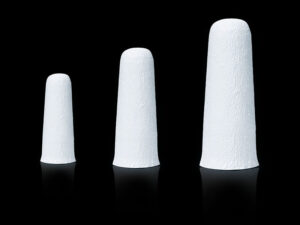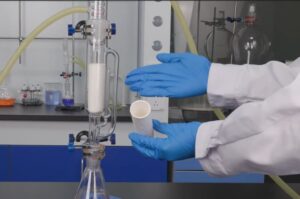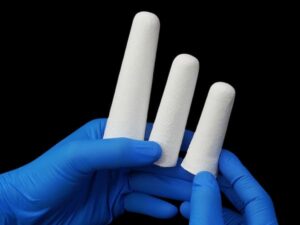

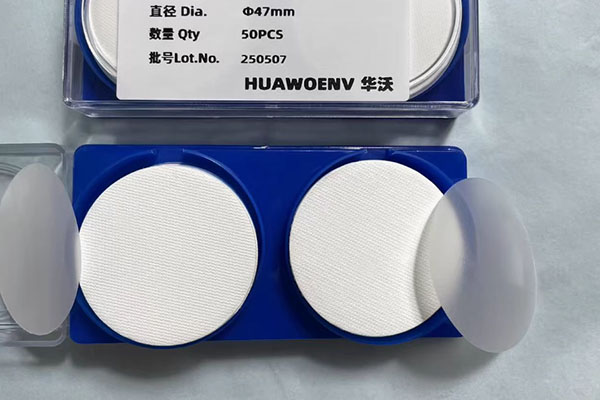
Glass fiber filters[^1] and prefilters are essential tools in labs and industrial settings. They help with contamination analysis, liquid clarification, and collecting suspended solids efficiently.
Glass fiber filters and prefilters are used for fine particle filtration.[^2] They are available with or without binders[^3] and come in various grades to suit different applications.
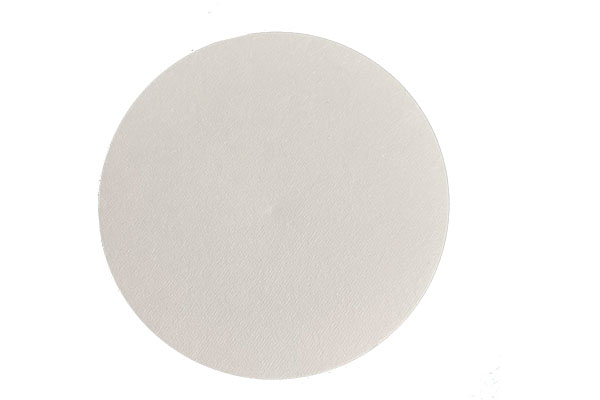
Choosing the right type of glass fiber filter or prefilter can impact your filtration results. Let's explore their types, uses, and the benefits they offer.
What makes glass fiber filters unique?
Glass fiber filters have a unique structure that sets them apart from traditional filters. Their fibers are intertwined, creating a three-dimensional matrix[^4] with excellent filtration capabilities.
Glass fiber filters are ideal for retaining fine particles and high-flow applications. Their high dirt-holding capacity[^5] and low fiber shedding make them a reliable choice for critical filtration tasks.
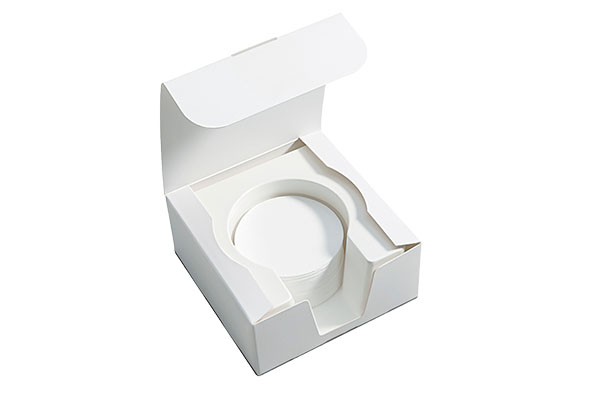
The choice between filters with binders and those without depends on your application. Filters with binders offer added strength, but they might introduce trace contaminants. Binder-free options ensure purity, which is crucial for sensitive analyses like trace element testing.
Applications of glass fiber filters
-
Contamination analysis: Used in environmental monitoring, these filters can trap particulates in air or liquid samples for analysis.[^6]
-
Liquid clarification: Glass fiber prefilters are often used upstream of membrane filters to reduce clogging and improve efficiency.[^7]
-
Suspended solids collection: With their high retention capacity, these filters are perfect for applications that require solid sample collection from liquids.
| Application | Preferred Filter Type |
|---|---|
| Contamination analysis | Binder-free glass fiber filters |
| Liquid clarification | Glass fiber prefilters |
| Suspended solids collection | High-grade glass fiber filters |
How do prefilters improve filtration processes?
Prefilters act as the first line of defense in filtration systems. They extend the lifespan of primary filters by removing larger particulates.
Glass fiber prefilters trap coarse particles, preventing clogging in finer filters. This helps reduce filtration time and increases cost efficiency.
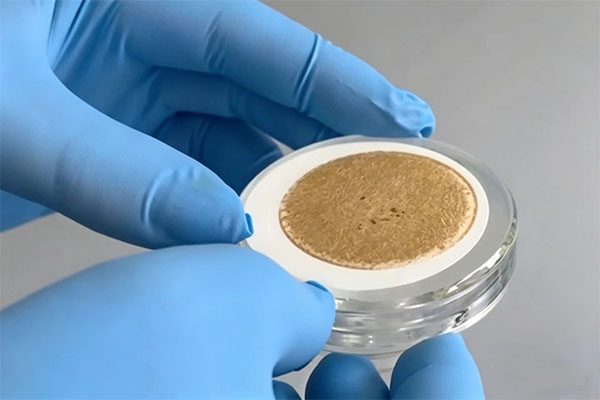
Prefilters are especially useful when working with turbid liquids or samples with high particulate loads. They prevent the need for frequent replacements of the main filter, saving both time and money in the long run.
Benefits of using prefilters
- Improved filtration speed: By capturing larger debris, prefilters allow the main filter to focus on finer particles.
- Extended filter life: With reduced clogging, primary filters last longer, leading to cost savings.
- Versatility: Prefilters can be used in various industries, from environmental testing to food and beverage production.
Are there limitations to glass fiber filters?
While glass fiber filters are versatile, they come with specific limitations. Understanding these can help you make informed decisions.
Glass fiber filters are not suitable for applications requiring absolute pore sizes[^8] or when chemical resistance to certain solvents is a must.
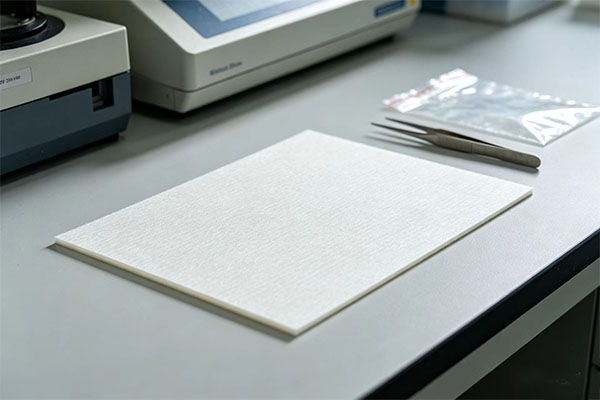
Binder-containing filters may leach substances under certain conditions[^9], making them less suitable for ultra-pure applications. Always consider the compatibility of your filter with the sample and solvent being used.
When to avoid glass fiber filters
- Ultra-pure applications: Use binder-free filters to minimize contamination risks.
- Chemical compatibility: Ensure the filter material can withstand the solvents or chemicals in your process.
- High-pressure systems: Glass fiber filters are designed for moderate flow rates and pressures; exceeding these limits can compromise the filter's integrity.
| Scenario | Recommended Action |
|---|---|
| Ultra-pure applications | Choose binder-free glass fiber filters |
| Chemical compatibility issue | Opt for chemically resistant filters |
| High-pressure requirements | Use alternative filter materials |
Conclusion
Glass fiber filters and prefilters are indispensable for contamination analysis, liquid clarification, and suspended solids collection. By choosing the right type and grade, you can optimize your filtration process and ensure reliable results.
[^1]: "[PDF] Method IO-3.1 - Selection, Preparation and Extraction of Filter Material", https://www.epa.gov/sites/default/files/2019-11/documents/mthd-3-1.pdf. A laboratory-filtration reference documenting glass-fiber filters as depth media for retaining suspended or fine particulates, and noting binder-free or binder-containing grade variants, supports the statement that these filters and prefilters are used for fine-particle filtration in application-specific forms. Evidence role: general_support; source type: institution. Supports: Glass fiber filters and prefilters are used for fine particle filtration. They are available with or without binders and come in various grades to suit different applications.. Scope note: Neutral sources may support the filtration function and laboratory use more readily than commercial availability across specific grades, which is often documented in manufacturer catalogs.
[^2]: "Filtration Mechanism of Fine Particle - PMC - NIH", https://pmc.ncbi.nlm.nih.gov/articles/PMC7498895/. A laboratory filtration reference or standards document should support that glass-fiber filters are used as depth filters for retaining fine suspended particles in analytical and preparative filtration. Evidence role: general_support; source type: institution. Supports: Glass fiber filters and prefilters are used for fine particle filtration.. Scope note: Such sources usually describe typical use and nominal retention behavior rather than proving suitability for every fine-particle application.
[^3]: "Whatman™ Grade GF/F Glass Microfiber Filters, Binder Free - Cytiva", https://www.cytivalifesciences.com/en/us/products/items/whatman-grade-gf-f-glass-microfiber-filters-binder-free-p-00425?selectedProduct=28418451. A materials or laboratory filtration reference should document that glass-fiber filter media are manufactured in binder-containing and binder-free forms, with binder-free variants used where extractables or contamination are a concern. Evidence role: definition; source type: institution. Supports: Glass fiber filters are available with or without binders.. Scope note: The source may describe common product categories rather than exhaustively covering all manufacturers or grades.
[^4]: "Mechanistic modeling of primary depth filtration in downstream ...", https://udspace.udel.edu/items/5837c016-f995-410a-aa4f-2f448772fd68. A filtration science text or educational source on depth filtration should support that fibrous filter media form a porous three-dimensional matrix that captures particles throughout the filter thickness. Evidence role: mechanism; source type: education. Supports: Glass fiber filters have intertwined fibers that create a three-dimensional filtration matrix.. Scope note: This evidence supports the general depth-filtration mechanism and may not specifically characterize every glass-fiber grade.
[^5]: "An Assessment on Average Pressure Drop and Dust-Holding ... - PMC", https://pmc.ncbi.nlm.nih.gov/articles/PMC8306576/. A filtration engineering reference should support that depth filters, including glass-fiber media, can retain particles throughout their thickness, giving them higher solids-loading or dirt-holding capacity than surface filters of comparable area. Evidence role: mechanism; source type: education. Supports: Glass fiber filters have high dirt-holding capacity.. Scope note: The support is contextual for depth-filter media generally unless the source provides data for a specific glass-fiber grade.
[^6]: "[PDF] Method 160.2", https://www.uvm.edu/bwrl/lab_docs/protocols/106.2_TSS_by_gravimetry_(EPA_1971).pdf. An environmental monitoring method from a government agency or standards body should support the use of glass-fiber filters for collecting particulate matter or suspended solids from air or water samples for subsequent analysis. Evidence role: case_reference; source type: government. Supports: Glass fiber filters are used in environmental monitoring to trap particulates in air or liquid samples for analysis.. Scope note: Different monitoring methods specify particular filter types and conditioning procedures, so the citation would support recognized uses rather than all environmental applications.
[^7]: "Low cost, high performance ultrafiltration membranes from glass ...", https://pmc.ncbi.nlm.nih.gov/articles/PMC7713439/. A membrane filtration methods guide should support that prefiltration with glass-fiber media can remove larger particulates before membrane filtration, reducing membrane fouling and improving throughput. Evidence role: mechanism; source type: institution. Supports: Glass fiber prefilters are often used upstream of membrane filters to reduce clogging and improve efficiency.. Scope note: The benefit depends on sample matrix, filter grade, and operating conditions, so the source would support the general practice rather than a universal outcome.
[^8]: "Nominal vs. Absolute Pore Size Rating - What's the Difference?", https://www.criticalprocess.com/blog/nominal-vs.-absolute-pore-size-rating-whats-the-difference. A filtration reference distinguishing depth filters from membrane filters should support that glass-fiber depth filters are generally assigned nominal retention ratings rather than absolute pore-size cutoffs. Evidence role: definition; source type: education. Supports: Glass fiber filters are not suitable for applications requiring absolute pore sizes.. Scope note: Some products may provide characterized particle-retention specifications, but this does not make them equivalent to absolute-rated membrane filters.
[^9]: "Metals and Other Trace Elements | U.S. Geological Survey", https://www.usgs.gov/mission-areas/water-resources/science/metals-and-other-trace-elements. A trace-analysis or laboratory contamination-control source should support that filter materials and binders can contribute extractable contaminants under some chemical conditions, making filter selection important for low-level analytical work. Evidence role: mechanism; source type: research. Supports: Binder-containing filters may leach substances under certain conditions.. Scope note: The extent of leaching is method- and solvent-dependent, and evidence may address filter media contamination generally rather than every binder-containing glass-fiber product.