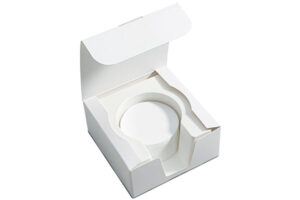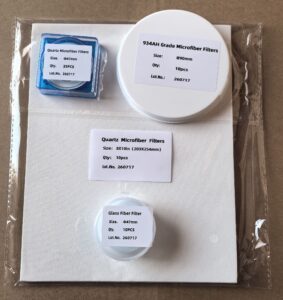

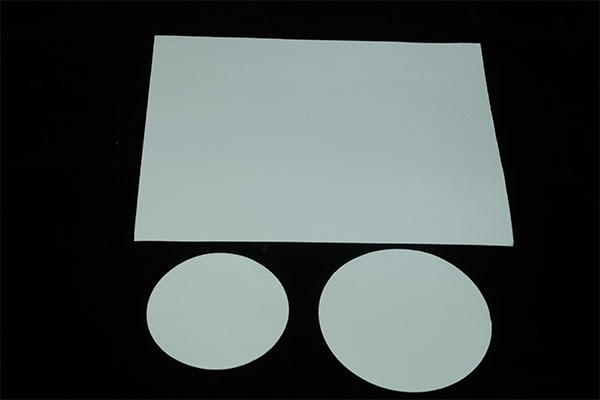
Filtration can be a critical step in many industries, especially when fine filtration and a high loading capacity are needed. But how do you ensure both precision and safety in the process?
Glass microfiber filters[^1], made from 100% borosilicate glass[^2], offer excellent performance in filtration by enabling fine filtration, high loading capacity, and safe use with aggressive solutions like strong acids and bases.
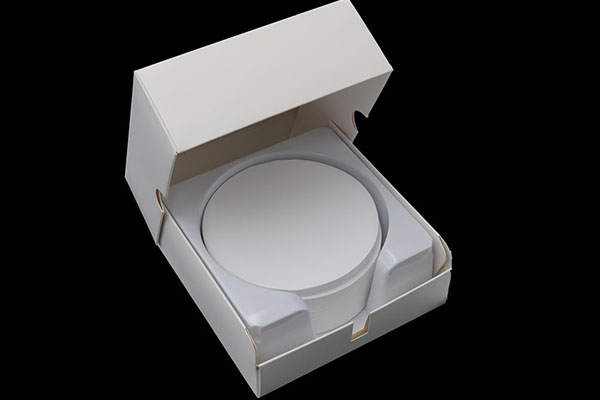
Glass microfiber filters have become indispensable in industries demanding reliable and high-performance filtration solutions. Let's explore their features and use cases to understand why they stand out.
What are glass microfiber filters?
Glass microfiber filters are made from borosilicate glass fibers, providing unique filtration properties that traditional materials can't match. These fibers are bound together without binders[^3], ensuring purity and precision.
Glass microfiber filters are renowned for their ability to provide superior filtration performance, handling fine particles while offering high capacity for capturing contaminants without clogging prematurely.
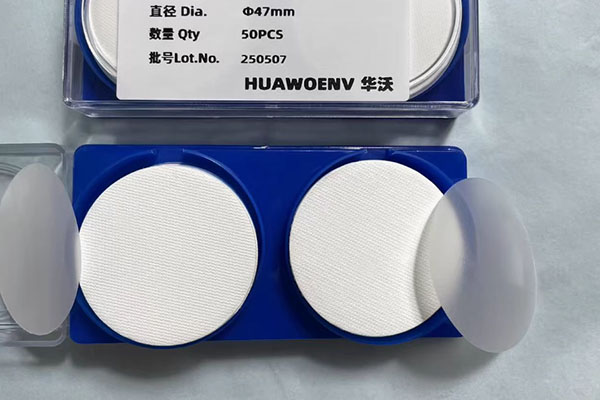
The absence of binders means they won't leach contaminants into your solution, making them ideal for both analytical and industrial applications. Their structure allows for efficient particle retention and fast filtration rates[^4], even with high-viscosity liquids or air streams.
Features of glass microfiber filters
| Feature | Description |
|---|---|
| Material | 100% borosilicate glass |
| Particle Retention | Exceptional for fine filtration |
| Loading Capacity | High, preventing premature clogging |
| Resistance | Withstands strong acids, bases, and solvents[^5] |
| No Binders or Additives | Ensures purity and no leaching |
These features make them versatile for a wide range of industries and applications.
Why are glass microfiber filters ideal for aggressive solutions?
Handling strong acids, bases, or solvents can be challenging in filtration, as many materials degrade or react. Borosilicate glass, however, offers unmatched durability and chemical resistance.
Glass microfiber filters are the go-to choice for aggressive solutions due to their chemical stability, ensuring safe and reliable filtration without compromising filter integrity.
This resistance, combined with their ability to handle high temperatures[^6], makes them suitable for environments where standard filters would fail. They maintain their performance even under demanding conditions.
Applications in aggressive environments
-
Environmental Monitoring[^7] Filters are used to trap particulate matter from air or water samples that may contain aggressive chemicals.
-
Pharmaceutical Quality Control[^8] Ideal for filtering aggressive solvents used in drug production.
-
Chemical Processing They help process strong acids, bases, and organic solvents without degradation.
Their robustness ensures that even the most challenging solutions can be filtered with confidence.
How do glass microfiber filters achieve fine filtration and high capacity?
The secret lies in their fiber structure. The fine borosilicate fibers create a dense yet porous matrix[^9], allowing them to trap particles efficiently while maintaining a high flow rate.
By combining fine filtration with high loading capacity, glass microfiber filters prevent clogging, making them suitable for extended use and heavy-duty applications.
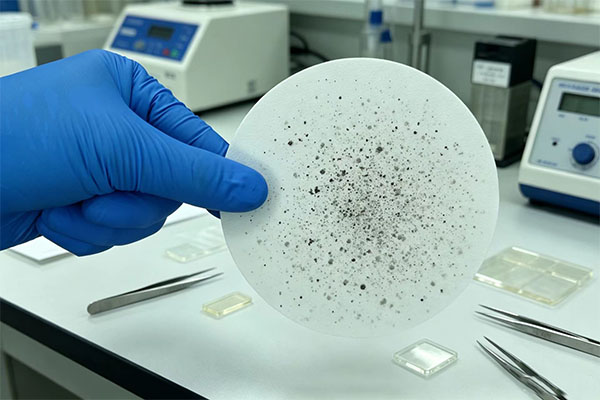
This balance between precision and capacity is why they are widely used in environmental testing, life sciences, and industrial processes. Whether for particulate analysis or large-scale filtration, they handle the task effectively.
Industries benefiting from high performance filtration
| Industry | Application Example |
|---|---|
| Environmental Monitoring | Airborne particulate collection |
| Life Sciences | Sample preparation and protein filtration |
| Energy & Chemicals | Filtration of process gases and liquids |
| Food & Beverage | Quality control and product testing |
These filters meet the stringent demands of these industries, ensuring reliability and precision.
Conclusion
Glass microfiber filters, with their fine filtration, high capacity, and chemical resistance, are an excellent solution for demanding filtration needs. They offer reliable performance in aggressive and challenging environments without compromising on safety or efficiency.
[^1]: "words-333333 - cs.Princeton", https://www.cs.princeton.edu/courses/archive/spring18/cos226/assignments/autocomplete/testing/words-333333.txt. An authoritative technical source describing borosilicate glass microfiber filters as chemically resistant depth-filtration media with fine particle retention and high contaminant-loading capacity would substantiate the stated performance and compatibility claims. Evidence role: general_support; source type: institution. Supports: Glass microfiber filters, made from 100% borosilicate glass, offer excellent performance in filtration by enabling fine filtration, high loading capacity, and safe use with aggressive solutions like strong acids and bases.. Scope note: A single source may not independently verify all elements—material composition, filtration performance, loading capacity, and resistance to strong acids and bases—so more than one technical or standards-based source may be needed.
[^2]: "[PDF] Glass Microfiber - I.W. Tremont", https://iwtremont.com/cmsAdmin/uploads/glassmicrofiberbrochure.pdf. A neutral technical reference should verify that glass microfiber filters are manufactured from borosilicate glass fibers and distinguish this from other glass-fiber or quartz-fiber filter media. Evidence role: definition; source type: institution. Supports: Glass microfiber filters are made from borosilicate glass fibers.. Scope note: Support may describe common commercial or laboratory-grade glass microfiber filters rather than every product sold under that name.
[^3]: "Rapid Method for Acid Digestion of Glass-Fiber", https://www.epa.gov/sites/default/files/2015-06/documents/air_filter_dissolution_by_acid_digestion_epa_402-r-12-009_10-22-12.pdf. A laboratory-method or standards source should document the use of binder-free glass-fiber filters in analytical filtration, supporting the claim that some glass microfiber filters are made without added binders. Evidence role: definition; source type: government. Supports: Glass microfiber filters can be manufactured without binders.. Scope note: The source may establish binder-free filters as an accepted analytical filter type, not prove that all glass microfiber filters are binder-free.
[^4]: "Correlation between the Porosity and Permeability of a Polymer ...", https://pmc.ncbi.nlm.nih.gov/articles/PMC7761719/. A filtration-science source on fibrous depth media should explain that porous fiber matrices can retain particles throughout the filter depth while maintaining permeability and flow. Evidence role: mechanism; source type: paper. Supports: The fibrous structure of glass microfiber filters enables particle retention while preserving relatively fast filtration.. Scope note: General depth-filtration theory supports the mechanism, but actual retention and flow depend on fiber diameter, thickness, pore structure, and operating conditions.
[^5]: "[PDF] Materials Compatability", https://scs.illinois.edu/system/files/inline-files/MaterialsCompatability.pdf. A materials-science or chemical-resistance reference should document the general resistance of borosilicate glass to many acids, solvents, and chemical reagents. Evidence role: general_support; source type: education. Supports: Borosilicate-glass filter media can tolerate many aggressive chemical solutions better than less chemically resistant filter materials.. Scope note: Borosilicate glass is not universally resistant to all bases or all conditions; concentrated alkali and hydrofluoric acid can attack glass.
[^6]: "[PDF] Thermal Properties Of Sodium Borosilicate Glasses As A Function Of ...", https://scholarsmine.mst.edu/cgi/viewcontent.cgi?article=4276&context=matsci_eng_facwork. A materials reference should describe borosilicate glass as having low thermal expansion and relatively high thermal-shock resistance, which contextualizes its suitability for elevated-temperature filtration settings. Evidence role: general_support; source type: encyclopedia. Supports: Borosilicate glass microfiber filters are suitable for higher-temperature conditions than many polymeric filter media.. Scope note: Material thermal resistance does not by itself establish the maximum operating temperature of a specific filter grade or assembly.
[^7]: "[PDF] Method 160.2", https://www.uvm.edu/bwrl/lab_docs/protocols/106.2_TSS_by_gravimetry_(EPA_1971).pdf. A government environmental-method source should show that glass-fiber filters are used in standardized environmental measurements, such as suspended solids in water or particulate sampling in air. Evidence role: case_reference; source type: government. Supports: Glass-fiber or glass-microfiber filters are used in environmental monitoring applications.. Scope note: This supports established environmental-monitoring uses of glass-fiber filters, not every aggressive-chemical scenario described in the article.
[^8]: "Organic Solvent Nanofiltration in Pharmaceutical Applications - PMC", https://pmc.ncbi.nlm.nih.gov/articles/PMC11036530/. A pharmacopeial or regulatory source should establish that filtration is a recognized operation in pharmaceutical testing or manufacturing control, and that solvent compatibility is a relevant criterion for filter selection. Evidence role: case_reference; source type: institution. Supports: Filtration and solvent-compatible filter media are relevant in pharmaceutical quality-control contexts.. Scope note: This would support the role of filtration and solvent compatibility in pharmaceutical quality work, but may not specifically endorse glass microfiber filters for every pharmaceutical solvent.
[^9]: "Filtration Mechanism of Fine Particle - PMC - NIH", https://pmc.ncbi.nlm.nih.gov/articles/PMC7498895/. A filtration textbook or peer-reviewed paper on fibrous filters should describe how networks of fine fibers form porous depth-filter structures that capture particles within the medium. Evidence role: mechanism; source type: paper. Supports: Fine borosilicate fibers create a porous matrix that supports depth filtration and particle capture.. Scope note: The source would support the general mechanism of fibrous filtration, while the exact pore structure of a given glass microfiber product remains grade-specific.