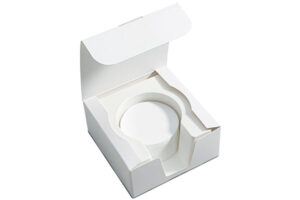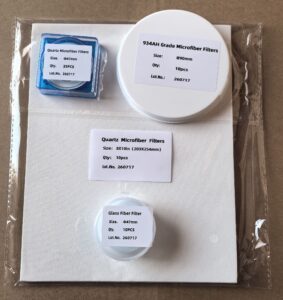

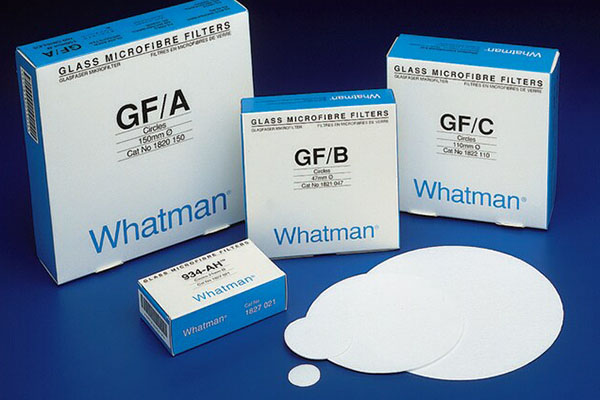
The demand for precision filtration is growing, yet finding materials that balance fine filtration with durability is challenging.
Glass microfiber filters are made from 100% borosilicate glass[^1], offering fine filtration, high loading capacity[^2], and resistance to aggressive solutions such as strong acids and bases[^3].
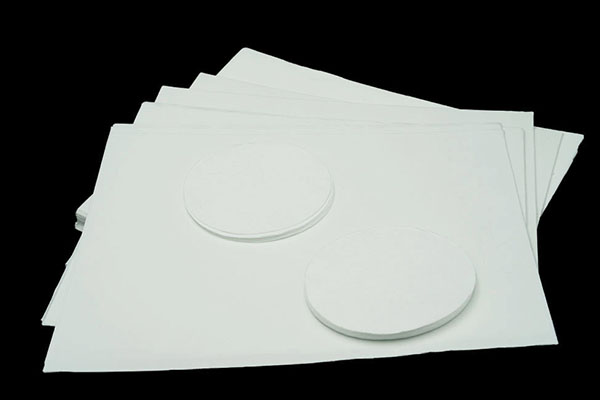
When considering filtration materials, the properties of borosilicate glass make these filters a standout choice. But what makes them so indispensable in modern labs?
Why are Glass Fiber Filters Ideal for Aggressive Solutions?
Aggressive solutions can corrode or weaken conventional filters, leading to compromised results and damaged equipment.
Glass microfiber filters made from borosilicate glass withstand aggressive solutions like strong acids and bases, ensuring safe and reliable filtration even in demanding applications.
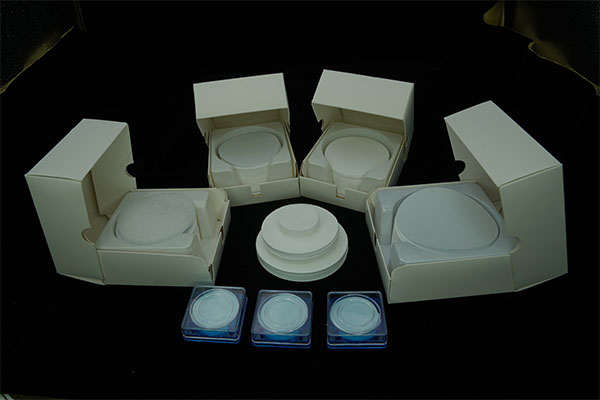
Borosilicate glass has inherent chemical and thermal resistance[^4]. It ensures stability under high temperatures[^5] or when exposed to harsh chemicals. By using these filters, labs can safely filter solutions without worrying about material degradation.
| Property | Benefit |
|---|---|
| Chemical resistance | Protection against acids and bases |
| Thermal stability | Reliable performance under high heat |
| Durable yet fine texture | Efficient particle retention |
How Does High Loading Capacity Benefit Lab Operations?
Overloading filters can disrupt lab processes, cause sample contamination, and lead to frequent replacements.
Glass microfiber filters handle large volumes of samples without clogging[^6], streamlining lab workflows and preventing contamination issues.
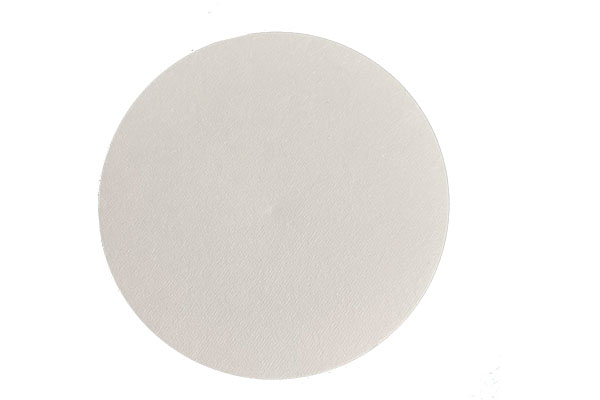
The high loading capacity allows labs to process more samples in less time. This efficiency is particularly useful for labs dealing with environmental monitoring, life sciences, and industrial applications where large sample volumes are routine.
| Scenario | Problem | Solution |
|---|---|---|
| High-volume filtration | Frequent clogging and delays | Glass microfiber filters |
| Aggressive chemical testing | Material degradation | Borosilicate glass filters |
| Environmental sampling | Need for precision and durability | Reliable filtration with borosilicate |
Can Glass Fiber Filters Handle Fine Filtration Needs?
Fine filtration requires precision to retain tiny particles without compromising filter integrity.
Glass microfiber filters achieve high filtration efficiency while maintaining structural integrity[^7], making them ideal for capturing fine particles.
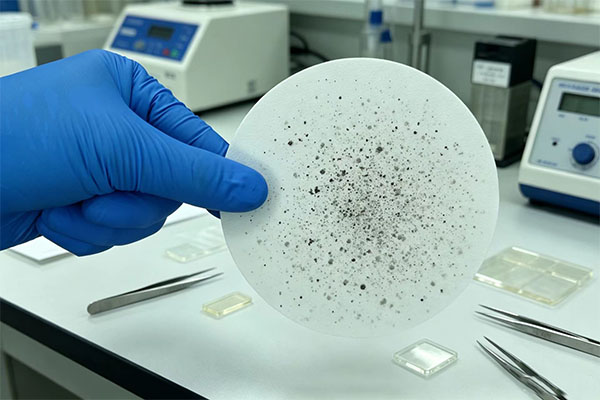
Their ability to trap small particulates makes them suitable for applications like air sampling, water quality testing, and pharmaceutical research[^8]. Labs can rely on these filters for consistent and accurate results.
| Industry | Common Application | Filter Benefit |
|---|---|---|
| Environmental monitoring | Air and water particulate analysis | Precise particle retention |
| Pharmaceuticals | Drug formulation testing | Consistent quality assurance |
| Life sciences | Microscopic sample preparation | Reliable and detailed filtration |
Why Choose Borosilicate Glass Filters Over Alternatives?
Alternative filters often fall short when exposed to extreme conditions or aggressive substances.
Borosilicate glass filters outperform competitors due to their combination of fine filtration, durability, and resistance to harsh chemicals.
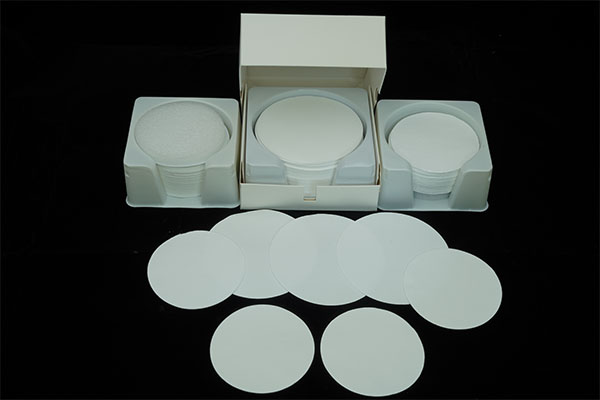
While other materials may offer similar filtration qualities, they often lack the chemical stability and high-temperature tolerance of borosilicate glass. This makes glass microfiber filters a versatile and trustworthy choice across industries.
Conclusion
Glass microfiber filters stand out with their ability to combine fine filtration, high loading capacity, and chemical resistance. They are the go-to solution for labs facing aggressive substances and demanding workloads.
[^1]: "Borosilicate glass - Wikipedia", https://en.wikipedia.org/wiki/Borosilicate_glass. A materials-science reference should support that borosilicate glass is formulated with silica and boron oxide and is known for chemical durability and low thermal expansion, providing context for its use in laboratory filtration media. Evidence role: definition; source type: encyclopedia. Supports: Glass microfiber filters made from borosilicate glass derive fine filtration and chemical resistance from the properties of borosilicate glass.. Scope note: This supports the material properties of borosilicate glass generally, not the composition or performance of every commercial glass microfiber filter.
[^2]: "Glass Fiber Filters and Prefilters - Fisher Scientific", https://www.fishersci.com/us/en/browse/90179025/glass-fiber-filters-and-prefilters. A filtration reference should explain that depth filter media, including glass fiber or glass microfiber structures, can retain particles throughout the matrix and therefore have higher dirt-holding capacity than surface-retention membranes in comparable applications. Evidence role: mechanism; source type: paper. Supports: Glass microfiber filters can offer high loading capacity because their fibrous depth structure retains particles within the filter matrix.. Scope note: This supports the general depth-filtration mechanism; loading capacity still depends on pore structure, particle distribution, sample matrix, and flow conditions.
[^3]: "Borosilicate glass - Wikipedia", https://en.wikipedia.org/wiki/Borosilicate_glass. A laboratory materials reference should indicate that borosilicate glass has broad resistance to many acids and chemical reagents, while noting that hydrofluoric acid and some strong alkaline conditions can attack glass. Evidence role: general_support; source type: education. Supports: Borosilicate glass filters resist many aggressive chemical solutions, including acids and bases under appropriate conditions.. Scope note: The support is conditional because resistance depends on the exact chemical, concentration, temperature, and exposure time.
[^4]: "Borosilicate glass - Wikipedia", https://en.wikipedia.org/wiki/Borosilicate_glass. A glass science or materials reference should document that borosilicate glass has low thermal expansion and comparatively high resistance to thermal shock and chemical attack, explaining why it is widely used in laboratory glassware. Evidence role: mechanism; source type: research. Supports: Borosilicate glass has inherent chemical and thermal resistance relevant to filtration under harsh conditions.. Scope note: This evidence explains the underlying material behavior rather than measuring the performance of a specific filter product.
[^5]: "Linear thermal expansion coefficient (at temperatures from 130 to ...", https://ui.adsabs.harvard.edu/abs/arXiv:1801.01181. A materials or laboratory glassware source should show that borosilicate glass tolerates elevated temperatures and thermal shock better than many common glass compositions because of its low coefficient of thermal expansion. Evidence role: mechanism; source type: education. Supports: Borosilicate glass provides stability under high-temperature conditions.. Scope note: The cited source may support the glass substrate generally; actual maximum operating temperature can differ by filter thickness, binder status, and manufacturer specification.
[^6]: "Filter media depth and its effect on the efficiency of ...", https://pubmed.ncbi.nlm.nih.gov/33823447/. A filtration engineering source should support that depth-type fibrous filters can process turbid or particle-laden samples with delayed clogging compared with purely surface filters because particles are distributed through the filter depth. Evidence role: mechanism; source type: paper. Supports: Glass microfiber filters can process relatively large sample volumes before clogging due to their depth-filter structure.. Scope note: The evidence would be contextual; it does not guarantee clog-free operation for all sample volumes or particulate loads.
[^7]: "Chemical Modification with Surface-Active Treatment - PMC", https://pmc.ncbi.nlm.nih.gov/articles/PMC11174125/. A filtration or aerosol-science source should support that glass fiber filter media can achieve high particle-capture efficiency while retaining mechanical integrity under laboratory handling or flow conditions. Evidence role: general_support; source type: paper. Supports: Glass microfiber filters can combine high filtration efficiency with structural integrity for fine-particle capture.. Scope note: Efficiency and integrity depend on grade, fiber diameter, binder content, flow rate, and particle size, so the support should not be read as a universal performance guarantee.
[^8]: "[PDF] Method IO-3.1 - Selection, Preparation and Extraction of Filter Material", https://www.epa.gov/sites/default/files/2019-11/documents/mthd-3-1.pdf. Environmental and laboratory standards should document established uses of glass fiber filters in particulate air sampling and water-quality measurements such as suspended solids, supporting the article's examples of common applications. Evidence role: case_reference; source type: government. Supports: Glass microfiber filters are used in air sampling, water quality testing, and related laboratory research applications.. Scope note: Standards may directly support air and water applications but may only contextualize, rather than fully prove, use in pharmaceutical research.