

Laboratory analysis often requires precise and reliable filtration methods. Glass microfiber filters provide a unique combination of low filtration resistance and high impurity retention, making them a top choice.
Glass microfiber filters are made of 100% borosilicate glass fibers[^1], with or without binders, offering outstanding retention capacity for particles down to 1 μm in liquids and <1 μm in air[^2].
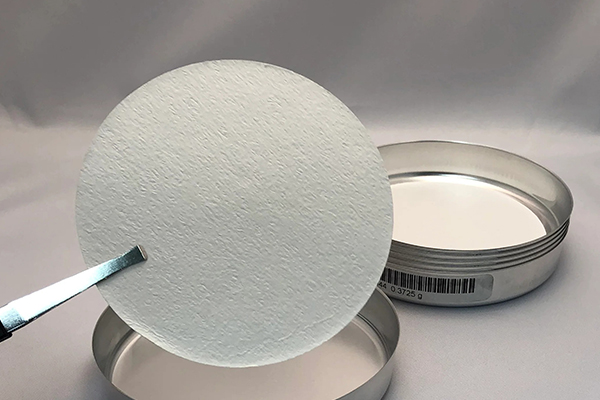
The unique properties of these filters make them versatile in various applications. From handling extreme temperatures to effectively removing aerosols, their advanced design ensures efficiency and reliability, creating a solid foundation for laboratory work.
What makes glass microfiber filters unique?
Laboratory environments often deal with challenging filtration needs. The question is: what makes glass microfiber filters the ideal solution for such demanding tasks?
The depth structure and large surface area[^3] of glass microfiber filters enable them to retain impurities while maintaining low filter resistance, thus ensuring efficient filtration.
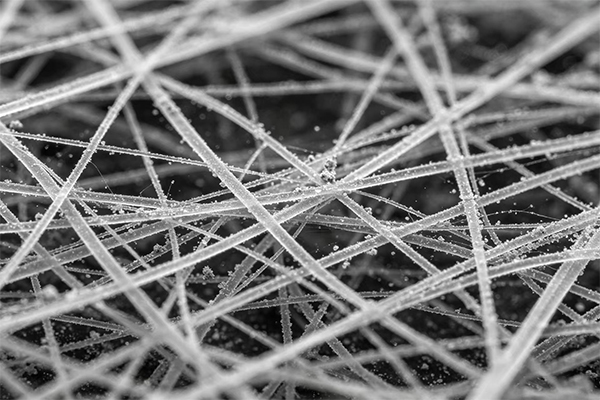
The filter's depth structure enhances impurity retention by trapping particles throughout the filter matrix rather than simply on the surface[^4]. This design also reduces the chances of clogging[^5], ensuring consistent performance over time. Additionally, the electrostatic interaction between glass fibers and gases enhances their efficiency in air filtration. This unique combination of features ensures that even the finest particles, including aerosols, are effectively captured.
How do glass microfiber filters handle high temperatures?
Laboratory processes frequently involve extreme temperature conditions, raising concerns about filter durability. Can glass microfiber filters withstand such challenges?
Glass microfiber filters are temperature resistant up to 500°C, with those containing organic binders tolerating up to 180°C[^6], ensuring reliability in high-temperature environments.
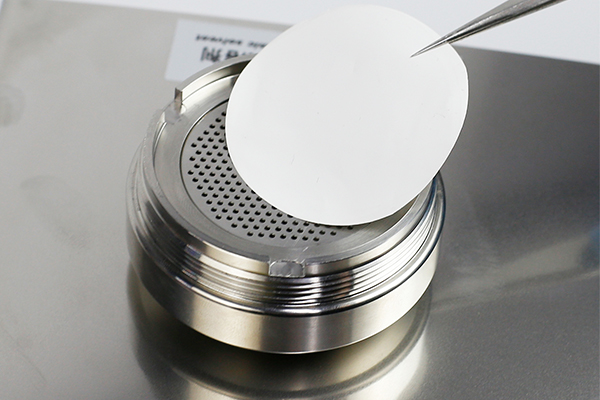
This impressive heat resistance makes them ideal for applications like air sampling, gas analysis, and high-temperature filtration tasks. Filters without binders are particularly effective in thermal processes, as they maintain their structural integrity and filtration capabilities even at elevated temperatures. Such resilience ensures that critical experiments and analyses are not compromised by filter failure.
Why are glass microfiber filters effective in air and gas filtration?
Air and gas filtration often demand high precision, especially for capturing aerosols and fine particles. How do glass microfiber filters excel in this field?
Glass microfiber filters can separate particles smaller than 1 μm in air and gases, thanks to the strong electrostatic interaction between glass fibers and gaseous particles[^7].
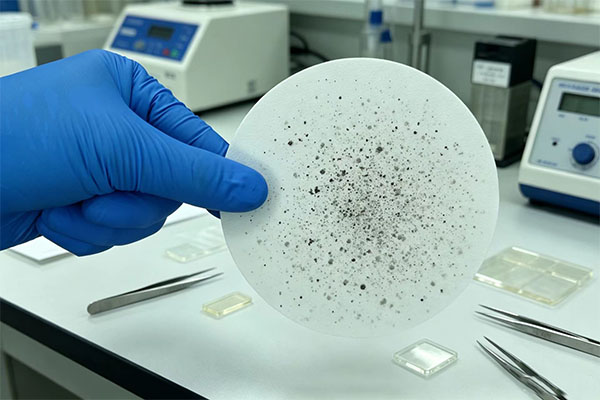
The electrostatic properties of borosilicate glass fibers play a key role. Unlike liquid filtration, where mechanical interactions dominate, the electrostatic forces between gas-phase particles and glass fibers enhance filtration efficiency. This makes them remarkably effective in applications like aerosol sampling, air quality monitoring, and environmental testing. Combined with their ability to handle high temperatures, glass microfiber filters are indispensable in air and gas analyses.
What are the differences between filters with and without binders?
Choosing between filters with and without binders depends on the application. But what determines this choice, and how do their characteristics differ?
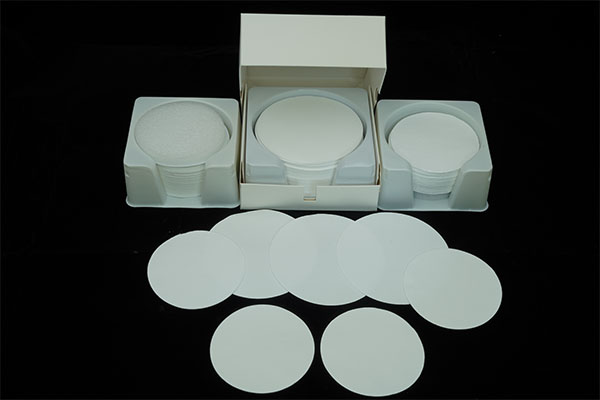
When binders are present, they provide additional structural support, reducing the risk of tear or damage during handling. However, they limit the temperature resistance of the filter to 180°C. On the other hand, binder-free filters are preferred in applications where the filters are exposed to extreme heat or chemicals. Their composition ensures higher purity, making them the go-to choice for sensitive laboratory and analytical procedures.
Conclusion
Glass microfiber filters stand out for their ability to combine low resistance, high impurity retention, and versatility. From handling extreme temperatures to excelling in air and gas filtration, their unique properties make them indispensable in laboratories worldwide.
[^1]: "[PDF] Whatman filtration Product guide", https://macro.lsu.edu/HowTo/Whatman-filtration-product-guide.pdf. A materials or laboratory-filtration reference describing glass microfiber filters as composed of borosilicate glass fibers would support the composition claim; this would not by itself verify every commercial grade or binder formulation. Evidence role: definition; source type: education. Supports: Glass microfiber filters are made of borosilicate glass fibers.. Scope note: Support may be general to glass microfiber filters and may not cover all manufacturers or specialty grades.
[^2]: "Whatman ® glass microfiber grade GF/B filter discs 1 μm pore size", https://www.sigmaaldrich.com/US/en/product/aldrich/wha1821110?srsltid=AfmBOoqdfR7B2LdS43uUvu_CRR4cf6SGQmtnJOKSf2gAmMjy2yZZ7fxz. A filtration handbook, standard method, or technical paper reporting typical particle-retention ranges for glass microfiber filters in liquid and air sampling would support this performance claim; retention values may vary by filter grade, test aerosol, flow rate, and challenge particle. Evidence role: statistic; source type: paper. Supports: Glass microfiber filters can retain particles around 1 μm in liquids and below 1 μm in air.. Scope note: Retention thresholds are grade- and test-condition-dependent rather than universal properties of all glass microfiber filters.
[^3]: "Advanced Design of Fiber-Based Particulate Filters - PMC - NIH", https://pmc.ncbi.nlm.nih.gov/articles/PMC7464808/. A filtration-theory source explaining that fibrous depth filters capture particles within a porous matrix and offer high effective surface area would support the stated mechanism; it would provide general support for glass microfiber filters rather than direct proof for a particular product. Evidence role: mechanism; source type: paper. Supports: The depth structure and large surface area of glass microfiber filters contribute to impurity retention and low resistance.. Scope note: The support is likely mechanistic and general to fibrous depth filters, not necessarily a direct measurement of every glass microfiber filter.
[^4]: "DNA RETENTION ON DEPTH FILTERS - PMC", https://pmc.ncbi.nlm.nih.gov/articles/PMC6586439/. A reference on depth filtration showing that particles are retained within the filter medium rather than only on the upstream surface would support this explanation; the source would describe the general depth-filtration mechanism rather than quantify performance in this article's specific conditions. Evidence role: mechanism; source type: education. Supports: Depth filters trap particles throughout the filter matrix instead of only on the surface.. Scope note: Mechanistic support may not quantify how much retention occurs within the matrix for a specific glass microfiber grade.
[^5]: "Influence of pleated geometry on the pressure drop of filters during ...", https://pmc.ncbi.nlm.nih.gov/articles/PMC9700835/. A filtration engineering source explaining that depth loading distributes captured particles through the medium and can delay surface blinding would support the clogging claim; the effect depends on particle size distribution, solids loading, and operating flow conditions. Evidence role: mechanism; source type: paper. Supports: Depth filtration can reduce clogging compared with filtration that loads particles mainly at the surface.. Scope note: Reduced clogging is conditional and may not occur under all sample loads or particle types.
[^6]: "What Are Glass Microfiber Filters without Binder?", https://huaenv.com/what-are-glass-microfiber-filters-without-binder/. A materials reference or laboratory-filtration standard giving maximum operating temperatures for binder-free and binder-containing glass fiber filters would support this temperature comparison; stated limits may reflect specific filter grades and binder chemistries rather than an absolute material constant. Evidence role: statistic; source type: institution. Supports: Binder-free glass microfiber filters can withstand substantially higher temperatures than filters containing organic binders, with commonly cited limits around 500°C and 180°C respectively.. Scope note: Temperature limits can vary by manufacturer, binder type, exposure time, and application conditions.
[^7]: "Advanced Design of Fiber-Based Particulate Filters - PMC - NIH", https://pmc.ncbi.nlm.nih.gov/articles/PMC7464808/. An aerosol-filtration source describing electrostatic attraction among recognized capture mechanisms for fibrous filters would support the proposed mechanism; such evidence would be contextual because collection efficiency also depends on diffusion, interception, impaction, fiber diameter, and face velocity. Evidence role: mechanism; source type: paper. Supports: Electrostatic interactions can contribute to the capture of fine airborne particles by glass microfiber filters.. Scope note: Electrostatic interaction is one mechanism among several and may not be the dominant mechanism under all air-filtration conditions.
[^8]: "[PDF] Whatman filtration Product guide", https://macro.lsu.edu/HowTo/Whatman-filtration-product-guide.pdf. A laboratory-filtration reference comparing binder-containing and binder-free glass fiber filters would support the tradeoff between mechanical strength, thermal resistance, and chemical cleanliness; the comparison should be read as application guidance rather than proof that every binder-free filter is chemically inert in all analyses. Evidence role: general_support; source type: institution. Supports: Binders can improve handling strength, while binder-free glass microfiber filters are preferred when high temperature tolerance or low extractables are important.. Scope note: The tradeoff depends on the binder formulation, filter grade, analyte, and sample chemistry.