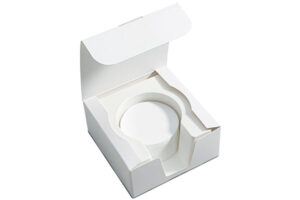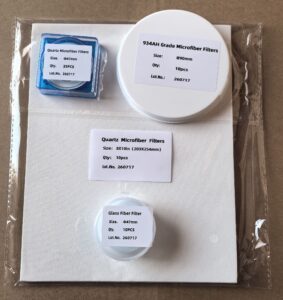

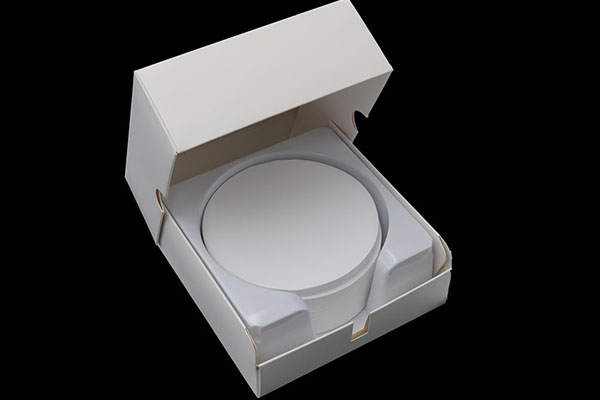
The choice of the right filtration material can make or break your experiment. Are you using filters that meet your lab's exact requirements?
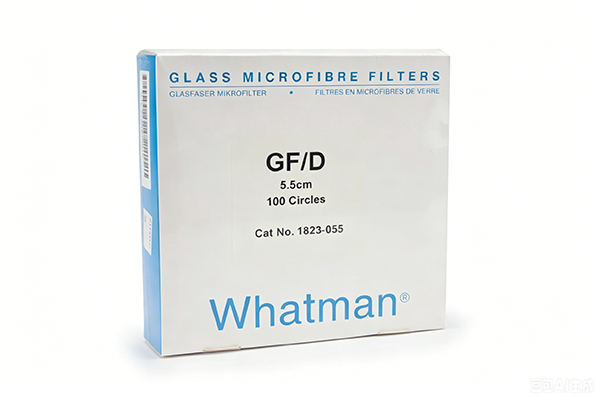
These membranes not only provide high filtration efficiency[^2] but also excel in scenarios requiring high flow rates and particle loading capacity[^3]. Let’s explore their features and applications further.
What makes GF/D filters stand out?
Filtering solutions vary, but not all deliver consistent results for demanding lab conditions. GF/D filters, however, are unique.
GF/D filters absorb more water due to their capillary fiber structure compared to cellulose filters.[^4] They also serve as chemically inert separators in environments where strong acids and alkalis are used as electrolytes[^5].
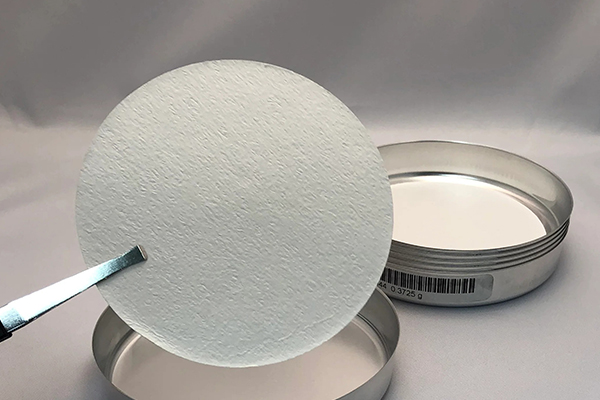
Besides their physical resilience and chemical inertness, their high flow rate and low resistance[^6] make them an exceptional choice for multi-stage filtration processes[^7].
Dive Deeper: Features That Redefine Lab Filtration
To understand why GF/D filters are a preferred choice, consider their standout attributes:
| Feature | Description |
|---|---|
| Material | 100% borosilicate glass fibers |
| Temperature Resistance | Withstands up to 500°C |
| Nominal Particle Retention | 2.7 µm |
| Flow Rate | High flow rates with low resistance |
| Particle Loading Capacity | Can handle high amounts of particles |
| Chemical Inertness | Ideal for use with strong acids and alkalis as electrolytes |
These features make GF/D membranes indispensable for applications requiring durability, precision, and efficiency.
Where are GF/D filters typically used?
The versatility of GF/D membranes opens doors to various applications. But are you leveraging them optimally?
GF/D filters are perfect for pre-filtration, water sample suspension testing, air dust sampling, solution clarification, chromatography preparation, and atmosphere particulate collection in emissions monitoring[^8].

Their utility extends further with applications in liquid scintillation counting methods and spot analysis[^9] thanks to their superior absorption capabilities.
Dive Deeper: Applications Across Industries
The environments where GF/D filters thrive include:
| Application | Industry | Benefits |
|---|---|---|
| Air Dust Sampling | Environmental Monitoring | High retention of particulate matter |
| Water Sample Suspension Testing | Food & Beverage, Pharmaceuticals | Precise measurement of suspended solids |
| Pre-Filtration | Analytical Chemistry | Extends the life of final filters |
| Chromatography Preparation | Life Sciences | Improves sample clarity |
| Atmosphere Particulate Collection | Emissions Monitoring | Reliable collection even in extreme conditions |
| Solution Clarification | Manufacturing and R&D | Efficient removal of impurities |
With a wide range of applications, GF/D filters prove their value across various sectors.
How does Hua Env compete with Whatman GF/D filters?
Choosing a supplier for lab filters involves balancing quality, cost, and reliability. Hua Env aims to meet all three criteria.
Hua Env manufactures glass fiber filters like GF/A, GF/B, GF/C, GF/D, GF/F, 934-AH, and EPM2000. We offer high-quality alternatives to Whatman and Ahlstrom products and provide free samples to distributors looking for lab consumables.
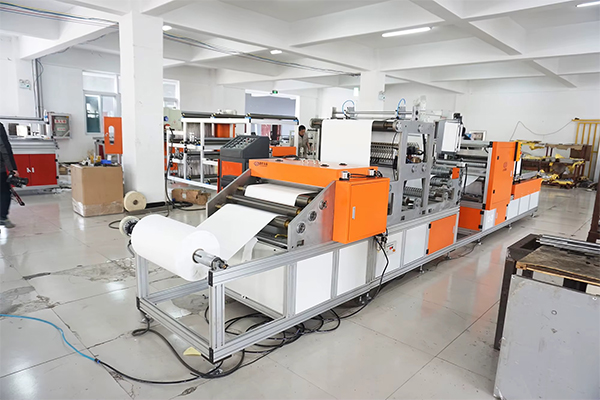
Our production lines ensure quality consistency through ISO-certified processes, temperature-precision cutting, and rigorous testing. Each product undergoes performance evaluation, including filtration efficiency, chemical resistance, and thermal stability.
Dive Deeper: Hua Env's Value Proposition
When partnering with Hua Env, you gain advantages tailored to your needs:
| Benefit | Hua Env Offering |
|---|---|
| Cost Efficiency | Competitive pricing compared to international brands |
| Customization | Filters tailored for specific applications |
| Free Samples | Evaluate quality before committing |
| Quality Assurance | ISO-certified production and stringent testing |
| Supply Reliability | Stable and timely delivery for continuous operations |
| Technical Support | Expert guidance on product selection |
By combining quality with affordability, Hua Env provides a strong alternative to established brands.
Conclusion
GF/D separator membranes redefine filtration with their efficient, durable, and chemically inert attributes. If you're seeking reliability and performance in demanding lab conditions, they are a choice worth considering. For those searching for competitive alternatives to Whatman, Hua Env offers solutions that deliver on quality and cost.
[^1]: "[PDF] Whatman filtration Product guide", https://macro.lsu.edu/howto/Whatman-filtration-product-guide.pdf. A Whatman/Cytiva technical specification sheet identifies Grade GF/D as a binder-free borosilicate glass microfiber filter and lists its nominal particle retention and maximum operating temperature, supporting the stated product specifications. Evidence role: definition; source type: other. Supports: Whatman Grade GF/D filters are binder-free borosilicate glass microfiber filters with 2.7 µm nominal particle retention and heat resistance up to 500°C.. Scope note: The source is a manufacturer specification rather than an independent performance test.
[^2]: "Chemical Modification with Surface-Active Treatment - PMC", https://pmc.ncbi.nlm.nih.gov/articles/PMC11174125/. Independent filtration literature describes glass fiber media as depth filters that can retain particles throughout a fibrous matrix, which provides contextual support for describing them as efficient filtration media. Evidence role: mechanism; source type: paper. Supports: Glass microfiber filters can provide high filtration efficiency.. Scope note: General glass-fiber filtration literature supports the mechanism but may not quantify efficiency for GF/D specifically under all test conditions.
[^3]: "Chemical Modification with Surface-Active Treatment - PMC", https://pmc.ncbi.nlm.nih.gov/articles/PMC11174125/. Technical literature on glass microfiber depth filters notes that their porous fiber structure can permit relatively high flow and substantial particulate loading compared with many surface-retention membranes, supporting the stated performance characteristics in general terms. Evidence role: mechanism; source type: paper. Supports: Glass microfiber filters are suitable for high flow rates and high particle loading capacity.. Scope note: The support is contextual unless the source reports GF/D-specific flow-rate and loading measurements.
[^4]: "Cellulose: A Review of Water Interactions, Applications in ... - PMC", https://pmc.ncbi.nlm.nih.gov/articles/PMC9999429/. Filtration and porous-media sources explain that capillary forces in fibrous structures influence liquid uptake, providing contextual support for the claim that glass microfiber structures can have high absorbency. Evidence role: mechanism; source type: paper. Supports: GF/D filters absorb more water because their fibrous capillary structure promotes liquid uptake.. Scope note: A direct GF/D-versus-cellulose comparison would be needed to prove the comparative wording exactly.
[^5]: "Separators for Li-Ion and Li-Metal Battery Including Ionic Liquid ...", https://pmc.ncbi.nlm.nih.gov/articles/PMC4159887/. Electrochemical literature reports the use of glass-fiber separators in acidic or alkaline electrolyte systems because of their chemical stability and porosity, supporting the separator-use claim in electrochemical contexts. Evidence role: case_reference; source type: paper. Supports: Glass microfiber filters can serve as chemically inert separators in strong acid or alkali electrolyte environments.. Scope note: Such sources support glass-fiber separators generally; they may not establish that GF/D is appropriate for every strong-acid or strong-alkali electrolyte system.
[^6]: "Performance factors for filtration of air using cellulosic fiber-based ...", https://bioresources.cnr.ncsu.edu/resources/performance-factors-for-filtration-of-air-using-cellulosic-fiber-based-media-a-review/. Studies of fibrous filter media describe how high porosity and fiber networks can reduce pressure drop while allowing fluid passage, giving mechanistic support for low-resistance, high-flow behavior in glass-fiber filters. Evidence role: mechanism; source type: paper. Supports: The porous fibrous structure of GF/D-type filters can support high flow rates and low resistance.. Scope note: The source would support the physical principle; GF/D-specific pressure-drop data would be needed for precise performance claims.
[^7]: "Contributions of depth filter components to protein adsorption in ...", https://pubmed.ncbi.nlm.nih.gov/29663326/. Filtration references describe prefilters and coarse depth filters as upstream stages used to remove larger particulate loads before finer filtration, supporting the relevance of glass microfiber filters in multi-stage filtration workflows. Evidence role: mechanism; source type: education. Supports: GF/D-type depth filters can be used in multi-stage filtration processes.. Scope note: This supports the process logic generally and does not prove GF/D is optimal for every multi-stage system.
[^8]: "Review of Filters for Air Sampling and Chemical Analysis in Mining ...", https://pmc.ncbi.nlm.nih.gov/articles/PMC10174218/. Product application tables and laboratory-method references list glass microfiber filters for prefiltration, suspended-solids analysis, air monitoring, clarification, and sample preparation, supporting the stated range of uses. Evidence role: general_support; source type: institution. Supports: GF/D filters are used for pre-filtration, suspended-solids testing, air dust sampling, solution clarification, chromatography preparation, and emissions particulate collection.. Scope note: A single neutral source may support only part of the list; multiple method or datasheet sources may be needed for full coverage.
[^9]: "[PDF] Method IO-3.1 - Selection, Preparation and Extraction of Filter Material", https://www.epa.gov/sites/default/files/2019-11/documents/mthd-3-1.pdf. Radiochemical and analytical-method references describe the use of absorbent filter media for sample collection or preparation in liquid scintillation counting and spot-test workflows, supporting these applications for absorbent glass-fiber filters. Evidence role: case_reference; source type: research. Supports: Absorbent glass microfiber filters can be used in liquid scintillation counting methods and spot analysis.. Scope note: The source may support absorbent filter media generally rather than GF/D filters specifically.