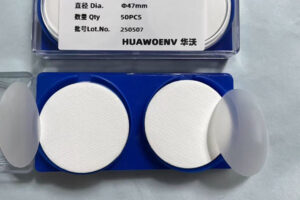

Air pollution is a growing concern[^1], and precise tools are necessary to monitor it effectively. Without reliable filters[^2], accurate results in pollution monitoring can be hard to achieve.
The Glass Microfibre Filter Grade GF/A is crafted from 100% borosilicate glass[^3], making it ideal for air pollution monitoring. It provides excellent fine particle retention, high flow rates, and strong loading capacity.
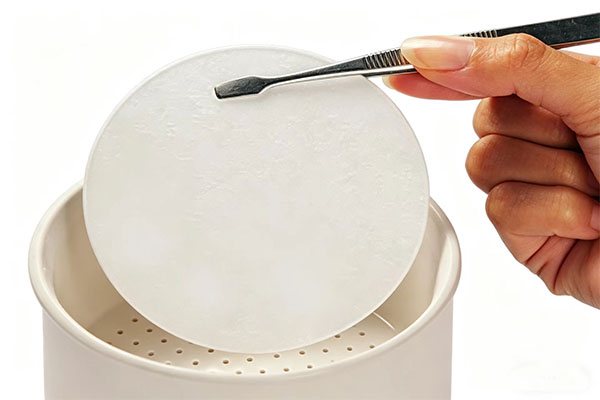
This unique filter has many applications, ranging from wastewater pollution monitoring to air pollution assessment. Its robust properties make it indispensable for researchers and organizations.
Why is borosilicate glass used in GF/A filters?
Borosilicate glass is known for its unique properties, but why is it specifically chosen for filters? It's because of the strength and reliability it offers under various conditions.
Borosilicate glass in GF/A filters ensures durability, chemical resistance, and precise filtration. It performs exceptionally well in high temperatures and harsh environments.
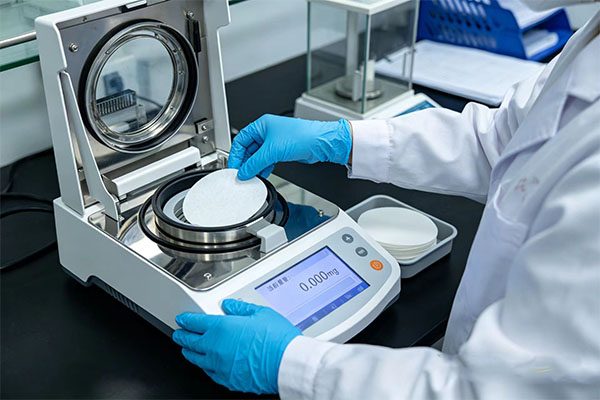
Borosilicate glass filters are essential for projects requiring high precision, such as air pollution monitoring. Their ability to withstand temperature fluctuations and chemical exposure makes them ideal for this task.
| Key Feature | Benefit |
|---|---|
| High thermal resistance[^4] | Suitable for extreme temperatures |
| Chemical durability[^5] | Resists acids and bases effectively |
| Fine particle retention | Captures minute pollutants efficiently |
How does GF/A perform in air pollution monitoring?
Air pollution monitoring requires filters that can capture particles effectively while providing reliable data. GF/A filters excel at this task.
GF/A filters are recommended for weight-based determination of airborne particles and chimney sampling[^6]. They are widely used for absorption-based air pollution monitoring[^7].
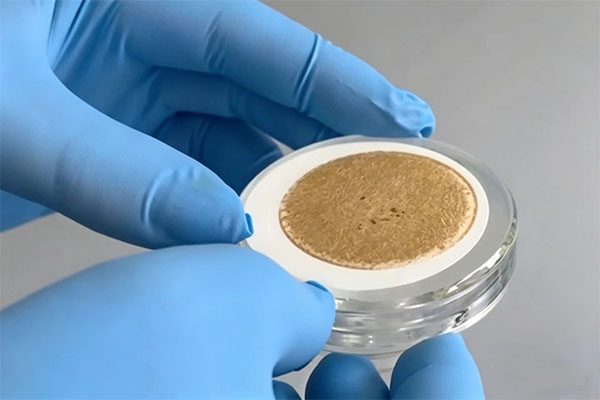
These filters excel at capturing particulate matter from air samples. The weight-based method ensures accurate assessments of pollution levels. Additionally, their high flow rates make sampling efficient, even with large volumes of air.
What other applications is GF/A suitable for?
While air pollution monitoring is a primary use, GF/A filters are versatile in various other applications. They serve labs, industries, and research centers.
GF/A filters are effective for wastewater monitoring, water filtration, protein filtering, algae and bacteria culture, and food analysis. They also assist in radioimmunoassays for weak β-ray emitters[^8].
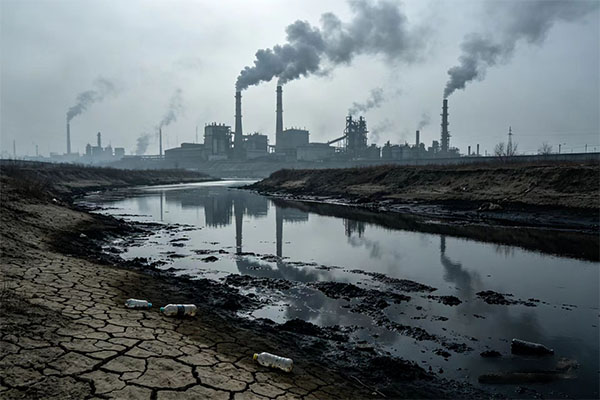
Their adaptability across multiple disciplines highlights their importance. Below is a breakdown of some common uses:
| Application | GF/A Contribution |
|---|---|
| Wastewater monitoring | Captures pollutants efficiently |
| Food analysis | Ensures accurate and safe filtration |
| Protein filtering | Provides clear and reliable results |
| Algae/bacteria culture | Supports growth without interference |
| Radioimmunoassays | Detects weak β-ray emitters effectively |
Why should you choose GF/A filters for environmental monitoring?
Environmental monitoring is critical, especially in today's climate. Selecting the right filter can make all the difference. GF/A filters are a trusted choice for professionals worldwide.
By choosing GF/A filters, organizations can ensure accurate sampling, reliable data, and robust performance across various conditions. Their consistent quality makes them a preferred option.
Their ability to capture fine particles, handle large volumes, and resist extreme conditions make them indispensable. Whether it's for air pollution, wastewater, or food analysis, GF/A filters offer unparalleled performance.
Conclusion
The Glass Microfibre Filter Grade GF/A combines fine particle retention, high flow rates, and robust chemical resistance, making it an ideal tool for air pollution monitoring and various laboratory applications.
[^1]: "Ambient (outdoor) air pollution - World Health Organization (WHO)", https://www.who.int/news-room/fact-sheets/detail/ambient-(outdoor)-air-quality-and-health. WHO or comparable international health data document that ambient air pollution remains a major global environmental-health burden, supporting the article's context that air pollution warrants ongoing monitoring. Evidence role: statistic; source type: institution. Supports: Air pollution is a growing concern.. Scope note: This supports the public-health context for monitoring, not any specific GF/A filter performance claim.
[^2]: "[PDF] Standard Operating Procedure for Particulate Matter (PM ...", https://www3.epa.gov/ttnamti1/files/ambient/pm25/spec/RTIGravMassSOPFINAL.pdf. Governmental air-sampling guidance describes filter media selection, conditioning, handling, and weighing as quality-control factors in particulate-matter measurement, supporting the claim that filter reliability affects monitoring accuracy. Evidence role: mechanism; source type: government. Supports: Without reliable filters, accurate results in pollution monitoring can be hard to achieve.. Scope note: This supports the measurement principle generally rather than proving that GF/A filters are superior in all monitoring settings.
[^3]: "Whatman ® glass microfiber filters, Grade GF/A - Sigma-Aldrich", https://www.sigmaaldrich.com/US/en/product/aldrich/wha1820866?srsltid=AfmBOorkssdQBSvV9MigcmMknHaRW-O-nijtaNF00p_PUGFEymXG24s4. A GF/A technical specification identifies the grade as a binder-free borosilicate glass microfibre filter, supporting the stated composition; the source is a product specification rather than independent analytical verification. Evidence role: definition; source type: other. Supports: The Glass Microfibre Filter Grade GF/A is crafted from 100% borosilicate glass.. Scope note: Direct neutral sources for the exact commercial grade composition may be limited, so this may require a manufacturer or distributor technical datasheet.
[^4]: "[PDF] Thermal Properties Of Sodium Borosilicate Glasses As A Function Of ...", https://scholarsmine.mst.edu/cgi/viewcontent.cgi?article=4276&context=matsci_eng_facwork. Materials references describe borosilicate glass as having a low coefficient of thermal expansion and relatively high resistance to thermal shock, supporting the article's statement about thermal resistance. Evidence role: mechanism; source type: encyclopedia. Supports: Borosilicate glass provides high thermal resistance suitable for demanding temperature conditions..
[^5]: "Borosilicate glass - Wikipedia", https://en.wikipedia.org/wiki/Borosilicate_glass. Glass-science or materials references report that borosilicate glasses generally show strong chemical durability against many aqueous and acidic environments, supporting the table's chemical-resistance claim while not covering every acid or base condition. Evidence role: mechanism; source type: research. Supports: Borosilicate glass in GF/A filters resists chemical exposure effectively.. Scope note: The support is general to borosilicate glass; actual resistance depends on reagent concentration, temperature, exposure time, and filter construction.
[^6]: "[PDF] Method 5 - Determination of Particulate Matter Emissions from ... - EPA", https://www.epa.gov/sites/default/files/2021-05/documents/method_5_-_2020_12_07_0.pdf. EPA stack-sampling and particulate-matter methods use filters and gravimetric determination to collect and measure particulate emissions from stationary sources, supporting the general role of glass-fibre filtration in airborne-particle and chimney sampling, although not necessarily specifying GF/A as the required grade. Evidence role: general_support; source type: government. Supports: GF/A filters are recommended for weight-based determination of airborne particles and chimney sampling.. Scope note: This supports the sampling method and filter class generally; it does not establish that GF/A is mandated or optimal for every regulatory chimney-sampling protocol.
[^7]: "The Measurement of Atmospheric Black Carbon: A Review - PMC", https://pmc.ncbi.nlm.nih.gov/articles/PMC10748019/. Peer-reviewed aerosol-measurement literature describes filter-based optical absorption methods for estimating light-absorbing particulate matter such as black carbon, supporting the existence of absorption-based air-pollution monitoring while not directly proving widespread use of GF/A specifically. Evidence role: mechanism; source type: paper. Supports: GF/A filters are widely used for absorption-based air pollution monitoring.. Scope note: The evidence is likely to support filter-based absorption monitoring in general; specific filter grades and optical corrections vary by instrument and protocol.
[^8]: "Scintillation proximity radioimmunoassay utilizing 125I-labeled ligands", https://pmc.ncbi.nlm.nih.gov/articles/PMC391498/. Laboratory assay literature and glass-fibre filter specifications document the use of glass-fibre filters to retain radiolabeled material for beta counting in radioimmunoassay-type workflows, supporting this specialized application; the evidence may be method-specific rather than exclusive to GF/A. Evidence role: case_reference; source type: paper. Supports: GF/A filters assist in radioimmunoassays for weak β-ray emitters.. Scope note: This supports compatibility with certain radiometric assay workflows, not universal performance for all weak beta emitters or all RIA protocols.