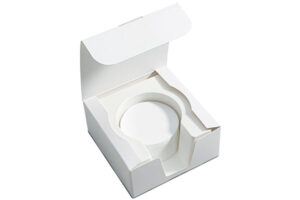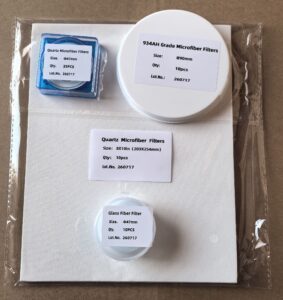

The analysis of total suspended solids (TSS) is critical in many industries, from environmental monitoring to water treatment.[^1] But choosing the right filter can be challenging if you're unsure where to begin.
The Grade 934-AH borosilicate glass microfiber filter is a reliable option for TSS analysis[^2] due to its high retention efficiency, smooth surface, and capacity for large-volume liquid filtration.

Selecting the proper filter is key to ensuring accurate results[^3], and the Grade 934-AH provides unique advantages that make it well-suited for this application. Let's explore why it stands out.
Why is a smooth surface important?
When performing TSS analysis, recovering all precipitates efficiently is essential to ensure accurate calculations and minimize errors[^4]. A rough surface filter often leads to incomplete collection, which compromises the data.
The Grade 934-AH features a smooth surface that allows for efficient and complete precipitate recovery[^5], ensuring precision in your analysis.

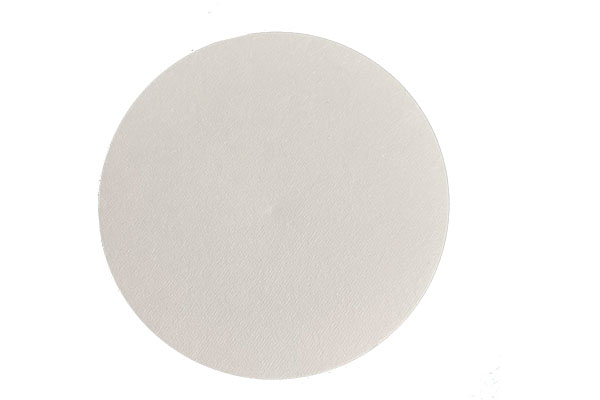
A smooth surface also reduces the risk of sample loss during the filtration process. It’s particularly valuable when handling fine particles, as it promotes retention without affecting flow rates. This design is optimized to give you confidence in your results, whether you're analyzing water quality or conducting experiments in a lab.
How does high loading capacity improve filtration?
Imagine you're working with turbid solutions that need thorough filtration. A small-capacity filter will clog quickly, causing delays, increased costs, and the need for repeated analysis.[^6]
The high loading capacity of the Grade 934-AH ensures efficient filtration of turbid solutions without frequent filter replacements[^7], saving both time and resources.

This feature is particularly advantageous for laboratories that process large sample volumes. By accommodating higher loads of particulates, the filter maintains its efficiency without sacrificing performance. This makes it ideal for industrial applications as well as academic research.
What makes borosilicate glass microfiber unique?
Not all filters are created equal. Filters must withstand high temperatures or corrosive conditions in certain environments. Ordinary materials may degrade, affecting the reliability of the filtration process.
The Grade 934-AH is made from high-grade borosilicate glass microfiber, which can withstand temperatures up to 550°C[^8], making it suitable for a wide range of demanding applications.

In addition to its temperature resistance, borosilicate glass microfiber is also binder-free, ensuring higher purity and minimizing the risk of contamination[^9]. This makes it particularly valuable for sensitive analytical procedures, including those in environmental sciences and pharmaceutical industries.
How precise is the particle retention?
In TSS analysis, precision is critical. Filters with inconsistent particle retention can distort results, leading to unreliable data.
The Grade 934-AH has a nominal particle retention of 1.5 µm[^10], ensuring accurate separation and consistent performance across applications.
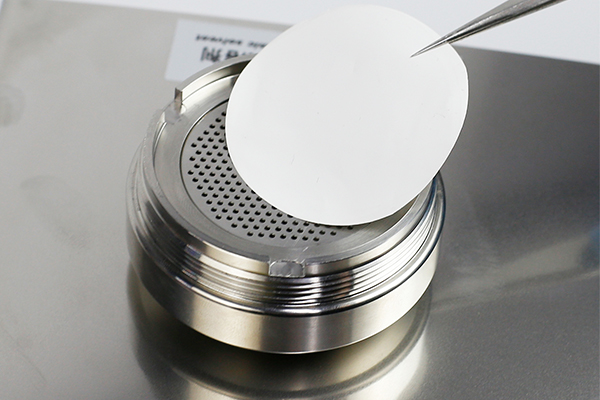
This level of precision contributes to its widespread use in industries requiring exact measurements. Whether filtering environmental samples or complex chemical mixtures, its consistent particle retention ensures dependable outcomes.
What about flow rates and operational efficiency?
Slow flow rates can bottleneck your workflow, especially when handling large-scale liquid filtration tasks. Conversely, overly fast flow rates might compromise retention efficiency.
The Grade 934-AH strikes a balance with an air flow rate of 3.7 seconds per 100 mL/in² and a water flow rate of 341 mL/min, ensuring both speed and accuracy.
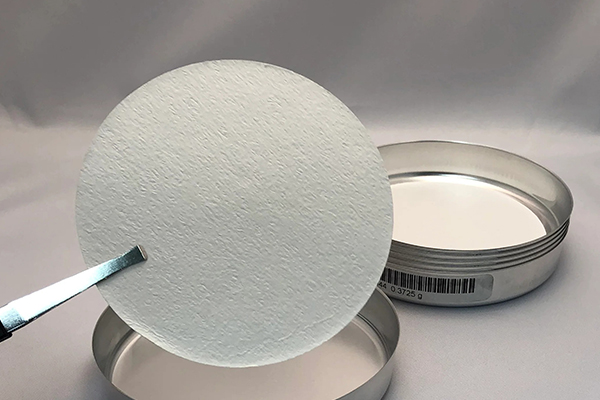
Its performance metrics make it ideal for high-throughput scenarios, where speed and reliability are equally important. Whether used in laboratory experiments or industrial processes, it allows for seamless integration into workflows.
How does low fiber shedding enhance application reliability?
Fiber shedding can lead to contamination, negatively impacting results and compromising your analysis. For sensitive applications, even minimal contamination can pose significant challenges.
The Grade 934-AH minimizes fiber shedding during filtration, maintaining the integrity of your samples and ensuring reliable outcomes.
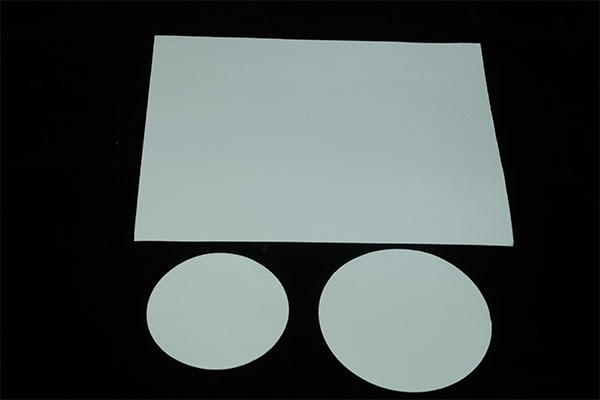
This characteristic is vital for industries like pharmaceuticals, where purity and precision are non-negotiable. It provides peace of mind, knowing your results will remain uncontaminated and consistent.
Conclusion
The Grade 934-AH borosilicate glass microfiber filter is a top-tier choice for TSS analysis. Its smooth surface, high loading capacity, temperature resistance, precise particle retention, and low fiber shedding make it a reliable solution for industries requiring precision and consistency.
[^1]: "5.8 Total Solids | Monitoring & Assessment - EPA Archive", https://archive.epa.gov/water/archive/web/html/vms58.html. EPA and USGS materials describe total suspended solids as a standard water-quality and wastewater parameter used to assess particulate matter, treatment performance, and environmental conditions. Evidence role: general_support; source type: government. Supports: TSS analysis is important in environmental monitoring and water treatment.. Scope note: These sources support the importance of TSS monitoring generally, not the importance of any particular filter grade.
[^2]: "Grade 934-AH Filter for Total Suspended Solids Analysis, 47mm ...", https://www.tischscientific.com/filter-papers-glass-microfiber-filters-1827-047?srsltid=AfmBOopoejJf3iOgoB8GM0LB8JExubveVybwr1jOw1pM14JwrQyfnx3s. Manufacturer specifications for Grade 934-AH identify it as a borosilicate glass microfiber filter intended for suspended-solids or environmental water testing applications, while standard TSS methods use glass-fiber filtration as the measurement medium. Evidence role: general_support; source type: other. Supports: Grade 934-AH is suitable for TSS analysis.. Scope note: This supports product compatibility with TSS-style methods but does not independently prove that it is superior or universally reliable under all sample conditions.
[^3]: "[PDF] Method 160.2", https://www.uvm.edu/bwrl/lab_docs/protocols/106.2_TSS_by_gravimetry_(EPA_1971).pdf. EPA Method 160.2 and comparable suspended-solids methods define TSS gravimetrically as material retained on a specified glass-fiber filter and dried under controlled conditions, indicating that filter selection is part of the measurement basis. Evidence role: mechanism; source type: government. Supports: Choosing an appropriate filter is important for accurate TSS results.. Scope note: The method establishes the importance of filter type for TSS measurement, but it does not by itself compare all commercial filter grades.
[^4]: "EPA-NERL: 160.2: Non-filterable Residue by Drying Oven", https://www.nemi.gov/methods/method_summary/5213/. Gravimetric suspended-solids methods calculate TSS from the mass of residue retained on a filter after drying, so loss or incomplete recovery of particulate material can directly affect the reported concentration. Evidence role: mechanism; source type: government. Supports: Efficient recovery of retained solids is necessary to reduce error in TSS calculations.. Scope note: The source supports the measurement principle; it may not specifically discuss precipitate recovery from Grade 934-AH filters.
[^5]: "Whatman glass microfiber filters, Grade 934-AH circles, diam. 105 ...", https://www.sigmaaldrich.com/US/en/product/aldrich/wha1827105?srsltid=AfmBOopkXSHOR74baemQWLWlWkVIk-qw6D6HxRylUIZX0DjiwmNzQdIL. Technical specifications for Grade 934-AH describe the filter surface and intended analytical uses; such documentation can substantiate whether the grade is marketed or specified for smooth-surface recovery of retained solids. Evidence role: case_reference; source type: other. Supports: Grade 934-AH has a smooth surface that supports efficient recovery of retained precipitates.. Scope note: A product datasheet can verify the stated feature, but it is manufacturer evidence and may not demonstrate complete recovery across all precipitate types.
[^6]: "CIVL 1101 - Introduction to Water Filtration", https://www.ce.memphis.edu/1101/notes/filtration/filtration-1.html. Filtration studies describe particle accumulation and cake formation as mechanisms that increase hydraulic resistance and reduce flow, explaining why low-capacity media can clog rapidly with high-solids samples. Evidence role: mechanism; source type: paper. Supports: Filters with insufficient loading capacity can clog quickly when processing turbid samples.. Scope note: The mechanism is general to filtration and does not quantify delays or costs for this specific filter or workflow.
[^7]: "Whatman Grade 934-AH Glass Microfiber Filters - ProSource Scientific", https://www.psscientific.com/whatman-grade-934-ah-glass-microfiber-filters?srsltid=AfmBOopbm_czB218kQf07s9_5wEPvyk-5JWJplcqOONKMOQmE-Mg6Axg. Glass microfiber filter references and Grade 934-AH specifications describe high particulate-loading capacity as a reason these filters are used for turbid liquids and suspended-solids testing. Evidence role: mechanism; source type: other. Supports: Grade 934-AH has high loading capacity that helps filter turbid solutions efficiently.. Scope note: The evidence can support higher loading capacity in general or under specified test conditions, but actual replacement frequency depends on sample turbidity, filter diameter, and vacuum conditions.
[^8]: "[PDF] Whatman filtration Product guide", https://macro.lsu.edu/howto/Whatman-filtration-product-guide.pdf. Grade 934-AH technical datasheets list the maximum operating or thermal resistance temperature for the borosilicate glass microfiber medium as approximately 550°C. Evidence role: case_reference; source type: other. Supports: Grade 934-AH borosilicate glass microfiber filters can withstand temperatures up to 550°C.. Scope note: The value is a product specification and may depend on dry conditions and handling constraints rather than all chemical or mechanical operating environments.
[^9]: "[PDF] Whatman filtration Product guide", https://macro.lsu.edu/howto/Whatman-filtration-product-guide.pdf. Analytical filter references describe binder-free glass microfiber media as avoiding added binders that could leach or contribute extractables, which supports their use where low contamination is required. Evidence role: mechanism; source type: research. Supports: Binder-free borosilicate glass microfiber can reduce contamination risk in sensitive analytical filtration.. Scope note: This supports the contamination-control rationale generally; it does not prove that every use of Grade 934-AH is contamination-free.
[^10]: "Whatman glass microfiber filters, Grade 934-AH circles, diam. 105 ...", https://www.sigmaaldrich.com/US/en/product/aldrich/wha1827105?srsltid=AfmBOopzMR5eYMd5Hca5-PiF3jip6O-nJrdAdWSTUdtQGJHgfrWJn_Uh. Grade 934-AH product specifications list a nominal particle retention of 1.5 µm, identifying the approximate particle size retained under the manufacturer’s test conditions. Evidence role: case_reference; source type: other. Supports: Grade 934-AH has a nominal particle retention rating of 1.5 µm.. Scope note: Nominal retention ratings are method-dependent and should not be read as an absolute cutoff for every particle shape, sample matrix, or filtration condition.