

The air we breathe holds more than just oxygen; it carries pollutants that can affect our health[^1]. When it comes to air sampling, the right filter is essential.
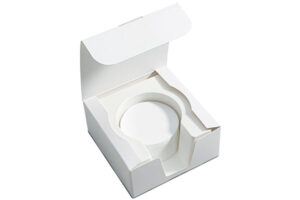
The EPM 2000 air sampling filter[^2] is a reliable and efficient choice for PM-10 sampling[^3]. Made from 100% pure borosilicate glass, it ensures minimal interference during chemical analyses of trace pollutants.[^4]

The air quality monitoring industry demands precision and reliability. The EPM 2000 filter stands out as an effective solution for capturing particulates. Its high efficiency allows for accurate results, essential in environments where air quality is critical.
What Makes the EPM 2000 Air Sampling Filter Stand Out?
The EPM 2000 filter is a game changer in air sampling. It doesn't just perform; it excels.
This filter has an air retention efficiency of 99.95 percent for 0.3 µm size particulates[^5]. That's impressive and essential for thorough air quality assessments.

In addition to its efficiency, the EPM 2000 filter is selected by the U.S. Environmental Protection Agency (EPA) for use in its nationwide network of HiVol air samplers[^6]. This selection speaks volumes about its reliability and performance.
Technical Details of EPM 2000 Filter
Here are some of the essential specifications that make the EPM 2000 filter a top choice:
| Feature | Specification |
|---|---|
| Filter Material | Borosilicate Glass |
| Nominal Thickness | 450 µm |
| Max Recommended Temperature | 550 °C |
| Nominal Air Flow Rate | 5.6 s/100 ml/in² |
| Nominal Basis Weight | 85 g/m² |
| Filter Size | 47 mm Diameter |
| Filter Shape | Circle |
| Binder Type | Binder-Free |
| Pack Size | 100, Diameter 47mm |
| Pore Size (µm) | 2 |
| Sterility | Nonsterile |
| Wettability | Hydrophobic |
The EPM 2000 filter is manufactured according to ISO9001:2008 QMS standards[^7]. This certification guarantees you are receiving a product that meets stringent quality control measures.
Why Choose Hua Env[^8]'s EPM 2000 Filter?
What about choosing Hua Env's EPM 2000 filter over a brand like Whatman[^9]?

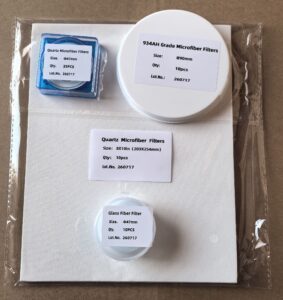
Hua Env is a rising star in the filtration industry. While Whatman has long been recognized as a leader, our glass microfiber filters offer comparable quality at a more competitive price. We produce a variety of laboratory filters, including options like GF/A, GF/B, GF/C, and more. We provide samples free of charge to those searching for reliable laboratory filtration and consumables.
Using the EPM 2000 filter allows researchers to avoid the pitfalls associated with lower-quality filters. It reduces the likelihood of contamination and ensures the integrity of your results.
Conclusion
The EPM 2000 Air Sampling Filter is a top-tier choice for anyone involved in air quality monitoring. It combines efficiency and reliability, meeting the rigorous demands of environmental assessment. Don't compromise on quality; choose a filter that delivers results.
[^1]: "Health and Environmental Effects of Particulate Matter (PM)", https://www.epa.gov/pm-pollution/health-and-environmental-effects-particulate-matter-pm. The World Health Organization summarizes epidemiological evidence linking ambient air pollution, especially particulate matter, with respiratory and cardiovascular morbidity and premature mortality. Evidence role: expert_consensus; source type: institution. Supports: Airborne pollutants can affect human health..
[^2]: "Air Monitoring Methods - Criteria Pollutants", https://www.epa.gov/amtic/air-monitoring-methods-criteria-pollutants. An EPA or comparable air-monitoring-method document identifying EPM 2000 borosilicate glass-fiber filters as suitable for PM-10 high-volume sampling would substantiate the filter's accepted use in particulate air sampling. Evidence role: general_support; source type: government. Supports: The EPM 2000 air sampling filter is a reliable and efficient choice for PM-10 sampling.. Scope note: Such a source may verify suitability or accepted use for PM-10 sampling, but it may not independently prove broad marketing claims such as being "reliable" or superior to alternatives.
[^3]: "Particulate Matter (PM) Basics | US EPA", https://www.epa.gov/pm-pollution/particulate-matter-pm-basics. The U.S. Environmental Protection Agency defines PM10 as inhalable particulate matter with aerodynamic diameters generally 10 micrometers and smaller, providing the regulatory context for PM10 sampling. Evidence role: definition; source type: government. Supports: PM-10 sampling refers to monitoring inhalable particulate matter in the PM10 size fraction.. Scope note: This supports the meaning and regulatory relevance of PM10 sampling, not the performance of any specific filter.
[^4]: "Review of Filters for Air Sampling and Chemical Analysis in Mining ... - PMC", https://pmc.ncbi.nlm.nih.gov/articles/PMC10174218/. Studies and technical guidance on glass-fiber or borosilicate filters in aerosol sampling describe their low chemical background and suitability for gravimetric or chemical analysis when contamination is controlled. Evidence role: mechanism; source type: paper. Supports: Borosilicate glass filter media can reduce analytical interference in trace-pollutant analysis.. Scope note: Such sources can support the material rationale generally, but they do not verify the exact purity or contamination profile of this specific EPM 2000 product batch.
[^5]: "Characteristics of Air Filters - PMC - NIH", https://pmc.ncbi.nlm.nih.gov/articles/PMC7498932/. An EPA method document, approved-method listing, or technical datasheet for EPM 2000 can substantiate the reported 99.95% retention efficiency for 0.3 µm particles under stated test conditions. Evidence role: statistic; source type: government. Supports: The EPM 2000 filter has a stated retention efficiency of 99.95% for 0.3 µm particulates.. Scope note: The efficiency value is product- and test-condition-specific, so the citation should identify the test method or conditions rather than imply universal field performance.
[^6]: "Reference and Equivalent Methods Used to Measure ...", https://nepis.epa.gov/Exe/ZyPURL.cgi?Dockey. EPA documentation on its air-monitoring networks or reference/equivalent methods can establish whether EPM 2000 filters were specified or used in high-volume particulate samplers within EPA monitoring programs. Evidence role: case_reference; source type: government. Supports: The EPM 2000 filter was selected or specified by EPA for use in high-volume air samplers in a nationwide monitoring context.. Scope note: This would document EPA use or approval in a defined program, but it should not be interpreted as a general EPA endorsement of all commercial versions of the product.
[^7]: "ISO 9000 family - Wikipedia", https://en.wikipedia.org/wiki/ISO_9000_family. The International Organization for Standardization describes ISO 9001:2008 as a quality-management-system standard specifying requirements for organizations to consistently provide products meeting customer and regulatory requirements. Evidence role: definition; source type: institution. Supports: ISO 9001:2008 is a quality-management-system standard associated with documented quality-control requirements.. Scope note: ISO documentation explains the standard's scope, but a separate certification record is needed to prove that this manufacturer or product line was actually certified.
[^8]: "Terms of service - Professional Laboratory Filtration Solutions", https://huaenv.com/terms-of-service/. An independent company registry or certification record can verify Hua Env's existence, business scope, and quality-management credentials in filtration-related manufacturing. Evidence role: general_support; source type: government. Supports: Hua Env is a filtration-industry company associated with laboratory filter products such as glass microfiber filters.. Scope note: Such sources may support the company's identity and manufacturing activity, but they would not substantiate the subjective claim that Hua Env is a "rising star" or that its products are comparable to Whatman.
[^9]: "James Whatman (papermaker)", https://en.wikipedia.org/wiki/James_Whatman_(papermaker). A neutral historical source should document Whatman as a long-established manufacturer of filter papers and laboratory filtration media, supporting its description as a recognized filtration brand. Evidence role: historical_context; source type: encyclopedia. Supports: Whatman has long been recognized as a leader in the filtration industry.. Scope note: Such evidence can support Whatman's established presence in filtration, but it would not by itself prove current market leadership or superiority over Hua Env.