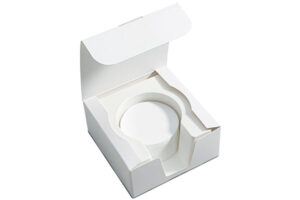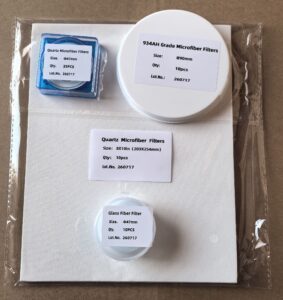


Air quality is a major concern today. With pollution levels rising and health effects becoming more apparent[^1], the need for efficient air sampling filters is crucial. The Grade EPM 2000 air sampling filter offers a solution with its impressive efficiency and reliable specifications.
The EPM 2000 air sampling filter has an air retention efficiency of 99.95% for 0.3 µm size particulates[^2]. Selected by the U.S. EPA for nationwide air sampling[^3], it meets high standards of quality and performance.

The EPM 2000 filter is manufactured according to ISO9001:2008 QMS standards[^4], ensuring that it meets strict quality control measures. It is available in both sheet and circle designs, making it versatile for various applications. This flexibility allows users to choose the format that best suits their specific needs.
What Applications Can the EPM 2000 Filter Be Used For?
The EPM 2000 air sampling filter is designed primarily for use in high volume air sampling equipment[^5]. It is ideal for monitoring ambient air quality, specifically in TSP (Total Suspended Particulates) monitoring[^6]. These filters are especially beneficial for environmental agencies and laboratories that require reliable air sampling results.
The EPM 2000 filter is specifically designed for US EPA TSP ambient air monitoring. With its robust construction and high efficiency, it effectively collects atmospheric particulates and aerosols[^7].

When using the EPM 2000 filter, you can expect consistent performance. Its nominal air flow rate is 5.6 s/100 ml/in², which facilitates efficient sampling. The filters come in two formats: 47 mm circles and 8 × 10 inch sheets, both available in packs of 100.
Key Specifications of the EPM 2000 Filter
Here's a quick overview of the key specifications for both formats of the EPM 2000 air sampling filter:
| Parameter | EPM 2000 Air Sampling Filter, 47 mm Circle | EPM 2000 Air Sampling Filter, 8 × 10 in Sheet |
|---|---|---|
| Application | US EPA TSP ambient air monitoring | US EPA TSP ambient air monitoring |
| Grade | Grade EPM 2000 | Grade EPM 2000 |
| Diameter | 47 mm | 203.2 mm x 254 mm |
| Nominal Air Flow Rate | 5.6 s/100 ml/in² | 5.6 s/100 ml/in² |
| Nominal Thickness | 450 µm | 450 µm |
| Nominal Basis Weight | 85 g/m² | 85 g/m² |
| Max recommended temperature | 550 °C | 550 °C |
| Material | Borosilicate glass | Borosilicate glass |
| Binder Type | Binder Free | Binder Free |
| Format | Circles | Sheets |
The EPM 2000 filter's high maximum recommended temperature of 550 °C[^8] allows it to perform well under various conditions. This ensures that the filter maintains its integrity and effectiveness, even in challenging environments.
Conclusion
The Grade EPM 2000 air sampling filter excels in air quality monitoring, providing reliable performance and flexibility. Its high efficiency and compliance with stringent standards make it an excellent choice for professionals in the environmental monitoring field.
[^1]: "findings from the 2021 Global Burden of Disease Study - PMC", https://pmc.ncbi.nlm.nih.gov/articles/PMC12325274/. WHO and global air-pollution assessments document that ambient air pollution is associated with substantial cardiopulmonary and mortality burdens, supporting the article's framing of air quality as a public-health concern. Evidence role: general_support; source type: institution. Supports: Air quality is a major concern because pollution exposure has documented health effects.. Scope note: This supports the general public-health context, not the performance of the EPM 2000 filter specifically.
[^2]: "Review of Filters for Air Sampling and Chemical Analysis in Mining ... - PMC", https://pmc.ncbi.nlm.nih.gov/articles/PMC10174218/. Product technical documentation for Grade EPM 2000 reports a particle-retention efficiency of 99.95% at 0.3 µm, supporting the stated filtration specification. Evidence role: statistic; source type: other. Supports: The EPM 2000 filter has 99.95% retention efficiency for 0.3 µm particulates.. Scope note: This is a manufacturer or product-specification claim and should not be treated as independent performance validation unless corroborated by third-party testing.
[^3]: "Reference and Equivalent Methods Used to Measure ...", https://nepis.epa.gov/Exe/ZyPURL.cgi?Dockey=P100RTU1.TXT. EPA or historical monitoring-method documentation identifying EPM 2000 glass-fiber filters in national high-volume particulate sampling would support the statement that the filter was used in EPA-related nationwide sampling programs. Evidence role: historical_context; source type: government. Supports: The U.S. EPA selected or used EPM 2000 filters for nationwide air sampling.. Scope note: Such documentation may establish use or selection in a particular EPA method or program, but it may not imply current EPA endorsement for all air-monitoring applications.
[^4]: "Whatman™ Grade EPM 2000 Air Sampling Filter", https://www.cytivalifesciences.com/en/us/products/items/whatman-grade-epm-2000-air-sampling-filter-p-00698?selectedProduct=28418582. An ISO 9001 certificate or accredited quality-management registration for the manufacturing site would support the claim that production operated under an ISO 9001:2008 quality-management system. Evidence role: definition; source type: institution. Supports: The EPM 2000 filter is manufactured under ISO 9001:2008 quality-management standards.. Scope note: ISO 9001 certification concerns quality-management processes; it does not independently verify each stated filter-performance specification.
[^5]: "Appendix B to Part 50, Title 40", https://www.ecfr.gov/current/title-40/chapter-I/subchapter-C/part-50/appendix-Appendix%20B%20to%20Part%2050. EPA high-volume air-sampling method documents describe filter-based collection of suspended particulate matter and specify requirements for filters used in high-volume samplers, providing context for the article's description of the filter's intended use. Evidence role: mechanism; source type: government. Supports: EPM 2000 is intended for use in high-volume air sampling equipment.. Scope note: EPA method requirements support the general application area; a product datasheet is still needed to show that EPM 2000 specifically is marketed or qualified for those samplers.
[^6]: "Appendix B to Part 50, Title 40 -- Reference Method for the ... - eCFR", https://www.ecfr.gov/current/title-40/chapter-I/subchapter-C/part-50/appendix-Appendix%20B%20to%20Part%2050. EPA particulate-monitoring references define total suspended particulates as airborne particles collected by high-volume sampling over a broad size range, supporting the article's use of TSP monitoring terminology. Evidence role: definition; source type: government. Supports: TSP means Total Suspended Particulates and is a recognized ambient-air monitoring category.. Scope note: This defines TSP and its monitoring context, but it does not establish that a particular filter model meets any EPA performance requirement.
[^7]: "Review of Filters for Air Sampling and Chemical Analysis in Mining ... - PMC", https://pmc.ncbi.nlm.nih.gov/articles/PMC10174218/. Air-sampling method literature explains that glass-fiber filters in high-volume samplers collect suspended particulate matter by passing ambient air through a fibrous medium, supporting the mechanism implied by the article. Evidence role: mechanism; source type: government. Supports: A borosilicate glass-fiber air-sampling filter can collect atmospheric particulates and aerosols in ambient-air monitoring.. Scope note: This supports the general collection mechanism for glass-fiber air-sampling filters, not a comparative claim that EPM 2000 is more effective than alternatives.
[^8]: "Review of Filters for Air Sampling and Chemical Analysis in Mining ... - PMC", https://pmc.ncbi.nlm.nih.gov/articles/PMC10174218/. Technical specifications for Grade EPM 2000 list a maximum recommended operating temperature of 550 °C, supporting the stated temperature rating. Evidence role: statistic; source type: other. Supports: The EPM 2000 filter has a maximum recommended temperature of 550 °C.. Scope note: A maximum recommended temperature is a product limit; it does not by itself prove unchanged filtration efficiency under all high-temperature or chemically challenging conditions.