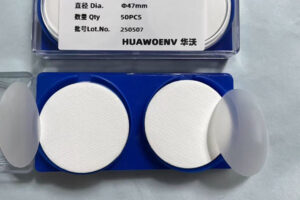

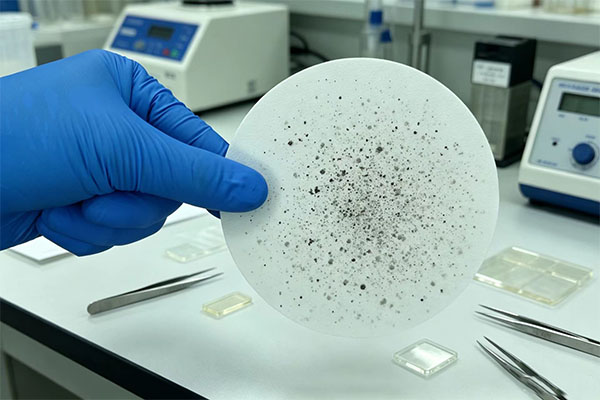
Air testing is critical for environmental health. Selecting the wrong filtration materials can compromise sample integrity. GF/A glass microfiber filters[^1] offer an ideal solution for precise air monitoring applications.
Grade GF/A glass microfiber filters, binder-free, are highly efficient in air sample collection, offering superior particle retention and high flow rates, ideal for demanding environmental monitoring.
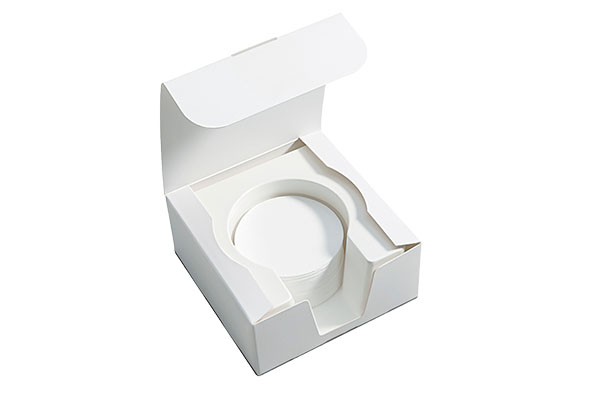
Grade GF/A filters are specifically engineered for air monitoring.[^2] Their binder-free design ensures minimal contamination risk, maintaining sample purity. But what makes these filters stand out? Let's explore further.
Why are GF/A filters[^3] suited for air monitoring?
Air testing involves challenges like capturing fine particulate matter while maintaining sample integrity.[^4] GF/A filters[^5] address these issues with their unique composition and carefully designed structure.
GF/A filters[^6]' high efficiency for particulate retention ensures precise results in air monitoring, making them a reliable choice for environmental testing professionals.
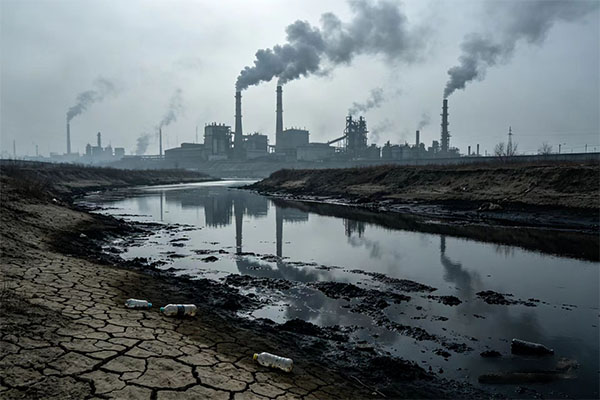
GF/A filters offer high flow rates, making them perfect for collecting large volumes of air samples swiftly. Their robust design ensures durability under varied air monitoring conditions, including humidity and temperature fluctuations.
Key features of GF/A filters for air testing
| Feature | Benefit |
|---|---|
| Binder-free composition | Prevents contamination, ensuring sample purity |
| Fine particle retention | Captures PM2.5, PM10 and other particulates accurately |
| High flow rates | Ideal for rapid air monitoring applications |
| Compatibility | Suitable for various air sampling devices |
Let's dive into these features to understand their significance.
What makes GF/A filters binder-free and why does it matter?
Binder materials in some filters can release particles or interfere with the sample's chemical composition.[^7] GF/A filters are binder-free, meaning they eliminate this risk entirely.
The binder-free nature of GF/A filters ensures the sample remains uncontaminated by filter materials, maintaining accurate test results.
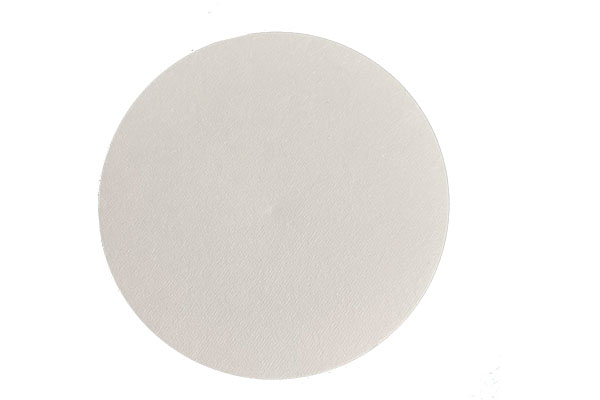
In air testing, even trace contamination can skew results[^8]. GF/A filters uphold high standards of sample integrity, making them indispensable in applications requiring precise air monitoring.
Advantages of going binder-free for air samples
- Prevents chemical interference
- Ensures consistent performance
- Ideal for applications where accuracy is critical
This unique characteristic makes GF/A filters preferable for sensitive environments like regulatory compliance testing or research studies.
How do GF/A filters achieve superior particle retention?
One challenge in air monitoring is capturing fine particulates like PM2.5 or PM10.[^9] GF/A filters excel in this area due to their microfiber structure.
The microfiber composition of GF/A filters captures fine particulate matter effectively, ensuring accurate environmental analysis in air testing applications.
Their structure allows efficient particle trapping without compromising flow efficiency, making them suitable for high-demand air monitoring scenarios. Let's break this down.
Particle retention mechanism in GF/A filters
- Microfiber density: Traps even the smallest particles
- Uniform pore size: Provides consistent retention across the surface
- High compatibility: Works seamlessly with air testing setups
This combination ensures reliable results, even under varying environmental conditions.
Why are high flow rates essential for air monitoring?
Air monitoring often involves capturing large sample volumes quickly. GF/A filters excel in their ability to maintain high flow rates while retaining particles.
GF/A filters' high flow rates enable efficient air sampling, ensuring fast and reliable environmental testing results.
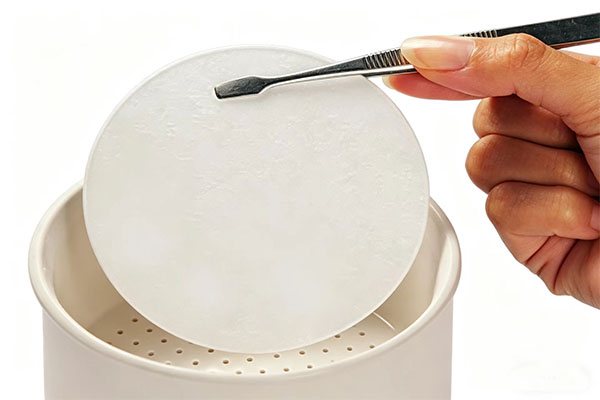
This is particularly valuable for industrial emissions testing, regulatory compliance, and emergency air quality monitoring situations.
Benefits of high flow rates in GF/A filters
- Speeds up sampling processes
- Improves efficiency for large-scale monitoring
- Reduces equipment downtime during testing
GF/A filters strike the perfect balance between speed and precision, making them a go-to choice for air monitoring professionals.
Conclusion
Grade GF/A glass microfiber filters[^10] are binder-free, highly efficient, and tailored for air monitoring applications. Their ability to retain fine particles, prevent contamination, and facilitate high flow rates makes them a reliable tool for environmental testing.
[^1]: "Review of Filters for Air Sampling and Chemical Analysis in Mining ...", https://pmc.ncbi.nlm.nih.gov/articles/PMC10174218/. The source identifies Grade GF/A as a binder-free glass microfiber filter used in air-monitoring contexts and documents its particulate-retention and flow characteristics, supporting its suitability for efficient air sample collection. Evidence role: general_support; source type: paper. Supports: Grade GF/A glass microfiber filters, binder-free, are highly efficient in air sample collection, offering superior particle retention and high flow rates, ideal for demanding environmental monitoring.. Scope note: Independent sources may support the use of glass microfiber filters in air sampling generally, while exact GF/A performance specifications may require a manufacturer or standards-method source.
[^2]: "Review of Filters for Air Sampling and Chemical Analysis in Mining ...", https://pmc.ncbi.nlm.nih.gov/articles/PMC10174218/. Air-sampling method literature documents the use of glass-fiber or glass-microfiber filters in suspended particulate monitoring because their physical structure supports particle capture under controlled airflow. Evidence role: case_reference; source type: paper. Supports: GF/A or comparable glass microfiber filters are used in air-monitoring applications.. Scope note: This contextual evidence supports suitability for air monitoring, but the phrase "specifically engineered" may require a manufacturer or standards source for GF/A-specific design intent.
[^3]: "[PDF] Filter Aerosol Measurements for ARM", https://www.arm.gov/publications/tech_reports/doe-sc-arm-tr-220.pdf. A technical or institutional source should document that Grade GF/A glass microfiber filters are binder-free glass-fiber media used in air or particulate sampling and characterized by high particle retention with relatively high flow capacity. Evidence role: general_support; source type: institution. Supports: GF/A filters are suited for air monitoring because their binder-free glass microfiber structure supports particulate retention while maintaining high flow rates and sample integrity.. Scope note: Independent sources may support the use and material properties of GF/A or glass-fiber filters, but claims such as "superior" or "ideal" require comparative performance data against other filter grades.
[^4]: "[PDF] METHOD 201A—DETERMINATION OF PM10 AND PM2.5 ... - EPA", https://www.epa.gov/sites/default/files/2019-08/documents/method_201a_0.pdf. EPA particulate-matter monitoring guidance discusses the need to collect size-selective particles such as PM2.5 and PM10 while maintaining quality-assured sampling and analytical procedures. Evidence role: expert_consensus; source type: government. Supports: Air testing requires both effective fine-particle capture and preservation of sample integrity.. Scope note: This supports the general monitoring challenge; it does not assess GF/A filters directly.
[^5]: "Ambient Air Quality Monitoring for Warangal City - Academia.edu", https://www.academia.edu/1080429/Ambient_Air_Quality_Monitoring_for_Warangal_City. Published air-monitoring methods and studies using Grade GF/A glass microfiber filters document their application for collecting particulate matter from air samples, supporting their suitability for environmental air sampling. Evidence role: general_support; source type: paper. Supports: GF/A filters are suited for air monitoring because they can collect particulate matter effectively while maintaining sample integrity and practical sampling flow.. Scope note: Independent sources can support GF/A filters' use in air sampling, but detailed claims about binder-free construction, retention rating, and flow-rate performance may require corroboration from a technical specification or standard method.
[^6]: "[PDF] Measurement of Air Concentrations of Volatile Aerosols in Paint ...", https://stacks.cdc.gov/view/cdc/205070/cdc_205070_DS1.pdf. A peer-reviewed aerosol-sampling study or official air-monitoring method documenting the use of binder-free GF/A glass microfiber filters for airborne particulate collection would support the claim that these filters are suitable for environmental air monitoring due to particle-retention and flow characteristics. Evidence role: general_support; source type: paper. Supports: GF/A filters are suited for air monitoring because their binder-free glass microfiber structure supports efficient particulate retention while maintaining high flow rates.. Scope note: Such sources may establish accepted use and relevant filter properties, but may not prove that GF/A filters are superior to all alternative filter media in every air-monitoring context.
[^7]: "Review of Filters for Air Sampling and Chemical Analysis in Mining ...", https://pmc.ncbi.nlm.nih.gov/articles/PMC10174218/. Published discussions of filter artifacts in aerosol and chemical sampling describe how filter substrates and additives can contribute background material or interact with collected analytes. Evidence role: mechanism; source type: paper. Supports: Filter binders or additives can introduce particles or chemical interference in samples.. Scope note: The evidence is likely method- and analyte-specific; it supports the plausibility of interference rather than proving all binders cause measurable bias.
[^8]: "[PDF] Detection Limits Best Practices Guide - EPA", https://www.epa.gov/system/files/documents/2025-09/wqxdetectionlimitsbestpracticesguide_final.pdf. Analytical quality-assurance guidance for environmental sampling emphasizes contamination control, field blanks, and detection limits because small background contributions can bias low-level measurements. Evidence role: expert_consensus; source type: government. Supports: Trace contamination can affect the accuracy of environmental air-testing results.. Scope note: This supports the general analytical principle; the magnitude of bias depends on the contaminant, method detection limit, and sampling design.
[^9]: "Inhalable Particulate Matter and Health (PM2.5 and PM10)", https://ww2.arb.ca.gov/resources/inhalable-particulate-matter-and-health. EPA and WHO particulate-matter materials define PM2.5 and PM10 as inhalable particle fractions and identify their monitoring as central to assessing ambient air quality. Evidence role: definition; source type: institution. Supports: Capturing PM2.5 and PM10 is a key challenge in air monitoring.. Scope note: This supports the relevance and definitions of PM2.5 and PM10, not the performance of a specific filter medium.
[^10]: "[PDF] Whatman filtration Product guide", https://macro.lsu.edu/HowTo/Whatman-filtration-product-guide.pdf. Technical specifications and/or method studies describe GF/A glass microfiber filters as binder-free glass-fiber media used for particulate collection, with stated particle-retention and flow-rate characteristics relevant to air-sampling applications. Evidence role: general_support; source type: paper. Supports: Grade GF/A glass microfiber filters, binder-free, are highly efficient in air sample collection, offering superior particle retention and high flow rates, ideal for demanding environmental monitoring.. Scope note: Support should verify the factual properties and use cases; evaluative wording such as "ideal" or "superior" may depend on the sampling method, target particle size, and comparison filter.