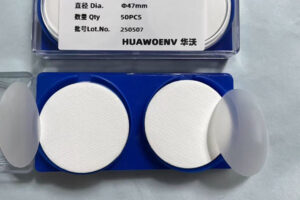

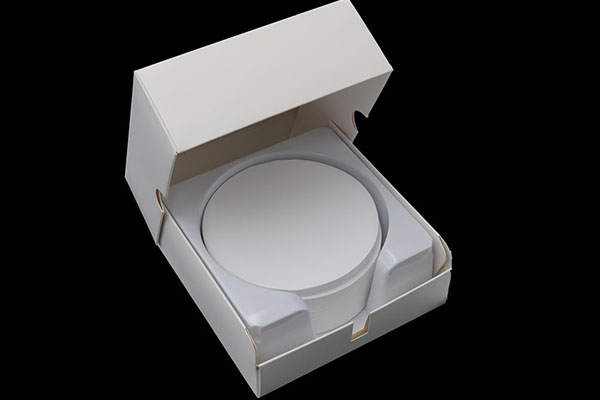
GF/B filters have earned their place in laboratories due to their versatility and performance. If you're working with liquid clarification or liquid scintillation counting, these filters are a dependable choice. But what exactly makes GF/B filters so special?
GF/B filters are binder-free glass microfiber filters with a nominal particle retention of 1.0 µm[^1], making them ideal for liquid clarification and liquid scintillation counting applications[^2].
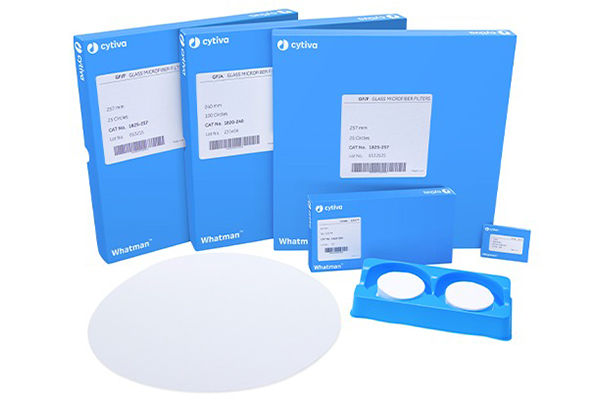
You might be wondering, who can benefit from using GF/B filters? Or, how do they compare with other filters in the market? Let’s dive into their applications, features, and why HuaEnv's filters might be a better option for your needs.
Why choose GF/B filters for pre-filtration?
Poor filtration can ruin even the most carefully planned experiments. GF/B filters provide exceptional filtration for suspended solids in water samples. Their efficiency ensures accurate results without clogging.
GF/B filters excel in pre-filtration by capturing even fine suspended particles, reducing the workload on finer filters downstream[^3]. This prolongs their lifespan and enhances efficiency[^4].
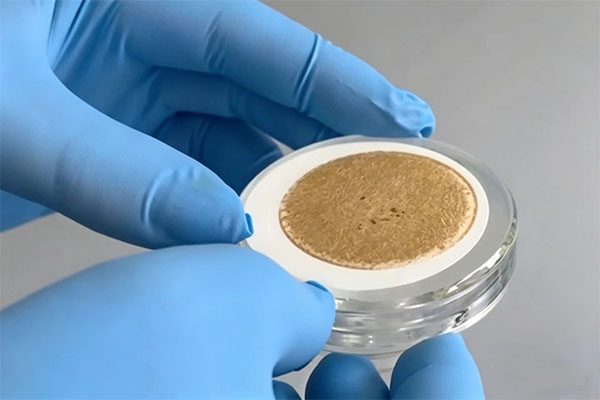
Dive deeper: Pre-filtration use cases
Pre-filtration is a critical step in many processes. GF/B filters are often chosen to reduce the load on final filters. For example:
| Application | Benefit | Why GF/B Works Best |
|---|---|---|
| Water analysis[^5] | Removes suspended solids | Nominal retention of 1.0 µm |
| Chromatography sample prep[^6] | Minimizes interference from particulates | Binder-free structure ensures purity[^7] |
| Airborne particulate matter collection[^8] | Captures large dust particles | Thick construction for high capacity |
Their versatility makes GF/B filters a go-to choice for researchers dealing with water quality testing or airborne particle analysis.
How do GF/B filters perform in liquid scintillation?
When counting radioactive isotopes, clarity matters. GF/B filters simplify the process by providing excellent liquid scintillation compatibility.
GF/B filters enhance liquid scintillation by ensuring consistent sample preparation and reducing interference from unwanted particles[^9].
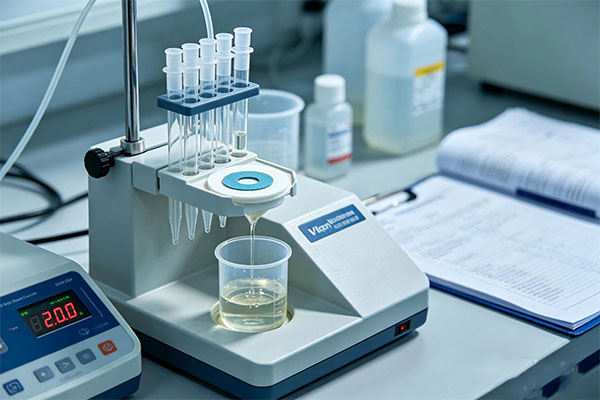
Dive deeper: Liquid scintillation and GF/B filters
Liquid scintillation requires precise preparation of samples for reliable counting[^10]. By using GF/B filters, labs can achieve:
| Feature | Result | Why GF/B Filters Matter |
|---|---|---|
| Binder-free design | No chemical contamination | Maintains sample integrity |
| High particle retention | Filters fine particles | Ensures clarity for accurate measurement |
| Compatibility with various solvents[^11] | Handles different scintillation cocktails | Versatility in lab processes |
This combination of features makes GF/B filters particularly effective for labs focused on environmental monitoring or radiological studies.
Can GF/B filters be used for air sampling?
Air sampling requires filters that can withstand demanding conditions. GF/B filters are well-suited for capturing airborne particles in environmental studies.
GF/B filters collect atmospheric and industrial particulate matter efficiently, providing reliable data for pollution analysis.
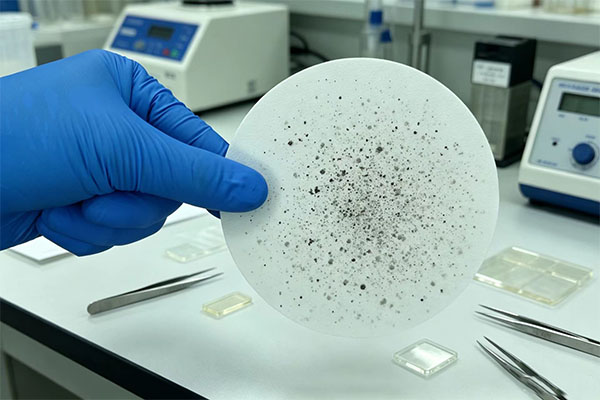
Dive deeper: Air sampling applications
For industries and labs monitoring air quality, GF/B filters prove their merit:
| Application | Result | Why GF/B Filters Are Ideal |
|---|---|---|
| Atmospheric dust analysis | Captures PM10 and PM2.5 particles | Thick layer for high capacity |
| Industrial emissions monitoring | Filters large particulates from exhaust | Binder-free glass microfiber |
| High-temperature environments | Handles elevated temperatures | Thermal stability of glass fibers[^12] |
From urban air quality testing to industrial waste monitoring, GF/B filters deliver dependable performance.
Why choose HuaEnv’s glass microfiber filters?
HuaEnv offers an alternative to Whatman’s GF/B filters with high-quality, cost-effective options. Our filters suit the same applications while providing additional benefits.
HuaEnv’s glass microfiber filters maintain consistency in performance while offering customizable options at competitive prices.
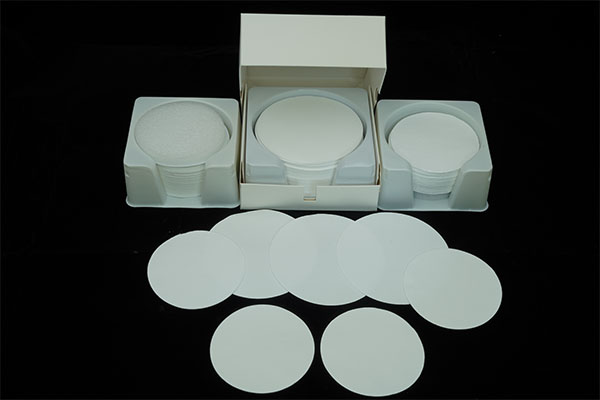
Dive deeper: Comparing HuaEnv with Whatman
HuaEnv’s filters stand out for their quality, price, and flexibility:
| Feature | Whatman GF/B | HuaEnv GF/B |
|---|---|---|
| Particle retention | 1.0 µm | 1.0 µm |
| Binder-free design | Yes | Yes |
| Customization | Limited | Wide range of options |
| Sample availability | Restricted | Free samples available |
| Price | Premium | Competitive |
HuaEnv also specializes in offering glass microfiber filters for diverse applications, such as GF/A, GF/C, GF/D, GF/F, and specialty filters like EPM2000 and 934-AH.
Conclusion
GF/B glass microfiber filters are versatile tools for labs working in pre-filtration, liquid scintillation, and air sampling. HuaEnv provides a reliable, customizable, and cost-effective alternative to Whatman’s filters, ensuring high-quality performance across all applications.
[^1]: "Whatman™ Grade GF/B Glass Microfiber Filters, Binder Free - Cytiva", https://www.cytivalifesciences.com/en/us/products/items/whatman-grade-gf-b-glass-microfiber-filters-binder-free-p-00436?selectedProduct=28418359. Manufacturer and laboratory-supply specifications for GF/B glass microfiber filters describe them as binder-free borosilicate glass fiber filters with approximately 1.0 µm nominal particle retention. Evidence role: definition; source type: other. Supports: GF/B filters are binder-free glass microfiber filters with a nominal particle retention of 1.0 µm.. Scope note: This supports the product-grade specification, but nominal retention is not equivalent to an absolute pore-size rating.
[^2]: "[PDF] 31 - Liquid Scintillation Counting.", https://www.nrc.gov/docs/ml1122/ML11229A718.pdf. Product specifications and laboratory method references list GF/B glass microfiber filters among filters used for liquid clarification and for preparing samples in liquid scintillation counting workflows. Evidence role: general_support; source type: other. Supports: GF/B filters are suitable for liquid clarification and liquid scintillation counting applications.. Scope note: The evidence can show common or recommended use, but “ideal” is evaluative and depends on sample matrix and protocol requirements.
[^3]: "[PDF] Total Suspended Solids - Standard Operating Procedure for:", https://oewri.missouristate.edu/_Files/SOP_Total_Suspended_Solids_2023_updated.pdf. Filtration references describe prefiltration as the removal of larger or suspended particles before finer membrane filtration, which reduces particulate loading on downstream filters. Evidence role: mechanism; source type: education. Supports: GF/B filters can function as prefilters by capturing suspended particles and reducing loading on downstream finer filters.. Scope note: This supports the general mechanism of prefiltration rather than proving a specific GF/B performance outcome for every sample type.
[^4]: "Filtration artifacts caused by overloading membrane filters", https://pubmed.ncbi.nlm.nih.gov/11783658/. Filtration engineering literature explains that reducing particulate loading and clogging upstream can extend the usable service life of downstream filters and maintain flow performance. Evidence role: mechanism; source type: paper. Supports: Prefiltration can prolong downstream filter life and improve filtration efficiency.. Scope note: The support is mechanistic and general; actual lifespan gains depend on particle size distribution, flow rate, and sample composition.
[^5]: "Suspended Solids | U.S. Geological Survey", https://www.usgs.gov/labs/national-water-quality-laboratory/science/science-topics/suspended-solids. Water-quality methods commonly require filtration or separation of suspended solids before chemical or microbiological analysis, establishing filtration as a standard preparation step in water analysis. Evidence role: general_support; source type: government. Supports: Filtration is commonly used in water analysis to remove or separate suspended solids.. Scope note: This supports filtration as a water-analysis practice, not exclusive superiority of GF/B over other filter grades.
[^6]: "Review of Filters for Air Sampling and Chemical Analysis in Mining ...", https://pmc.ncbi.nlm.nih.gov/articles/PMC10174218/. Chromatography sample-preparation guidance states that removing particulates before injection helps protect columns and reduce particulate-related interferences in chromatographic analysis. Evidence role: mechanism; source type: education. Supports: Filtration during chromatography sample preparation helps minimize particulate interference.. Scope note: The source would support the need for filtration in chromatography generally, not necessarily that GF/B is the best filter for all chromatographic samples.
[^7]: "Analysis and evaluation of filter cartridge extractables for validation ...", https://pubmed.ncbi.nlm.nih.gov/9038087/. Filter-media references note that binders or extractable additives can contribute contaminants to analytical samples, while binder-free glass fiber media are used where low extractables are required. Evidence role: mechanism; source type: research. Supports: A binder-free filter structure can reduce the risk of introducing binder-derived contaminants into samples.. Scope note: This supports the rationale for binder-free media; it does not verify extractables for a particular GF/B batch or brand.
[^8]: "[PDF] Method IO-3.1 - Selection, Preparation and Extraction of Filter Material", https://www.epa.gov/sites/default/files/2019-11/documents/mthd-3-1.pdf. Air-monitoring methods and aerosol studies describe the use of fiber filters, including glass-fiber media, to collect particulate matter from air samples for gravimetric or chemical analysis. Evidence role: general_support; source type: government. Supports: Glass microfiber filters can be used for airborne particulate matter collection.. Scope note: This supports glass-fiber filter use in air sampling generally; specific particle-size cutoffs depend on the sampler inlet and method, not the filter alone.
[^9]: "[PDF] 31 - Liquid Scintillation Counting.", https://www.nrc.gov/docs/ml1122/ML11229A718.pdf. Liquid scintillation counting guidance explains that suspended solids, color, and other matrix effects can cause quenching or counting interferences, so clarification can improve measurement conditions. Evidence role: mechanism; source type: government. Supports: Removing unwanted particles can reduce interference in liquid scintillation counting.. Scope note: The evidence supports particle-related interference in principle; the magnitude of improvement from GF/B filtration depends on the radionuclide, matrix, and counting protocol.
[^10]: "Sample Preparation Effects On Liquid Scintillation Counting Quench", https://digitalcommons.library.uab.edu/etd-2020s/51/. Radiochemical analysis references describe liquid scintillation counting as sensitive to sample preparation factors such as quench, sample clarity, and cocktail compatibility, which affect counting reliability. Evidence role: expert_consensus; source type: government. Supports: Liquid scintillation counting requires careful sample preparation for reliable measurements.. Scope note: This supports the importance of preparation in liquid scintillation counting, not a unique requirement for GF/B filters.
[^11]: "[PDF] NC DENR/DWQ LABORATORY CERTIFICATION", https://www.deq.nc.gov/chlorophyll-checklist-sm-10150-b-pdf/open. Borosilicate glass fiber media are generally described as chemically resistant to many solvents, supporting their use with a range of laboratory liquids and scintillation cocktails. Evidence role: general_support; source type: institution. Supports: Glass microfiber filters can be compatible with many solvents used in laboratory filtration and scintillation workflows.. Scope note: Chemical compatibility is solvent-specific; strong alkalis or hydrofluoric acid and some aggressive conditions may not be compatible.
[^12]: "Glass fiber - Wikipedia", https://en.wikipedia.org/wiki/Glass_fiber. Materials references describe glass fibers as inorganic fibers with high thermal stability relative to many polymeric filter media, explaining their use in elevated-temperature sampling or analysis contexts. Evidence role: mechanism; source type: encyclopedia. Supports: Glass fibers have thermal stability that can make glass microfiber filters suitable for elevated-temperature conditions.. Scope note: This supports the material property of glass fibers generally; allowable operating temperature still depends on filter construction and manufacturer specifications.