
Air quality testing is vital for environmental monitoring, but inaccurate sample collection[^1] can lead to unreliable results. Without the right air monitoring filters, lab technicians face challenges in obtaining representative samples for analysis.
Air monitoring filters improve sample reliability by capturing airborne particulate matter accurately[^2], enabling precise gravimetric and chemical analysis of pollutants. They ensure representative sampling by trapping particles efficiently while allowing air to flow through[^3].

Air monitoring filters are instrumental in environmental testing, from standard air quality checks to stack emissions monitoring. Choosing the correct filter type[^4] significantly impacts the reliability of test results. Let’s explore the options and their applications.
What are Grade GF/A air sampling filters and how do they improve reliability?
Environmental monitoring requires filters to perform efficiently under various conditions. Inconsistent filter performance can compromise data accuracy, leading to flawed pollution assessments.
Grade GF/A air sampling filters improve reliability by offering high particle retention and uniform filtration. These binder-free glass microfiber filters[^5] are ideal for gravimetric analysis of airborne particulate matter.
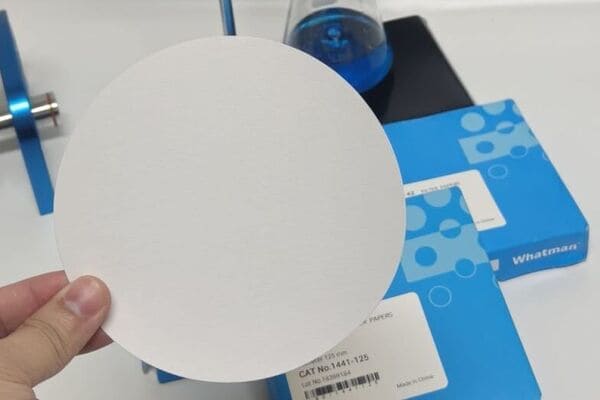
Grade GF/A filters are widely used for air monitoring. Their binder-free construction ensures minimal interference[^6] with analytical processes, making them suitable for collecting PM samples for gravimetric and chemical analysis. These filters have a high flow rate and low pressure drop[^7], optimizing sample collection while maintaining accuracy. They are particularly beneficial for general air quality monitoring applications.
Why is the EPM 2000 air sampling filter critical for environmental testing?
Lab technicians often face challenges when sampling air in chemically harsh conditions or environments with high temperatures. Filters that fail under such conditions can skew data.
EPM 2000 air sampling filters are critical for environmental testing because they withstand extreme conditions while maintaining high filtration efficiency, ensuring consistent and reliable sample collection.

EPM 2000 filters, made from binder-free glass microfiber, are designed for demanding applications like stack and flue gas monitoring[^8]. Their ability to tolerate high temperatures and chemically harsh environments makes them ideal for collecting particulate matter in industrial settings. They ensure that particles are captured reliably without contamination or loss, supporting accurate post-collection analysis and environmental assessments.
How do PM2.5 air monitoring membrane filters enhance testing accuracy?
PM2.5 particles are among the most harmful to human health[^9], making accurate monitoring critical for public safety. Filters that fail to capture these tiny particles can lead to underreporting of pollution levels.
PM2.5 air monitoring membrane filters enhance testing accuracy by targeting fine particulate matter, providing precise measurements essential for air quality assessments.

These membrane filters are specially designed to trap fine particles measuring 2.5 micrometers or smaller. PTFE membranes, commonly used for PM2.5 monitoring[^10], offer high chemical resistance and thermal stability. Their precise pore sizes ensure efficient particle retention while minimizing air flow resistance. This combination allows laboratories to conduct accurate gravimetric and chemical analyses, providing key insights into pollution sources and health risks.
What makes QM-C quartz filter paper suitable for extreme environments?
Harsh environments pose unique challenges for air monitoring, requiring filters with exceptional durability and chemical stability to ensure reliable data collection.
QM-C quartz filter paper is suitable for extreme environments because it resists high temperatures and chemical reactions, ensuring reliable sample collection in challenging conditions.
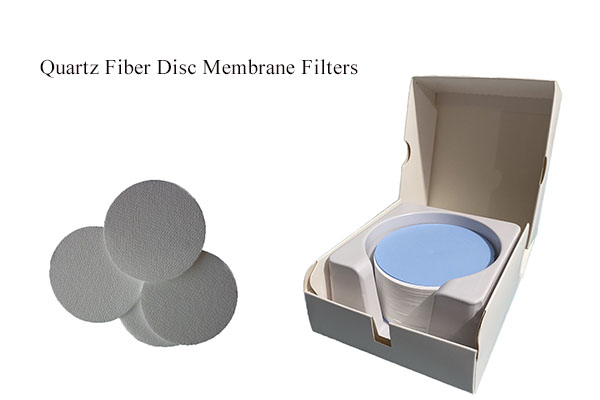
These filters are crafted from pure quartz microfiber and can withstand temperatures up to 1000°C[^11], making them ideal for monitoring stack emissions or high-temperature processes. Their inert nature ensures minimal interaction[^12] with collected particulates, maintaining sample integrity for downstream analysis. QM-C filters are indispensable for applications that demand durability and consistent performance under extreme conditions.
Why is selecting the right air sampling filter key to reliable results?
Using the wrong filter can lead to inaccurate data, failed experiments, and wasted resources. Selecting the right filter ensures the integrity of the entire testing process.
Selecting the right air sampling filter is key to reliable results because it guarantees representative sample collection, enabling accurate analysis and data interpretation.
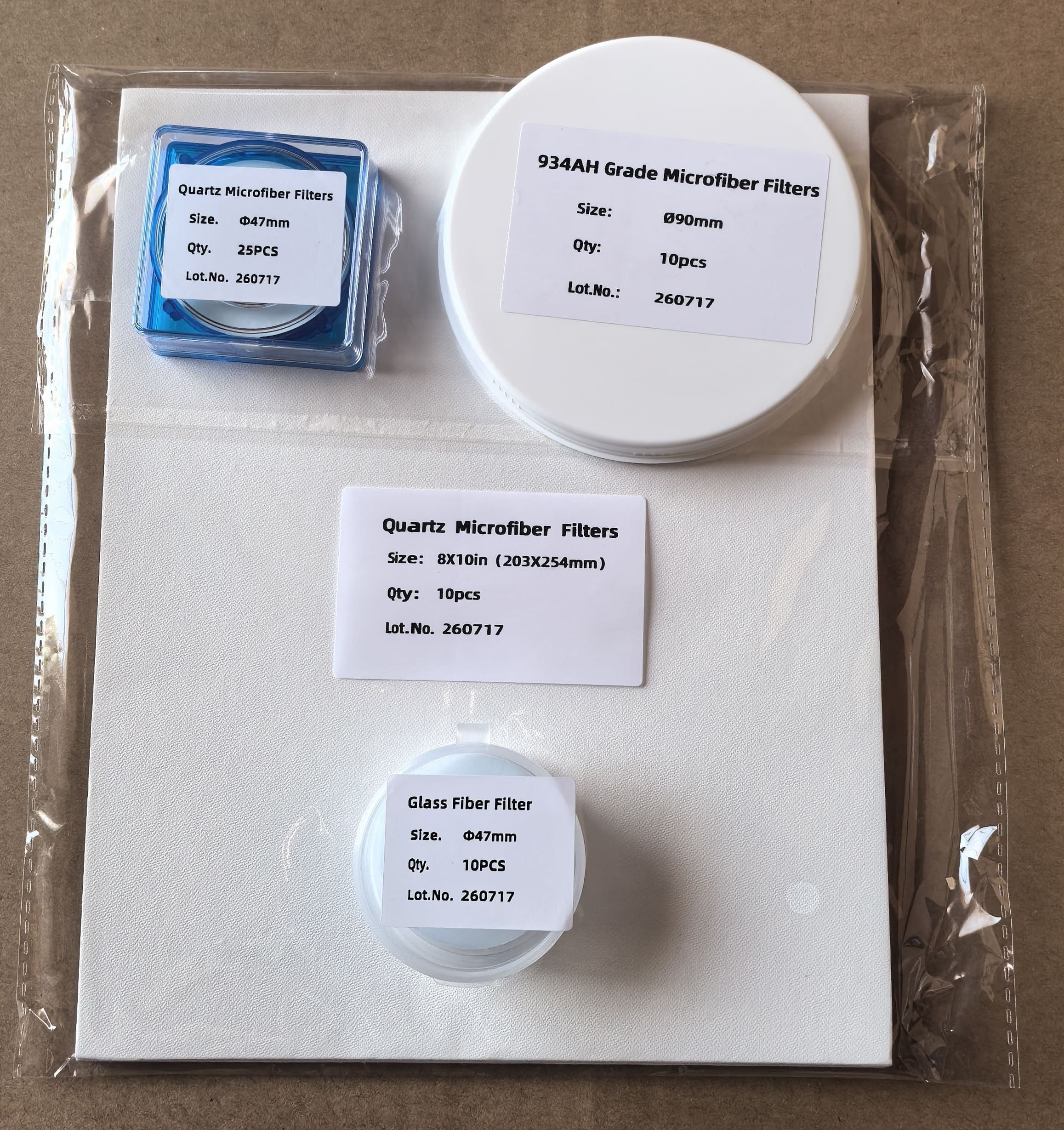
Choosing the appropriate filter depends on the application requirements, such as particle size, environmental conditions, and analytical methods. Glass microfiber filters like GF/A and EPM 2000 are optimal for general air quality and harsh industrial settings, while PTFE membranes are ideal for fine particulate monitoring like PM2.5. Quartz filters excel in extreme conditions where durability and chemical inertness are crucial. By matching filters to specific applications, labs can improve sample reliability and streamline testing workflows.
Conclusion
Air monitoring filters play a crucial role in environmental testing by enhancing sample reliability. Selecting the right filter ensures accurate gravimetric and chemical analysis, enabling informed decisions for public health and pollution control.
[^1]: "Ambient Air Monitoring Quality Assurance Guidance ...", https://www.epa.gov/amtic/ambient-air-monitoring-quality-assurance-guidance-documents. EPA quality-assurance guidance for ambient air monitoring describes sample collection, handling, and method control as determinants of whether measured pollutant concentrations are valid for regulatory or scientific interpretation. Evidence role: general_support; source type: government. Supports: Inaccurate sample collection can lead to unreliable air-quality test results.. Scope note: This supports the general importance of proper sampling practice rather than evaluating the specific filters discussed in the article.
[^2]: "Appendix L to Part 50, Title 40", https://www.ecfr.gov/current/title-40/chapter-I/subchapter-C/part-50/appendix-Appendix%20L%20to%20Part%2050. EPA reference methods for particulate matter monitoring specify filter-based collection and gravimetric weighing as the basis for determining ambient particulate concentrations. Evidence role: mechanism; source type: government. Supports: Air monitoring filters improve sample reliability by capturing airborne particulate matter for gravimetric and chemical analysis.. Scope note: The method directly supports filter-based gravimetric PM measurement, but it does not prove that every air monitoring filter captures particles accurately under all conditions.
[^3]: "Air sampling filtration media: Collection efficiency for ... - PMC", https://pmc.ncbi.nlm.nih.gov/articles/PMC4729392/. Aerosol sampling guidance describes filter media performance in terms of particle collection efficiency and pressure drop, both of which affect whether a sampler can collect an adequate air volume without excessive flow restriction. Evidence role: mechanism; source type: government. Supports: Representative air sampling requires filters that efficiently retain particles while permitting controlled airflow.. Scope note: This is a general aerosol-sampling principle and does not establish performance for any named filter grade without product-specific test data.
[^4]: "Selection, Preparation and Extraction of Filter Material", https://www.epa.gov/sites/default/files/2019-11/documents/mthd-3-1.pdf. EPA and standards-based particulate monitoring methods specify filter-material requirements, conditioning, handling, and weighing procedures, indicating that filter selection is part of measurement quality control. Evidence role: expert_consensus; source type: government. Supports: Choosing the correct filter type significantly impacts the reliability of air-testing results.. Scope note: The source can support the importance of filter requirements in standardized methods, but it may not compare all commercial filter types mentioned in the article.
[^5]: "Selection, Preparation and Extraction of Filter Material", https://www.epa.gov/sites/default/files/2019-11/documents/mthd-3-1.pdf. Technical specifications for Whatman Grade GF/A describe it as a binder-free glass microfiber filter with nominal particle retention around the low-micrometre range, consistent with use in gravimetric particulate collection. Evidence role: definition; source type: other. Supports: Grade GF/A filters are binder-free glass microfiber filters suitable for particulate collection and gravimetric analysis.. Scope note: This is product-specification evidence and does not independently validate performance in every air-monitoring application.
[^6]: "Selection, Preparation and Extraction of Filter Material", https://www.epa.gov/sites/default/files/2019-11/documents/mthd-3-1.pdf. EPA guidance on particulate-matter filter selection notes that filter media can introduce background contamination or artifacts in chemical analysis, which explains why low-background or binder-free media are selected for some analytical applications. Evidence role: mechanism; source type: government. Supports: Binder-free filter construction can reduce analytical interference in particulate-matter analysis.. Scope note: The evidence supports the rationale for minimizing filter-derived interference generally, not a quantified interference reduction for Grade GF/A specifically. [^7]: "Review of Filters for Air Sampling and Chemical Analysis in ...", https://pmc.ncbi.nlm.nih.gov/articles/PMC10174218/. Filter specifications and aerosol-sampling texts commonly report flow rate and pressure drop because lower resistance helps maintain target sampling flow while collecting particles. Evidence role: mechanism; source type: research. Supports: High flow rate and low pressure drop can help optimize particulate sample collection.. Scope note: General sampling literature supports the importance of pressure drop, while product-specific flow-rate claims require the filter manufacturer’s test conditions. [^8]: "Method 5 - Determination of Particulate Matter Emissions ...", https://www.epa.gov/sites/default/files/2021-05/documents/method_5_-_2020_12_07_0.pdf. Stationary-source particulate measurement methods use heated sample trains and filter media selected for temperature and chemical compatibility, providing context for why robust glass or quartz filters are used in stack and flue-gas sampling. Evidence role: case_reference; source type: government. Supports: Demanding stack and flue-gas monitoring can require filters that tolerate heat and harsh sampling conditions.. Scope note: This supports the application context for demanding emissions sampling but does not by itself verify the stated performance of EPM 2000 filters.
[^9]: "Integrated Science Assessment (ISA) for Particulate Matter", https://www.epa.gov/isa/integrated-science-assessment-isa-particulate-matter. WHO air-quality guidelines and health-risk assessments identify PM2.5 as a major air pollutant associated with increased morbidity and mortality, especially because fine particles can penetrate deeply into the respiratory tract. Evidence role: expert_consensus; source type: institution. Supports: PM2.5 is among the air pollutants of greatest concern for human health.. Scope note: The source supports the health relevance of PM2.5 broadly, not a ranking that proves it is the single most harmful pollutant in every exposure setting.
[^10]: "Quality Assurance Guidance 2.12 - Monitoring PM2.5 In ...", https://www.epa.gov/sites/default/files/2021-03/documents/p100oi8x.pdf. EPA’s PM2.5 Federal Reference Method specifies PTFE membrane filters for collecting fine particulate matter for gravimetric mass determination, supporting their common use in regulatory PM2.5 monitoring. Evidence role: case_reference; source type: government. Supports: PTFE membrane filters are commonly used for PM2.5 monitoring and gravimetric analysis.. Scope note: The citation supports PM2.5 reference-method monitoring in the United States and may not cover all international or research monitoring protocols.
[^11]: "Whatman filtration Product guide", https://macro.lsu.edu/HowTo/Whatman-filtration-product-guide.pdf. Technical specifications for quartz microfiber filter papers such as QM-C report very high heat resistance, often cited up to about 1000°C, which is consistent with their use where filter combustion or thermal degradation would compromise sampling. Evidence role: definition; source type: other. Supports: QM-C quartz filter paper can withstand temperatures up to 1000°C.. Scope note: This is a product or material specification; actual usable temperature can depend on sampler design, exposure duration, and chemical environment.
[^12]: "Review of Filters for Air Sampling and Chemical Analysis in ...", https://pmc.ncbi.nlm.nih.gov/articles/PMC10174218/. Quartz-fiber filters are widely used in atmospheric aerosol sampling because their thermal stability and low organic background make them suitable for downstream carbonaceous or chemical analyses. Evidence role: mechanism; source type: paper. Supports: Quartz filter media can help preserve sample integrity for downstream particulate analysis because of their chemical and thermal stability.. Scope note: This supports the analytical rationale for quartz filters generally, but individual blank levels and interactions still depend on pretreatment and analytical protocol.