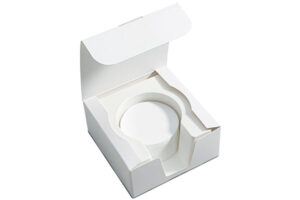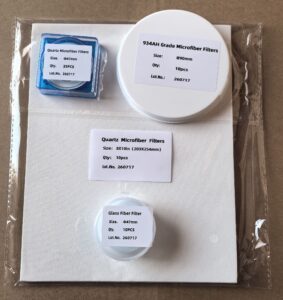

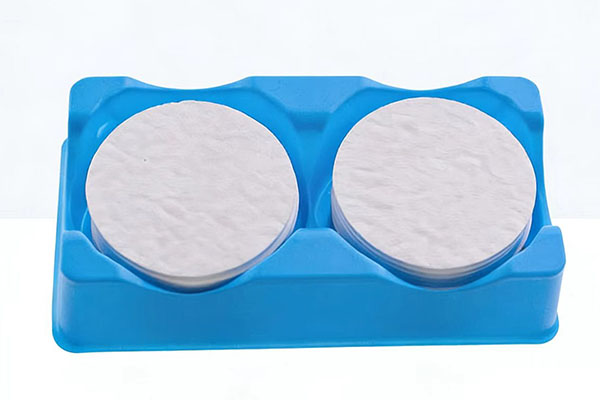
The Cambridge filter pad[^1], embedded with organic binders, boasts higher strength compared to ordinary glass fibers. Its retention rate of 0.30 µm DOP standard particles[^2] meets PM2.5 standards[^3], effectively detecting harmful solid particulates and related chemicals.
The 44 mm Cambridge filter pad[^1] is highly effective for specific applications as it efficiently traps total particulate matter, including PM2.5, meeting both ISO and WHO standards[^4]. It boasts a high retention rate of 0.30 µm DOP standard particles[^2] and can accommodate most commercial smoking machines.

Its thickness of 1300 µm and weight of 215 g/m further enhances its capability for particulate matter detection. These features ensure its adaptability and performance in high-demand environments, offering reliability in monitoring harmful substances.
Does the Cambridge filter pad[^1] meet various diameter and quantity requirements?
The Cambridge filter pad[^1] is available in several diameters and quantities, catering to diverse laboratory needs. With diameters of 55 mm, 44 mm, and 92 mm, it offers flexibility for different experimental setups.
The filter pad's compatibility with various commercial smoking machines is a testament to its versatility. It is sold in packages of 100 pk for the 55 mm and 92 mm varieties, while the 44 mm version comes in a larger quantity of 960 pk, favoring extensive testing scenarios.
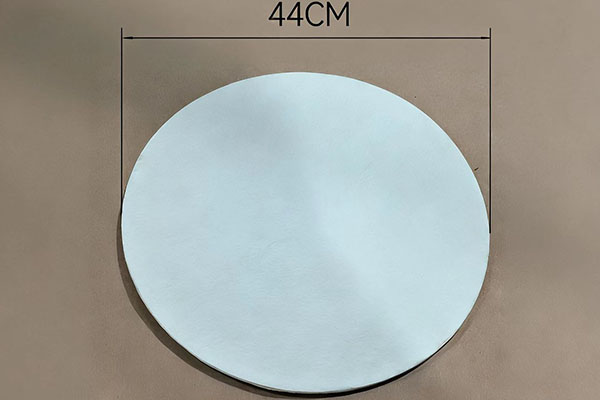
These diameter options allow for tailored applications in labs, ensuring that researchers and technicians can choose the right size for their specific needs. The availability in bulk quantities further supports ongoing and large-scale research projects, maintaining consistency and quality in particulate matter analysis.
How does the Cambridge filter pad[^1] ensure accuracy in particulate matter detection?
The accuracy of the Cambridge filter pad[^1] in trapping particulate matter is due to its high retention rate and material composition. The organic binder in the glass fibers contributes to its strong structure, preventing loss of particles during testing.
Its performance in trapping particles as small as 0.30 µm, especially PM2.5, is crucial for accurate environmental assessments, as these particles are known to affect human health. By adhering to stringent ISO and WHO standards[^4], it guarantees reliable data for environmental monitoring.
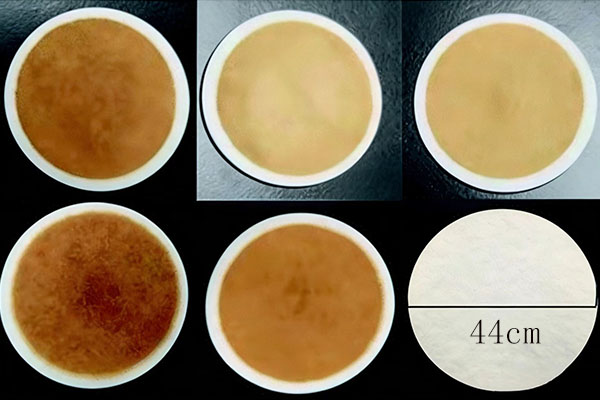
The pad's thickness and weight also play a role in its efficacy, providing additional layers of filtration and stability. This ensures the capture of both large and small particulates, contributing to comprehensive data collection.
Conclusion
The 44 mm Cambridge filter pad[^1] effectively traps total particulate matter, meeting ISO and WHO standards[^4], suitable for diverse lab needs with high accuracy and reliability.
[^1]: Explore the advantages of the Cambridge filter pad for accurate particulate matter detection in lab settings.
[^2]: Discover how the retention rate impacts the effectiveness of filters in trapping harmful particles.
[^3]: Learn about PM2.5 standards and their significance in environmental health and safety.
[^4]: Understand the importance of ISO and WHO standards in ensuring reliable air quality assessments.