

The world of environmental monitoring can be complex and confusing. Choosing the right filter can make a big difference in the accuracy of your results.[^1]
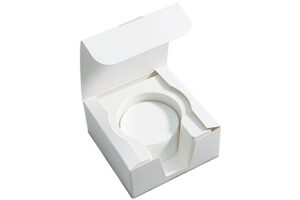
The Grade EPM 2000 hi-vol filter is designed for high efficiency and reliability in air quality monitoring. It effectively captures particles, ensuring your data is precise and dependable.

When it comes to monitoring air quality, you can't afford to compromise on the quality of your filters. The Grade EPM 2000 is an essential tool for anyone involved in environmental monitoring.
What makes the Grade EPM 2000 filter stand out?
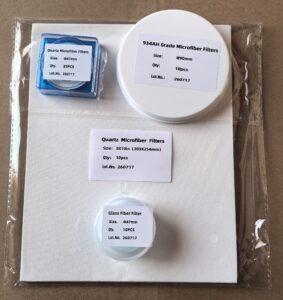
The Grade EPM 2000 filter has specific dimensions that suit various applications. Measuring 20.3 cm ± 0.2 cm × 25.4 cm ± 0.2 cm (8 in × 10 in) provides a nominal exposure area of 406.5 cm²[^2]. It is made from glass fiber, which is known for its inert and non-hygroscopic properties[^3]. This material choice is crucial as it ensures that the filter does not interact with the particles being collected.
The collection efficiency of the EPM 2000 filter is impressive, boasting a minimum of 99% efficiency based on the dioctyl phthalate (DOP) test for 0.3 µm diameter particles (ASTM D-2986)[^4]. This means that it reliably captures even the smallest particles, which is vital for accurate monitoring.

One important aspect of this filter is its recommended pressure drop. It operates efficiently within a range of 42 mmHg to 54 mmHg (5.6 kPa to 7.2 kPa) at a flow rate of 1.25 m³/min under standard conditions (25 °C, 760 mmHg or 101 kPa). This specification is essential for ensuring that your monitoring systems function correctly and provide accurate readings.
The pH range of the filter is between 6 to 10, making it suitable for a broad range of applications. Additionally, the integrity of the filter is maintained with a maximum mass loss of just 2.4 mg, which is crucial for ensuring the filter's reliability.
Conclusion
The Grade EPM 2000 filter is a top choice for high-efficiency air monitoring. Its impressive specifications and reliability make it essential for accurate environmental assessments.
[^1]: "Quality Assurance Guidance 2.12 - Monitoring PM2.5 In ...", https://www.epa.gov/sites/default/files/2021-03/documents/p100oi8x.pdf. Authoritative air-sampling methods describe filter media selection, collection efficiency, flow resistance, and conditioning as factors that can affect particulate matter measurements. Evidence role: general_support; source type: government. Supports: Filter choice can materially affect the accuracy of environmental air-monitoring results.. Scope note: This supports the general methodological importance of filter choice, not the performance of the Grade EPM 2000 specifically.
[^2]: "Whatman™ Grade EPM 2000 Air Sampling Filter", https://www.cytivalifesciences.com/en/us/products/items/whatman-grade-epm-2000-air-sampling-filter-p-00698?selectedProduct=28418582. A product specification sheet or certified technical data sheet for the Grade EPM 2000 filter would document the stated dimensions and nominal exposure area. Evidence role: definition; source type: other. Supports: The Grade EPM 2000 filter has stated dimensions of 20.3 cm × 25.4 cm and a nominal exposure area of 406.5 cm².. Scope note: This would verify the product specification, but it would not independently establish field performance or monitoring accuracy.
[^3]: "Filtration Characteristics of Glass Fiber Filter at Elevated ...", https://nepis.epa.gov/Exe/ZyPURL.cgi?Dockey=91015XO6.TXT. Technical guidance on particulate sampling commonly describes glass-fiber filter media as chemically stable and relatively non-hygroscopic for high-volume air sampling applications. Evidence role: mechanism; source type: government. Supports: Glass-fiber filter media are used in air sampling partly because of their inertness and low hygroscopicity.. Scope note: Such sources support the general material property of glass-fiber filters, not necessarily that no chemical interaction can occur under all sampling conditions.
[^4]: "Characteristics of Air Filters - PMC - NIH", https://pmc.ncbi.nlm.nih.gov/articles/PMC7498932/. ASTM D2986 describes a DOP aerosol method for evaluating filtration performance, and a Grade EPM 2000 technical data sheet would be needed to verify the stated minimum 99% efficiency at 0.3 µm. Evidence role: statistic; source type: institution. Supports: The EPM 2000 filter is reported to have at least 99% collection efficiency for 0.3 µm particles under a DOP test method.. Scope note: The ASTM method supports the testing framework; the exact 99% value is product-specific and should be verified from certified product documentation.