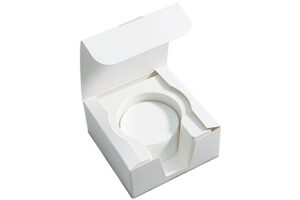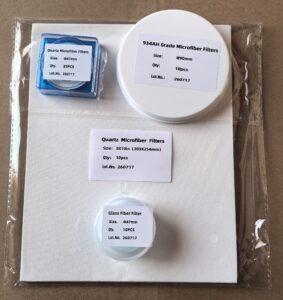

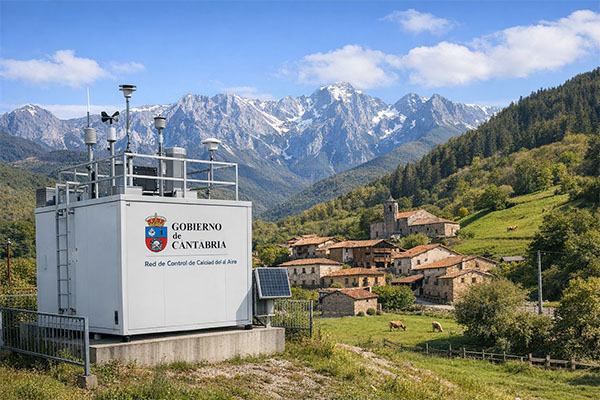
In the world of environmental monitoring, air quality is crucial. Many overlook the importance of the right filters in their testing processes. This is where TE-EPM2000 High Purity Glass Fiber Filters come into play.
TE-EPM2000 filters are essential for accurate air sampling. They are designed for TSP (Total Suspended Particulates) measurements[^1], ensuring reliable results in various applications, including determining organic and inorganic compounds[^2].

Choosing the right filter is vital for reliable air quality analysis[^3]. The TE-EPM2000 filters are specially designed for the precise needs of air sampling. They offer high purity and excellent performance in capturing particles. Whether you're monitoring PM2.5, PM10, or TSP[^4], these filters ensure that your results are not compromised.
Why are TE-EPM2000 Filters Important for Air Quality Monitoring?
Air quality monitoring is a critical task. Many professionals may not fully grasp the significance of using the right filters. I often hear questions about the differences between filter types. The TE-EPM2000 filters stand out due to their high purity and reliability. They are designed to meet the rigorous demands of air sampling protocols.
These filters excel in capturing particulate matter, crucial for determining both organic and inorganic compounds in ambient air. Their design makes them indispensable for anyone involved in air quality monitoring.
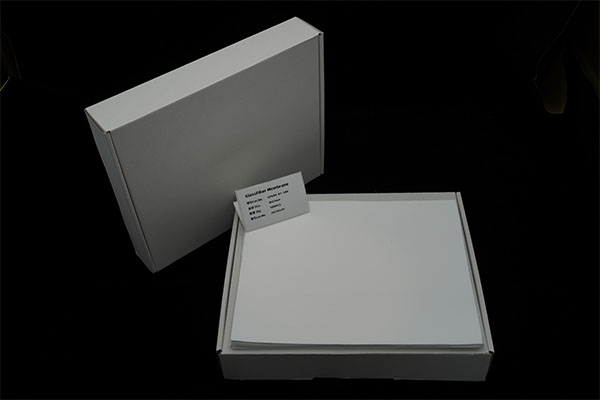
TE-EPM2000 filters are engineered for various applications. They are ideal for smoke stack gas monitoring and meet EPA methods for air sampling. Their high-quality glass microfiber material offers superior filtration efficiency. It captures a wide range of particulate sizes, ensuring that you can trust your results.
Applications of TE-EPM2000 Filters
The TE-EPM2000 filters find applications in several areas of environmental monitoring. They are particularly useful for:
- PM2.5 and PM10 Monitoring: These filters are designed to capture fine particulate matter, essential for understanding air quality.
- Smoke Stack Gas Monitoring[^5]: They effectively measure emissions from industrial processes, ensuring compliance with environmental standards.
- Organic and Inorganic Compound Determination: These filters help identify pollutants that can impact health and the environment.
Each application requires precision. The TE-EPM2000 filters deliver on this front. They are suitable for laboratories and industries that demand high accuracy.
Benefits of Using TE-EPM2000 High Purity Glass Fiber Filters
Employing TE-EPM2000 filters in your air quality assessments offers several advantages:
- High Filtration Efficiency: The glass fiber construction captures a wide range of particles[^6], ensuring comprehensive sampling.
- Consistency and Reliability: These filters provide consistent results, crucial for compliance reporting and research.
- Easy to Use: Their design allows for straightforward handling, making them accessible for professionals at all levels.
In my experience, using the right filters can significantly enhance the quality of your data. These filters help ensure that your results reflect the true air quality, which is vital for any monitoring project.
Conclusion
TE-EPM2000 High Purity Glass Fiber Filters are essential tools for air quality monitoring. Their reliability and efficiency make them invaluable in various applications. For expert advice on filter selection and to explore our range, feel free to contact HuaEnv.
[^1]: "SAMPLING OF AMBIENT AIR FOR TOTAL SUSPENDED ...", https://www.epa.gov/sites/default/files/2015-07/documents/epa-io-2.1.pdf. EPA reference and equivalent-method materials describe total suspended particulates as an ambient air measurement based on collecting airborne particles on a filter over a measured sampling period. Evidence role: definition; source type: government. Supports: TE-EPM2000 filters are designed for TSP measurements.. Scope note: This supports the measurement concept and filter-based method generally, not the performance of the TE-EPM2000 product specifically.
[^2]: "Evaluation of PM2.5 Chemical Speciation Samplers for ...", https://nepis.epa.gov/Exe/ZyPURL.cgi?Dockey=P100D71X.TXT. Air-particulate chemical speciation literature and monitoring guidance describe filter-collected particulate matter as a substrate for measuring inorganic ions, elements, carbon fractions, and organic compounds in ambient air. Evidence role: general_support; source type: government. Supports: Air sampling filters can support determination of organic and inorganic compounds in collected particulate matter.. Scope note: This supports the general use of filter samples for chemical analysis; it does not independently verify that this specific filter is validated for every organic or inorganic analyte.
[^3]: "Selection, Preparation and Extraction of Filter Material", https://www.epa.gov/sites/default/files/2019-11/documents/mthd-3-1.pdf. Air-sampling method guidance notes that filter media selection affects collection efficiency, blank contamination, pressure drop, and compatibility with subsequent gravimetric or chemical analyses. Evidence role: mechanism; source type: government. Supports: Filter choice is important to the reliability of air quality analysis.. Scope note: This is methodological support for filter selection in general and does not rank TE-EPM2000 against alternative filter media.
[^4]: "Particulate Matter (PM) Basics", https://www.epa.gov/pm-pollution/particulate-matter-pm-basics. EPA and WHO materials define PM2.5 and PM10 as size-fractionated particulate matter indicators used in air-quality monitoring, while TSP represents a broader measure of suspended airborne particles. Evidence role: definition; source type: government. Supports: PM2.5, PM10, and TSP are established particulate-matter categories in air quality monitoring.. Scope note: This supports the relevance of these particulate categories to monitoring, not the suitability of any one commercial filter for all categories.
[^5]: "Method 5 - Determination of Particulate Matter Emissions ...", https://www.epa.gov/sites/default/files/2021-05/documents/method_5_-_2020_12_07_0.pdf. EPA stationary-source test methods describe collecting particulate emissions from stack gas on filters under controlled sampling conditions to quantify industrial particulate emissions. Evidence role: case_reference; source type: government. Supports: Filters are used in smoke stack gas monitoring to measure emissions from industrial processes.. Scope note: This supports the role of filters in stack particulate testing generally; it does not establish that TE-EPM2000 is approved for a particular EPA stack method without product-specific documentation.
[^6]: "Filtration Mechanism of Fine Particle - PMC - NIH", https://pmc.ncbi.nlm.nih.gov/articles/PMC7498895/. Filtration science references describe glass-fiber filter media as depth filters whose fiber matrix collects particles through mechanisms such as interception, impaction, diffusion, and sieving across a range of particle sizes. Evidence role: mechanism; source type: research. Supports: Glass fiber filter construction can capture a broad range of particle sizes.. Scope note: This explains the general filtration mechanism of glass-fiber media and does not provide a measured efficiency curve for TE-EPM2000 filters.