Every breath we take is filled with unseen particles, some of which can affect our health[^1]. Monitoring air quality[^2] has become a critical task, and one key tool for this job is the 47 mm filter. But how does it actually work, and why are its materials so important?
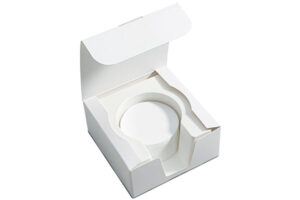
A 47 mm air filter is used to collect and measure airborne particles during sampling[^3], with materials like Teflon, glass fiber, or cellulose providing effective filtration for environmental monitoring[^4].
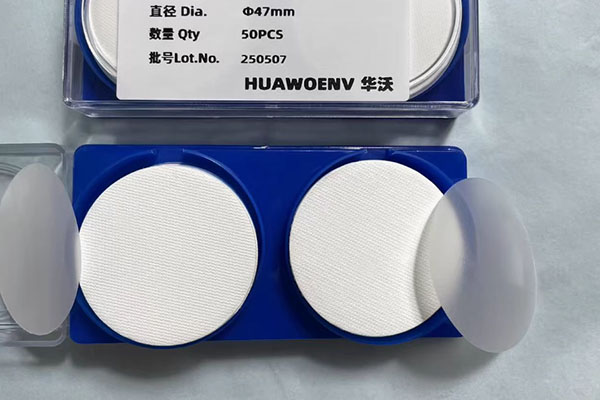
Airborne particle sampling relies on filters like these to trap pollutants. These filters are exposed to an air stream for specific durations—ranging from a single day, in line with PM (particulate matter) concentration limit assessments[^5], to both shorter and extended sampling periods. The timing depends on the monitoring goals and regulatory requirements. The material of the filter is crucial for ensuring accurate results, as it directly affects filtration efficiency and the ability to analyze the trapped particles later[^6].
What Materials Are Used for 47 mm Filters?
When it comes to air sampling filters, the material they are made of can substantially impact performance. But why does material choice matter?
Filters for air sampling are typically made of Teflon, glass fiber, or cellulose because these materials effectively capture particulate matter while meeting required performance standards.
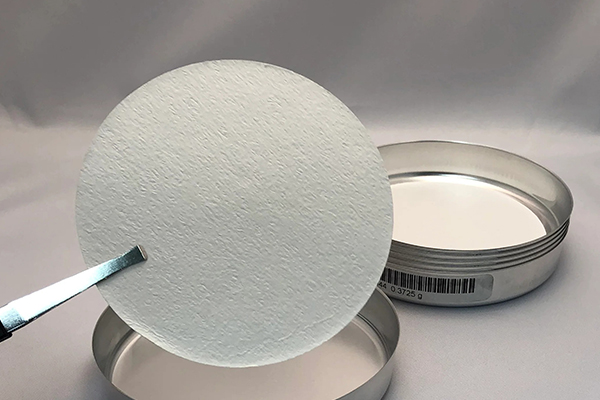
Each material has unique properties tailored to specific applications:
- Teflon (PTFE): Known for its non-stick and chemical-resistant properties[^7], Teflon filters are highly effective in trapping fine particles, such as PM2.5, while resisting moisture and chemical interference[^8]. This makes them suitable for a wide range of environmental conditions, including areas with high humidity.
- Glass Fiber: With its intricate weave, glass fiber excels at capturing both fine and coarse particulates, such as PM10 or heavy metals in industrial emissions. It's often used in high-temperature settings and for applications requiring high airflow rates[^9].
- Cellulose: A more budget-friendly option, cellulose filters are effective for trapping larger particles but may not perform as well in humid conditions or when exposed to certain chemicals[^10].
When choosing a filter material, it's essential to consider the specific environmental conditions and the type of particles you need to sample.
How Long Should You Expose a 47 mm Filter to the Air?
One key question for those using 47 mm filters is the length of the sampling period. Does it need to be fixed, or can it vary depending on your needs?
The sampling duration for 47 mm filters can range from a few hours to several days[^11], depending on the monitoring objectives and regulatory limits for particulate matter.

For daily average PM concentration limits, the filter is typically exposed to the air for 24 hours[^12]. During this time, particles in the air are drawn onto the filter, collecting a sample that can later be analyzed for size, type, and concentration. However, there's flexibility: shorter sampling periods are used for real-time or near-real-time monitoring, while extended periods may be employed for specific research projects. Automated filter replacement systems make it easier to switch filters within precise time frames[^13], ensuring reliable data collection.
Why Choose HuaEnv for 47 mm Filters?
As you can imagine, not all filters are created equal. The quality and reliability of the filters are crucial for accurate results. So why should you consider HuaEnv?
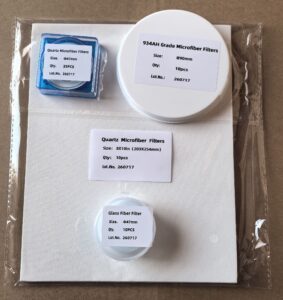
HuaEnv provides high-quality air sampling filters, including Teflon, glass fiber, and cellulose options, designed to meet rigorous standards for environmental monitoring.
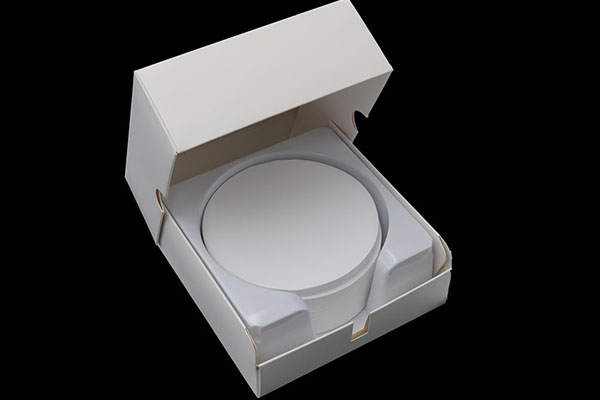
Our filters are manufactured with over 15 years of experience in OEM/ODM production. With a commitment to precision, we use advanced manufacturing processes to ensure that each filter meets the highest standards for filtration efficiency and durability. Whether you need filters for PM2.5 monitoring, industrial emissions analysis, or specialized research applications, HuaEnv offers tailored solutions that combine performance with cost-effectiveness. Our products undergo strict quality control, ensuring reliability for your critical air sampling needs.
Diving Deeper into HuaEnv's Expertise
When it comes to air sampling, attention to detail is everything. HuaEnv goes beyond basic manufacturing by offering customized solutions. Here's what sets us apart:
-
Material Expertise: We understand that different applications require different materials. Our Teflon filters offer chemical resistance, our glass fiber filters perform exceptionally in high-temperature environments, and our cellulose filters provide an economical option for less demanding tasks.
-
Precision Manufacturing: Every 47 mm filter we produce is crafted with precision engineering. Our production lines ensure uniform thickness, consistent pore size, and optimal filtration efficiency.
-
Quality Assurance: We employ rigorous testing protocols, including performance and physical tests, to ensure that our filters meet or exceed international standards.
-
Customization: We offer tailored solutions to meet specific requirements, such as exact pore sizes, material compositions, and sampling durations.
-
Global Reach: With our headquarters in China and a strong international presence, HuaEnv has become a trusted partner for environmental monitoring organizations worldwide.
By focusing on these core principles, we ensure that our filters not only meet but exceed your expectations, offering you peace of mind and reliable results.
Conclusion
47 mm filters are an essential tool in air sampling, and their effectiveness largely depends on the quality of the materials used and the precision in their manufacture. HuaEnv, as a trusted name in the field, offers tailored, high-quality solutions for a wide range of applications. Whether you're monitoring PM2.5 levels, analyzing industrial emissions, or conducting specialized research, our filters are designed to help you achieve accurate, dependable results. Trust HuaEnv to deliver the reliability your work demands.
[^1]: "WHO global air quality guidelines: particulate matter (PM2.5 and ...", https://www.who.int/publications/i/item/9789240034228. The WHO global air quality guidelines summarize epidemiological evidence linking exposure to particulate matter, especially PM2.5 and PM10, with adverse health outcomes. Evidence role: expert_consensus; source type: institution. Supports: Airborne particles can affect human health.. Scope note: This supports the health relevance of airborne particulate matter generally, not the health effect of every particle in inhaled air. [^2]: "Air quality monitoring for enhanced understanding of health impacts ...", https://www.who.int/publications/i/item/B09646. Authoritative public-health or environmental-agency sources describe ambient air-quality monitoring as essential for assessing pollutant levels, protecting public health, and supporting regulatory air-quality management. Evidence role: general_support; source type: government. Supports: Monitoring air quality has become a critical task..
[^3]: "Appendix L to Part 50, Title 40 -- Reference Method for the ... - eCFR", https://www.ecfr.gov/current/title-40/chapter-I/subchapter-C/part-50/appendix-Appendix%20L%20to%20Part%2050. U.S. EPA reference-method documentation for PM2.5 specifies collection of ambient particulate matter on 47 mm PTFE membrane filters for subsequent gravimetric mass determination. Evidence role: case_reference; source type: government. Supports: A 47 mm air filter can be used to collect and measure airborne particles during sampling.. Scope note: The reference method directly supports 47 mm filters for PM2.5 mass sampling; other particle-size fractions or analytical methods may use different filter formats.
[^4]: "[PDF] NIOSH Manual of Analytical Methods (NMAM), 5th Edition - CDC", https://www.cdc.gov/niosh/nmam/pdf/NMAM_5thEd_EBook-508-final.pdf. Air-monitoring methods from agencies such as NIOSH and EPA list PTFE, glass-fiber, and cellulose-based membrane filters among media used for collecting airborne particulates for environmental or occupational analysis. Evidence role: general_support; source type: government. Supports: Teflon/PTFE, glass fiber, and cellulose filters are used as effective filter media in particulate sampling.. Scope note: Such methods support the use of these materials in specified sampling contexts, but they do not establish that every material is equally effective for every pollutant or environment.
[^5]: "[PDF] METHOD 201A—DETERMINATION OF PM10 AND PM2.5 ... - EPA", https://www.epa.gov/sites/default/files/2019-08/documents/method_201a_0.pdf. National ambient air-quality standards and reference-method procedures commonly define 24-hour particulate-matter concentration metrics, making single-day filter sampling relevant to regulatory PM assessment. Evidence role: historical_context; source type: government. Supports: A one-day sampling period aligns with particulate-matter concentration limit assessments.. Scope note: This supports the regulatory relevance of 24-hour PM sampling, primarily in jurisdictions using 24-hour PM standards and reference methods.
[^6]: "Review of Filters for Air Sampling and Chemical Analysis in Mining ...", https://pmc.ncbi.nlm.nih.gov/articles/PMC10174218/. Reviews of aerosol filter sampling describe how filter substrate properties, including fiber structure, chemical background, hygroscopicity, and compatibility with analytical techniques, influence collection efficiency and downstream chemical or gravimetric analysis. Evidence role: mechanism; source type: paper. Supports: Filter material affects both particle collection efficiency and later analysis of collected particles.. Scope note: This supports the mechanism generally; the magnitude of the effect depends on the specific filter medium, aerosol composition, and analytical method.
[^7]: "Polytetrafluoroethylene - Wikipedia", https://en.wikipedia.org/wiki/Polytetrafluoroethylene. Reference works on polytetrafluoroethylene describe PTFE as a fluoropolymer notable for low surface energy, non-stick behavior, and high chemical inertness. Evidence role: definition; source type: encyclopedia. Supports: Teflon/PTFE has non-stick and chemical-resistant properties.. Scope note: This supports intrinsic PTFE material properties rather than performance of a particular commercial filter product.
[^8]: "QC of Filters for PM2.5, PM10 and Low Volume Pb | US EPA", https://www.epa.gov/amtic/qc-filters-pm25-pm10-and-low-volume-pb. EPA PM2.5 reference-method specifications require PTFE membrane filters with defined collection efficiency and handling characteristics, supporting their use for fine-particle mass sampling under controlled conditioning procedures. Evidence role: case_reference; source type: government. Supports: PTFE filters are used to collect fine particles such as PM2.5 and are selected partly for properties compatible with gravimetric monitoring.. Scope note: This supports PTFE filters in standardized PM2.5 gravimetric sampling; it does not prove equal resistance to all moisture levels or chemical interferences in all field settings.
[^9]: "[PDF] Method 5 - Determination of Particulate Matter Emissions from ... - EPA", https://www.epa.gov/sites/default/files/2021-05/documents/method_5_-_2020_12_07_0.pdf. EPA stationary-source particulate methods and aerosol sampling references specify glass-fiber filters for heated sampling trains and high-volume sampling applications, indicating their suitability for elevated-temperature and high-flow collection contexts. Evidence role: case_reference; source type: government. Supports: Glass-fiber filters are used in high-temperature and high-airflow particulate sampling applications.. Scope note: This supports common method-specific uses of glass-fiber filters, not universal suitability for all high-temperature or high-flow sampling conditions.
[^10]: "Cellulose for the Production of Air-Filtering Systems: A Critical Review", https://pmc.ncbi.nlm.nih.gov/articles/PMC8839425/. Filter-media compatibility references and aerosol sampling literature describe cellulose-based membranes as relatively hydrophilic and chemically less inert than fluoropolymer media, which can affect weighing stability and chemical compatibility. Evidence role: mechanism; source type: paper. Supports: Cellulose filters may be less suitable under humid conditions or when exposed to some chemicals.. Scope note: This supports a general material limitation; performance varies by cellulose filter type, treatment, pore size, and target analyte.
[^11]: "How long to air sample? Practical considerations for short-term air ...", https://hero.epa.gov/reference/2573549/. Ambient and occupational air-sampling methods specify different sample durations, including short task-based samples, 24-hour integrated PM samples, and longer integrated sampling periods depending on monitoring objectives. Evidence role: general_support; source type: government. Supports: Sampling duration for filter-based air monitoring can vary from hours to days.. Scope note: This supports variability in sampling duration across methods; a specific 47 mm filter setup may be constrained by flow rate, loading, and the target analyte.
[^12]: "Appendix L to Part 50, Title 40 -- Reference Method for the ... - eCFR", https://www.ecfr.gov/current/title-40/chapter-I/subchapter-C/part-50/appendix-Appendix%20L%20to%20Part%2050. The U.S. EPA PM2.5 Federal Reference Method specifies a nominal 24-hour sample collection period for determining daily ambient particulate-matter mass concentration. Evidence role: case_reference; source type: government. Supports: For daily average PM concentration limits, filters are typically exposed for 24 hours.. Scope note: This directly supports 24-hour exposure for EPA PM2.5 reference sampling, but other regulatory programs and research designs may use different durations.
[^13]: "Sampling Schedule Calendar | US EPA", https://www.epa.gov/amtic/sampling-schedule-calendar. Technical descriptions of sequential particulate samplers explain that automated mechanisms advance or exchange filters according to programmed schedules, enabling unattended collection of multiple time-defined samples. Evidence role: mechanism; source type: government. Supports: Automated filter replacement systems can switch filters within scheduled sampling time frames.. Scope note: This supports the operating principle of sequential samplers generally; reliability depends on the specific instrument design, maintenance, and quality-assurance procedures.