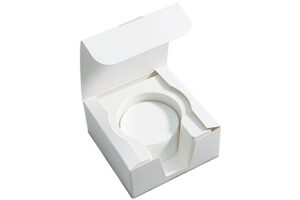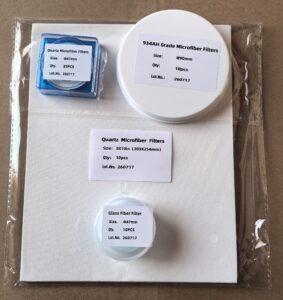

The 934-AH glass fiber filter is a remarkable tool for efficient filtration in laboratory settings. Its unique properties make it a favorite among researchers and scientists alike.
The 934-AH filter captures liquid particles with a size of 1.5μm[^1]. It stands out for its high retention efficiency and load capacity at high flow rates[^2]. Standardized with a 9 cm diameter, it is designed to ensure comparability in measurements under gravity conditions.

The 934-AH filter features a smooth borosilicate material that can withstand temperatures exceeding 550°C[^3]. This makes it suitable for determining total suspended solids in water, removing turbidity, and filtering bacterial culture media. The use of the 934-AH filter is widespread across various laboratory applications. It is particularly recommended for water pollution monitoring, cell collection, LSC, and air pollution monitoring[^4].
How does 934-AH Glass Fiber Filter compare with others?
The question of how the 934-AH glass fiber filter stacks up against its competitors is crucial. Many people are familiar with Whatman, a giant in the life sciences laboratory filtration sector. Their glass microfiber filters have held a significant market share internationally. However, there is a shift in the landscape as companies from China, like Hua Env, begin to challenge this status quo.
Hua Env produces several types of laboratory-grade glass fiber filters, including the 934-AH filter. These products can replace Whatman’s glass fiber filter binder-free options like GF/A, GF/B, GF/C, GF/D, GF/F, and EPM2004.
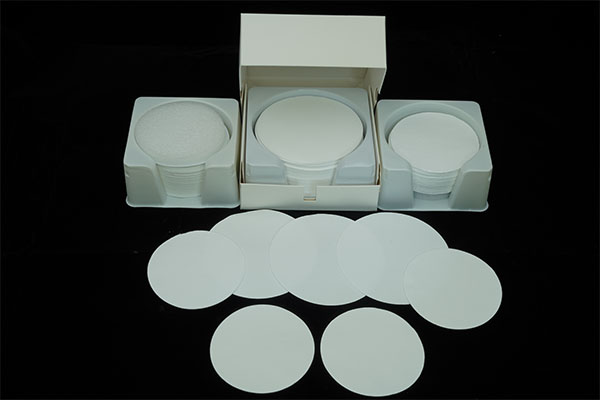
When comparing the 934-AH filter to others, it is essential to consider the specific needs of your laboratory. While Whatman filters are well-known for their quality, Hua Env offers competitive pricing and flexibility. This is especially vital for laboratories that require smaller batch orders.
Features and Benefits of 934-AH Glass Fiber Filters
The 934-AH filter's features make it an attractive option for many laboratories. Its ability to perform under high temperatures and its impressive retention capacity are just a few of its advantages.
Key Features:
- Particle Retention: It captures particles as small as 1.5μm, making it ideal for a variety of applications.
- High Flow Rate: The filter excels in high flow conditions, allowing for more efficient filtration.
- Durability: Withstanding temperatures over 550°C, it can be used in demanding environments.
- Versatility: Suitable for various applications, including water quality testing and cell collection.
Benefits:
- Cost-Effectiveness: Compared to other brands, Hua Env's 934-AH filter offers excellent value without compromising quality.
- Customizability: The ability to produce filters in various sizes and specifications allows laboratories to find exactly what they need.
- Sample Integrity: High purity levels help maintain the integrity of samples, a crucial factor in laboratory work.

Conclusion
In summary, the 934-AH glass fiber filter is a reliable and efficient choice for laboratories. Its features and benefits position it as a strong contender against established brands in the filtration market.
[^1]: "Whatman™ Grade 934-AH Glass Microfiber Filters, Binder ...", https://www.cytivalifesciences.com/en/us/products/items/whatman-grade-934-ah-glass-microfiber-filters-binder-free-p-00427?selectedProduct=28418481. A product technical specification or laboratory filtration reference identifies Grade 934-AH glass microfiber filters as having approximately 1.5 μm particle retention, supporting the stated nominal retention rating. Evidence role: definition; source type: other. Supports: The 934-AH filter captures liquid particles with a size of 1.5μm.. Scope note: This would support the nominal product specification, not guarantee identical capture performance for every particle type or operating condition.
[^2]: "Whatman Grade 934-AH Glass Microfiber Filters, Binder Free", https://www.poly.my/product/whatman-grade-934-ah-glass-microfiber-filters-binder-free/. A technical datasheet for Grade 934-AH glass microfiber filters describes the filter as designed for high solids loading and relatively fast filtration, providing support for the performance characterization. Evidence role: general_support; source type: other. Supports: The 934-AH filter has high retention efficiency and load capacity at high flow rates.. Scope note: Datasheet language is usually based on manufacturer testing and may not provide independent comparative performance data across brands.
[^3]: "Grade 934-Ah Glass Microfiber Filters", https://www.thomassci.com/p/thomas-grade-934-ah-glass-microfiber-filters?srsltid=AU7gw4XtHmldEEeU7SyfOU0gb5s5L9KODug1hCcEQw9f-eiv4eD5F9UB. References on borosilicate glass microfiber filters note their suitability for high-temperature gravimetric procedures, supporting the claim that binder-free glass fiber media can tolerate elevated ignition or drying temperatures. Evidence role: mechanism; source type: other. Supports: The 934-AH filter uses borosilicate glass fiber material that can withstand temperatures exceeding 550°C.. Scope note: The exact maximum temperature should be confirmed for the specific 934-AH product because thermal limits can vary by binder content, manufacturing process, and test duration.
[^4]: "Filtration Characteristics of Glass Fiber Filter at Elevated ...", https://nepis.epa.gov/Exe/ZyPURL.cgi?Dockey=91015XO6.TXT. Laboratory filtration references describe glass microfiber filters as used in environmental water testing, particulate collection, liquid scintillation counting sample preparation, and air particulate sampling, giving contextual support for these application categories. Evidence role: general_support; source type: research. Supports: The 934-AH filter is recommended for water pollution monitoring, cell collection, liquid scintillation counting, and air pollution monitoring.. Scope note: This evidence would support common application areas for glass microfiber filters broadly and may not independently validate that 934-AH is optimal for each listed use.