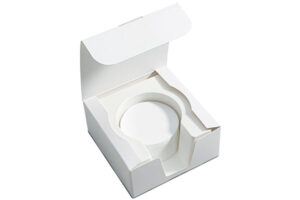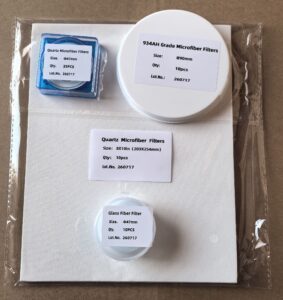


Are you curious about how TSS glass fiber filters work? Understanding their features can help improve your filtration processes and provide better results in your laboratory.
TSS glass fiber filters, such as the Whatman Grade 934-AH, have a nominal particle retention of 1.5 µm[^1] and are ideal for large-volume liquid filtration[^2]. Their high retention efficiency and flow rates make them essential for various applications.

Let's dive deeper into what makes TSS glass fiber filters effective and valuable for various applications in different industries.
What makes TSS glass fiber filters unique?
Many people ask why TSS glass fiber filters, especially the Whatman Grade 934-AH, are considered top choices. The answer lies in their outstanding features and performance in demanding situations.
TSS glass fiber filters are renowned for their high loading capacity and smooth surface, enabling efficient precipitate recovery and handling of turbid solutions. Their durability under extreme temperatures adds to their versatility.

The TSS glass fiber filters are made of high-grade borosilicate glass. This type of glass can withstand temperatures of up to 550°C[^3], making it suitable for various challenging applications. The nominal particle retention of 1.5 µm ensures that even the smallest particles are effectively captured, preserving the integrity of your samples. They have a low fiber shedding rate, which means you can trust their reliability during your filtration processes.
Applications of TSS glass fiber filters include cell harvesting, liquid scintillation counting, air pollution monitoring, and water pollution monitoring[^4]. In cell harvesting, these filters can efficiently separate cells from culture media. For liquid scintillation counting, they help in accurate detection of radioactivity in samples. When it comes to air and water pollution monitoring, they play a crucial role in capturing particulate matter, ensuring that your measurements are accurate and reliable.
Furthermore, the filters are binder-free, which enhances their effectiveness and ensures that no unwanted substances interfere with your samples. With a thickness of 435 µm and a basis weight of 64 g/m², they provide optimal performance in various filtration applications.
Conclusion
In summary, TSS glass fiber filters are essential tools for efficient and reliable filtration across various industries.
[^1]: "Whatman™ Filter Paper Grade 934-AH RTU Glass ... - Cytiva", https://www.cytivalifesciences.com/en/us/products/items/whatman-filter-paper-grade-934-ah-rtu-glass-microfiber-filter-ready-to-use-p-00444?selectedProduct=29276942. A manufacturer technical specification for Whatman Grade 934-AH glass microfiber filters reports a nominal particle retention of 1.5 µm, supporting the stated retention rating. Evidence role: definition; source type: other. Supports: Whatman Grade 934-AH TSS glass fiber filters have a nominal particle retention of 1.5 µm.. Scope note: Nominal retention is a product specification and does not by itself prove absolute retention under all sample matrices, pressures, or protocols.
[^2]: "Whatman™ Grade 934-AH Glass Microfiber Filters, Binder Free | Cytiva", https://www.cytivalifesciences.com/en/us/products/items/whatman-grade-934-ah-glass-microfiber-filters-binder-free-p-00427. Technical literature for Grade 934-AH glass microfiber filters describes the grade as having high loading capacity and high flow rate, characteristics associated with use in filtering larger liquid volumes. Evidence role: general_support; source type: other. Supports: Whatman Grade 934-AH TSS glass fiber filters are suitable for large-volume liquid filtration.. Scope note: This supports suitability in general terms; actual maximum volume depends on suspended-solids concentration, filter diameter, vacuum conditions, and the analytical method used.
[^3]: "Borosilicate Glass Microfiber Filters - I.W. Tremont", https://iwtremont.com/products/glass-microfiber. Product specifications for borosilicate glass microfiber filters list heat resistance up to approximately 550°C, supporting the stated temperature tolerance for this filter type. Evidence role: mechanism; source type: other. Supports: Borosilicate glass TSS filters can withstand temperatures of up to 550°C.. Scope note: The cited temperature rating concerns the filter medium under specified conditions and may not apply to housings, seals, sample residues, or all operational environments.
[^4]: "Liquid scintillation counting at the limit of detection in biogeosciences - PMC", https://pmc.ncbi.nlm.nih.gov/articles/PMC10361571/. Technical and analytical-method sources identify glass microfiber filters, including grades such as 934-AH, as used in suspended-solids testing and particulate collection, while manufacturer application notes list uses such as cell harvesting and liquid scintillation counting. Evidence role: general_support; source type: institution. Supports: TSS glass fiber filters are used in cell harvesting, liquid scintillation counting, air pollution monitoring, and water pollution monitoring.. Scope note: The evidence is partly contextual because different applications may require different filter grades, diameters, pretreatment steps, or regulatory methods.