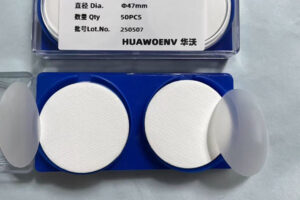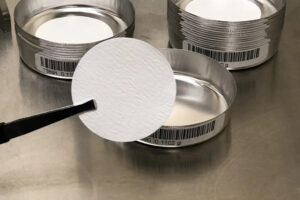

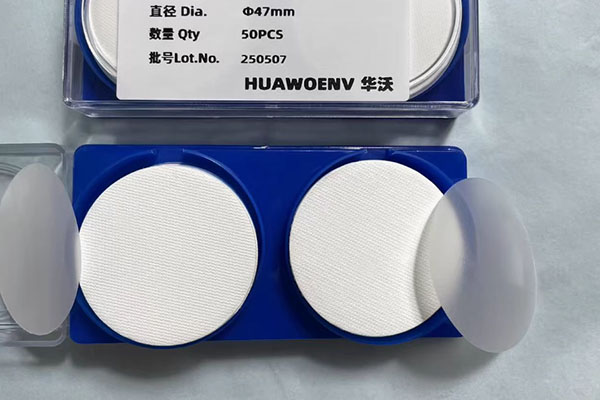
The demand for reliable and efficient laboratory filtration solutions has surged.[^1] Scientists and researchers constantly seek materials that can handle complex filtration tasks without compromising results. Whatman GF/D prefilter discs may be the solution you need.
Whatman glass microfiber GF/D prefilter discs are binder-free borosilicate filters with a nominal pore size of 2.7 μm[^2], designed for prefiltration tasks, efficient particle retention, and enhanced loading capacity.
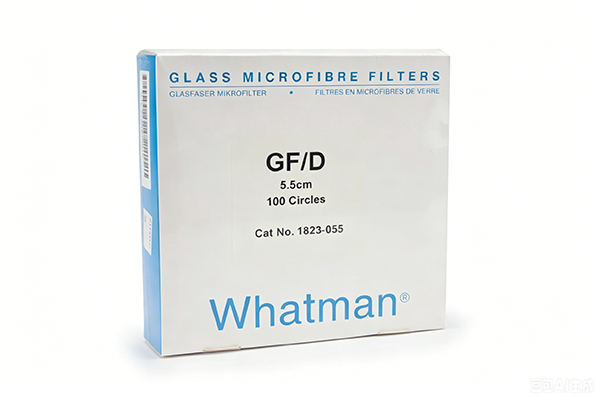
This article will explore Whatman GF/D filters in detail, including their features, applications, benefits, and alternative options from competitive manufacturers like HuaEnv.
What are the key features of GF/D prefilter discs?
Laboratory filtration often comes with challenges like clogging, inconsistent results, or underperformance. GF/D filters aim to solve these issues with their unique design and features.
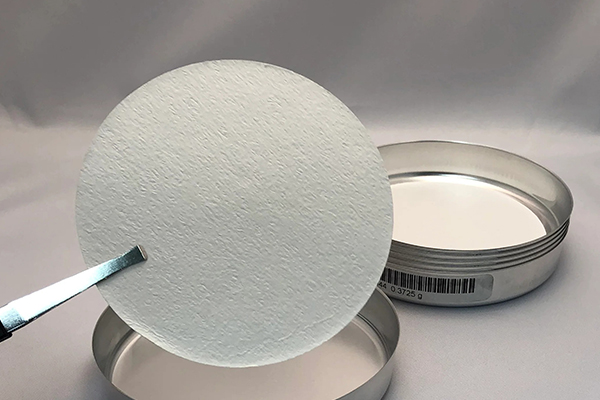
GF/D filters are 675 µm thick borosilicate glass fiber filters, binder-free, available in various diameters like 47 mm, non-sterile, and hydrophilic[^3], offering enhanced loading capacity and nominal particle retention.
Dive deeper:
The 2.7 μm particle retention ensures fine particle capture[^4], making GF/D filters ideal as prefilters before membrane filtration[^5]. Their hydrophilic nature allows efficient liquid absorption, while binder-free construction ensures no additional contamination[^6]. The increased thickness offers higher loading capacity[^7] for demanding applications. These filters typically come packaged in quantities of 100, suitable for high-volume laboratory needs.
| Feature | Description |
|---|---|
| Material | Borosilicate glass |
| Diameter (Example) | 47 mm |
| Particle Retention | 2.7 μm |
| Thickness | 675 µm |
| Sterility | Non-sterile |
| Hydrophilicity | Hydrophilic |
| Packaging | 100 filters per pack |
What are the applications of GF/D filters?
Whether you're conducting air quality analysis or preparing chromatography samples, GF/D filters serve diverse purposes, thanks to their versatile features.
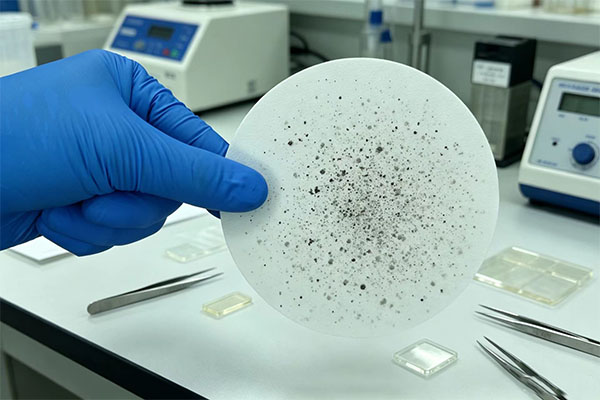
GF/D filters are used for prefiltration tasks, water sample suspension testing[^8], air dust sampling[^9], solution clarification, chromatography preparation, and particle collection in smoke and atmospheric studies.
Dive deeper:
These filters excel in prefiltration, where coarse particles are removed before finer filtration, enhancing the performance of subsequent membranes[^10]. In water sampling, GF/D filters capture suspended solids, ensuring accurate analysis. For air sampling, their robustness aids in capturing dust particles efficiently. Their application in chromatography preparation ensures contaminant-free solutions, vital for precise results. Additionally, GF/D filters are reliable for smoke particle collection and atmospheric studies, where durability is key.
| Application | Advantages |
|---|---|
| Prefiltration | Captures coarse particles efficiently |
| Water sample suspension test | Ensures accurate solids retention |
| Air dust sampling | Robust and reliable for particulate analysis |
| Solution clarification | Removes contaminants for clean samples |
| Chromatography preparation | Enhances downstream filtration results |
| Smoke/atmospheric studies | Durable for challenging environments |
How do GF/D filters compare to alternatives?
For laboratories looking for competitive solutions, options like HuaEnv filters can offer similar performance, often at a better price point.
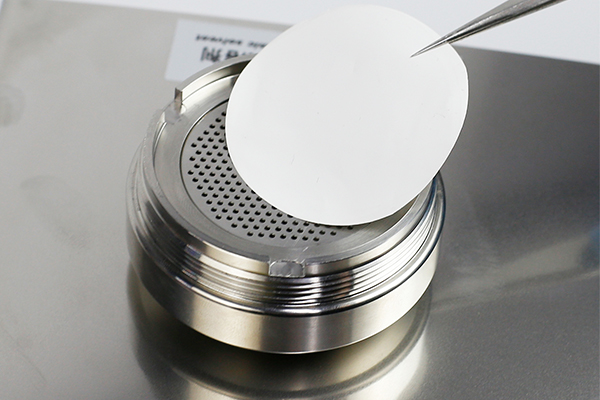
HuaEnv manufactures glass microfiber filters comparable to GF/D, including GF/A, GF/B, GF/C, GF/D, GF/F, 934-AH, and EPM2000, providing high-quality filtration at competitive costs.
Dive deeper:
HuaEnv filters match the technical specifications of GF/D filters and are produced using advanced manufacturing techniques. These filters are tested for pore size consistency, filtration efficiency, and particle retention. HuaEnv offers free samples to distributors and laboratories seeking reliable alternatives to premium brands like Whatman or Ahlstrom. Their filters are widely used in environmental monitoring, sample preparation, and industrial applications.
| Brand | Features | Price point | Other benefits |
|---|---|---|---|
| Whatman | Premium quality, binder-free | Higher | Trusted brand |
| HuaEnv | High-quality, competitive pricing | Lower | Free samples, custom options |
| Ahlstrom | Reliable filtration solutions | Medium | Industry-standard alternatives |
Conclusion
GF/D filters offer a robust solution for various laboratory filtration tasks, with features like binder-free construction, 2.7 μm particle retention, and hydrophilicity. Equipped with increased loading capacity, they are ideal for prefiltration, air sampling, and water testing. HuaEnv provides a compelling alternative for laboratories seeking quality filters at competitive pricing. No matter your filtration needs, understanding your options can help you achieve accurate and efficient results.
[^1]: "Laboratory Filtration Market Size, Trends, Growth Report 2035", https://www.marketresearchfuture.com/reports/laboratory-filtration-market-24581. A market or institutional report documenting recent growth in laboratory filtration or analytical sample-preparation demand would support the claim that demand has increased. Evidence role: statistic; source type: institution. Supports: Demand for reliable and efficient laboratory filtration solutions has increased.. Scope note: Such evidence may describe the broader laboratory filtration market rather than demand for GF/D prefilter discs specifically.
[^2]: "[PDF] Whatman filtration Product guide", https://macro.lsu.edu/howto/Whatman-filtration-product-guide.pdf. A Cytiva/Whatman product specification sheet for GF/D glass microfiber filters would support the material, binder-free construction, and nominal particle-retention rating stated for the product. Evidence role: definition; source type: other. Supports: Whatman GF/D prefilter discs are binder-free borosilicate glass microfiber filters with a nominal 2.7 μm pore size or particle-retention rating.. Scope note: Manufacturer specifications verify the product attributes but do not independently assess performance in all applications.
[^3]: "[PDF] Whatman filtration Product guide", https://macro.lsu.edu/howto/Whatman-filtration-product-guide.pdf. A Whatman/Cytiva catalog entry for the relevant GF/D disc size would substantiate the listed thickness, diameter, sterility, hydrophilicity, material, and binder-free construction. Evidence role: definition; source type: other. Supports: GF/D filters have the stated physical and chemical specifications, including 0.67 mm thickness and 47 mm diameter for the disc described.. Scope note: The citation would confirm catalog specifications for a particular product code and may not apply to every GF/D format or diameter.
[^4]: "What is a Whatman GF/ D filter?", https://huaenv.com/what-is-a-whatman-gf-d-filter/. A product datasheet or filtration handbook describing GF/D nominal particle retention would support that the filter is intended to retain particles around the stated nominal rating. Evidence role: mechanism; source type: other. Supports: The 2.7 μm nominal rating is associated with particle retention suitable for prefiltration.. Scope note: Nominal pore size or particle-retention ratings do not guarantee complete retention of all particles at that size under every filtration condition.
[^5]: "[PDF] Whatman filtration Product guide", https://macro.lsu.edu/howto/Whatman-filtration-product-guide.pdf. A laboratory filtration handbook or manufacturer technical note explaining prefiltration would support the use of glass microfiber filters to remove larger particulates before membrane filtration. Evidence role: mechanism; source type: education. Supports: GF/D-type glass microfiber filters are appropriate for prefiltration before membrane filtration.. Scope note: This supports the general prefiltration role; suitability still depends on sample matrix, particle load, and downstream membrane type.
[^6]: "[PDF] Whatman filtration Product guide", https://macro.lsu.edu/howto/Whatman-filtration-product-guide.pdf. A filtration materials reference explaining binder-free glass microfiber media would support that the absence of binders reduces the risk of binder-derived extractables in filtrates. Evidence role: mechanism; source type: research. Supports: Binder-free construction reduces the possibility of contamination from binder materials.. Scope note: Binder-free construction can reduce one contamination source but does not ensure complete absence of contamination from the filter or handling process.
[^7]: "CIVL 1101 - Introduction to Water Filtration", https://www.ce.memphis.edu/1101/notes/filtration/filtration-1.html. A filtration engineering reference or technical note relating filter depth/thickness to dirt-holding or loading capacity would support the mechanism that thicker depth media can retain more particulate matter before clogging. Evidence role: mechanism; source type: education. Supports: Greater filter thickness can contribute to higher loading capacity in depth filtration media.. Scope note: Thickness is only one determinant of loading capacity; fiber structure, porosity, particle size distribution, and operating conditions also affect performance.
[^8]: "NEMI Method Summary - I-3765", https://www.nemi.gov/methods/method_summary/5495/. A standard method or environmental monitoring reference for suspended-solids analysis would support the use of glass-fiber filters in collecting suspended particulate matter from water samples. Evidence role: case_reference; source type: government. Supports: Glass-fiber filters are used in water-sample suspended-solids or particulate-matter testing.. Scope note: Many standardized suspended-solids methods specify particular glass-fiber filter types or preparation steps, which may not be identical to GF/D discs.
[^9]: "PARTICULATES NOT OTHERWISE REGULATED, TOTAL ... - OSHA", http://www.osha.gov/chemicaldata/801. An occupational or environmental air-sampling method specifying filter collection of airborne particulate matter would support the general use of filter media for dust or aerosol sampling. Evidence role: case_reference; source type: government. Supports: Filter media are used for air dust or particulate sampling.. Scope note: Specific air-sampling methods often require defined filter materials, pore sizes, and gravimetric procedures; the source may support filter-based dust sampling generally rather than GF/D specifically.
[^10]: "Membrane Filtration Guidance Manual November 2005 - epa nepis", https://nepis.epa.gov/Exe/ZyPURL.cgi?Dockey=901V0500.TXT. A membrane-filtration guidance document explaining staged filtration would support that prefilters remove larger particles and can reduce clogging or extend the useful life of downstream membranes. Evidence role: mechanism; source type: institution. Supports: Prefiltration removes coarse particles before finer membrane filtration and can improve downstream membrane performance.. Scope note: The degree of improvement depends on sample composition and the selected prefilter and membrane combination.