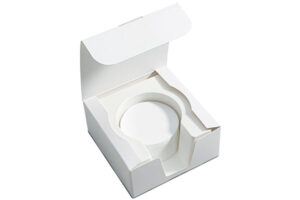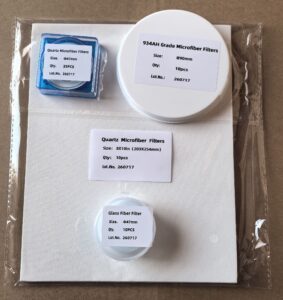

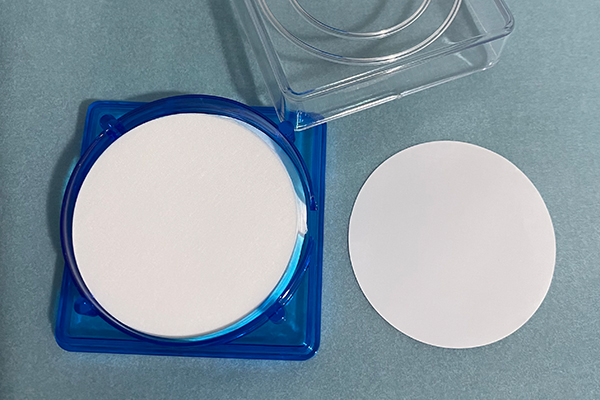
GF/D filters are thick, highly efficient glass microfiber prefilters designed for high particle loading[^1]. They provide faster flow rates and efficient filtration[^2], making them ideal for air filtration and gravimetric analysis involving ignition[^3].
GF/D filters are made from borosilicate glass microfiber, binder-free, and hydrophilic[^4], which allows for effective and rapid filtration of volatile materials. They are recommended for protecting finely retentive membranes[^5] and combining with GF/B filters for enhanced prefilter protection[^6].
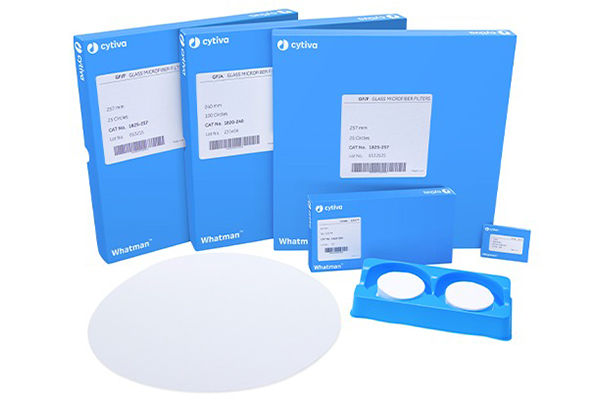
What makes GF/D filters unique?
Glass microfiber filters like the GF/D grade stand out due to their thickness[^7]. This characteristic enables them to handle high particle loads efficiently. Compared to other materials with similar particle retention rates, GF/D filters exhibit faster flow rates and higher filtering speeds.
Their unique properties make them well-suited for applications such as air filtration, where they effectively capture fine airborne particles, and for gravimetric analysis involving ignition, where their ability to withstand temperatures up to 550°C[^8] is critical.
Technical properties of GF/D filters
GF/D filters are designed to meet specific performance standards. Below is a table summarizing their key technical specifications:
| Property | Value |
|---|---|
| Diameter | 47 mm |
| Thickness | 675 µm |
| Maximum Temperature Resistance | 550°C |
| [Particle Retention Rate | 2.7 µm](https://www.sigmaaldrich.com/US/en/product/aldrich/wha1823007?srsltid=AfmBOoquPEj3R7OMnjb38LpmjxebNSNfeAneOlAEMGk_9e2IHMlQ_6GZ)[^9] |
| Air Flow Rate | 2.6 s/100 ml/in² |
| Water Flow Rate | 681 (ml/min)² |
| Material | Binder-free borosilicate glass |
| Pack Size | 100 |
| Wettability | Hydrophilic |
These features collectively make GF/D filters one of the most reliable options for laboratory and industrial filtration needs.
Why should you use GF/D filters for air filtration?
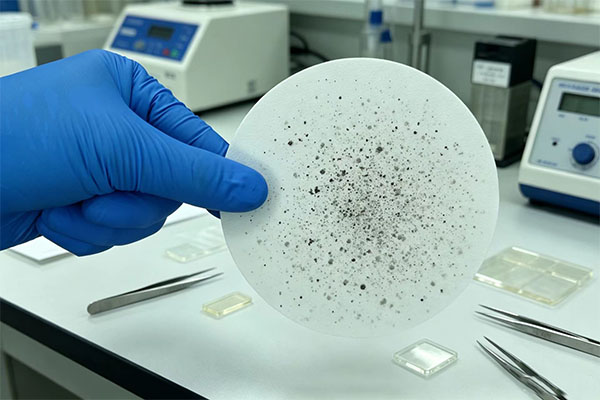
Air filtration often requires filters to capture fine airborne particles efficiently. GF/D filters excel in this application due to their high particle loading capacity and quick flow rates. Their borosilicate glass microfiber composition ensures fine filtration while maintaining durability under high operational demands.
GF/D filters are also hydrophilic, allowing for the smooth passage of air or liquid without clogging. When air sampling is involved, their temperature tolerance (up to 550°C) makes them suitable for extreme conditions where other filters might fail.
Combining GF/D filters with other grades
Pairing GF/D filters with GF/B filters enhances efficiency and extends the life of finely retentive membranes. GF/B filters, known for their finer particle retention, act as a complementary layer, ensuring a more robust filtration system. This combination helps in minimizing clogging and optimizing the filtration process.
How are GF/D filters used in gravimetric analysis?
Gravimetric analysis often involves volatile materials and ignition processes. GF/D filters are ideal for this due to their ability to withstand high temperatures (up to 550°C) without compromising filtration efficiency. Their thick structure supports high particle loading, which is crucial for accurate weight measurements in gravimetric studies.
The filters are often used to analyze suspended solids in liquids[^10] or airborne particles, providing reliable data for research, environmental monitoring, and other scientific applications.
Detailed application scenarios
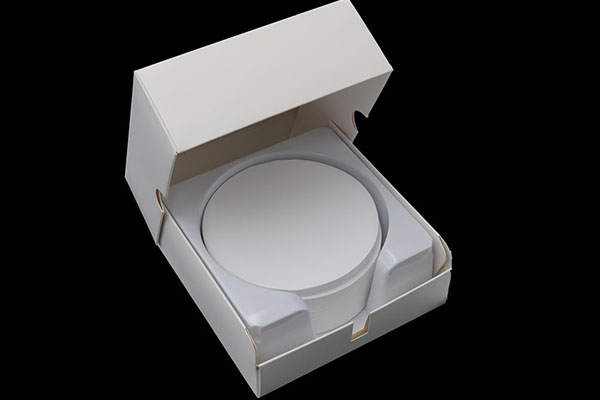
Below are some typical applications for GF/D filters:
| Application | Description |
|---|---|
| Air Filtration | Capturing airborne particulate matter |
| Gravimetric Analysis | Weighing volatile materials post-ignition |
| Suspended Solids Analysis | Filtering solids from water samples |
| Pre-filtering | Protecting finely retentive filtration membranes |
Their versatility across multiple domains highlights their value for laboratory and industrial use.
Conclusion
GF/D filters are vital for efficient air filtration and reliable gravimetric analysis. Their thickness, high particle loading capacity, and ability to withstand extreme conditions make them indispensable for advanced filtration needs.
[^1]: "[PDF] Whatman filtration Product guide", https://macro.lsu.edu/howto/Whatman-filtration-product-guide.pdf. A product specification or technical data sheet for Whatman GF/D identifies the grade as a thick glass microfiber prefilter intended for high particle loading applications. Evidence role: general_support; source type: institution. Supports: GF/D filters are thick glass microfiber prefilters designed for high particle loading.. Scope note: This is product-specific support and may come from the manufacturer rather than an independent comparative study.
[^2]: "Characteristics of Air Filters - PMC - NIH", https://pmc.ncbi.nlm.nih.gov/articles/PMC7498932/. Technical specifications for GF/D glass microfiber filters report flow-rate and retention characteristics consistent with their use as rapid-flow prefilters. Evidence role: general_support; source type: institution. Supports: GF/D filters provide faster flow rates and efficient filtration.. Scope note: Such specifications establish reported performance parameters but do not independently prove superiority in every filtration setup.
[^3]: "[PDF] Method IO-3.1 - Selection, Preparation and Extraction of Filter Material", https://www.epa.gov/sites/default/files/2019-11/documents/mthd-3-1.pdf. Laboratory filtration references and GF/D product specifications describe glass microfiber filters as suitable for particulate air sampling and gravimetric procedures where filters may be heated or ignited. Evidence role: general_support; source type: institution. Supports: GF/D filters are suitable for air filtration and gravimetric analysis involving ignition.. Scope note: This supports typical applications of the filter material and grade, but application suitability still depends on the analytical method used.
[^4]: "Whatman glass filters - Sigma-Aldrich", https://www.sigmaaldrich.com/US/en/search/whatman-glass-filters?focus=products&page=1&perpage=30&sort=relevance&term=whatman%20glass%20filters&type=product&srsltid=AfmBOopNMBsaH0ASAZeqXXI0s5JwMihaMVRGj3dTi3rS3LWoty7nClHg. GF/D filter specifications list the medium as binder-free borosilicate glass microfiber and describe the filter as hydrophilic. Evidence role: definition; source type: institution. Supports: GF/D filters are made from binder-free borosilicate glass microfiber and are hydrophilic.. Scope note: The source would verify composition and wettability for the specified grade, not necessarily for all glass microfiber filters.
[^5]: "Grade GF/D Glass Microfiber PreFilters, 47mm Circle 100/Pk", https://huaenv.com/grade-gf-d-glass-microfiber-prefilters-47mm-circle-100-pk-what-makes-them-stand-out/. Technical guidance for glass microfiber prefilters notes that coarser prefilters can protect finer membrane filters by trapping larger particles before they reach the final membrane. Evidence role: mechanism; source type: research. Supports: GF/D filters can be used to protect finely retentive membranes.. Scope note: This supports the general prefiltration mechanism; a GF/D-specific recommendation should be verified against a product datasheet or application guide.
[^6]: "Membrane Filtration Guidance Manual November 2005 - epa nepis", https://nepis.epa.gov/Exe/ZyPURL.cgi?Dockey=901V0500.TXT. Product guidance for Whatman glass microfiber grades describes using sequential prefilters, including GF/D with finer grades such as GF/B, to increase loading capacity and protect downstream filters. Evidence role: mechanism; source type: institution. Supports: GF/D filters may be combined with GF/B filters to improve prefilter protection.. Scope note: This is a configuration recommendation and may depend on sample type, particle-size distribution, and filtration apparatus.
[^7]: "Whatman glass microfiber filters, Grade GF/D diam. 4.7 cm glass ...", https://www.sigmaaldrich.com/US/en/product/aldrich/wha1823047?srsltid=AfmBOoqexphZzyS5rdEFhF9XWg0h_B-S0MrBHnUP61ZkGPwCfSTtvk8D. The GF/D specification lists a nominal thickness of about 675 µm, supporting the article’s characterization of the grade as comparatively thick. Evidence role: statistic; source type: institution. Supports: GF/D filters stand out because of their thickness.. Scope note: The value is a nominal product specification and may vary by manufacturer, lot, or test method.
[^8]: "Glass Microfiber Filter - Professional Laboratory Filtration Solutions", https://huaenv.com/product/glass-microfiber-filter/. Glass microfiber filter specifications commonly list a maximum operating or ignition temperature of 550 °C for binder-free borosilicate glass grades such as GF/D. Evidence role: statistic; source type: institution. Supports: GF/D filters can withstand temperatures up to 550°C.. Scope note: This supports temperature tolerance under specified conditions; it does not prove unchanged filtration performance after every heating protocol.
[^9]: "Whatman ® glass microfiber grade GF/D prefilter discs 2.7 μm pore ...", https://www.sigmaaldrich.com/US/en/product/aldrich/wha1823007?srsltid=AfmBOoquPEj3R7OMnjb38LpmjxebNSNfeAneOlAEMGk_9e2IHMlQ_6GZ. The GF/D product specification reports a nominal particle retention rating of 2.7 µm for the filter grade. Evidence role: statistic; source type: institution. Supports: GF/D filters have a particle retention rate of 2.7 µm.. Scope note: Particle-retention ratings are method-dependent and should be treated as nominal rather than absolute cutoffs.
[^10]: "NEMI Method Summary - I-3765", https://www.nemi.gov/methods/method_summary/5495/. Standard methods for total suspended solids use glass-fiber filters and gravimetric weighing to collect and quantify suspended particulate matter in water samples. Evidence role: case_reference; source type: government. Supports: Glass fiber filters can be used to analyze suspended solids in liquids.. Scope note: Standard methods support the use of glass-fiber filters for suspended-solids analysis generally; they may specify particular filter types or performance criteria rather than GF/D exclusively.