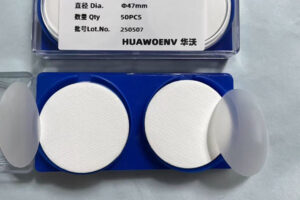

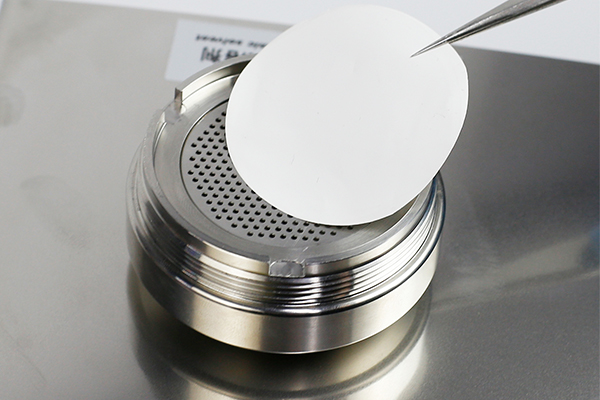
The right filter paper[^1] can make or break the accuracy of your analytical results. Choosing the wrong one may lead to contamination, inefficiency, and wasted time.
Binder-free glass microfiber filter papers are ideal for analytical and gravimetric analyses as well as prefilters due to their fast flow rates, high load capacity, and ability to retain fine particles[^2].
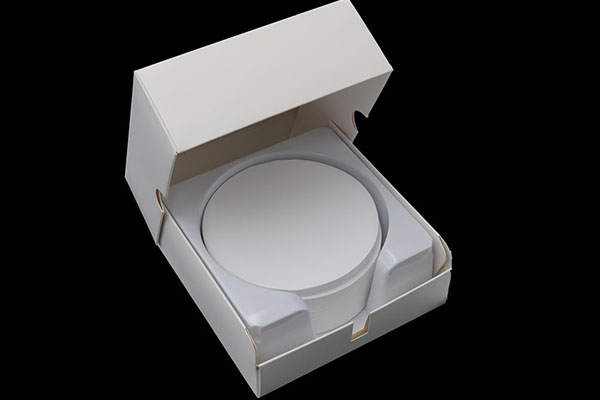
Glass fiber filters are biologically inert and chemically resistant. They are suitable for high-temperature applications, withstanding up to 500 °C or 550 °C in specialized grades like 550-HA. Their versatility makes them indispensable. Let's dive deeper into their features.
Why Are Binder-Free Glass Fiber Filters Ideal for Analytical Applications?
Laboratories need accurate and reliable tools to ensure dependable outcomes. Poor choices in filters can compromise results.
Binder-free glass microfiber filters excel in analytical and gravimetric analyses because they are free from binders that could leach substances[^3]. Their high filtration efficiency and retention of fine particles[^4] guarantee precision in laboratory operations.
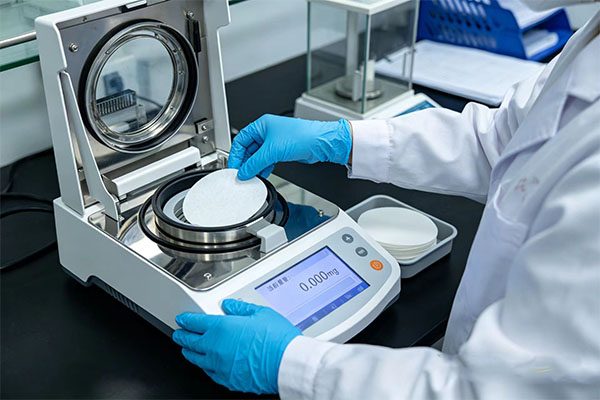
In addition to precision, their fast flow rates accelerate processes without sacrificing load capacity. Below is a breakdown of their key characteristics:
| Feature | Benefit |
|---|---|
| Binder-Free | Eliminates the risk of contamination |
| Fast Flow Rate | Speeds up filtration processes |
| High Load Capacity | Handles large sample volumes |
| Fine Particle Retention | Ensures analytical accuracy |
Can Glass Fiber Filters Withstand Harsh Chemicals and High Temperatures?
Chemical resistance and temperature tolerance are critical for demanding laboratory applications. Not all filters can endure extreme conditions.
Glass fiber filter papers are made to withstand exposure to most chemicals, including corrosive acids and bases[^5]. They can handle temperatures up to 500 °C, with specialized grades like 550-HA enduring up to 550 °C. This makes them ideal for applications like hot gas filtration and environmental monitoring[^6].
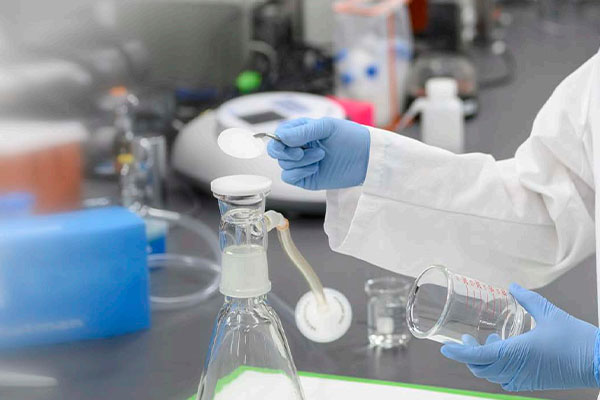
When used in high-temperature settings, these filters retain their structural integrity and filtration efficiency. This ensures consistency and reliability across various industries.
How Do Glass Fiber Filters Perform as Prefilters?
Prefiltration is key to extending the life of final filters and ensuring efficient filtration in complex setups.
Glass fiber filters excel as prefilters due to their ability to trap larger particles while allowing finer particles to pass through to secondary filters. This reduces the load on the final filter, optimizing its performance and longevity[^7].
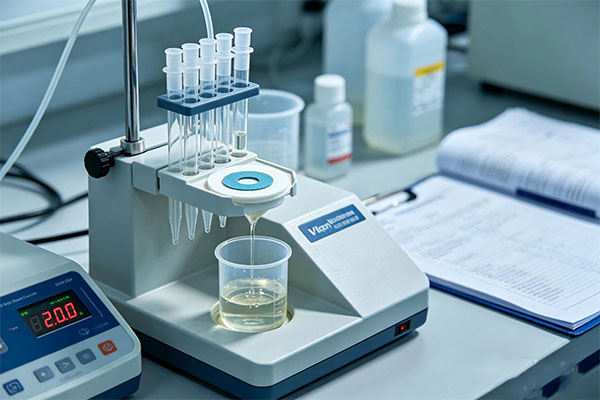
Whether used in water quality testing or air sampling, their high load capacity ensures that they can handle samples with high particulates without clogging or losing effectiveness.
Are Glass Fiber Filters Biologically Inert?
Biological inertness matters in applications like cell culture and microbiological testing. Filters that can react with the samples can lead to skewed results.
Glass fiber filters are biologically inert, meaning they don't interfere with biological processes or analytes[^8]. This characteristic makes them suitable for applications like environmental monitoring, where accuracy is critical.
Their inert nature contributes to their versatility, enabling use across multiple industries, from pharmaceuticals to environmental sciences.
Conclusion
Glass fiber filter papers are indispensable for analytical and gravimetric analyses, prefiltration, and high-temperature applications. Their binder-free composition, chemical resistance, and biological inertness ensure precision, durability, and reliability in laboratory processes.
[^1]: "Filtration performance of dual-layer filter paper with fibrillated ...", https://bioresources.cnr.ncsu.edu/resources/filtration-performance-of-dual-layer-filter-paper-with-fibrillated-nanofibers/. A laboratory filtration reference should document that filter-paper selection—such as material, retention rating, flow rate, and compatibility with the sample—affects filtration performance and can influence analytical accuracy. Evidence role: general_support; source type: education. Supports: Choosing the right filter paper is important for maintaining the accuracy and reliability of analytical results.. Scope note: A general laboratory or analytical chemistry source may support the importance of proper filter selection, but it may not validate every product-specific performance claim in the article.
[^2]: "A theoretical study on the filtration efficiency and dust holding ... - PMC", https://pmc.ncbi.nlm.nih.gov/articles/PMC10395295/. A peer-reviewed filtration-engineering source describing glass microfiber media as fibrous depth filters would support that such media can combine relatively rapid flow, high particulate loading, and fine-particle retention in analytical filtration contexts. Evidence role: mechanism; source type: paper. Supports: Binder-free glass microfiber filter papers are useful in analytical and gravimetric analyses because they offer fast flow rates, high load capacity, and fine-particle retention.. Scope note: This would support the general material behavior, not the performance of every specific commercial grade.
[^3]: "[PDF] Method 160.2", https://www.uvm.edu/bwrl/lab_docs/protocols/106.2_TSS_by_gravimetry_(EPA_1971).pdf. A standard analytical method specifying binder-free glass-fiber filters for gravimetric residue or suspended-solids testing would support that binder-free media are used to reduce filter-derived residues or extractables that could affect measured mass. Evidence role: mechanism; source type: government. Supports: Binder-free glass microfiber filters reduce the risk that binders will leach substances into samples during analytical or gravimetric work.. Scope note: Such a method would document accepted analytical practice rather than quantify leaching from all binder-containing filters.
[^4]: "Experimental measurements of particle retention efficiency of filters ...", https://pubmed.ncbi.nlm.nih.gov/9503227/. A laboratory filtration study or institutional methods reference reporting particle-retention characteristics of glass microfiber filters would support the claim that these media can retain fine particulates with high efficiency. Evidence role: general_support; source type: paper. Supports: Glass microfiber filters provide high filtration efficiency and retain fine particles in laboratory filtration.. Scope note: Retention efficiency depends on grade, pore structure, particle size distribution, and test conditions.
[^5]: "[PDF] Materials Compatability", https://scs.illinois.edu/system/files/inline-files/MaterialsCompatability.pdf. A materials-science or institutional chemical-compatibility reference for glass fiber would support that borosilicate or glass microfiber media are resistant to many solvents and acids and have conditional resistance to alkaline media. Evidence role: general_support; source type: education. Supports: Glass fiber filter papers are chemically resistant to many laboratory chemicals, including some corrosive acids and bases.. Scope note: The phrase "most chemicals" requires qualification because glass can be attacked by hydrofluoric acid and may degrade in strong alkali or at elevated temperatures.
[^6]: "Method 5E - Particulate Matter Fiberglass Plants | US EPA", https://www.epa.gov/emc/method-5e-particulate-matter-fiberglass-plants. An environmental sampling method or government air-monitoring protocol specifying glass-fiber filters for particulate collection would support the contextual use of glass-fiber filters in hot-gas or environmental monitoring applications. Evidence role: case_reference; source type: government. Supports: Glass fiber filters are used in applications such as hot gas filtration and environmental monitoring.. Scope note: A protocol would show accepted use in specified sampling conditions, not prove suitability for every hot-gas filtration system.
[^7]: "Characterization of Sterilizing‐Grade Membranes/Prefilters and ...", https://pmc.ncbi.nlm.nih.gov/articles/PMC12699132/. A filtration textbook or university laboratory reference explaining prefiltration would support that upstream depth filters remove coarse particulates, thereby reducing fouling of downstream membrane or final filters. Evidence role: mechanism; source type: education. Supports: Using glass fiber filters as prefilters can reduce particulate loading on a final filter and extend its useful service life.. Scope note: The degree of performance improvement depends on sample composition, prefilter grade, flow conditions, and the downstream filter type.
[^8]: "Bioactive Glass Applications: A Literature Review of Human Clinical ...", https://pmc.ncbi.nlm.nih.gov/articles/PMC8470635/. A biocompatibility or materials reference describing glass as chemically and biologically inert would support the general claim that glass fiber media have low reactivity with many biological samples and analytes. Evidence role: general_support; source type: paper. Supports: Glass fiber filters are generally biologically inert and therefore less likely to interfere with biological samples or analytes.. Scope note: Biological inertness is contextual; surface treatments, extractables, sterilization state, and specific assays can still affect biological measurements.