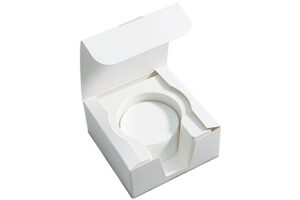


Air quality is a pressing issue. The need to monitor it accurately is essential for public health[^1]. But how do we ensure that we are capturing the right data?
Air monitoring filters are vital for collecting representative samples[^2]. They help analyze airborne particulate matter (PM) effectively. Correct filter selection ensures reliable test results.[^3]
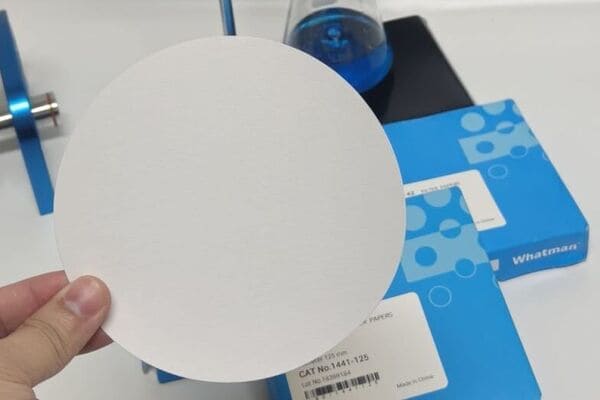
We often think of air monitoring as an afterthought. But it deserves our attention. Air monitoring filters play a crucial role in this process. They help in collecting samples that reflect the actual conditions in the environment. The choice of filter depends on the specific requirements of the monitoring task.
What Are the Main Types of Air Monitoring Filters?
Selecting the right air monitoring filter can be overwhelming. There are various options available. Let's explore some of the most common types used in air monitoring.
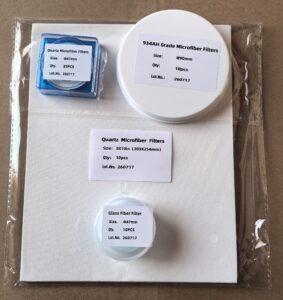
1. Grade GF/A Air Sampling Filters: These filters are known for their efficiency in capturing particulate matter. They are made from glass fiber, which allows for high flow rates[^4]. This feature makes them ideal for air pollution monitoring.
2. Grade EPM 2000 Air Sampling Filter: Another great choice, the EPM 2000 filter is designed to hold larger volumes of air samples. It is a durable option that supports accurate gravimetric analysis.
3. PM2.5 Air Monitoring Membrane Filters: These filters target particulate matter that is 2.5 micrometers or smaller. They are crucial for assessing health impacts since PM2.5 can penetrate deep into the lungs[^5].
4. QM-C Quartz Filter Paper: Quartz filters are known for their thermal stability[^6]. They are suitable for testing in chemically aggressive environments. Their resilience makes them a reliable choice for various applications.
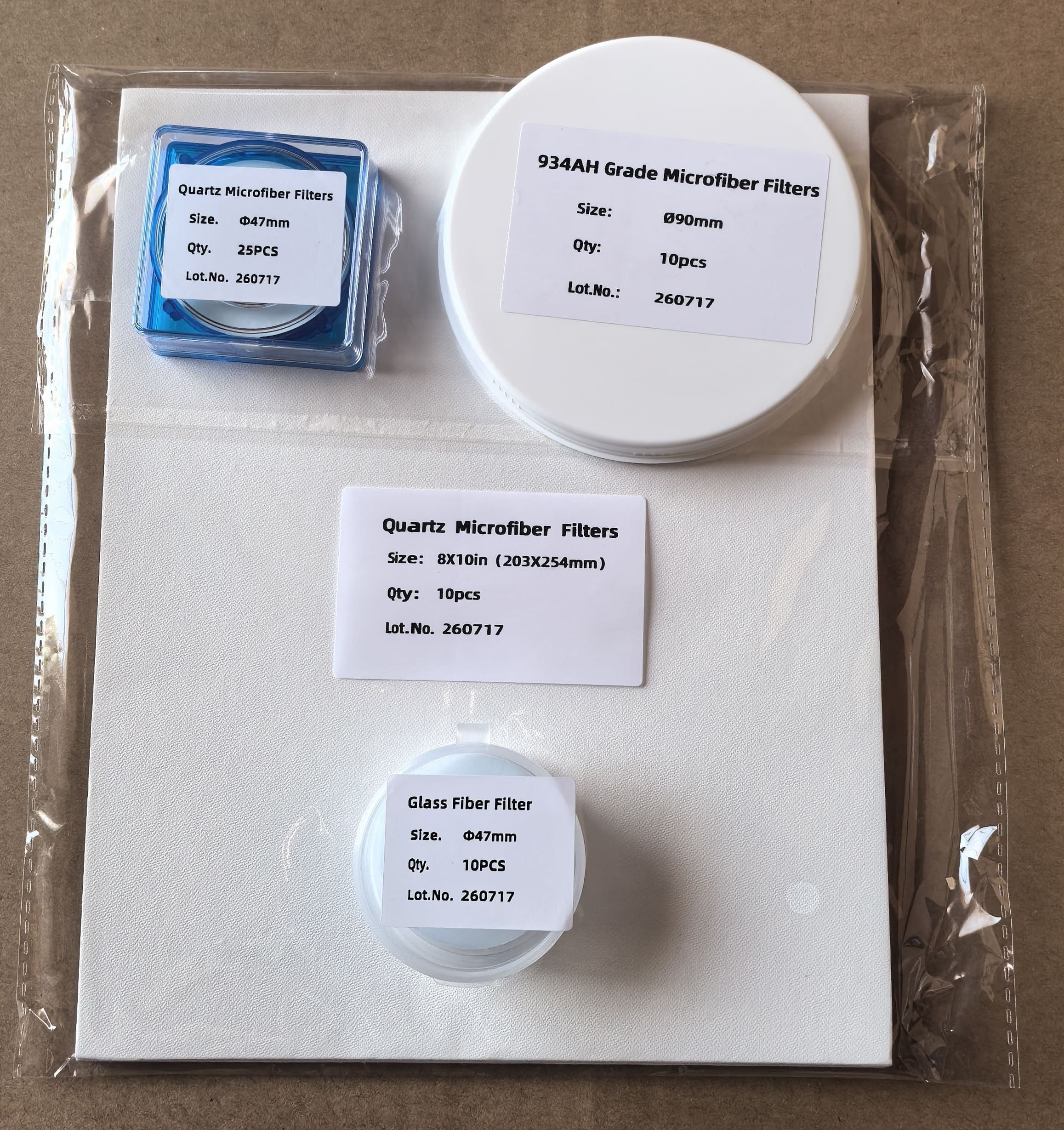
Diving deeper into these options reveals their unique characteristics. Each filter type serves a specific function in air monitoring tasks. Knowing these differences can lead to more accurate results in air quality assessments.
Why Is Filtration Important for Air Monitoring?
Filtration is essential for accurate air monitoring. Airborne particulate matter (PM) consists of a mix of solid particles and liquid droplets. Filters allow air to pass through while trapping these particles for further testing. This process is critical for understanding air quality.
Lab technicians often use gravimetric methods to assess PM concentrations. This involves measuring the weight of trapped particles in a known volume of air. It is commonly expressed in parts per million (PPM). Accurate data from these filters provide insights into air pollution levels.
Follow-up chemical analyses can further clarify what the particulate matter consists of[^7]. This detailed information is crucial for health assessments and environmental regulations. Therefore, the selection of the right filter cannot be underestimated.
How to Choose the Right Air Sampling Filter?
Choosing the right air sampling filter is crucial for effective monitoring. Here are some factors to consider:
-
Application Requirements: Understand the specific needs of your air monitoring project. The type of pollutants you're measuring will dictate the filter choice.
-
Filter Material: Different materials have distinct properties. For example, glass fiber is excellent for high-volume sampling. In contrast, quartz filters are better for high-temperature environments.
-
Size and Pore Density: The filter size and pore density can affect air flow and particle retention. Make sure you choose a filter with the right specifications for your needs.
-
Chemical Resistance: If you are monitoring air from stacks or flues, consider filters that can withstand harsh chemicals. This ensures that the filter does not degrade during the sampling process.
-
Temperature Resistance: In cases where high temperatures are expected, select filters designed to handle such conditions.
Taking these factors into account will help you select the most suitable air sampling filter for your needs.
Conclusion
In summary, selecting the right air monitoring filter is critical for accurate air quality assessments. Understanding the different types of filters available can lead to more reliable test results.
[^1]: "Particulate Matter (PM) Pollution", https://www.epa.gov/pm-pollution. WHO air-quality materials summarize evidence that exposure to air pollution, especially particulate matter, is associated with major morbidity and mortality, supporting the public-health importance of accurate air monitoring. Evidence role: expert_consensus; source type: institution. Supports: Accurate air-quality monitoring is essential for public health..
[^2]: "METHOD 201A—DETERMINATION OF PM10 AND PM2.5 ...", https://www.epa.gov/sites/default/files/2019-08/documents/method_201a_0.pdf. Ambient air monitoring guidance from agencies such as the U.S. EPA describes particulate sampling methods in which a defined airflow passes through a filter to collect particles for measurement, supporting the role of filters in obtaining samples for PM analysis. Evidence role: mechanism; source type: government. Supports: Air monitoring filters are vital for collecting representative particulate samples.. Scope note: Such guidance supports the sampling principle but representativeness also depends on sampler siting, flow control, handling, and quality assurance.
[^3]: "Particulate Matter concentration measurement in ambient air", https://pmc.ncbi.nlm.nih.gov/articles/PMC13260175/. Standard PM measurement methods specify requirements for filter media, handling, conditioning, and weighing, indicating that filter choice and preparation affect the reliability of gravimetric particulate measurements. Evidence role: expert_consensus; source type: government. Supports: Correct filter selection helps ensure reliable air-monitoring test results.. Scope note: The standards support the importance of correct filter selection within defined PM methods, not a universal rule for every air-monitoring application.
[^4]: "Method IO-2.1 - Sampling of Ambient Air for Total ...", https://www.epa.gov/sites/default/files/2019-11/documents/mthd-2-1.pdf. U.S. EPA high-volume particulate sampling methods describe the use of glass-fiber filters in samplers operating at large volumetric flow rates, supporting the general association between glass-fiber filter media and high-volume PM collection. Evidence role: general_support; source type: government. Supports: Glass fiber air sampling filters can support high flow rates in air pollution monitoring.. Scope note: This is contextual support for glass-fiber media generally and may not verify the performance of every Grade GF/A filter product.
[^5]: "The impact of PM2.5 on the human respiratory system - PMC", https://pmc.ncbi.nlm.nih.gov/articles/PMC4740125/. EPA and WHO particulate-matter health summaries explain that fine particles with aerodynamic diameters of 2.5 micrometers or smaller can reach the bronchioles and alveolar regions, supporting the claim about deep lung penetration. Evidence role: mechanism; source type: government. Supports: PM2.5 can penetrate deep into the lungs and is relevant to health assessment..
[^6]: "NMAM METHOD5040", https://www.cdc.gov/niosh/nmam/pdf/5040.pdf. NIOSH and EPA methods for carbonaceous aerosol analysis commonly specify quartz-fiber filters because they can be pre-baked and tolerate the elevated temperatures used in thermal or thermal-optical analysis, supporting their thermal stability in air-sampling contexts. Evidence role: mechanism; source type: government. Supports: Quartz filter paper is known for thermal stability in air-monitoring applications.. Scope note: This supports thermal suitability for specific analytical methods rather than all chemically aggressive environments.
[^7]: "Chemical Speciation Network (CSN)", https://www.epa.gov/amtic/chemical-speciation-network-csn. Reviews and agency guidance on particulate-matter speciation describe chemical analysis of collected PM to determine components such as ions, metals, elemental carbon, organic carbon, and crustal material, supporting the value of composition data for source and health assessment. Evidence role: general_support; source type: government. Supports: Follow-up chemical analyses can clarify the composition of particulate matter and inform health or regulatory assessment.. Scope note: Composition data can inform health and regulatory assessments, but a specific causal or regulatory conclusion requires pollutant-specific analysis.