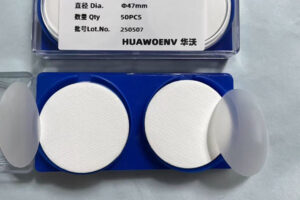

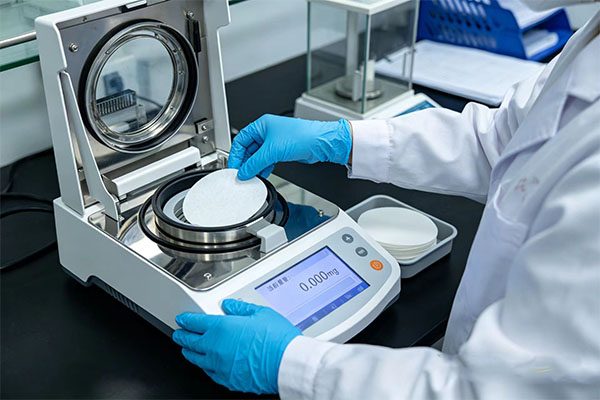
The right filter can make all the difference when ensuring accurate results in laboratory applications. Whatman GF/A filters are legendary for their reliability and adaptability.
Whatman 1820-150 GF/A filters are widely used for high-efficiency general filtration tasks[^1] because of their fine particle retention, rapid flow rates, and impressive loading capacity.
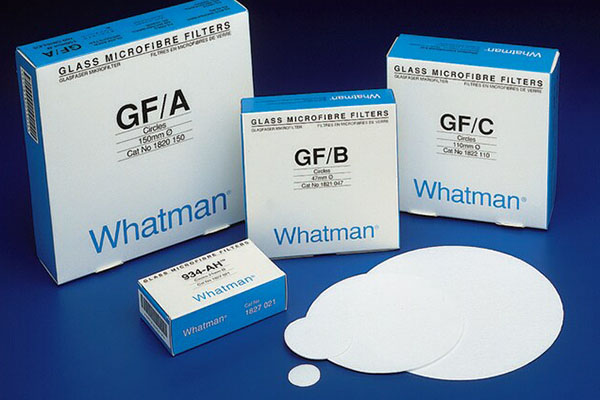
These filters have earned their reputation due to their versatility and high performance. In this article, I'll walk through their key applications, specifications, and reasons they stand apart.
What makes GF/A filters unique and effective?
GF/A filters are designed to meet a wide range of filtration needs without compromising performance. Their fine retention rate and speed make them the first choice for many labs.
GF/A filters are made of borosilicate glass microfiber[^2], which offers excellent filtration performance for fine particles, while maintaining high permeability and flow rates[^3].
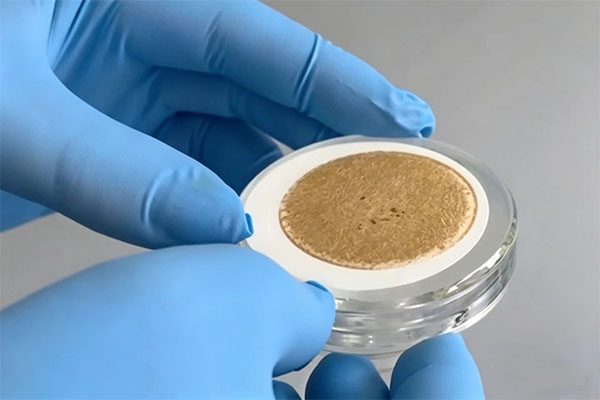
This material ensures durability and consistency, making them reliable for critical applications such as environmental monitoring or food analysis.
Dive deeper into their specifications:
| Property | Specification |
|---|---|
| Material | Borosilicate Glass Microfiber |
| Particle Retention Size | 1.6 μm[^4] |
| Thickness | ~0.33 mm |
| Flow Rate | High |
| Applications | Environmental monitoring, wastewater filtration, food analysis |
GF/A filters also boast high loading capacity[^5]. This allows them to capture more contaminants while maintaining efficiency, which is especially helpful in processes with high particulate concentrations.
How do GF/A filters benefit environmental monitoring?
Environmental monitoring is critical for studying air and water pollution. The GF/A filters excel in this area with their reliable performance in particle collection.
GF/A filters are ideal for air particulate matter analysis, stack sampling, and water pollution testing[^6] due to their fine retention rates and durability in harsh conditions.
For air monitoring, they are commonly used in gravimetric analysis, capturing PM2.5 and PM10 particles[^7] accurately. In wastewater filtration, they can effectively separate suspended solids from water samples[^8], aiding in pollution analysis.
Dive deeper into key applications:
-
Airborne particulate analysis:
- Used for weight-based analysis of particulate matter.
- Suitable for PM10 and PM2.5 testing.
- Applicable in chimney exhaust sampling.
-
Water pollution filtration:
- Removes fine particles from water samples for quality analysis.
- Supports algal and bacterial studies.
The borosilicate microfiber ensures stability under varying temperature and pressure conditions, making it versatile for different environments.
Why are GF/A filters recommended for food and biological experiments?
Food and biological experiments require filters that maintain sample integrity without interacting with the substances being tested. GF/A filters meet these criteria seamlessly.
In food analysis, they are used for protein filtration and fat content determination[^9], ensuring accurate results without contamination.

For biological work, these filters play a role in radiological immunoassays[^10], allowing for precise measurements even in weak beta radiation environments.
Dive deeper into their benefits:
| Application | Role of GF/A Filters |
|---|---|
| Protein filtration | Removes impurities while maintaining protein structure |
| Fat content analysis | Filters residues for accurate concentration measurements |
| Radiological immunoassays | Supports weak beta radiation detection |
Their high flow rate and fine particle retention make them indispensable in labs focused on food safety and biological studies.
How are GF/A filters used in air pollution monitoring?
Air pollution monitoring often requires a reliable filter with fine retention and consistency under extreme conditions. GF/A filters meet these demands.
They are used in absorption methods for air pollution monitoring, capturing and analyzing particulate matter from smoke and exhaust emissions.
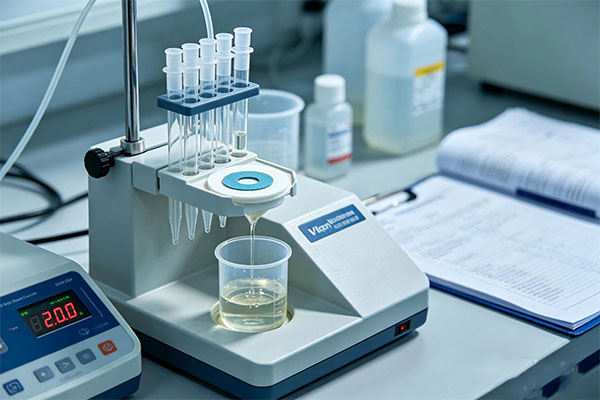
Whether it's gravimetric analysis or chemical absorption, their capacity to handle high particulate loads without clogging ensures accurate readings.
Dive deeper into air monitoring processes:
- Stack sampling: Filters trap smoke-borne particles for weight and chemical analysis.
- Air pollution absorption: Used for capturing pollutants in reactive environments.
- Long-term exposure studies: Durable enough to withstand extended monitoring periods.
These filters are especially reliable for monitoring industrial pollutants, making them a favorite for environmental agencies.
Conclusion
Whatman 1820-150 GF/A Glass Microfiber Filters stand out for their fine retention, high flow rates, and versatile applications across environmental, food, and biological fields. Their consistent performance ensures reliable results in demanding laboratory conditions.
[^1]: "[PDF] Whatman-filtration-product-guide.pdf", https://macro.lsu.edu/HowTo/Whatman-filtration-product-guide.pdf. A manufacturer specification sheet or laboratory-supply catalog identifies Whatman GF/A grade glass microfiber filters as general-purpose filters with defined particle retention and flow characteristics, supporting the description of their use in general filtration work. Evidence role: general_support; source type: other. Supports: Whatman 1820-150 GF/A filters are widely used for high-efficiency general filtration tasks.. Scope note: This would support the product's stated intended use and specifications, but not independently quantify how widely the filters are used across laboratories.
[^2]: "Whatman ® glass microfiber filters, Grade GF/A - Sigma-Aldrich", https://www.sigmaaldrich.com/US/en/product/aldrich/wha1820915?srsltid=AfmBOooKUAjCcvKSDjD1mTQEkiASnR7mvfz411rMpcnYPZEcsDuRr52D. A technical product specification for Whatman GF/A states that the filter medium is borosilicate glass microfiber, supporting the material description used in the article. Evidence role: definition; source type: other. Supports: GF/A filters are made of borosilicate glass microfiber..
[^3]: "Borosilicate Glass Microfiber Filters", https://iwtremont.com/products/glass-microfiber. Technical literature on glass microfiber depth filters describes their porous fibrous structure as providing relatively high permeability and fast flow compared with denser membrane filters, supporting the mechanism behind the article's flow-rate claim. Evidence role: mechanism; source type: paper. Supports: Borosilicate glass microfiber filters maintain high permeability and flow rates.. Scope note: This support is contextual for glass microfiber media generally and may not provide a direct measured flow rate for the 1820-150 format.
[^4]: "Whatman ® glass microfiber filters, Grade GF/A - Sigma-Aldrich", https://www.sigmaaldrich.com/US/en/product/aldrich/wha1820900086?srsltid=AfmBOoq7q2QoXLOLaI4BenPMd89rIVQ1hkRj6_Qms_DxQ25vZRs2LYGF. A Whatman GF/A product specification lists the nominal particle retention for Grade GF/A glass microfiber filters as 1.6 μm, supporting the numerical value in the specifications table. Evidence role: definition; source type: other. Supports: The particle retention size of Whatman GF/A filters is 1.6 μm.. Scope note: The value is a nominal product specification rather than a universal measured cutoff under all sample conditions.
[^5]: "Filtration Mechanism of Fine Particle - PMC - NIH", https://pmc.ncbi.nlm.nih.gov/articles/PMC7498895/. Descriptions of glass microfiber depth filtration explain that particulate matter is retained throughout the filter matrix rather than only on the surface, which supports the claim that such filters can have high loading capacity. Evidence role: mechanism; source type: education. Supports: GF/A filters have high loading capacity because they can retain more particulate matter before clogging.. Scope note: This supports the general mechanism for glass microfiber depth filters, but the exact loading capacity of Whatman 1820-150 would require product-specific testing data.
[^6]: "[PDF] Method 5 - Determination of Particulate Matter Emissions ... - EPA", https://www.epa.gov/sites/default/files/2021-05/documents/method_5_-_2020_12_07_0.pdf. Environmental monitoring methods and filter-selection guides list glass fiber or glass microfiber filters for particulate collection, stack sampling, and water-quality suspended-solids procedures, supporting the stated range of environmental applications. Evidence role: general_support; source type: government. Supports: GF/A filters are used for air particulate matter analysis, stack sampling, and water pollution testing.. Scope note: Such sources support suitability for these application categories, but the word "ideal" is evaluative and would require comparative performance evidence.
[^7]: "[PDF] Standard Operating Procedure for Particulate Matter (PM ...", https://www3.epa.gov/ttnamti1/files/ambient/pm25/spec/RTIGravMassSOPFINAL.pdf. Air-quality monitoring guidance from environmental agencies defines PM2.5 and PM10 as particulate matter fractions collected on filters for gravimetric or equivalent mass analysis, supporting the article's reference to filter-based monitoring of these particle classes. Evidence role: definition; source type: government. Supports: PM2.5 and PM10 particulate matter can be collected on filters for air-monitoring analysis.. Scope note: This supports filter-based PM monitoring generally, but not that GF/A filters are the required medium for every PM2.5 or PM10 regulatory method.
[^8]: "ASTM: D5907: Matter, Filterable and Nonfilterable, in Water", https://www.nemi.gov/methods/method_summary/5451/. Standard water-quality methods describe measuring total suspended solids by passing a water sample through a glass-fiber filter and weighing the retained residue, supporting the claim that such filters separate suspended solids from water samples. Evidence role: mechanism; source type: institution. Supports: Glass fiber filters can separate suspended solids from water samples for water-quality analysis.. Scope note: The method support is for glass-fiber filters meeting specified criteria and may not single out Whatman GF/A unless the method or lab protocol names that grade.
[^9]: "Determination of Fat", https://www.fsis.usda.gov/sites/default/files/media_file/2020-11/CLG_FAT_03.pdf. Food-analysis methods and laboratory protocols use filtration steps to clarify protein-containing extracts and to separate residues during lipid or fat determinations, providing contextual support for the stated food-analysis applications of glass microfiber filters. Evidence role: general_support; source type: institution. Supports: GF/A filters are used in food-analysis workflows involving protein filtration and fat content determination.. Scope note: This would support the relevance of filtration in these analyses, but a product-specific source is needed to prove that Whatman GF/A is the prescribed filter in a given method.
[^10]: "Self absorption of alpha and beta particles in a fiberglass filter", https://pubmed.ncbi.nlm.nih.gov/11007466/. Historical and methodological descriptions of radioimmunoassay note the use of radiolabeled tracers and separation steps to measure bound or free analyte fractions, supporting the contextual claim that filters can be part of radiological immunoassay workflows. Evidence role: historical_context; source type: paper. Supports: Glass microfiber filters can be used in radiological immunoassay workflows that require separation and measurement of radiolabeled components.. Scope note: This supports the general role of separation media in radioimmunoassay; it does not by itself establish that Whatman GF/A is required for all such assays or all weak beta-emitting systems.