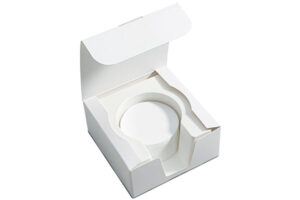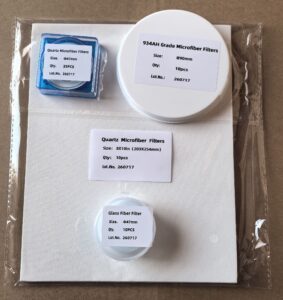

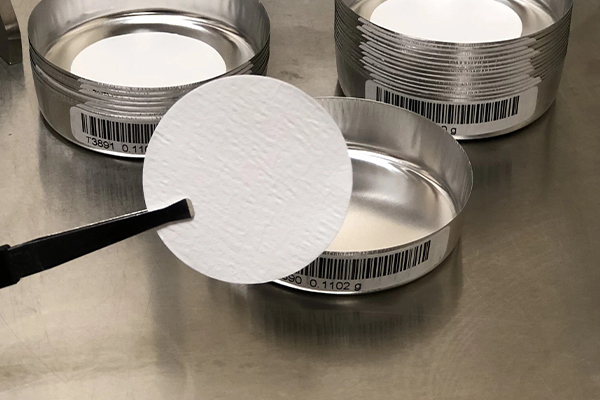
The right filter can make or break your experiment or water quality test. Are you using the correct one for suspended solids filtration?
Whatman GF/C filters have a pore size of around 1.2 microns[^1], allowing them to capture fine particles and making them ideal for suspended solids testing in both potable and waste water[^2].

Glass fiber filters like the GF/C are widely recognized for their efficiency and versatility. But how do they work, and are there alternatives that can provide equal performance? Let’s explore their benefits and practical uses.
Why choose Whatman GF/C filters for suspended solids testing?
Testing water for suspended solids is critical in environmental monitoring and wastewater treatment[^3]. But not all filters can handle the varying demands of this task.
Whatman GF/C filters are designed for high efficiency in capturing suspended solids. Their 1.2-micron pore size balances particle retention and flow rate[^4], making them suitable for a variety of applications, including potable and waste water testing.
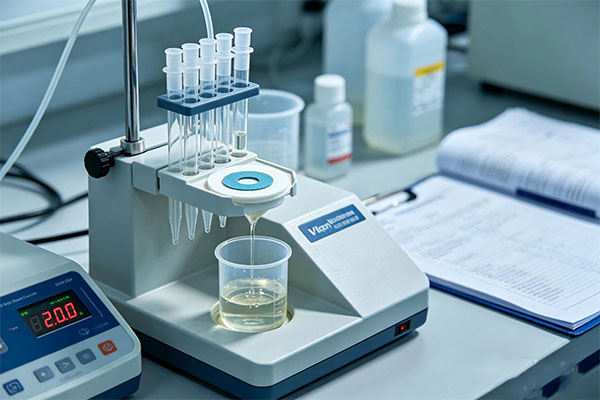
These filters are often chosen for their reliability and ability to deliver precise results. However, they aren’t the only option in the market. Let’s dive deeper into the characteristics of these filters and viable alternatives.
What are the features and benefits of Whatman GF/C filters?
Choosing the right filter can feel overwhelming, especially when precision is key. Why are GF/C filters a go-to for many professionals?
GF/C filters are made from glass fiber and offer high loading capacity, excellent particle retention, and consistent performance[^5]. They are often used for pre-filtration, air dust sampling, and solution clarification.

These features make them a reliable choice across various industries, but they do come at a cost. For those seeking cost-effective yet high-quality alternatives, there are options available, such as HuaEnv glass fiber filters. Let’s examine these alternatives next.
Could HuaEnv filters replace Whatman GF/C filters?
It's no secret that Whatman filters are considered premium products. But can you achieve similar results with alternatives?
HuaEnv produces glass fiber filters, including replacements for Whatman filters like GF/A, GF/B, GF/C, GF/D, GF/F, 934-AH, and EPM2000. These filters are cost-effective and customizable for specific filtration needs.
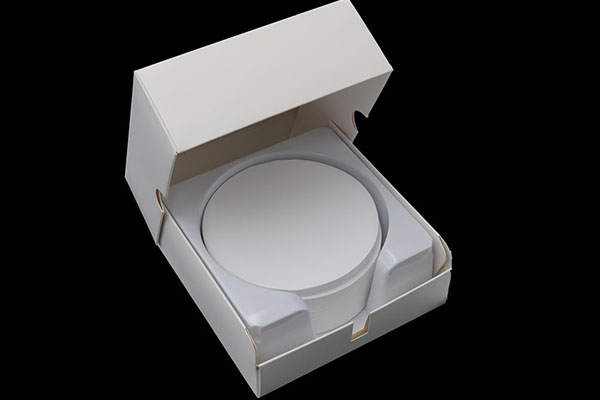
The availability of free samples makes it easier for distributors and labs to test these products. With applications ranging from pre-filtration to air dust sampling and solution clarification, HuaEnv filters offer a versatile and affordable solution without compromising on quality.
What are the typical applications of GF/C filters?
Filters play a crucial role in scientific and industrial applications. GF/C filters are no exception, and their uses span across multiple sectors.
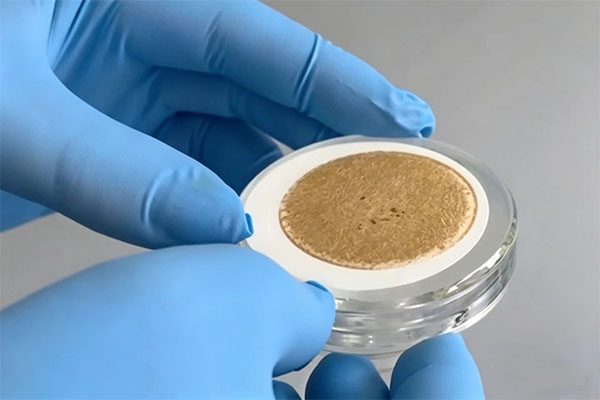
Their broad applicability highlights their importance, but also raises the question: are they the best fit for every scenario? The answer depends on factors like cost, availability, and the specific demands of your work.
Conclusion
Understanding the benefits and applications of Whatman GF/C filters makes it easier to assess their value. With alternatives like HuaEnv glass fiber filters offering similar performance and cost advantages, finding the right filter for your needs has never been more accessible.
[^1]: "Whatman ® glass microfiber grade GF/C filter discs 1.2 μm pore size", https://www.sigmaaldrich.com/US/en/product/aldrich/wha1822110?srsltid=AfmBOophn9jr9-lCpyVbd7R3AVdGM0yzt-hGJWpC7GI798ZnHbGcpAtw. Product specifications for Whatman GF/C glass microfiber filters list a nominal particle retention of about 1.2 µm, supporting the stated pore-size characterization. Evidence role: definition; source type: other. Supports: Whatman GF/C filters have a pore size of around 1.2 microns.. Scope note: This is a manufacturer specification and does not independently verify performance under all test conditions.
[^2]: "[PDF] TOTAL SUSPENDED SOLIDS (TSS) EPA Method 160.2 ...", https://19january2017snapshot.epa.gov/sites/production/files/2015-06/documents/160_2.pdf. Standard methods for suspended-solids analysis specify filtration through glass-fiber filters and gravimetric measurement of retained residue, providing methodological context for the use of glass-fiber filters in potable-water and wastewater solids testing. Evidence role: expert_consensus; source type: government. Supports: Glass-fiber filters such as Whatman GF/C are suitable for suspended solids testing in potable and wastewater samples.. Scope note: Such methods support the general use of glass-fiber filters for suspended-solids analysis but may not designate Whatman GF/C as uniquely ideal.
[^3]: "5.8 Total Solids | Monitoring & Assessment - EPA Archive", https://archive.epa.gov/water/archive/web/html/vms58.html. Environmental and wastewater guidance documents treat total suspended solids as a core water-quality parameter because suspended particles affect turbidity, pollutant transport, and treatment-plant performance. Evidence role: general_support; source type: government. Supports: Testing water for suspended solids is critical in environmental monitoring and wastewater treatment.. Scope note: The source would support the importance of suspended-solids monitoring generally, not the necessity of any specific filter brand.
[^4]: "Tunable retention and recovery via pore-to-particle interactions in ...", https://pmc.ncbi.nlm.nih.gov/articles/PMC12931841/. Technical descriptions of glass microfiber filters explain that nominal retention ratings and filter structure jointly influence particle capture and filtration flow, giving context for the tradeoff between retention and throughput. Evidence role: mechanism; source type: education. Supports: The 1.2-micron pore size of GF/C filters balances particle retention and flow rate.. Scope note: This supports the filtration principle in general; direct evidence for an optimal GF/C balance would require comparative performance data.
[^5]: "Whatman ® glass microfiber grade GF/C filter discs 1.2 μm pore size", https://www.sigmaaldrich.com/US/en/product/aldrich/wha1822024?srsltid=AfmBOoqztRtvMlAGTJTttinieq4CnJDEAFlVEgdDORnxZJy5mFlX1y6e. Whatman GF/C specifications describe the filters as glass microfiber filters with relatively high loading capacity and fine particle retention, supporting the stated material and performance attributes. Evidence role: definition; source type: other. Supports: GF/C filters are made from glass fiber and offer high loading capacity, excellent particle retention, and consistent performance.. Scope note: The support is based on product documentation rather than independent laboratory comparison across brands or applications.
[^6]: "[PDF] Method IO-3.1 - Selection, Preparation and Extraction of Filter Material", https://www.epa.gov/sites/default/files/2019-11/documents/mthd-3-1.pdf. Laboratory filter references and air-sampling method descriptions identify glass microfiber filters as suitable media for aqueous filtration, prefiltration, and particulate collection, supporting the listed application areas at a general level. Evidence role: general_support; source type: institution. Supports: GF/C filters are commonly used for water sampling, air particle collection, chromatography preparation, and particulate matter capture in flue gas and atmospheric studies.. Scope note: This supports common uses of glass microfiber filters broadly and may not document every listed GF/C application in a single source.