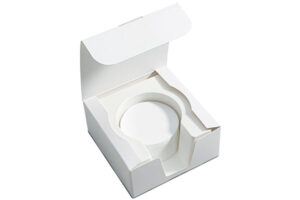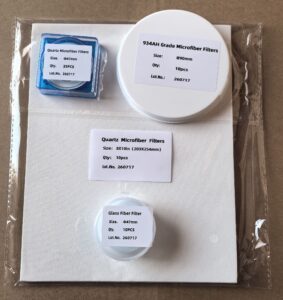


The problem with air quality monitoring is that not all filters are created equal. As an engineer in environmental monitoring, I understand how vital it is to choose the right filter for precise results.
Whatman EPM 2000 air filters are specifically designed for high-volume PM-10 sampling[^1]. They are made from 100% pure borosilicate glass[^2], ensuring minimal interference during chemical analysis of trace pollutants.

The right air sampling filter can make or break your research. Selecting the Whatman Grade EPM 2000 is a decision I often recommend. With its impressive air retention efficiency of 99.95 percent for particulates as small as 0.3 µm[^3], it meets rigorous standards. The U.S. EPA has selected this filter for its nationwide HiVol air samplers[^4], a testament to its reliability and performance. When conducting air quality studies, using a filter that complies with ISO9001:2008 standards is critical for ensuring quality and consistency.
Why Choose Whatman EPM 2000 Air Filters?
Choosing the right air filter is crucial for accurate data collection. The Whatman EPM 2000 air filters stand out in several ways.
These filters are made from 100% pure borosilicate glass, which allows for detailed analysis without interference from the filter material itself. They are available in both sheet and circle designs, making them versatile for various sampling setups.

What sets the Whatman EPM 2000 apart is its binder-free construction. This feature is essential as binders can release unwanted substances that contaminate samples. By using a binder-free filter, I have noticed a significant decrease in background noise during analysis. The results are cleaner and more reliable, which is what every environmental monitoring project needs.
Dive deeper into the specifications of the Whatman EPM 2000 air filter:
| Feature | Specification |
|---|---|
| Material | 100% Pure Borosilicate Glass |
| Air Retention Efficiency | 99.95% for 0.3 µm Particulates |
| Compliance | ISO9001:2008 QMS Standards |
| Designs Available | Sheet and Circle |
| Construction | Binder-free |
The ability to use these filters in both sheet and circular designs means that they can adapt to different sampling equipment. This versatility is a game-changer for engineers like myself who need to ensure compatibility across various devices.
Conclusion
In the world of air quality monitoring, the Whatman Grade EPM 2000 air sampling filter is a top choice. Its specifications and certifications ensure high performance and reliability.
[^1]: "[PDF] List of Designated Reference and Equivalent Methods - US EPA", https://19january2021snapshot.epa.gov/sites/static/files/2019-08/documents/designated_reference_and-equivalent_methods.pdf. A technical product specification or regulatory method document should substantiate that Whatman EPM 2000 filters are intended for high-volume PM10 sampling applications. Evidence role: definition; source type: institution. Supports: Whatman EPM 2000 air filters are designed for high-volume PM-10 sampling.. Scope note: Product-intended-use evidence would verify the stated application but would not independently demonstrate superior field performance. [^2]: "Review of Filters for Air Sampling and Chemical Analysis in ...", https://pmc.ncbi.nlm.nih.gov/articles/PMC10174218/. A manufacturer specification or laboratory-method reference should confirm that Whatman EPM 2000 filters are composed of 100% borosilicate glass microfiber, which is relevant to their use in trace-level particulate analysis. Evidence role: definition; source type: institution. Supports: The filters are made from 100% pure borosilicate glass.. Scope note: Composition data supports the material claim; additional analytical studies would be needed to quantify interference under specific pollutant assays. [^3]: "Whatman™ Grade EPM 2000 Air Sampling Filter", https://www.cytivalifesciences.com/en/us/products/items/whatman-grade-epm-2000-air-sampling-filter-p-00698?selectedProduct=28418582. A technical specification should document the reported 99.95% retention efficiency at 0.3 µm for Whatman EPM 2000 filters or for the applicable test method used to characterize them. Evidence role: statistic; source type: institution. Supports: The filter has an air retention efficiency of 99.95% for particulates as small as 0.3 µm.. Scope note: Retention-efficiency figures are test-condition dependent and may not directly represent collection efficiency in every high-volume field sampling configuration. [^4]: "[PDF] List of Designated Reference and Equivalent Methods - US EPA", https://19january2021snapshot.epa.gov/sites/static/files/2019-08/documents/designated_reference_and-equivalent_methods.pdf. An EPA procurement, method, or air-monitoring document should show that Whatman EPM 2000 filters were specified or used in EPA high-volume air sampling programs. Evidence role: case_reference; source type: government. Supports: The U.S. EPA selected or used Whatman EPM 2000 filters for HiVol air samplers.. Scope note: Such documentation would support EPA use or specification, but the phrase "nationwide" may require a source explicitly describing the geographic scope of the program.