Laboratories around the world rely on high-quality filters for critical applications. If you’re researching glass microfiber filters, you’ve likely come across Whatman Grade GF/C filters. But how do these filters perform, and are there alternatives that offer equal quality and value?
Whatman Grade GF/C glass microfiber filters are binder-free and offer a nominal particle retention of 1.2 µm[^1], making them ideal for total suspended solids (TSS) analysis in both potable and wastewater applications[^2].
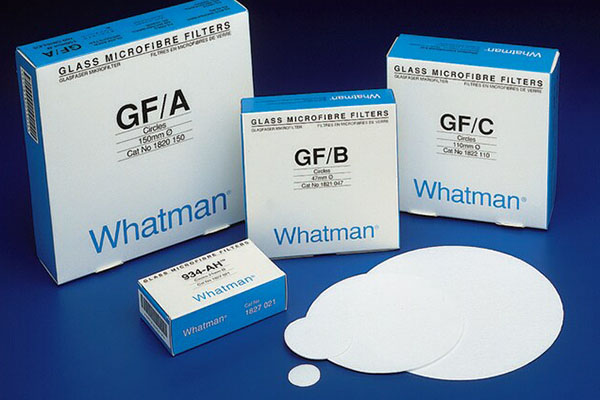
These filters combine a smooth surface for efficient precipitate recovery, a high loading capacity for turbid solutions, and the ability to withstand temperatures up to 550°C[^3]. They are widely used in applications such as water quality testing, air pollution monitoring, and liquid scintillation counting[^4]. Let’s explore their features, applications, and potential alternatives in detail.
What are the key features of Whatman Grade GF/C filters?
When selecting a filter, understanding its features is crucial. The Grade GF/C filters are renowned for their performance in laboratory settings.
Key features of Whatman Grade GF/C filters include a particle retention rate of 1.2 µm, smooth surface for precipitate recovery, high loading capacity, and a maximum temperature tolerance of 550°C.
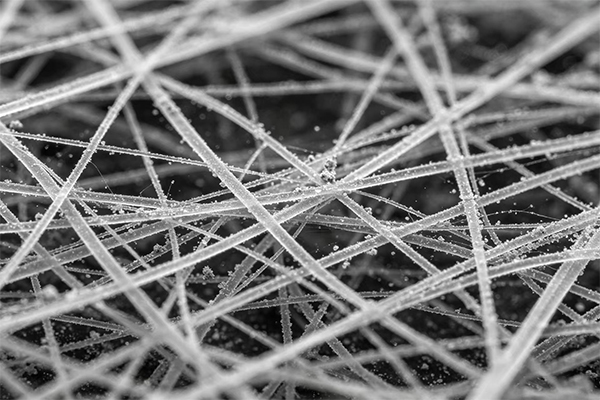
The binder-free borosilicate glass microfiber ensures low fiber shedding[^5], which is critical for maintaining the integrity of experimental results. At 260 µm thick and with a nominal basis weight of 53 g/m²[^6], these filters provide excellent durability during filtration. Moreover, their flow rates—6.7 seconds per 100 ml/in² for air and 105 ml/min for water[^7]—strike a good balance between efficiency and reliability.
Why are these features important?
- High retention efficiency: The 1.2 µm retention capability makes them suitable for precise filtration tasks, like TSS analysis[^8].
- Withstanding high temperatures: The 550°C heat resistance expands their applications to high-temperature processes like air pollution monitoring[^9].
- Smooth surface: Enhances recovery of precipitates, ensuring that none of your sample is lost during filtration.
- Low fiber shedding: Prevents contamination of the sample, which is critical for accurate results.
These attributes make the Grade GF/C filters a staple for laboratories focused on environmental testing and scientific research.
Where are Whatman Grade GF/C filters typically used?
Applications are another major factor to consider when evaluating filters. The versatility of Grade GF/C filters has made them a popular choice across several industries.
Whatman Grade GF/C filters are used in TSS analysis, air pollution monitoring, water pollution monitoring, cell harvesting, and liquid scintillation counting. Their smooth surface and binder-free construction make them ideal for these applications.

Dive deeper into their applications:
- TSS Analysis: The superior particle retention of these filters allows for accurate measurement of total suspended solids in both potable and wastewater[^10].
- Air Pollution Monitoring: Withstanding high temperatures up to 550°C, they are perfect for sampling particulates in air pollution studies.
- Liquid Scintillation Counting and Cell Harvesting[^11]: The smooth and binder-free construction ensures no contamination during these sensitive procedures.
- Chromatographic Pretreatment: Their efficiency aids in clarifying solutions for chromatographic analysis.
Their versatility makes them a reliable choice for scientists and technicians. However, not every organization can consistently rely on Whatman due to cost or availability concerns.
Are there alternatives to Whatman Grade GF/C filters?
For organizations seeking similar performance but more flexibility, alternatives to Whatman Grade GF/C filters are worth exploring.
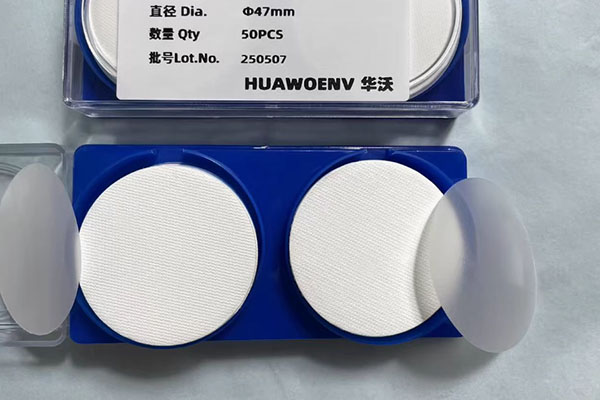
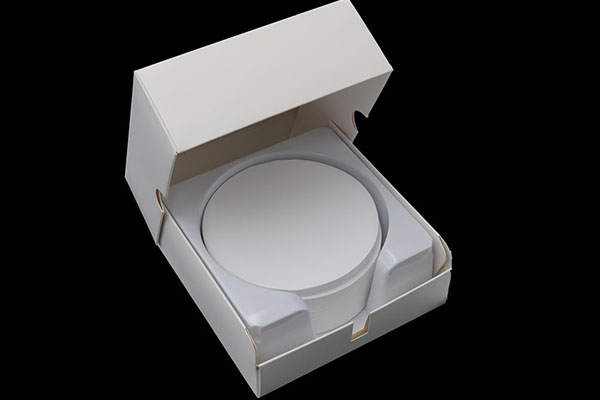
Yes, HuaEnv offers high-quality glass microfiber filters, including equivalents to Whatman Grade GF/C. These filters boast the same performance standards at a more competitive price.
Dive deeper into HuaEnv’s capabilities:
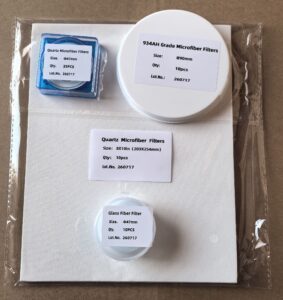
- Customizable Options: HuaEnv offers filters in various sizes and shapes, including both circles and sheets, making them adaptable to different setups.
- High Performance: Their filters feature a particle retention rate of 1.2 µm, high loading capacity for suspended solids, and low fiber shedding.
- Temperature Resistance: Like GF/C filters, they withstand temperatures up to 550°C, ensuring reliability in demanding applications.
- Cost-Effective: By offering small-batch orders and competitive pricing, HuaEnv provides an excellent alternative for laboratories looking to optimize costs without compromising on quality.
- Applications: HuaEnv’s filters are well-suited for pre-filtration, air sampling, liquid clarification, and environmental testing, among other uses.
HuaEnv’s glass microfiber filters are a worthy replacement for Whatman filters, providing the same reliability and performance at a fraction of the cost.
How do HuaEnv filters compare to Whatman Grade GF/C?
Let’s put their specifications side by side to better understand how they stack up.
| Feature | Whatman Grade GF/C | HuaEnv Glass Microfiber Filters |
|---|---|---|
| Nominal Particle Retention | 1.2 µm | 1.2 µm |
| High Temperature Tolerance | Up to 550°C | Up to 550°C |
| Fiber Shedding | Low | Low |
| Customizable Sizes | Limited | Wide range of sizes available |
| Pricing | Premium | More affordable |
The comparison highlights HuaEnv’s ability to deliver equivalent quality while offering better flexibility and affordability. Moreover, HuaEnv provides free samples, allowing laboratories to test their filters before committing to bulk orders.
Conclusion
Whatman Grade GF/C glass microfiber filters set a high standard for laboratory filtration needs. But with HuaEnv’s high-quality alternatives, labs have the opportunity to achieve the same results at a reduced cost. Whether you’re analyzing TSS, monitoring air or water quality, or preparing for chromatographic analysis, HuaEnv offers customizable solutions that don’t compromise on performance. For laboratories looking to optimize both quality and budget, HuaEnv filters are worth considering.
[^1]: "[PDF] Whatman filtration Product guide", https://macro.lsu.edu/HowTo/Whatman-filtration-product-guide.pdf. A manufacturer technical specification for Whatman Grade GF/C supports that the filter is binder-free and has a nominal particle retention rating of 1.2 µm; this is product-specification evidence rather than independent performance validation. Evidence role: definition; source type: other. Supports: Whatman Grade GF/C filters are binder-free and have a nominal particle retention of 1.2 µm.. Scope note: Manufacturer specifications can verify stated product attributes but do not independently prove performance in all laboratory conditions.
[^2]: "EPA-NERL: 160.2: Non-filterable Residue by Drying Oven", https://www.nemi.gov/methods/method_summary/5213/. EPA or Standard Methods documentation for total suspended solids describes gravimetric TSS determination using glass-fiber filtration for water and wastewater matrices; it supports the application context but may not identify Whatman GF/C as the only acceptable filter grade. Evidence role: expert_consensus; source type: government. Supports: Glass microfiber filters such as GF/C are suitable for TSS analysis in potable water and wastewater applications.. Scope note: The source is expected to support glass-fiber filtration for TSS generally, not necessarily exclusive use of Whatman Grade GF/C.
[^3]: "[PDF] Whatman filtration Product guide", https://macro.lsu.edu/HowTo/Whatman-filtration-product-guide.pdf. A Whatman Grade GF/C technical datasheet reports a maximum operating or ignition temperature of approximately 550°C for the glass microfiber filter; this supports the stated thermal tolerance as a product specification. Evidence role: definition; source type: other. Supports: Whatman Grade GF/C filters can withstand temperatures up to 550°C.. Scope note: The figure is a rated product property and does not by itself establish performance after repeated heating cycles or chemical exposure.
[^4]: "[PDF] LIQUID SCINTILLATION ANALYSIS", https://hwbdocs.env.nm.gov/Los%20Alamos%20National%20Labs/References/9489.PDF. Technical application notes and laboratory methods describe glass microfiber filters as used in water-quality filtration, particulate air sampling, and collection of samples for liquid scintillation counting; this supports the range of applications contextually rather than proving that GF/C is optimal for every listed workflow. Evidence role: general_support; source type: institution. Supports: Glass microfiber filters, including GF/C-type filters, are used in water quality testing, air pollution monitoring, and liquid scintillation counting.. Scope note: Support is likely distributed across application-specific sources and may not validate all uses with the same filter grade.
[^5]: "Whatman™ Grade GF/F Glass Microfiber Filters, Binder Free - Cytiva", https://www.cytivalifesciences.com/en/us/products/items/whatman-grade-gf-f-glass-microfiber-filters-binder-free-p-00425?selectedProduct=28418448. Materials or filtration references explain that binder-free borosilicate glass microfiber filters are used where low extractables and minimal sample contamination are desired; this supports the rationale for low contamination risk, though fiber shedding can vary with handling and filtration conditions. Evidence role: mechanism; source type: research. Supports: Binder-free borosilicate glass microfiber construction helps reduce fiber shedding or contamination risk.. Scope note: A general materials reference may support the mechanism but not quantify fiber shedding for this exact product lot.
[^6]: "Whatman™ Filter Paper Grade GF/C Microfiber Glass Filter, Binder ...", https://www.cytivalifesciences.com/en/us/products/items/whatman-filter-paper-grade-gf-c-microfiber-glass-filter-binder-free-p-09618. A Whatman Grade GF/C specification sheet lists nominal thickness and basis weight values for the filter medium; this directly supports the dimensional figures but not broader claims about durability. Evidence role: definition; source type: other. Supports: Whatman Grade GF/C filters are approximately 260 µm thick and have a nominal basis weight of 53 g/m².. Scope note: The specification verifies the measurements, while durability under use would require separate testing evidence.
[^7]: "[PDF] Whatman filtration Product guide", https://macro.lsu.edu/HowTo/Whatman-filtration-product-guide.pdf. A technical datasheet for Whatman Grade GF/C reports nominal air-flow and water-flow values for the medium; this supports the stated figures as standardized test-condition data rather than guaranteed rates in every apparatus. Evidence role: definition; source type: other. Supports: Whatman Grade GF/C filters have nominal flow-rate specifications of 6.7 seconds per 100 ml/in² for air and 105 ml/min for water.. Scope note: Flow rates depend on test conditions, pressure differential, filter diameter, and sample matrix.
[^8]: "[PDF] Method 160.2", https://www.uvm.edu/bwrl/lab_docs/protocols/106.2_TSS_by_gravimetry_(EPA_1971).pdf. Water-analysis methods for suspended solids specify retention of particulate matter on glass-fiber filters before drying and weighing; this supports the suitability of fine-retention glass fiber filters for TSS measurement, although method requirements may specify preparation and filter performance rather than a single nominal pore size. Evidence role: expert_consensus; source type: government. Supports: A 1.2 µm glass microfiber filter is suitable for precise filtration tasks such as TSS analysis.. Scope note: TSS methods generally define filter preparation and retention characteristics, not always a specific 1.2 µm nominal retention rating.
[^9]: "Filtration Characteristics of Glass Fiber Filter at Elevated Temperatures", https://nepis.epa.gov/Exe/ZyPURL.cgi?Dockey=91015XO6.TXT. Air-particulate sampling and gravimetric methods document the use of heat-resistant glass or quartz fiber filters where filters may be conditioned, dried, or combusted; this supports the relevance of thermal stability to air-monitoring workflows, but it does not prove that all air-pollution methods require 550°C tolerance. Evidence role: mechanism; source type: government. Supports: High temperature tolerance can make glass microfiber filters useful in air-pollution monitoring workflows.. Scope note: The support is contextual because air-monitoring protocols vary by pollutant, sampler, and filter medium.
[^10]: "[PDF] SOP 227-Total Suspended Solids and Total Suspended Volatile ...", https://pubs.usgs.gov/sir/2015/5006/downloads/sir2015-5006_appendix1/2010%20Standard%20Operating%20Procedures/SOP%20227-Total%20Suspended%20Solids%20and%20Total%20Suspended%20Volatile%20Solids.pdf. Recognized TSS methods describe measuring suspended solids by filtering a measured water or wastewater sample through a prepared glass-fiber filter and determining the dried residue gravimetrically; this supports the analytical basis for accurate TSS measurement when the method is properly followed. Evidence role: expert_consensus; source type: government. Supports: Glass-fiber filtration enables gravimetric measurement of total suspended solids in potable water and wastewater.. Scope note: Accuracy depends on sampling, filter preparation, drying temperature, balance calibration, and matrix effects, not solely on the filter grade.
[^11]: "Labeling cells in microtiter plates for determination of [3H]thymidine ...", https://pubmed.ncbi.nlm.nih.gov/18432656/. Biomedical and radiochemical methods report collecting labeled cells or macromolecules on glass-fiber filters before scintillation counting; this supports the stated application area, though the exact filter grade used can differ by assay protocol. Evidence role: case_reference; source type: paper. Supports: Glass microfiber filters are used in liquid scintillation counting and cell-harvesting workflows.. Scope note: The evidence may demonstrate common use of glass-fiber filters in these assays without establishing GF/C as universally preferred.