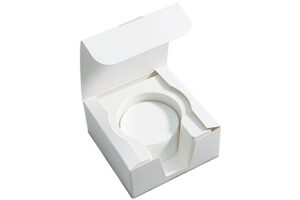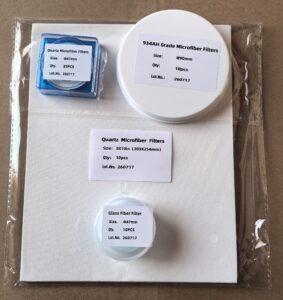


Many environmental monitoring labs are on the hunt for high-volume filter paper to meet their needs. They often turn to Whatman as the go-to choice, but I found that China's HuaEnv offers filters with better cost performance and shorter lead times.
What makes Whatman EPM 2000 air filters so popular for high-volume PM-10 sampling? These filters are made from 100% pure borosilicate glass[^1]. This allows for detailed chemical analysis of trace pollutants with minimal interference[^2]. They have an impressive air retention efficiency of 99.95 percent for particles as small as 0.3 µm[^3].

In addition to their impressive specifications, the EPM 2000 filters have been selected by the U.S. Environmental Protection Agency (EPA) for use in a nationwide network of HiVol air samplers[^4]. This endorsement speaks volumes about their reliability and effectiveness.
What Are the Key Benefits of EPM 2000 Filters?
Many labs wonder why they should choose EPM 2000 filters over other options. I can share a few compelling reasons based on my observations.
First, the manufacturing process for EPM 2000 filters adheres to ISO9001:2008 QMS standards[^5]. This means that every filter is produced with quality in mind. They come in both sheet and circle designs, offering flexibility to meet various sampling equipment needs. Additionally, these filters are binder-free, which enhances their performance and reliability.

The benefits don't stop there. When you use EPM 2000 filters, you gain access to the following advantages:
| Feature | EPM 2000 Filters |
|---|---|
| Material | 100% Pure Borosilicate Glass |
| Air Retention Efficiency | 99.95% for 0.3 µm Size Particulates |
| Compliance | ISO9001:2008 QMS Standards |
| Design Options | Available in Sheet and Circle Design |
| Binder-free | Yes |
How Do EPM 2000 Filters Enhance Sampling Efficiency?
I remember the first time I used EPM 2000 filters in my own work. The efficiency was remarkable. The quality of air samples collected was exceptional. I had fewer issues with contamination and interference from the filter itself.
Using EPM 2000 filters means you can trust that your results are accurate. Their high retention efficiency prevents even the smallest particulates from passing through. This is critical when monitoring PM-10 levels, especially in environments with significant pollution. The detailed chemical analysis achievable with these filters can lead to better insights into air quality issues.
Moreover, their binder-free nature contributes to their stability and reliability[^6]. This means fewer variables to worry about during sampling processes.
Conclusion
In summary, EPM 2000 filters provide an excellent choice for high-volume PM-10 sampling. Their quality and efficiency make them superior to many alternatives.
[^1]: "Review of Filters for Air Sampling and Chemical Analysis in Mining ... - PMC", https://pmc.ncbi.nlm.nih.gov/articles/PMC10174218/. A product specification source for Whatman EPM 2000 documents that the filters are made from borosilicate glass fiber, supporting the stated material composition. Evidence role: definition; source type: other. Supports: Whatman EPM 2000 air filters are made from 100% pure borosilicate glass.. Scope note: This is a product-specific specification and may need to come from the manufacturer or an authorized technical datasheet rather than an independent study.
[^2]: "Review of Filters for Air Sampling and Chemical Analysis in Mining ... - PMC", https://pmc.ncbi.nlm.nih.gov/articles/PMC10174218/. EPA air-sampling guidance describes the importance of selecting filter media with low background contamination and chemical compatibility for subsequent pollutant analysis, which contextually supports the claim that suitable glass-fiber media can reduce analytical interference. Evidence role: mechanism; source type: government. Supports: Borosilicate glass filters allow detailed chemical analysis of trace pollutants with minimal interference.. Scope note: Such guidance supports the principle of low-interference filter selection but may not independently prove this performance for EPM 2000 specifically.
[^3]: "Review of Filters for Air Sampling and Chemical Analysis in Mining ...", https://pmc.ncbi.nlm.nih.gov/articles/PMC10174218/. A technical specification for Whatman EPM 2000 reports a particle retention efficiency of 99.95% at 0.3 µm, supporting the stated filtration-efficiency value. Evidence role: statistic; source type: other. Supports: EPM 2000 filters have an air retention efficiency of 99.95% for particles as small as 0.3 µm.. Scope note: The figure is a product performance specification and should be verified against the current datasheet or test method conditions.
[^4]: "Municipal Solid Waste Combustor Ash Demonstration Program", https://nepis.epa.gov/Exe/ZyPURL.cgi?Dockey=30003E17.TXT. EPA documentation identifying the filter media used in national high-volume sampling programs would support the statement that EPM 2000 filters were selected for EPA network use. Evidence role: case_reference; source type: government. Supports: EPM 2000 filters have been selected by the U.S. EPA for use in a nationwide network of HiVol air samplers.. Scope note: The source may document use in a specific EPA monitoring network or time period rather than a universal EPA endorsement of the product.
[^5]: "Whatman™ Grade EPM 2000 Air Sampling Filter", https://www.cytivalifesciences.com/en/us/products/items/whatman-grade-epm-2000-air-sampling-filter-p-00698?selectedProduct=28418581. An ISO or certification record can establish what ISO 9001:2008 quality-management certification means and whether the relevant manufacturing process was certified, supporting the quality-system aspect of the claim. Evidence role: definition; source type: institution. Supports: The manufacturing process for EPM 2000 filters adheres to ISO 9001:2008 QMS standards.. Scope note: ISO 9001 certification concerns a quality-management system and does not by itself demonstrate superior filter performance.
[^6]: "Review of Filters for Air Sampling and Chemical Analysis in ...", https://pmc.ncbi.nlm.nih.gov/articles/PMC10174218/. Technical literature on air-sampling filter media notes that binders and other additives can affect background contamination, thermal or chemical stability, and analytical artifacts, contextually supporting why binder-free media may improve reliability in particulate sampling. Evidence role: mechanism; source type: paper. Supports: The binder-free nature of EPM 2000 filters contributes to their stability and reliability during sampling.. Scope note: This supports the general mechanism for binder-free filter media, not necessarily a comparative performance advantage for EPM 2000 over all alternatives.