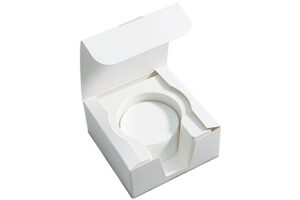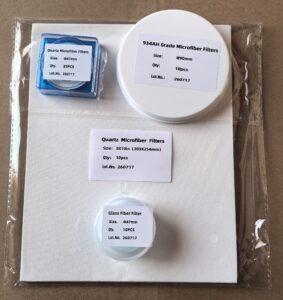


Air quality is essential for our health and environment. But how do we ensure accurate measurements? The answer lies in the type of filter we use.
Quartz fiber filters are an excellent choice for air sampling, especially in challenging conditions. Their unique composition prevents chemical reactions that can lead to inaccurate results.
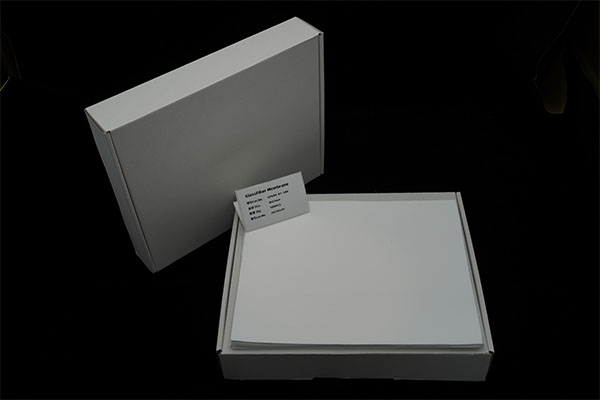
Quartz fiber filters have changed the way we approach air sampling. Their high purity, stability, and resistance to high temperatures set them apart from traditional glass fiber filters. As an engineer, I have seen firsthand how these filters help in obtaining reliable data, especially when monitoring pollutants. If you're involved in environmental monitoring or industrial applications, understanding these filters is crucial.
What Makes Quartz Fiber Filters Stand Out?
Quartz fiber filters are not just another option; they are the superior choice for accurate environmental monitoring.
These filters are made of pure quartz fibers that do not react with acidic gases, unlike glass fibers[^1]. This feature significantly reduces the risk of false readings in heavy metal concentration measurements and small particle analysis[^2].
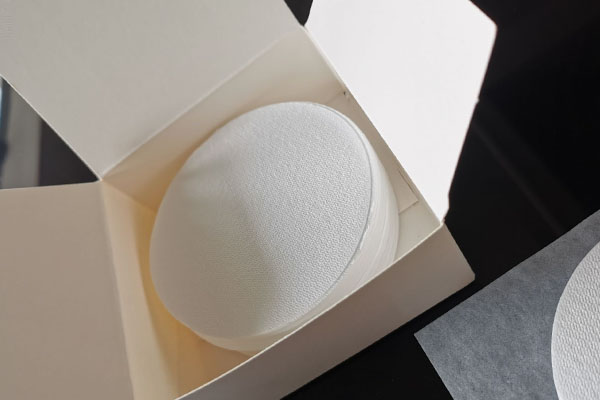
The benefits of quartz fiber filters go beyond just preventing reactions. They also provide exceptional mechanical strength and thermal stability. For instance, they can withstand temperatures of up to 900 ºC[^3], making them ideal for high-temperature applications. Their binder-free design ensures that they maintain their integrity even under extreme conditions.
Features and Benefits of Quartz Fiber Filters
- High Purity: Made from pure quartz microfibers (SiO2), they are free of binding elements or additives.
- Heat Resistance: Capable of enduring high temperatures, making them suitable for various applications.
- High Filtration Efficiency: They effectively capture small particles and pollutants.
- Biologically Inert: These filters do not interact chemically with the sample, ensuring accurate analysis.
- Low Metal Content: The low level of alkaline earth metals minimizes artifacts from sulfates and nitrates[^4], which can skew results.
These features make quartz fiber filters essential for industries that rely on precise air quality monitoring.
Conclusion
In summary, quartz fiber filters are a key component in achieving accurate air sampling results. Their unique properties ensure that we can monitor pollutants effectively and reliably.
[^1]: "Filtration Characteristics of Glass Fiber Filter at Elevated ...", https://nepis.epa.gov/Exe/ZyPURL.cgi?Dockey=91015XO6.TXT. A peer-reviewed aerosol-sampling study or EPA sampling-method document can support that quartz-fiber filters are chemically more inert than glass-fiber media in acidic gas environments, while glass-fiber filters may contain alkaline constituents that can interact with acidic species. Evidence role: mechanism; source type: paper. Supports: Quartz fiber filters are less reactive with acidic gases than glass fiber filters.. Scope note: The support is likely contextual because reactivity depends on filter formulation, pretreatment, sampled gas, humidity, and analytical method.
[^2]: "Assessment of trace elements directly from archived total ...", https://pmc.ncbi.nlm.nih.gov/articles/PMC9912379/. A government air-monitoring method or peer-reviewed source can support that filter composition and trace-metal background levels influence measured particulate metal concentrations, and that low-blank quartz filters are used to reduce analytical artifacts in particulate sampling. Evidence role: mechanism; source type: government. Supports: Using quartz fiber filters can reduce measurement artifacts in heavy metal and fine-particle analysis.. Scope note: Such evidence supports the analytical rationale but may not directly quantify the reduction in false readings for every heavy-metal or particle-size method.
[^3]: "DRI SOP Pre-firing and Acceptance Testing of Quartz-Fiber ...", https://www.epa.gov/sites/default/files/2018-10/documents/quartzprefire_2-106r8_20170927_508comp-dri.pdf. A standards document, government method, or materials reference can support that quartz-fiber filters tolerate high-temperature treatment around 900 °C, which is why they are used in applications requiring ignition, pre-baking, or thermal analysis. Evidence role: definition; source type: government. Supports: Quartz fiber filters can withstand temperatures up to about 900 ºC.. Scope note: The supported temperature limit may vary by product grade, exposure duration, atmosphere, and mechanical loading.
[^4]: "Artifact particulate sulfate and nitrate formation on filter media", https://hero.epa.gov/reference/35964/. A peer-reviewed aerosol-chemistry paper or atmospheric sampling method can support that alkaline compounds on filters can cause positive artifacts by retaining or forming sulfate and nitrate species, and that low-alkali quartz media are selected to limit these artifacts. Evidence role: mechanism; source type: paper. Supports: Low alkaline earth metal content in quartz fiber filters helps reduce sulfate and nitrate sampling artifacts.. Scope note: This supports the mechanism of artifact formation but does not establish the exact magnitude of artifact reduction for all quartz filters or sampling conditions.