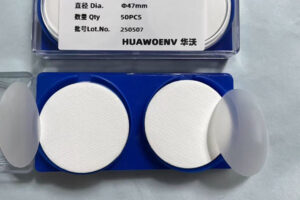

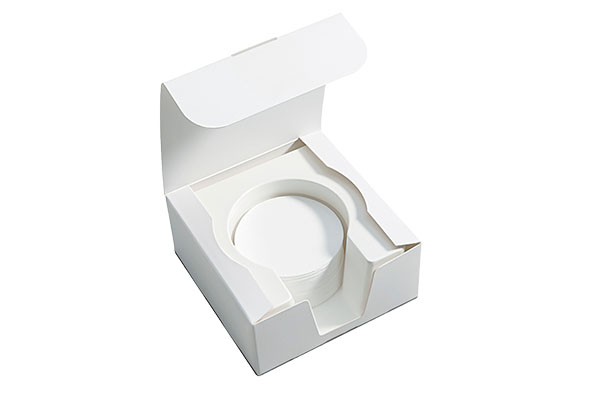
Choosing the right air sampling and testing filters is crucial for accurate environmental monitoring[^1]. Selecting the wrong filter could compromise your data, leading to incorrect conclusions.
For PM2.5, PM10, and TSP applications[^2], several filter options are available to ensure precise data collection. Grade GF/A glass microfiber filters[^3], Grade EPM 2000 air sampling filters[^4], PM2.5 air monitoring membrane filters[^5], QM-A and QM-C quartz microfiber filters[^6], and Nuclepore polycarbonate track-etched membranes[^7] are popular choices.
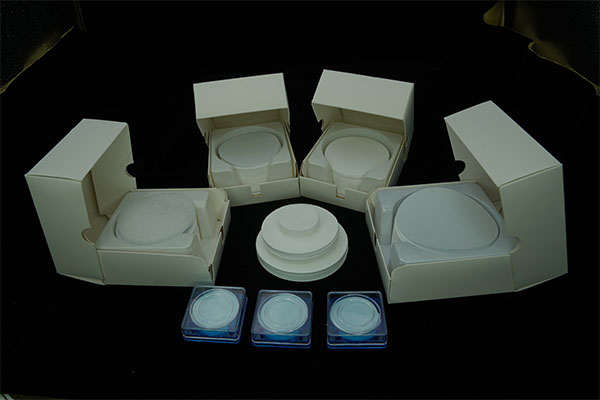
When it comes to selecting filters for air sampling, understanding the specific requirements of PM2.5, PM10, and TSP applications[^2] is essential. Not only do the filters need to match the particle size[^8], but they also need to withstand environmental conditions and provide reliable results.
What are Grade GF/A Glass Microfiber Filters?
Grade GF/A glass microfiber filters[^3] are known for their high retention efficiency and ruggedness. They are designed to capture fine particles with minimal clogging.
These filters are ideal for PM10 and TSP applications[^2] due to their fibrous structure, which allows for efficient particle capture while maintaining airflow. They are particularly useful in environments where dust and particulate matter are prevalent.
The fibrous nature of GF/A filters makes them an excellent choice for PM10 and TSP monitoring. They provide a balance between filtration efficiency and airflow, ensuring precise results without compromising on sample collection speed. Their robustness makes them suitable for outdoor applications where particulate matter can vary significantly in concentration.
Why choose Grade EPM 2000 Air Sampling Filters for your analysis?
Grade EPM 2000 air sampling filters[^4] are designed for high-efficiency particulate air (HEPA) filtration[^9]. They offer excellent particle retention, making them suitable for both PM2.5 and PM10 applications[^10].
These filters are specifically crafted to handle environments with varying particulate concentrations, ensuring that even the smallest particles are captured without affecting airflow. Their structure allows for efficient sampling in diverse settings, from urban areas to industrial zones.
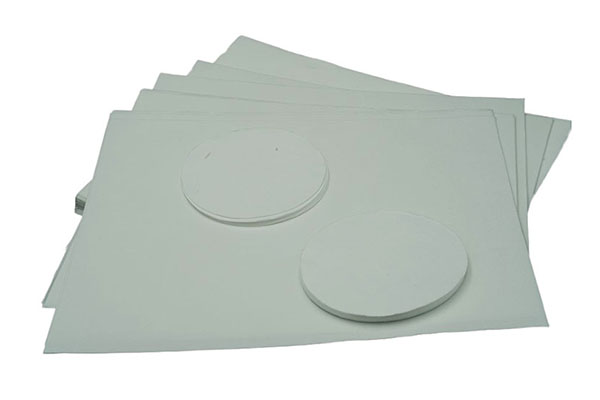
The high-efficiency design of EPM 2000 filters makes them a reliable choice for comprehensive air sampling. They excel in scenarios where precise measurement of particulate matter is crucial for environmental assessments. Their compatibility with standard air sampling equipment ensures seamless integration into existing monitoring systems.
What makes PM2.5 Air Monitoring Membrane Filters unique?
PM2.5 air monitoring membrane filters[^5] are specifically designed to target fine particulate matter with a diameter of 2.5 micrometers. Their precision makes them invaluable for urban air quality assessments.
These filters are engineered to capture PM2.5 particles while allowing for accurate quantitative analysis. Their high retention efficiency ensures that even the smallest particles are accurately measured, aiding in health-related studies and regulatory compliance.
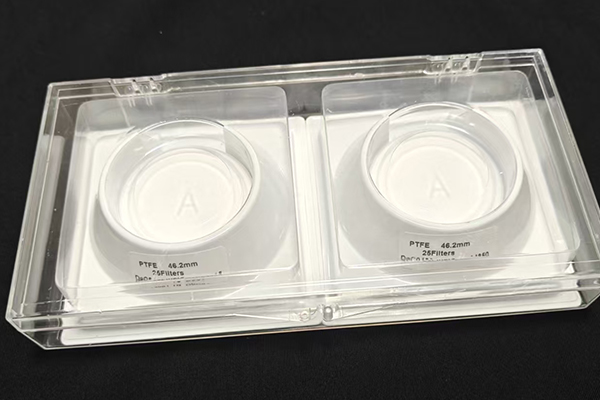
The specificity of PM2.5 air monitoring filters is essential for detailed air quality studies. They provide the necessary accuracy required for monitoring fine particulate matter, which is critical for assessing health impacts and environmental policies. Their design facilitates straightforward integration into air quality monitoring stations.
How are QM-A and QM-C Quartz Microfiber Filters different?
QM-A quartz microfiber filters are known for their high-temperature resistance and low background contamination. They are suitable for PM2.5, PM10, and TSP applications[^2].
QM-C filters, on the other hand, offer similar benefits with enhanced chemical resistance. They are ideal for environments where chemical reactions may affect filter performance, ensuring reliable data collection in challenging conditions.
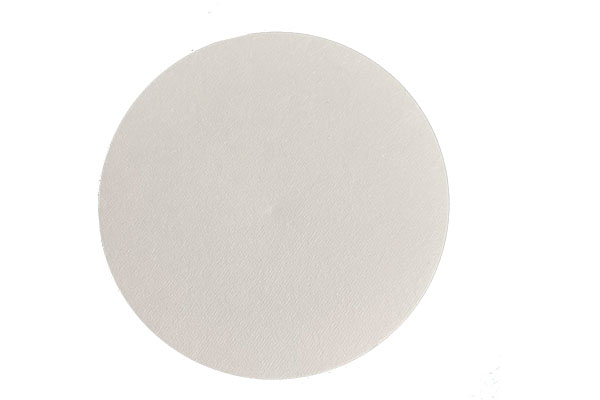
Both QM-A and QM-C quartz microfiber filters[^6] provide robust solutions for air sampling in varied conditions. Their unique properties allow for consistent particle measurement across different temperature ranges and chemical environments. This versatility makes them suitable for multiple sampling scenarios, including industrial and urban air quality assessments.
What are Nuclepore Polycarbonate Track-Etched Membranes used for?
Nuclepore polycarbonate track-etched membranes[^7] are available in hydrophobic and hydrophilic variants, making them versatile for different sampling needs.
Hydrophobic membranes repel water, making them ideal for dry particulate sampling, while hydrophilic membranes attract moisture, enhancing their performance in humid conditions. Both types offer precise particle capture, crucial for accurate environmental monitoring[^1].
These membranes offer specialized solutions for air sampling across diverse climatic conditions. Their track-etched structure ensures precise particle capture, vital for both PM2.5 and PM10 assessments. Their adaptability to varying moisture levels adds a layer of flexibility, making them suitable for dynamic environments.
Conclusion
Choosing the right air sampling filters for PM2.5, PM10, and TSP applications[^2] ensures accurate environmental monitoring[^1] and reliable data collection.
[^1]: Stay updated on the latest advancements in environmental monitoring for better data collection.
[^2]: Learn about the significance of TSP applications in assessing overall air quality.
[^3]: Explore the advantages of GF/A filters for efficient air sampling and their role in capturing fine particles.
[^4]: Learn how EPM 2000 filters enhance air quality assessments with their high-efficiency design.
[^5]: Discover the importance of PM2.5 filters in accurately measuring fine particulate matter in urban settings.
[^6]: Understand the unique properties of QM-A and QM-C filters for reliable air sampling in various conditions.
[^7]: Find out how Nuclepore membranes provide versatile solutions for accurate environmental monitoring.
[^8]: Understand the impact of particle size on air sampling accuracy and data reliability.
[^9]: Discover the critical role of HEPA filtration in maintaining high air quality standards.
[^10]: Explore effective strategies for PM10 air sampling to ensure accurate data collection.