
Choosing the right pore size for your glass fiber filter can make or break your experiment. Picking the wrong one risks sample contamination and inaccurate results. So, how do you choose?
Glass fiber filter pore size refers to the diameter of pores in the filter material[^1], which determines its ability to retain particles of certain sizes while allowing others to pass[^2].
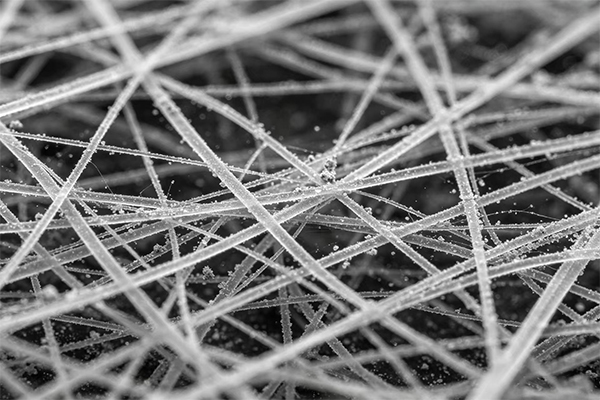
Understanding pore size is crucial, but equally important are the format and dimensions of the filter. Let's explore this further.
Why do different pore sizes matter?
Glass fiber filters are versatile. Their pore sizes dictate filtration efficiency, particle retention, and flow rate.[^3] Choosing the wrong one leads to poor filtration and compromises your data.[^4]
Pore size impacts the ability to capture desired particles while maintaining sample purity. Selecting the right size ensures accurate results and prevents experiment failure.[^5]
Different industries have unique needs. Whether monitoring air pollutants or preparing samples for analysis, pore size is a key decision factor. Let's dive deeper into formats.
What formats are available for Glass Fiber Filters?
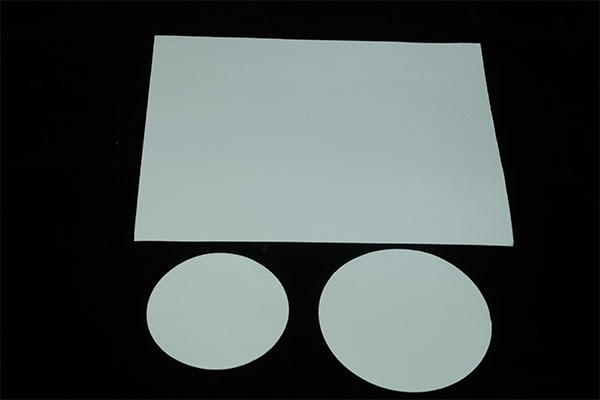
Filters come in two primary formats: circles and sheets. Each serves different purposes and fits specific equipment. Knowing this can save time and resources.
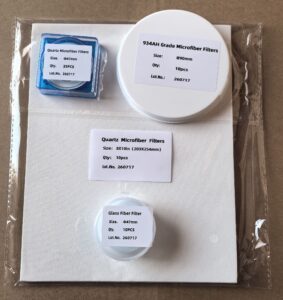
Circles are available in Ø 21 mm to Ø 200 mm sizes, with common diameters being Ø 47 mm and Ø 90 mm.[^6] Sheets measure 460 x 570 mm or 8 x 10 in[^7], the latter being the most popular size.
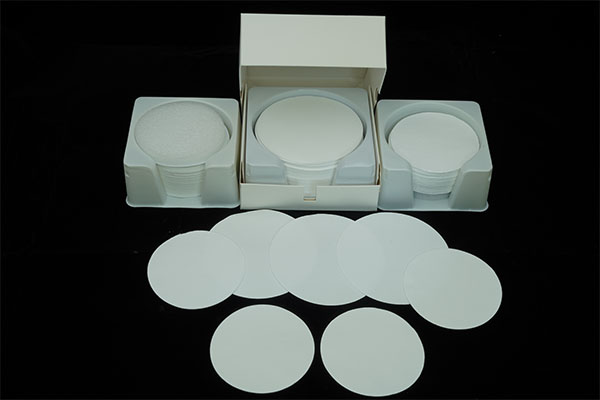
Circles are often used in smaller filtration devices, while sheets are suitable for larger setups. Huaenv, based in China, customizes filters to your requirements, offering flexibility beyond standard sizes.
Circle vs. Sheet Comparison
| Format Type | Size Range | Popular Sizes | Applications |
|---|---|---|---|
| Circles | Ø 21 mm – Ø 200 mm | Ø 47 mm, Ø 90 mm | Air monitoring, sample preparation |
| Sheets | 460 x 570 mm, 8 x 10 in | 8 x 10 in | Industrial filtration, lab settings |
Let's discuss why customization matters next.
Why is customization important?
Not every experiment uses standard-sized filters. Custom dimensions allow labs to tailor their setups for specific equipment or processes. This makes customization essential in many cases.
Customized filters enable labs to meet their exact experimental needs, ensuring compatibility, efficiency, and accuracy of results.
At Huaenv, we specialize in providing custom-sized glass fiber filters for global clients. Whether circles or sheets, our team ensures filters match your specifications perfectly.
Benefits of Customization
| Benefit | Description |
|---|---|
| Compatibility | Fits unique laboratory systems. |
| Efficiency | Minimizes material waste. |
| Precision | Adapts to specific experimental needs. |
Now, let's tie this back to pore size and formats.
How do pore size and format work together?
Selecting the right pore size and format ensures optimal performance. Filters act as barriers, but their effectiveness depends on matching size and structure to your application.
Choosing the correct pore size and format ensures your setup meets filtration requirements while maintaining sample integrity.
For example, environmental monitoring often uses Ø 47 mm filters with specific pore sizes to capture particulate matter[^8]. Similarly, laboratory analysis may require 8 x 10 in sheets with tailored pore sizes.
Matching Pore Size and Format
| Application | Recommended Format | Pore Size Consideration |
|---|---|---|
| Air monitoring | Ø 47 mm circles | Retain PM2.5 while allowing airflow. |
| Industrial filtration | 8 x 10 in sheets | Prevent clogging while filtering liquids. |
| Laboratory sample prep | Custom options | Adapt filters to specific chemical needs. |
Finally, let's bring it all together.
Conclusion
Choosing the right glass fiber filter pore size and format is critical. Whether you need circles or sheets, or custom sizes, Huaenv ensures you get exactly what you need.
[^1]: "[PDF] [ ' Simple Filtration Using Porous Media 1 Introduction", https://www1.udel.edu/dedwards/MPI/07Gore.pdf. The source explains that membrane or fibrous filter pore size is a nominal measure used to describe the size of openings or retention pathways through which particles may pass. Evidence role: definition; source type: education. Supports: Glass fiber filter pore size refers to the diameter of pores in the filter material.. Scope note: For fibrous depth filters such as glass fiber media, pore size may be nominal or effective rather than a uniform geometric diameter.
[^2]: "Filtration - Wikipedia", https://en.wikipedia.org/wiki/Filtration. The source describes filtration as a size-selective separation process in which filter media retain particles above a characteristic retention threshold while allowing smaller particles or fluid to pass. Evidence role: mechanism; source type: encyclopedia. Supports: Pore size determines a filter's ability to retain particles of certain sizes while allowing others to pass.. Scope note: Retention in fibrous glass filters can also depend on depth loading, adsorption, flow rate, and particle shape, not only nominal pore size.
[^3]: "[PDF] Multiphase Flow and Coalescence Filtration in Fibrous Filters", https://upcommons.upc.edu/server/api/core/bitstreams/b90fe134-cf90-49e2-9c2c-5af661388fdf/content. The source reports that filter media pore structure influences particle collection efficiency and hydraulic or air-flow resistance, linking pore size to retention and flow performance. Evidence role: mechanism; source type: paper. Supports: Glass fiber filter pore sizes affect filtration efficiency, particle retention, and flow rate.. Scope note: The relationship may vary by filter grade, media thickness, particle loading, and test method.
[^4]: "[PDF] Analytical Chemistry Problems And Solutions - sciphilconf.berkeley ...", https://sciphilconf.berkeley.edu/default.aspx/mLC073/605992/Analytical%20Chemistry%20Problems%20And%20Solutions.pdf. The source notes that inappropriate filter selection can cause particle breakthrough, clogging, analyte loss, or contamination, each of which can bias analytical results. Evidence role: general_support; source type: education. Supports: Choosing the wrong filter pore size can cause poor filtration and compromise data quality.. Scope note: The source may discuss laboratory filtration generally rather than glass fiber filters specifically.
[^5]: "[PDF] Filter Pore Size and Aerosol Sample Collection - CDC Stacks", https://stacks.cdc.gov/view/cdc/181706/cdc_181706_DS1.pdf. The source supports that filter pore size or retention rating must be matched to the target particles and analytical method to reduce breakthrough, clogging, and measurement error. Evidence role: expert_consensus; source type: institution. Supports: Selecting the right pore size helps ensure accurate results and reduces the risk of filtration-related experimental failure.. Scope note: A source can support reduced analytical error, but the phrase "prevents experiment failure" is stronger than most evidence will directly prove.
[^6]: "Enumeration of microparticles on a gridded filter using a stratified ...", https://pmc.ncbi.nlm.nih.gov/articles/PMC10407279/. The source documents standard circular filter diameters used in laboratory and environmental sampling equipment, including common use of 47 mm and 90 mm formats. Evidence role: historical_context; source type: institution. Supports: Circular glass fiber filters are available in a range of diameters, with 47 mm and 90 mm among common sizes.. Scope note: A neutral source may confirm common diameters but may not verify the full commercial availability range of 21–200 mm across all suppliers.
[^7]: "Filter sheets, glass microfiber, Whatman, Grade GF/C, 460x570 mm ...", https://www.buch-holm.com/products/filtration/filter-sheets-glass-microfiber-whatman-grade-gf-3-9056803. The source identifies sheet-format glass fiber or laboratory filter media dimensions, including large sheets used for cutting or fitting nonstandard filtration holders. Evidence role: general_support; source type: institution. Supports: Glass fiber filter sheets are supplied in large sheet formats such as 460 × 570 mm or 8 × 10 in.. Scope note: Published neutral sources may support sheet-format use but may not establish that these exact dimensions are universal standards.
[^8]: "[PDF] METHOD 201A—DETERMINATION OF PM10 AND PM2.5 ... - EPA", https://www.epa.gov/sites/default/files/2019-08/documents/method_201a_0.pdf. The source describes filter-based ambient particulate-matter sampling methods that use 47 mm filters for collecting airborne particulate matter for measurement or analysis. Evidence role: case_reference; source type: government. Supports: Environmental monitoring often uses 47 mm filters to collect particulate matter.. Scope note: In PM2.5 monitoring, particle size selection is commonly performed by the sampler inlet before collection on the filter, so the citation supports the filter format and application more directly than pore size alone.