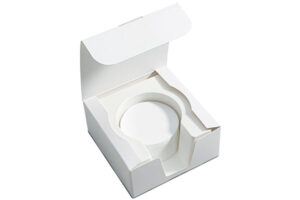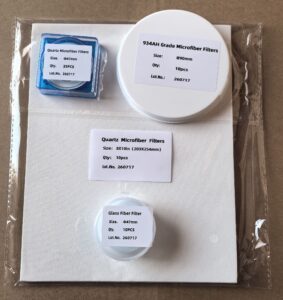

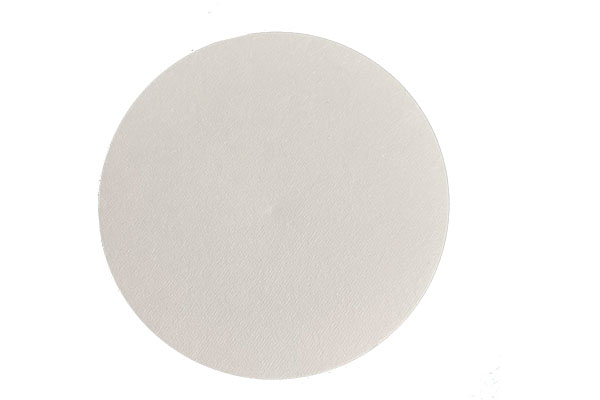
Glass microfiber filter media is the unsung hero in countless analytical applications. It offers unmatched performance for tasks demanding high purity, fast flow rates, and high loading capacities. But what makes it so effective, and why is it the go-to solution for microfiltration and other critical applications?
Glass microfiber filter media is made from pure borosilicate glass fibers[^1], offering excellent filtration efficiency, rapid flow rates, and the ability to handle high particle loads[^2]. It retains particles as small as sub-micron sizes[^3], withstands temperatures up to 500°C[^4], and is free from binders or additives that could interfere with results[^5].
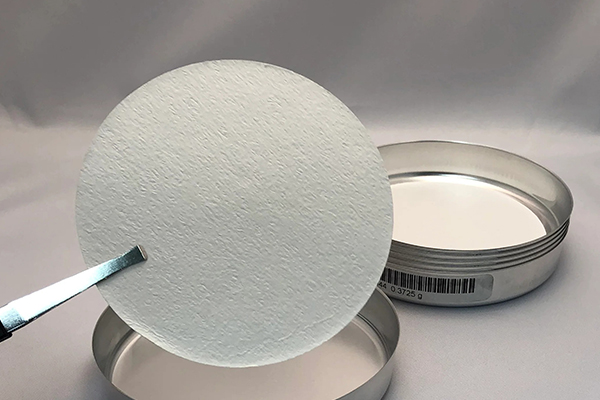
In the sections below, let's delve deeper into the unique characteristics that make glass microfiber filters indispensable for filtration in liquid and gaseous environments.
Why is fast flow rate crucial in filtration?
Time is often critical in analytical and industrial processes. Delays can disrupt workflows and increase costs. A fast flow rate ensures that filtration tasks are completed efficiently, but how does glass microfiber filter media achieve this?
The fibrous structure of glass microfiber allows for rapid fluid or gas passage without compromising on filtration efficiency[^6]. This makes it ideal for high-throughput applications where speed and precision must coexist.
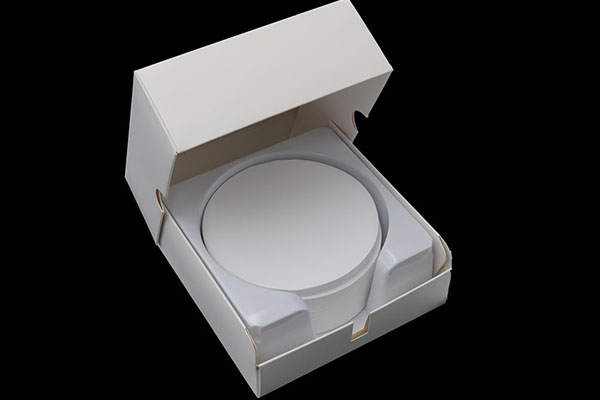
Glass microfiber filters are designed to reduce bottlenecks in processes. Their open structure allows fluids and air to pass through freely, yet the fibers are tightly packed enough to trap particles effectively. This balance ensures that filtration tasks are both quick and thorough.
What makes glass microfiber filters handle high particle loads?
In analytical settings, filters often face a high volume of particles that need to be retained. Filters with low load capacities quickly clog, leading to frequent replacements and additional costs. But glass microfiber filters excel in this aspect.
Glass microfiber filters have a high particle load capacity due to their three-dimensional matrix of fibers.[^7] This design traps large quantities of particles without clogging or losing efficiency.
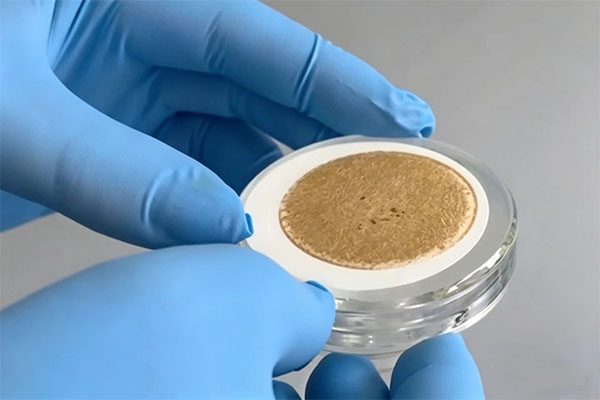
The secret lies in their depth filtration mechanism. Unlike surface filters that rely on a single layer to trap particles, glass microfiber filters use their entire volume.[^8] This means particles are captured throughout the filter, reducing clogging and extending the filter's usable life.
How can glass microfiber filters retain sub-micron particles?
Not all filtration tasks are created equal. Some require filters to capture extremely small particles, even at sub-micron levels. This is another area where glass microfiber filters shine.
Glass microfiber filters can retain particles as small as sub-micron sizes thanks to their dense and finely interwoven fibers. This makes them ideal for applications requiring ultra-fine filtration.

Their ability to trap such small particles is critical in applications like water quality testing, air pollution monitoring, and pharmaceutical research[^9]. These filters ensure that even the tiniest contaminants are effectively removed.
Why is temperature resistance up to 500°C important?
High-temperature environments present unique filtration challenges. Many filters degrade or lose their effectiveness under extreme heat. Glass microfiber filters, however, are designed to perform under such conditions.
With a temperature resistance of up to 500°C, glass microfiber filters can be used in high-temperature liquid and gaseous filtration applications without compromising their structural integrity or performance.
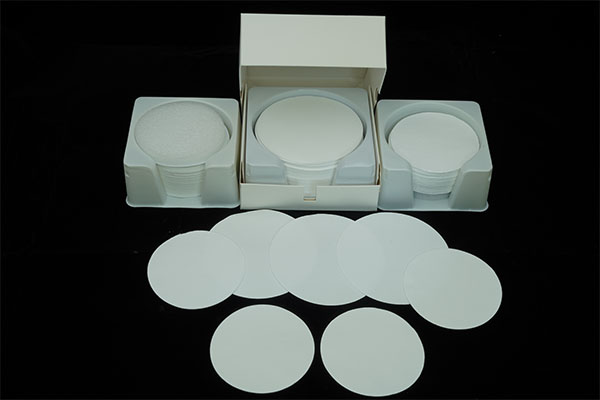
This feature makes them suitable for industries like energy production, chemical processing, and environmental monitoring, where filtration tasks often involve elevated temperatures.
What role does inert fiber composition play in filtration?
Filtration results can be compromised if the filter material interacts with the sample. Inert materials are essential to maintain the purity and integrity of the filtered product. This is where the composition of glass microfiber filters becomes crucial.
Glass microfiber filters are made from pure borosilicate glass fibers, free of binders or additives. This inert composition ensures that the filter does not interfere with the sample, maintaining accurate results[^10].
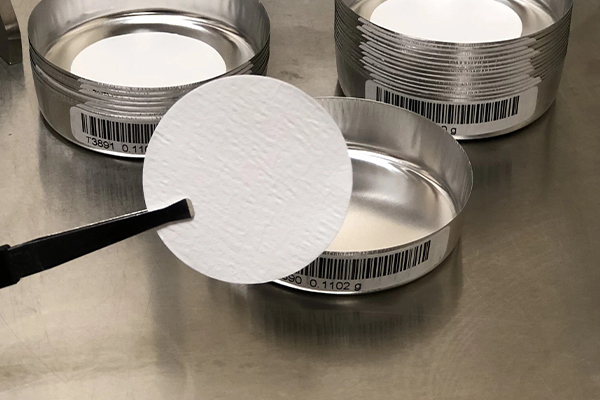
This characteristic is particularly important in analytical applications where chemical interference could alter test outcomes. It ensures that the filters are reliable for tasks like trace element analysis and environmental monitoring.
Conclusion
Glass microfiber filter media stands out for its fast flow rates, high particle load capacities, ability to retain sub-micron particles, resistance to high temperatures, and inert fiber composition. These characteristics make it an indispensable tool for microfiltration and other analytical applications, offering unparalleled performance and reliability.
[^1]: "[PDF] Method IO-3.1 - Selection, Preparation and Extraction of Filter Material", https://www.epa.gov/sites/default/files/2019-11/documents/mthd-3-1.pdf. A neutral technical or standards source should document that glass microfiber filter media is commonly manufactured from borosilicate glass fibers, supporting the material-composition claim. Evidence role: definition; source type: institution. Supports: Glass microfiber filter media is made from pure borosilicate glass fibers.. Scope note: Specific fiber purity can vary by manufacturer and grade, so the source may support the general material class rather than every commercial product.
[^2]: "Chemical Modification with Surface-Active Treatment - PMC", https://pmc.ncbi.nlm.nih.gov/articles/PMC11174125/. A filtration textbook, standards document, or peer-reviewed source should describe glass microfiber media as a high-flow depth filter with substantial particle-loading capacity, supporting the combined performance characterization. Evidence role: general_support; source type: paper. Supports: Glass microfiber filter media offers filtration efficiency, rapid flow, and high particle-loading capacity.. Scope note: Performance depends on filter grade, pore structure, sample matrix, and operating pressure, so evidence will usually support the property range rather than a universal performance guarantee.
[^3]: "The adsorption of dissolved organic carbon onto glass fiber filters ...", https://pmc.ncbi.nlm.nih.gov/articles/PMC6155487/. A laboratory method, standards reference, or independent technical source should report particle-retention ratings for glass microfiber filters in the sub-micron range, supporting the stated retention capability. Evidence role: statistic; source type: institution. Supports: Glass microfiber filters can retain particles as small as sub-micron sizes.. Scope note: Retention thresholds differ substantially among filter grades and test conditions; the source should be tied to a specified grade or retention method where possible.
[^4]: "Filtration Characteristics of Glass Fiber Filter at Elevated Temperatures", https://nepis.epa.gov/Exe/ZyPURL.cgi?Dockey=91015XO6.TXT. A materials or filtration reference should state the high-temperature tolerance of binderless glass microfiber filters, supporting the claim that some grades can withstand temperatures around 500°C. Evidence role: statistic; source type: institution. Supports: Glass microfiber filter media can withstand temperatures up to 500°C.. Scope note: The 500°C figure may apply only to binderless grades and dry-use conditions; chemical exposure, support hardware, and sample matrix can lower practical limits.
[^5]: "Filtration Characteristics of Glass Fiber Filter at Elevated Temperatures", https://nepis.epa.gov/Exe/ZyPURL.cgi?Dockey=91015XO6.TXT. A laboratory-method or analytical-chemistry source should explain that binderless glass fiber filters reduce extractables or chemical interferences, supporting the claim that absence of binders is relevant to analytical results. Evidence role: mechanism; source type: government. Supports: Glass microfiber filters are free from binders or additives that could interfere with analytical results.. Scope note: Being binder-free reduces one potential source of interference but does not prove absence of all extractables or contamination in every analytical method.
[^6]: "Mechanical Modification with Electrospun Nanofibers - PMC", https://pmc.ncbi.nlm.nih.gov/articles/PMC11123098/. A filtration science source should describe how porous fibrous media combine permeability with particle capture, supporting the mechanism by which glass microfiber filters can provide relatively high flow while retaining particles. Evidence role: mechanism; source type: paper. Supports: The fibrous structure of glass microfiber allows rapid fluid or gas passage while maintaining filtration efficiency.. Scope note: The source may explain fibrous filtration generally; direct performance for a particular glass microfiber grade requires grade-specific testing.
[^7]: "Definition of fibrous - NCI Dictionary of Cancer Terms", https://www.cancer.gov/publications/dictionaries/cancer-terms/def/fibrous. A depth-filtration reference should explain that three-dimensional fibrous matrices capture particles throughout the medium, supporting the relationship between glass microfiber structure and higher solids-loading capacity. Evidence role: mechanism; source type: paper. Supports: Glass microfiber filters have high particle load capacity because of their three-dimensional fibrous matrix.. Scope note: The evidence supports the general mechanism; actual loading capacity depends on particle size distribution, fluid properties, and filter thickness.
[^8]: "Mechanical Modification with Electrospun Nanofibers - PMC", https://pmc.ncbi.nlm.nih.gov/articles/PMC11123098/. A filtration reference should distinguish surface filtration from depth filtration and state that depth filters retain particles within the thickness of the medium, supporting the contrast drawn here. Evidence role: definition; source type: education. Supports: Glass microfiber filters function as depth filters that capture particles throughout the filter volume rather than only at the surface.. Scope note: The surface-depth distinction is an idealized classification; some filters may show mixed capture mechanisms depending on operating conditions.
[^9]: "[PDF] Acceptance Testing and Distribution of CY-2014 Glass Fiber Filters ...", https://www.epa.gov/sites/default/files/2020-10/documents/2014glassreport.pdf. Governmental methods, standards, or institutional laboratory guidance should document uses of glass fiber or glass microfiber filters in environmental water testing, air particulate monitoring, or analytical research, supporting these application examples. Evidence role: case_reference; source type: government. Supports: Glass microfiber filters are used in water quality testing, air pollution monitoring, and pharmaceutical or analytical research applications.. Scope note: Separate sources may be needed for each application area, and the evidence may show common use rather than proving suitability for all protocols.
[^10]: "Review of Filters for Air Sampling and Chemical Analysis in Mining ...", https://pmc.ncbi.nlm.nih.gov/articles/PMC10174218/. An analytical-chemistry or environmental-method source should state that chemically inert, binderless glass fiber filters are selected to minimize sample contamination or analyte loss, supporting the rationale for their use in accurate measurements. Evidence role: expert_consensus; source type: paper. Supports: The inert composition of glass microfiber filters helps avoid sample interference and supports accurate analytical results.. Scope note: Inert composition minimizes interference but does not guarantee accuracy; validation, blanks, cleaning, and method compatibility remain necessary.