
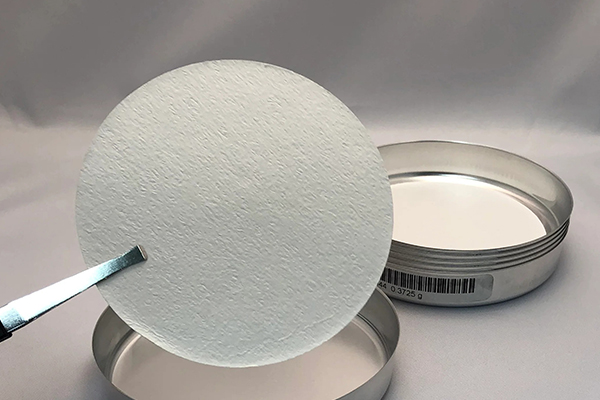
In the world of laboratory filtration[^1], reliability and precision are key. For years, brands like Whatman have dominated the international market in glass microfiber filters[^2]. But is there room for alternatives?
Yes, there are now reliable suppliers for binder-free glass microfiber filters, 1.2um and 47mm in size. These filters offer high filtration efficiency and are suitable for applications like water sample analysis, air particulate sampling, and high-temperature filtration[^3].
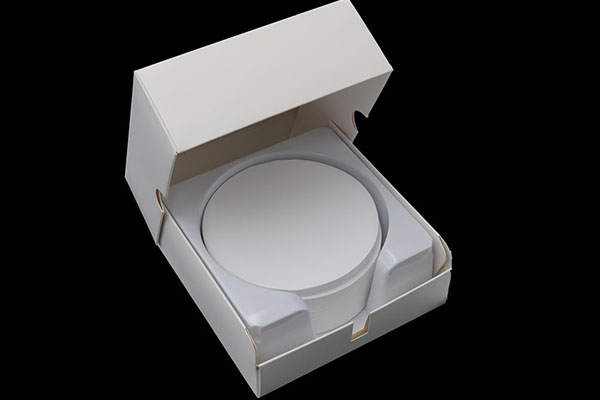
Chinese manufacturers, such as HuaEnv[^4], have entered the market with products capable of challenging the giants. Their binder-free glass microfiber filters, specifically the GF/C series, offer not only competitive pricing but also remarkable quality. Let's dive into what makes these filters a go-to choice.
Why Choose Glass Microfiber Filters?
Lab experiments often demand precision and dependable materials. But what happens when the cost of these premium-quality products becomes a concern?
Glass microfiber filters like the GF/C (1.2um, 47mm) offer a high retention rate, resistance to extreme temperatures, and compatibility with various applications[^5], making them an ideal choice for laboratories.

These filters are made from borosilicate glass fibers without binders[^6], offering superior chemical and thermal resistance compared to their cellulose counterparts[^7]. What sets them apart is their ability to handle high-temperature filtration and retain fine particles[^8]. This makes them suitable for precise tasks like testing suspended solids in water[^9], collecting air particulates[^10], and conducting heavy metal and ash analysis[^11].
The GF/C series, in particular, is known for high flow rates and fine filtration[^12]. It's no surprise that these filters are gaining popularity among labs worldwide.
Who Are Glass Microfiber Filters For?
Laboratories and industries rely heavily on high-quality filtration products. But who benefits most from these advanced filters?
Glass microfiber filters, such as GF/C, are used by environmental monitoring services, research labs, pharmaceutical companies, and even food and beverage industries for a variety of applications.
These filters are indispensable for tasks like water sample testing for suspended solids, pre-filtration in chromatography[^13], and air particulate sampling. In environmental monitoring, they play a critical role in detecting heavy metals, ash, and particulate matter like PM2.5 and TSP in atmospheric research[^14].
For pharmaceutical and life sciences sectors, glass microfiber filters are often used in pre-filtration processes to remove particulates before conducting more sensitive testing. Food and beverage industries use these filters for quality assurance, ensuring that products meet stringent safety standards by checking for contaminants[^15].
How Do HuaEnv Filters Compare to Leading Brands?
Mention the name Whatman, and most lab professionals will nod in recognition. But with high-quality alternatives entering the market, is it still the only option?
HuaEnv produces glass microfiber filters like GF/A, GF/B, GF/C, and others, offering comparable performance to premium brands at a fraction of the cost.
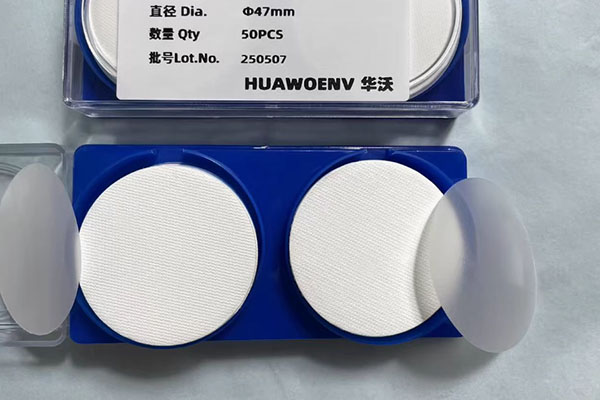
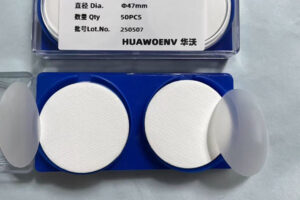
The GF/C 1.2um, 47mm filter from HuaEnv meets international standards while addressing important user concerns: reliability, cost, and availability. Key benefits include:
- High filtration efficiency: Comparable to Whatman and other premium brands.
- Versatility: Suitable for suspended solids testing, air particulate sampling, and even high-temperature filtration.
- Cost-effective: HuaEnv offers competitive pricing without compromising on quality.
- Custom options: Filters can be tailored for specific applications, including variations in pore size and thickness.
What's more, HuaEnv provides free samples to prospective distributors, enabling hands-on evaluation of the product before making purchasing decisions.
Applications of GF/C Filters
When it comes to laboratory and industrial use, a versatile filter can transform workflows. But what specific tasks are GF/C filters best for?
GF/C filters are ideal for pre-filtration, suspended solids testing, air particulate sampling, solution clarification, and atmospheric particulate collection.
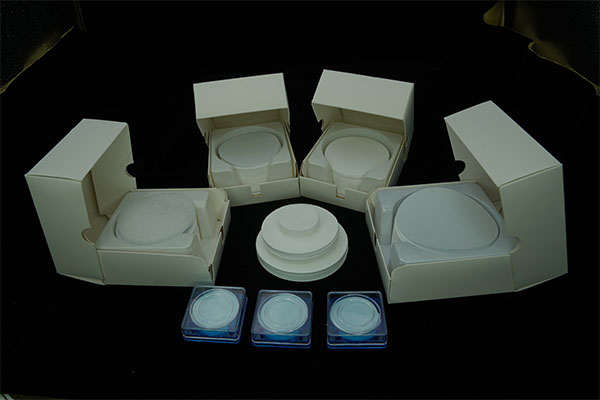
Here's a breakdown of potential applications:
| Industry/Sector | Application | Filter Benefits |
|---|---|---|
| Environmental Monitoring | PM2.5 and TSP sampling | High-temperature and chemical resistance |
| Pharmaceutical | Pre-filtration for chromatography | High flow rate and fine retention |
| Food & Beverage | Quality assurance in raw materials | Fine filtration for contaminants |
| Industrial | Smoke and ash analysis | Handles high-temperature filtration |
From detecting PM2.5 in air samples to clarifying solutions in research labs, the GF/C filter's adaptability makes it an invaluable asset across multiple fields.
Why Distributors Should Consider HuaEnv?
Distributors face unique challenges when sourcing lab consumables. High costs, supply chain issues, and inconsistent quality can all impede efforts to meet client needs.
HuaEnv offers reliable, cost-effective glass microfiber filters with custom options, making them a strong alternative to global brands for distributors.
For distributors, partnering with HuaEnv unlocks several benefits:
- Free Samples: Evaluate product quality before committing.
- Custom Specifications: Tailored solutions to meet client needs.
- Cost-Effective Pricing: Compete with global brands without breaking budgets.
- Reliable Supply Chain: Stable production ensures consistent availability.
By offering high-quality alternatives to Whatman and Ahlstrom filters, HuaEnv empowers distributors to expand their product range while improving profit margins.
Conclusion
HuaEnv's binder-free glass microfiber filters, such as the GF/C 1.2um, 47mm, offer a practical, high-quality alternative to premium brands. With versatile applications, competitive pricing, and reliable supply, these filters are an excellent choice for laboratories and distributors alike.
[^1]: "[PDF] selection of optimum filtration bates fob 3akd filters", https://dr.lib.iastate.edu/bitstreams/9d50bcec-8e2d-40c8-902d-11bf52f5adca/download. An authoritative laboratory or educational source describing filtration as a standard laboratory separation technique and emphasizing appropriate filter selection, reliability, and accurate particle retention would substantiate the statement that precision and dependability are central to laboratory filtration. Evidence role: general_support; source type: education. Supports: In laboratory filtration, reliability and precision are key considerations.. Scope note: Such a source would support the general importance of reliable and precise filtration practices, but not any specific product performance claims made later in the article.
[^2]: "[PDF] Method 160.2", https://www.uvm.edu/bwrl/lab_docs/protocols/106.2_TSS_by_gravimetry_(EPA_1971).pdf. Authoritative laboratory methods and technical references describe borosilicate glass-fiber filters as chemically and thermally resistant media used for suspended-solids testing and particulate collection, supporting the stated functional applications of glass microfiber filters. Evidence role: general_support; source type: government. Supports: Glass microfiber filters offer high filtration efficiency, thermal and chemical resistance, and are suitable for applications such as water suspended-solids analysis, air particulate sampling, and high-temperature filtration.. Scope note: This supports the general properties and laboratory applications of glass microfiber filters, not the performance or quality of any specific supplier or brand.
[^3]: "[PDF] Method IO-3.1 - Selection, Preparation and Extraction of Filter Material", https://www.epa.gov/sites/default/files/2019-11/documents/mthd-3-1.pdf. Standard methods and environmental sampling guidance describe glass-fiber or glass-microfiber filters as established media for suspended-solids measurement and particulate collection, and note their suitability where thermal stability is required. Evidence role: general_support; source type: government. Supports: Binder-free glass microfiber filters are suitable for water sample analysis, air particulate sampling, and high-temperature filtration.. Scope note: This supports the application categories generally, not the performance of a specific supplier's 1.2 µm, 47 mm product.
[^4]: "How to Use Cytiva Whatman Microfiber Filter?", https://huaenv.com/how-to-use-cytiva-whatman-microfiber-filter/. A source documenting HuaEnv's product catalog or company profile should substantiate that HuaEnv is a Chinese supplier offering glass microfiber filters, including GF/C-type products. Evidence role: case_reference; source type: other. Supports: Chinese manufacturers, such as HuaEnv, have entered the market with products capable of challenging the giants.. Scope note: This would verify HuaEnv's presence and product offering, but would not independently prove comparative quality or that it can 'challenge' established global brands.
[^5]: "Chemical Modification with Surface-Active Treatment - PMC", https://pmc.ncbi.nlm.nih.gov/articles/PMC11174125/. Technical references on glass-fiber filtration describe borosilicate glass microfiber media as chemically inert, thermally stable, and capable of retaining fine particles in laboratory filtration applications. Evidence role: mechanism; source type: education. Supports: Glass microfiber filters provide fine-particle retention, temperature resistance, and broad application compatibility.. Scope note: The source would substantiate material-level properties, not comparative claims about a named GF/C product unless that product is tested directly.
[^6]: "Borosilicate glass - Wikipedia", https://en.wikipedia.org/wiki/Borosilicate_glass. Materials references identify borosilicate glass as a chemically durable, thermally resistant glass composition, which explains its use in binder-free microfiber filtration media. Evidence role: definition; source type: encyclopedia. Supports: Binder-free glass microfiber filters are made from borosilicate glass fibers.. Scope note: This supports the material rationale, but it does not verify the composition of any specific commercial filter unless paired with a product certificate or specification.
[^7]: "Resistance of pathogenic biofilms on glass fiber filters formed under ...", https://pmc.ncbi.nlm.nih.gov/articles/PMC7406593/. Comparative filtration and materials references describe glass-fiber filters as more heat resistant and chemically inert than cellulose-based filter papers, reflecting differences between inorganic glass fibers and organic cellulose media. Evidence role: mechanism; source type: education. Supports: Glass microfiber filters generally have better chemical and thermal resistance than cellulose filters.. Scope note: The comparison is general and may vary by chemical, temperature range, and specific cellulose or glass filter grade.
[^8]: "Filtration Characteristics of Glass Fiber Filter at Elevated Temperatures", https://nepis.epa.gov/Exe/ZyPURL.cgi?Dockey=91015XO6.TXT. Laboratory filtration references note that glass microfiber filters tolerate elevated temperatures and are used where fine-particle retention is required, including gravimetric and particulate analyses. Evidence role: general_support; source type: institution. Supports: Glass microfiber filters can be used for high-temperature filtration and fine-particle retention.. Scope note: This supports the general capability of glass microfiber filters, not a measured retention efficiency for the named GF/C filter.
[^9]: "[PDF] LABORATORY THEORY AND METHODS F Or SEDIMENT ANALYSIS", https://pubs.usgs.gov/twri/twri5c1/pdf/TWRI_5-C1.pdf. EPA and Standard Methods procedures for total suspended solids use glass-fiber filters in gravimetric determination of suspended material in water and wastewater samples. Evidence role: case_reference; source type: government. Supports: Glass microfiber or glass-fiber filters are used for suspended-solids testing in water samples.. Scope note: The cited methods establish the use of glass-fiber filters for TSS, but filter grade and pore-size requirements may differ by method version.
[^10]: "[PDF] Method IO-3.1 - Selection, Preparation and Extraction of Filter Material", https://www.epa.gov/sites/default/files/2019-11/documents/mthd-3-1.pdf. Air-quality monitoring guidance describes filter-based collection of airborne particulate matter, including use of glass-fiber or related filter media in gravimetric and chemical analyses. Evidence role: case_reference; source type: government. Supports: Glass microfiber filters can be used to collect air particulates.. Scope note: Filter media selection depends on the target analyte and sampling method; this does not prove universal suitability for every air-particulate protocol.
[^11]: "[PDF] Rapid Method for Acid Digestion of Glass-Fiber - EPA", https://www.epa.gov/sites/default/files/2015-06/documents/air_filter_dissolution_by_acid_digestion_epa_402-r-12-009_10-22-12.pdf. Environmental and analytical methods use filtered particulate or suspended-solid residues for subsequent ash determination and metals analysis, showing that filtration media can serve as sample collection substrates for these measurements. Evidence role: case_reference; source type: government. Supports: Glass microfiber filters may be used in workflows involving heavy-metal and ash analysis.. Scope note: This supports the analytical workflow context; suitability for heavy-metal analysis also depends on filter blank levels and contamination controls.
[^12]: "Glass fiber filters – High performance filtration", https://huaenv.com/glass-fiber-filters-high-performance-filtration/. Filtration references describe glass microfiber depth filters as combining relatively high flow capacity with fine-particle capture because particles are retained throughout the fibrous matrix rather than only on a surface membrane. Evidence role: mechanism; source type: education. Supports: GF/C-type glass microfiber filters are associated with high flow rates and fine filtration.. Scope note: This explains the general depth-filtration mechanism and does not quantify the flow rate of HuaEnv GF/C filters.
[^13]: "Protect your columns and your peaks - Cytiva LifeSciences", https://www.cytivalifesciences.com/en/us/insights/protect-your-columns-and-your-peaks. Chromatography sample-preparation guidance commonly recommends prefiltration to remove particulates before injection, reducing blockage and protecting columns and instruments. Evidence role: mechanism; source type: education. Supports: Glass microfiber filters can be used for pre-filtration in chromatography workflows.. Scope note: This supports the rationale for prefiltration before chromatography, not the exclusive need for GF/C filters over other filter media.
[^14]: "[PDF] METHOD 201A—DETERMINATION OF PM10 AND PM2.5 ... - EPA", https://www.epa.gov/sites/default/files/2019-08/documents/method_201a_0.pdf. Air-monitoring literature defines PM2.5 and total suspended particulates as atmospheric particulate metrics and describes filter-based sampling as a standard approach for collecting particulate matter for mass or composition analysis. Evidence role: definition; source type: government. Supports: Glass microfiber filters are relevant to atmospheric particulate monitoring involving PM2.5 and TSP.. Scope note: The source would support the monitoring context and terminology, while specific filter acceptance depends on the sampling standard used.
[^15]: "Hazard Analysis Critical Control Point (HACCP) - FDA", https://www.fda.gov/food/guidance-regulation-food-and-dietary-supplements/hazard-analysis-critical-control-point-haccp. Food-safety systems such as HACCP and regulatory monitoring frameworks require identification and control of physical, chemical, and biological contaminants, for which laboratory filtration can be one sample-preparation or quality-control step. Evidence role: general_support; source type: government. Supports: Food and beverage quality assurance involves contaminant checks to meet safety standards.. Scope note: This supports the broader need for contaminant testing in food and beverage quality assurance, not the necessity of glass microfiber filters for every test.