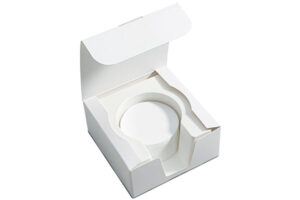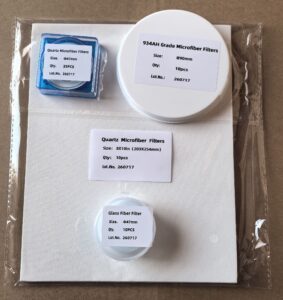


When it comes to wastewater analysis, precision is key. Choosing the right filtration material can make or break the process. One of the most reliable choices? Glass microfiber filters.
Glass microfiber filters, made from pure borosilicate fibers, are essential for wastewater analysis.[^1] They offer a wide range of flow rates and nominal pore sizes[^2], making them versatile for different filtration needs in water testing and analysis.
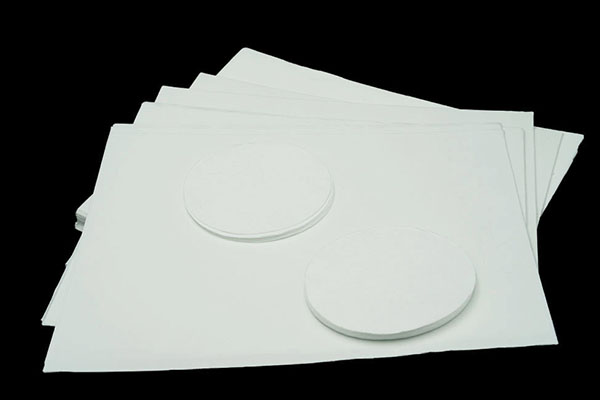
Beyond their versatility, glass microfiber filters stand out for their ability to filter fine particles effectively. They can be sterilized through EtO, gamma, or autoclave methods[^3], ensuring they meet the rigorous demands of water and wastewater analysis. Let's dive into their specific applications.
Why are glass microfiber filters ideal for wastewater analysis?
The challenge in wastewater analysis lies in the diverse range of particles and contaminants present. Accurate measurements depend on a filter that can handle these variables while maintaining consistency.
Glass microfiber filters are ideal because they capture fine particles, offer high loading capacity, and resist chemical degradation[^4]. This makes them a top choice for suspended particle analysis, total suspended solids (TSS) measurement[^5], and pre-filtration.
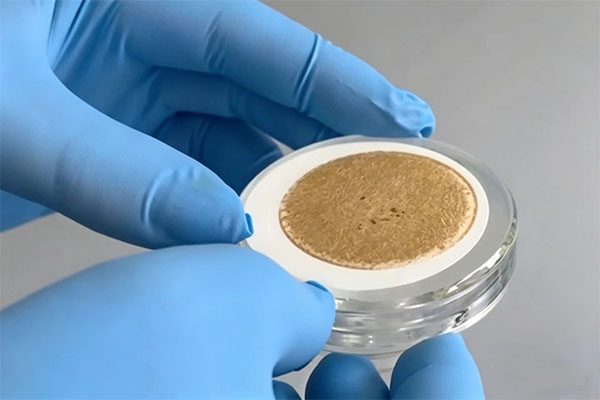
The unique composition of borosilicate fibers allows these filters to operate effectively across various conditions. Whether it's for cell harvesting or volatile suspended solids testing, their performance remains unmatched. Below, I'll detail how different glass fiber grades are tailored for specific wastewater analysis needs.
What are 934-AH glass filters and why are they used?
When discussing glass microfiber filters, the 934-AH grade is often mentioned. Its popularity isn't without reason—it remains the gold standard for several established methodologies.
934-AH glass filters are specifically designed for methods like SM 2540D and EPA Method 160.2[^6], making them foundational tools for wastewater testing. They are perfect for determining total and volatile suspended solids (TSS and VSS)[^7] in water samples.
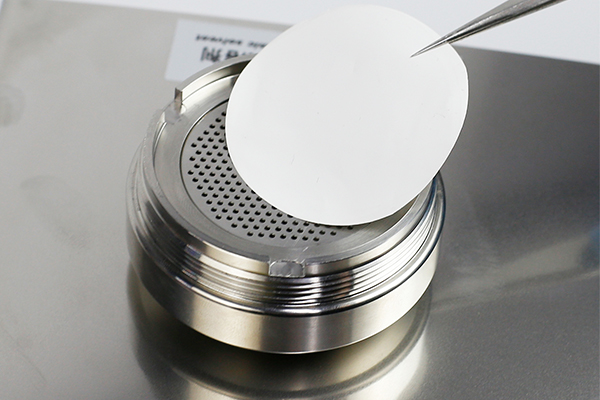
The 934-AH grade offers high particle retention and thermal stability[^8]. For volatile suspended solids (VSS)—a critical parameter in wastewater analysis—these filters provide accurate and repeatable results. Additionally, their high loading capacity allows for efficient pre-filtration of large sample volumes.
| Parameter | 934-AH Glass Filters Performance |
|---|---|
| Material | Borosilicate fibers (binder-free) |
| Particle Retention | High (1.5 µm nominal pore size) |
| Applications | TSS, VSS, pre-filtration, cell harvesting |
| Sterilization Compatibility | EtO, gamma, autoclave |
How do 934-AH filters aid in measuring total suspended solids?
Accurate TSS measurement is vital for assessing water quality and ensuring compliance with environmental standards.[^9] The process requires filters that can efficiently trap particles without impacting the analysis.
934-AH filters are used to measure total suspended solids because of their ability to retain fine particles. Their high flow rate makes them suitable for large sample volumes[^10], ensuring consistent results.
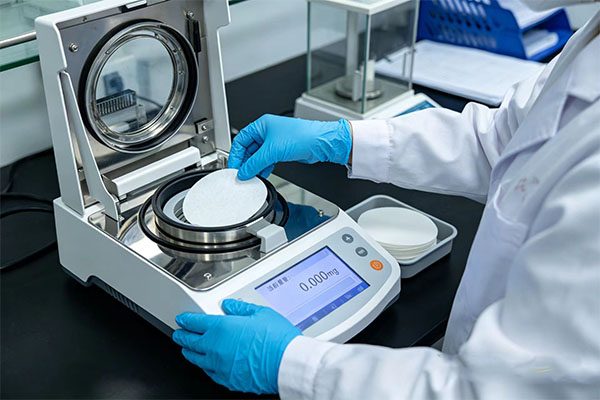
These filters are engineered for methods like SM 2540D, where precision is non-negotiable. Their design minimizes particle loss and ensures that even the smallest contaminants are captured. This reduces variability in results and enhances analytical accuracy.
What role do glass microfiber filters play in volatile suspended solids analysis?
Volatile suspended solids (VSS) are another key parameter in wastewater testing. Measuring VSS involves heating samples to remove volatile components[^11], making filter thermal stability essential.
Glass microfiber filters, particularly the 934-AH grade, are perfect for VSS analysis. Their thermal resistance ensures they can withstand high temperatures without compromising performance.
This stability is crucial when following protocols like EPA Method 160.2, where filters must endure drying and ignition steps[^12]. Their ability to maintain integrity under such conditions ensures reliable and repeatable results.
| Parameter | Requirement | 934-AH Performance |
|---|---|---|
| Thermal Resistance | High (up to 550°C) | Excellent |
| Weight Stability Post-Ignition | Minimal Variability | Ensured |
| Particle Retention | Fine (<1.5 µm) | Outstanding |
How do glass microfiber filters support suspended particle analysis and pre-filtration?
Beyond TSS and VSS, glass microfiber filters are also employed in general suspended particle analysis and pre-filtration. These applications require durability and efficiency.
Glass microfiber filters support suspended particle analysis by providing high particle retention and minimal clogging. For pre-filtration, their high loading capacity allows efficient sample preparation.
In suspended particle analysis, the high retention capability ensures that even sub-micron particles are trapped. This is particularly useful for cell harvesting, where large volumes need to be filtered rapidly without compromising on efficiency or accuracy.
For pre-filtration, these filters act as a robust first line of defense, removing coarse debris and extending the life of downstream filters. This dual functionality makes them invaluable in laboratory settings.
Conclusion
Glass microfiber filters, especially the 934-AH grade, are indispensable tools in wastewater analysis. Their high particle retention, thermal stability, and versatility make them a trusted choice for applications like TSS, VSS, and suspended particle analysis. When precision and reliability matter, these filters deliver unmatched performance.
[^1]: "[PDF] Method 160.2", https://www.uvm.edu/bwrl/lab_docs/protocols/106.2_TSS_by_gravimetry_(EPA_1971).pdf. A wastewater solids-method source should support that glass-fiber filters are specified for suspended-solids determinations and that borosilicate glass is a common chemically resistant glass composition; this supports the material and use context but not the evaluative term "essential." Evidence role: general_support; source type: government. Supports: Glass microfiber filters made from borosilicate fibers are important materials used in wastewater analysis.. Scope note: The source may document accepted use rather than prove that the filters are universally essential.
[^2]: "Performance factors for filtration of air using cellulosic fiber-based ...", https://bioresources.cnr.ncsu.edu/resources/performance-factors-for-filtration-of-air-using-cellulosic-fiber-based-media-a-review/. A technical or educational source on glass-fiber depth filtration should document that glass microfiber filters are manufactured in multiple grades with differing nominal retention ratings and flow characteristics; this supports product-category variability rather than any specific brand specification. Evidence role: general_support; source type: education. Supports: Glass microfiber filters are available in different grades with varying flow rates and nominal pore sizes.. Scope note: The evidence is likely to be general to glass-fiber filter grades and may not verify every commercially available pore size or flow rate.
[^3]: "Ethylene Oxide "Gas" Sterilization | Infection Control - CDC", https://www.cdc.gov/infection-control/hcp/disinfection-sterilization/ethylene-oxide-sterilization.html. A sterilization guidance source should establish that ethylene oxide, gamma irradiation, and steam autoclaving are recognized sterilization methods for laboratory or medical materials; this contextualizes the stated compatibility but does not by itself certify every glass microfiber filter product for all three methods. Evidence role: definition; source type: government. Supports: EtO, gamma irradiation, and autoclaving are established sterilization methods that may be used for compatible filtration materials.. Scope note: A general sterilization source supports the methods, while product-specific compatibility may still require a manufacturer specification.
[^4]: "Chemical Modification with Surface-Active Treatment - PMC", https://pmc.ncbi.nlm.nih.gov/articles/PMC11174125/. A neutral source on glass-fiber depth filters should support that the fibrous depth structure retains fine particulates and can hold substantial solids, while a materials source should support the chemical durability of borosilicate glass; together these sources substantiate the mechanism but may not rank glass microfiber filters against alternatives. Evidence role: mechanism; source type: education. Supports: Glass microfiber filters can retain fine particles, accommodate particulate loading, and have chemical durability associated with borosilicate glass.. Scope note: This support would explain relevant properties but may not prove superiority over all other filtration media.
[^5]: "[PDF] Method 160.2", https://www.uvm.edu/bwrl/lab_docs/protocols/106.2_TSS_by_gravimetry_(EPA_1971).pdf. EPA or Standard Methods documentation should show that total suspended solids are determined by filtering a well-mixed sample through a glass-fiber filter and measuring the residue retained after drying; this directly supports the analytical role of filtration in TSS measurement. Evidence role: definition; source type: government. Supports: TSS measurement uses filtration through a specified filter to quantify suspended solids retained from a water or wastewater sample..
[^6]: "[PDF] Method 160.2", https://www.uvm.edu/bwrl/lab_docs/protocols/106.2_TSS_by_gravimetry_(EPA_1971).pdf. EPA Method 160.2 and Standard Methods 2540D-type references should document the use of glass-fiber filter disks, including 934-AH or equivalent binder-free glass-fiber filters, for suspended-solids procedures; this supports method compatibility but not necessarily the phrase "specifically designed." Evidence role: case_reference; source type: government. Supports: 934-AH or equivalent glass-fiber filters are accepted or specified in recognized suspended-solids methods such as EPA Method 160.2 and SM 2540D.. Scope note: The methods typically specify acceptable filter characteristics or equivalents, which may not prove the original design intent of the 934-AH grade.
[^7]: "[PDF] Method 160.4: Residue, Volatile (Gravimetric, Igition at 550°C ... - EPA", https://www.epa.gov/sites/default/files/2015-08/documents/method_160-4_1971.pdf. Standard Methods 2540D and 2540E or equivalent wastewater-method references should define procedures for total suspended solids and volatile suspended solids using filtered residues, drying, and ignition; this supports the stated analytical applications of the filters. Evidence role: definition; source type: institution. Supports: Glass-fiber filters are used in recognized methods for determining TSS and VSS in water or wastewater samples.. Scope note: The method source supports accepted analytical use, not that one filter grade is uniquely perfect for all TSS and VSS samples.
[^8]: "[PDF] Method 160.2", https://www.uvm.edu/bwrl/lab_docs/protocols/106.2_TSS_by_gravimetry_(EPA_1971).pdf. A method or technical specification source should show that 934-AH-type binder-free glass-fiber filters have nominal particle retention around 1.5 µm and can withstand the drying and ignition conditions used in solids analysis; this supports the functional properties but may rely partly on product specifications for the exact grade. Evidence role: general_support; source type: institution. Supports: 934-AH glass-fiber filters provide fine particle retention and sufficient thermal stability for suspended-solids methods.. Scope note: Neutral standards may specify filter performance requirements, while exact 934-AH retention values often come from technical datasheets.
[^9]: "National Pollutant Discharge Elimination System (NPDES) | US EPA", https://www.epa.gov/npdes. An environmental regulatory source should show that total suspended solids are a conventional water-quality pollutant and a monitored permit or effluent parameter, supporting its relevance to water-quality assessment and compliance. Evidence role: historical_context; source type: government. Supports: TSS is a recognized water-quality and regulatory-compliance parameter.. Scope note: The source may establish regulatory relevance generally, not the importance of TSS in every jurisdiction or discharge permit.
[^10]: "Selection, Preparation and Extraction of Filter Material", https://www.epa.gov/sites/default/files/2019-11/documents/mthd-3-1.pdf. A filtration-method or technical source should support that glass-fiber filters can provide relatively high flow rates and are therefore useful where larger water-sample volumes must be processed; this supports practical suitability but not guaranteed performance for all wastewater matrices. Evidence role: mechanism; source type: education. Supports: High-flow glass-fiber filters can facilitate filtration of larger water-sample volumes in solids analysis.. Scope note: Flow rate depends on sample solids loading, vacuum pressure, filter diameter, and grade.
[^11]: "U.S. Environmental Protection Agency | US EPA", https://www.epa.gov/home. A standard VSS method should state that the dried residue retained on a filter is ignited at high temperature and the mass lost on ignition is reported as volatile solids; this directly supports the heating mechanism used in VSS analysis. Evidence role: mechanism; source type: government. Supports: VSS analysis uses ignition or heating to estimate volatile material from the mass loss of dried suspended solids..
[^12]: "[PDF] Method 160.2", https://www.uvm.edu/bwrl/lab_docs/protocols/106.2_TSS_by_gravimetry_(EPA_1971).pdf. EPA Method 160.2 or a comparable solids method should specify drying the filter and residue and igniting the retained solids for volatile residue determination; this supports the procedural requirement that filters tolerate those steps. Evidence role: case_reference; source type: government. Supports: Suspended-solids methods require filters to withstand drying and ignition steps during total and volatile residue determinations.. Scope note: The source supports the procedural conditions, while exact filter endurance may depend on using an approved binder-free glass-fiber filter.