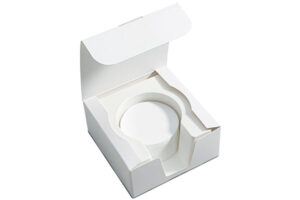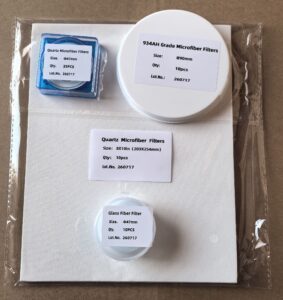

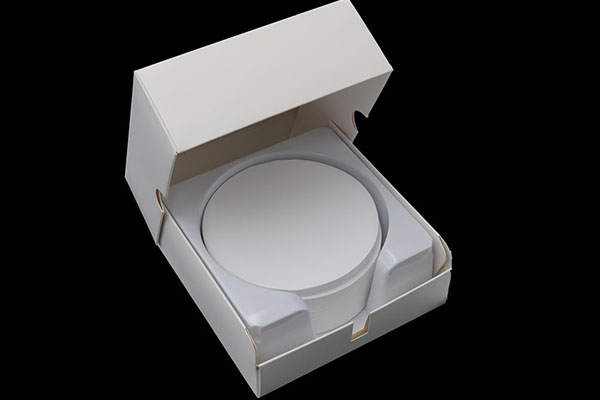
When it comes to precision in solids testing, one small misstep can lead to skewed results. Imagine investing significant time and resources into a process, only to discover inconsistencies in your data. For environmental and quality testing professionals, using the right filter materials is not optional; it's a necessity.
Prewashed and preweighed glass microfiber filters ensure accuracy in determining Total Suspended Solids (TSS) and Volatile Suspended Solids (VSS)[^1]. These filters are ready-to-use, meeting the stringent requirements of Standard Method 2540 D and EPA Method 160.2[^2].
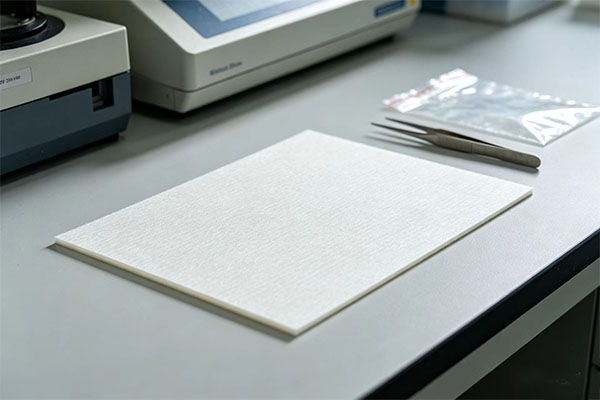
Ready-to-use filters save time and eliminate the risk of human error during preparation. But how do these filters work, and why are they the best choice for high-heat applications? Let's dive deeper.
What are the key features of prewashed and preweighed glass microfiber filters?
The challenge in solids testing is often ensuring accurate results while adhering to strict protocols. Using standard filters without pre-treatment can introduce variability in your process. This is where the prewashed, preweighed filters come in.
Prewashed and preweighed glass microfiber filters, like the industry-standard 934-AH, are specially processed to ensure precision. They are washed, dried, desiccated, and fired at 550°C[^3] before being weighed to a 4-decimal place resolution[^4].
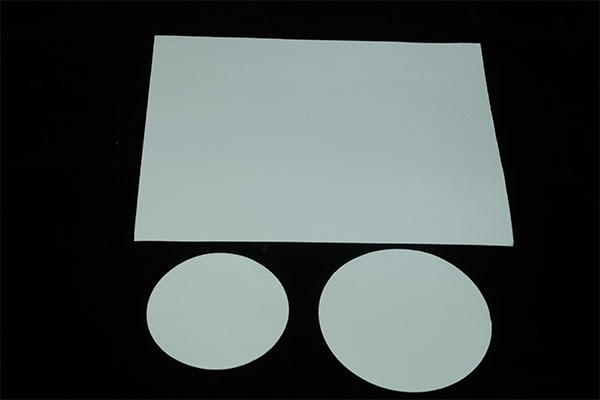
These filters are free of binders[^5], ensuring no unintended compounds interfere with your results. They are perfect for tests requiring high heat applications, exceeding 550°C. Let's explore more about their applications and benefits.
Why is binder-free material important for TSS and VSS testing?
You might wonder why the material matters so much for something as simple as filtering. But in solids testing, every detail counts. Filters with binders can release residual chemicals during testing, which might alter your data.
Binder-free glass microfiber filters are ideal for determining TSS and VSS because they do not introduce contaminants[^6]. This ensures that the only materials left on the filter after a test are the suspended solids themselves.
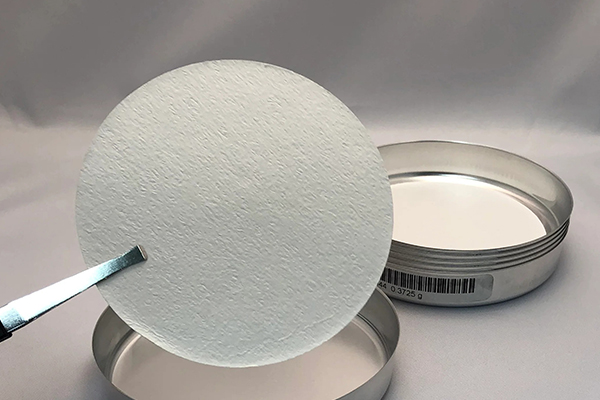
For TSS (Total Suspended Solids), which is measured using EPA Method 160.2 or Standard Method 2540 D[^7], this precision means accurate and repeatable results. Similarly, for VSS (Volatile Suspended Solids), firing the filters at 550°C ensures that any organic matter is burned off, leaving only the fixed residue behind[^8].
By starting with a clean, preweighed filter, you eliminate the potential for errors caused by incorrect preparation or contamination.
What makes the 934-AH grade a top choice for solids testing?
The choice of filter grade plays a critical role in the outcome of your analysis. The 934-AH grade is a proven leader in environmental and analytical testing.
Grade 934-AH filters are industry-standard glass microfiber filters for TSS and VSS testing. They are known for their high loading capacity, fine particle retention, and thermal stability up to 550°C[^9].
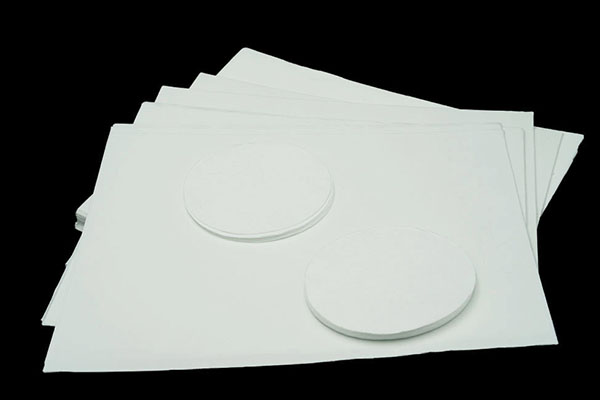
This grade is not only prewashed and preweighed but is also highly durable under extreme conditions. Its precision and consistency make it the go-to filter for environmental monitoring, wastewater analysis, and other critical applications.
Here's why the 934-AH grade stands out:
| Feature | Benefit |
|---|---|
| Prewashed and Preweighed | Eliminates preparation errors and saves time. |
| Binder-Free Composition | Ensures no contamination or interference with results. |
| High Heat Resistance (>550°C) | Suitable for applications requiring extreme thermal conditions. |
| Accurate to 4 Decimal Places | Guarantees precision in weighing and data reliability. |
| Industry Standard for TSS & VSS | Trusted by laboratories worldwide for compliance with EPA standards. |
How does pre-treatment improve lab efficiency?
One of the most overlooked aspects of lab work is preparation time. In a busy schedule filled with testing protocols, every saved minute counts. Prewashed and preweighed filters are a game-changer in this regard.
Pre-treated filters reduce preparation time and ensure consistency in testing protocols. They eliminate the need for washing, drying, and weighing steps before use[^10].
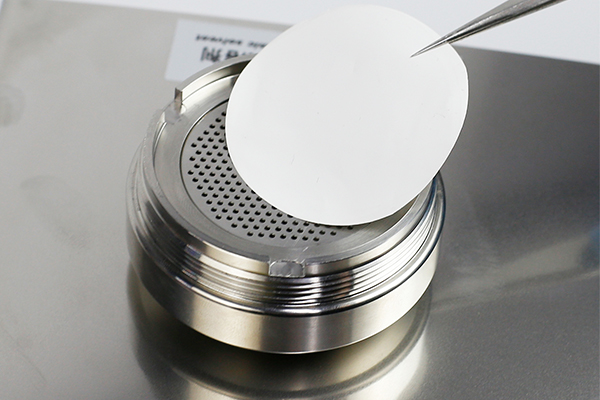
For labs that conduct multiple tests daily, this can lead to significant time savings. More importantly, it reduces the risk of human error during preparation, ensuring compliance with standardized methods like EPA Method 160.2 and Standard Method 2540 D.
By outsourcing the preparation process to trusted manufacturers, you can focus more on analysis and less on labor-intensive prep work.
Conclusion
Prewashed and preweighed glass microfiber filters, such as the 934-AH grade, are essential for accurate and efficient solids testing. They ensure precision, save time, and meet the demands of rigorous testing protocols. When accuracy matters, starting with the right filter makes all the difference.
[^1]: "[PDF] Method 160.2", https://www.uvm.edu/bwrl/lab_docs/protocols/106.2_TSS_by_gravimetry_(EPA_1971).pdf. EPA and Standard Methods procedures define suspended-solids determinations by mass retained on a prepared glass-fiber filter after controlled drying or ignition; this supports the role of filter preparation in accurate TSS/VSS measurement, although it does not verify the performance of any particular commercial filter. Evidence role: general_support; source type: government. Supports: Prewashed and preweighed glass microfiber filters help ensure accurate TSS and VSS determinations.. Scope note: Supports the methodological importance of prepared filters, not the article's specific product claims.
[^2]: "[PDF] Method 160.2", https://www.uvm.edu/bwrl/lab_docs/protocols/106.2_TSS_by_gravimetry_(EPA_1971).pdf. EPA Method 160.2 and Standard Methods 2540 D describe gravimetric determination of nonfilterable residue or total suspended solids using glass-fiber filtration and controlled drying; this supports the cited compliance context, but users must consult the current method text for exact acceptance criteria. Evidence role: case_reference; source type: government. Supports: The filters are intended to meet Standard Method 2540 D and EPA Method 160.2 requirements.. Scope note: Confirms the methods' relevance to TSS testing, but may not establish that every prewashed/preweighed filter meets all method requirements.
[^3]: "[PDF] Method 160.2", https://www.uvm.edu/bwrl/lab_docs/protocols/106.2_TSS_by_gravimetry_(EPA_1971).pdf. Standard solids methods specify conditioning glass-fiber filters through washing, drying, cooling in a desiccator, weighing, and ignition for volatile-solids procedures; this supports the described preparation sequence, though exact steps and temperatures vary by method section and analyte. Evidence role: mechanism; source type: institution. Supports: Glass microfiber filters used for solids testing are commonly conditioned by washing, drying, desiccating, and ignition at about 550°C.. Scope note: Supports the general preparation sequence, not necessarily the exact manufacturer workflow for the named filters.
[^4]: "[PDF] TOTAL SUSPENDED SOLIDS (TSS) EPA Method 160.2 ...", https://19january2017snapshot.epa.gov/sites/production/files/2015-06/documents/160_2.pdf. EPA gravimetric residue methods require weighing samples or filters to milligram or sub-milligram precision, commonly corresponding to analytical-balance readings such as 0.0001 g; this supports the precision context, but the source may state required mass resolution rather than the phrase "four decimal places." Evidence role: definition; source type: government. Supports: Filters for solids testing are weighed with high analytical precision, such as four decimal places in grams.. Scope note: Supports the analytical-balance precision requirement contextually; it does not confirm that a given filter lot was weighed to that resolution.
[^5]: "[PDF] Method 160.2", https://www.uvm.edu/bwrl/lab_docs/protocols/106.2_TSS_by_gravimetry_(EPA_1971).pdf. EPA suspended-solids methods specify glass-fiber filter disks without organic binder for nonfilterable residue determinations; this supports the relevance of binder-free filters to TSS testing, but it does not by itself demonstrate absence of all possible contaminants. Evidence role: definition; source type: government. Supports: Binder-free glass microfiber filters are appropriate for TSS/VSS solids testing.. Scope note: Directly supports the binder-free requirement in method context, but not broader claims of complete chemical noninterference.
[^6]: "NEMI Method Summary - 2540 D", https://www.nemi.gov/methods/method_summary/9819/. Official gravimetric solids methods require prewashing, drying, and weighing glass-fiber filters to minimize filter-derived residue before sample filtration; this supports the rationale that prepared filters reduce contamination risk, although it cannot prove that no contaminants are introduced in every use case. Evidence role: mechanism; source type: government. Supports: Binder-free, pretreated glass microfiber filters minimize contamination in TSS and VSS determinations.. Scope note: Supports reduced contamination risk, not an absolute guarantee of zero contamination.
[^7]: "EPA-NERL: 160.2: Non-filterable Residue by Drying Oven", https://www.nemi.gov/methods/method_summary/5213/. EPA Method 160.2 and Standard Methods 2540 D are recognized gravimetric procedures for determining total suspended solids or nonfilterable residue in water and wastewater; this supports the method identification, with terminology depending on the regulatory or standards context. Evidence role: definition; source type: government. Supports: TSS is measured using EPA Method 160.2 or Standard Method 2540 D.. Scope note: Supports the link between TSS and the named methods, not the suitability of a specific filter brand or grade.
[^8]: "[PDF] Method 160.4: Residue, Volatile (Gravimetric, Igition at 550°C ... - EPA", https://www.epa.gov/sites/default/files/2015-08/documents/method_160-4_1971.pdf. Standard volatile-solids procedures determine volatile and fixed fractions by igniting dried residue at approximately 550°C, where mass loss is reported as volatile solids and remaining mass as fixed solids; this supports the analytical principle, although ignition loss is an operational measure rather than a direct chemical identification of all organic matter. Evidence role: mechanism; source type: institution. Supports: Ignition at 550°C is used in VSS testing to estimate volatile solids and leave fixed residue.. Scope note: Ignition at 550°C operationally estimates volatile matter and may include some inorganic losses, so it is not direct proof that only organic matter was removed.
[^9]: "Whatman™ Grade 934-AH Glass Microfiber Filters, Binder Free", https://www.cytivalifesciences.com/en/us/products/items/whatman-grade-934-ah-glass-microfiber-filters-binder-free-p-00427. Published specifications for Grade 934-AH glass microfiber filters report characteristics such as nominal particle retention, high solids loading, binder-free construction, and suitability for ignition-based solids methods; this supports the grade-specific performance description, but manufacturer data should be distinguished from independent comparative validation. Evidence role: case_reference; source type: other. Supports: Grade 934-AH filters have high loading capacity, fine particle retention, and thermal stability suitable for 550°C solids testing.. Scope note: Likely relies on manufacturer or distributor specifications because grade-specific neutral sources are limited.
[^10]: "[PDF] Method 160.2", https://www.uvm.edu/bwrl/lab_docs/protocols/106.2_TSS_by_gravimetry_(EPA_1971).pdf. EPA and Standard Methods procedures include filter preparation steps such as washing, drying, cooling in a desiccator, and weighing before filtration; this supports the claim that a certified prewashed and preweighed filter can replace in-house preparation steps, assuming the filter documentation satisfies the laboratory's quality requirements. Evidence role: mechanism; source type: government. Supports: Prewashed and preweighed filters can reduce or remove routine in-laboratory preparation steps before use.. Scope note: Contextual support only; laboratories may still need verification blanks, lot records, or method-specific quality-control checks.