
Have you ever wondered how to achieve superior filtration efficiency in your lab work without compromising sample integrity? Choosing the right filtration material can be a game-changer in achieving reliable results.
Glass microfiber filters like GF/A with a pore size of 1.6μm[^1] are ideal for filtering suspended solids, plant tissue residues, and crude extracts in biochemical and phytochemical analysis[^2]. These filters ensure efficient removal of particles and promote precise downstream applications such as HPLC, GC-MS, spectrophotometry, and bioactivity assays[^3].
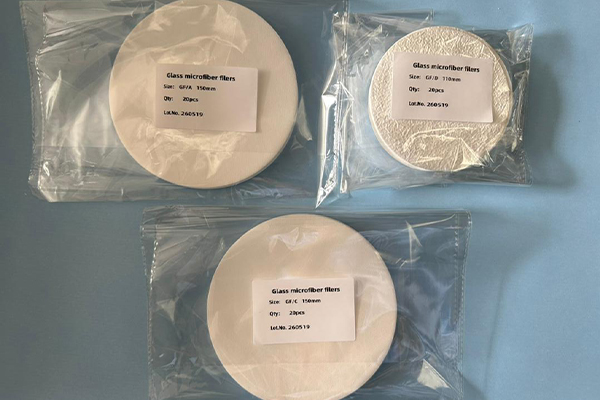
Recently, an Israeli client approached us, seeking high-quality Glass Microfiber Filters of grade GF/A. After a brief conversation, I learned about their fascinating application of these filters in biochemical analysis of plant-derived compounds. Let me share the details of their use case and the benefits of our filters for similar applications.
Why are GF/A Glass Microfiber Filters ideal for plant extract analysis?
Plant-based biochemical research presents unique challenges—residues, suspended particles, and complex solvent systems[^4]. These can create roadblocks to clear extraction or compromise analytical results.
GF/A glass microfiber filters are designed for high flow rates and efficiency[^5], making them perfect for filtering plant tissue residues, suspended particles, and solvent-based crude extracts. They ensure clarity and purity in samples while retaining the finest particles, thanks to their 1.6μm filtration precision.
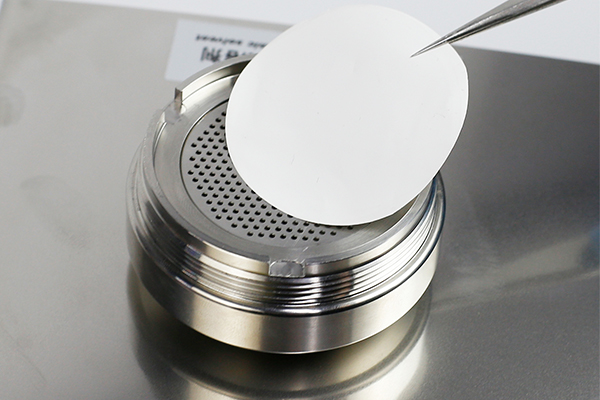
The Israeli client shared that their work involves filtering crude plant extracts prepared using solvents like methanol, ethanol, acetone, hexane, and water[^6]. These extracts are then analyzed using advanced techniques like HPLC, GC-MS, and spectrophotometry. The GF/A filters not only help to remove unwanted residues but also ensure that the extracts maintain their integrity for accurate analysis.
Key Benefits in Biochemical Research:
- High Retention Efficiency: Retains fine particles and residues, improving sample clarity.
- Versatile Solvent Compatibility[^7]: Works seamlessly with various solvents used in plant extraction.
- High Capacity[^8]: Handles larger sample volumes without compromising performance.
How do GF/A filters perform in pre-filtration and water analysis?
Pre-filtration and water analysis demand filters that can efficiently separate suspended particles and provide clear outputs for accurate testing.
GF/A filters are widely used in pre-filtration processes and water analysis[^9]. They are excellent in retaining fine suspended solids and particulate matter without clogging or slowing down filtration speed[^10].
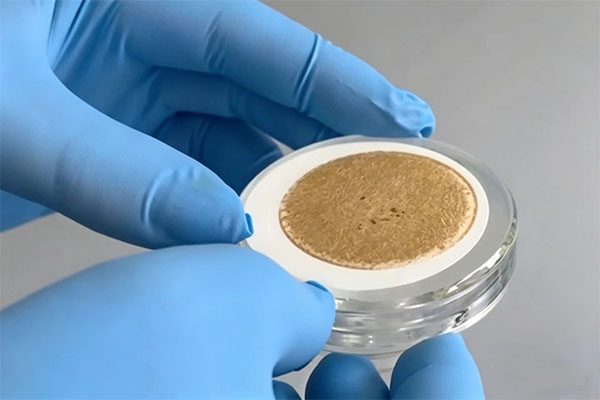
In industries or laboratories, these filters are employed to prepare samples before further analytical procedures. Whether it’s testing water quality or preparing solutions for chromatography, their high throughput and reliable performance make them indispensable.
Key Features for Pre-filtration and Water Analysis:
- High Flow Rate: Ensures faster filtration without loss of efficiency.
- Heat Resistance: Suitable for use even in high-temperature applications.
- Durability: Resistant to chemical degradation, ensuring consistent results.
For example, in water quality testing, GF/A filters are used to detect suspended solids accurately[^11]. Similarly, in environmental monitoring, they play a critical role in analyzing particulate matter in air and water samples.
What makes GF/A filters ideal for air and gas sampling?
Environmental monitoring requires materials that can withstand extreme conditions while providing precise particulate capture.
GF/A filters are perfect for air and gas sampling tasks. Their fine pore size and heat resistance allow them to collect even the smallest particulate matter, whether in emissions or environmental air quality assessment.
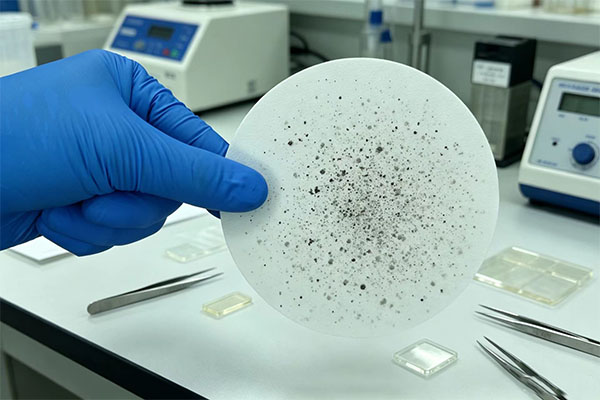
In applications like PM10 or TSP monitoring[^12], these filters capture dust and particulate matter for further analysis. Their stability under high temperatures makes them suitable for emissions testing, such as monitoring smoke or dust from industrial chimneys.
Advantages in Air and Gas Sampling:
- Strength and Durability: Performs well under mechanical and environmental stresses.
- High Particulate Retention: Ensures accurate capture of even fine particles.
- Versatile Applications: Suitable for both laboratory and fieldwork.
How does HuaEnv compare to global brands like Whatman and Ahlstrom?
When it comes to laboratory filtration, many professionals default to well-known international brands. But are they always the best choice in terms of value and customization?
HuaEnv’s Glass Microfiber Filters, including GF/A grade, offer equivalent or superior quality to brands like Whatman and Ahlstrom but at a more competitive price point. They provide flexibility in order quantities and meet the highest standards in precision cutting, chemical resistance, and performance testing.
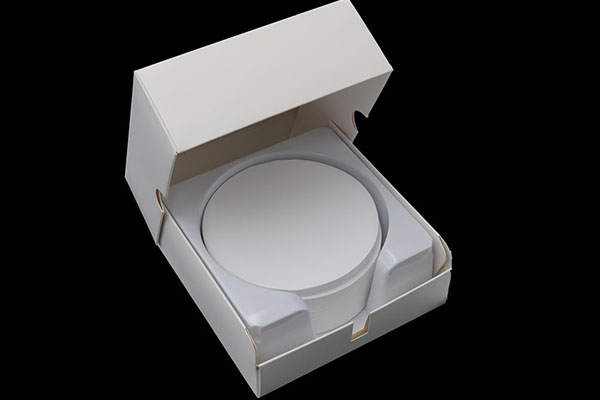
For distributors and researchers alike, HuaEnv provides a reliable alternative to expensive international brands. We also offer customization options, free samples, and robust application support, ensuring that our filters meet your specific requirements.
Key Differentiators:
- Cost-Effective: Lower price points without compromising quality.
- Customization Options: Tailored solutions for unique applications.
- Stringent Quality Control: ISO-certified production ensures consistency and reliability.
- Sample Availability: Free samples to validate filter performance before purchase.
Conclusion
Glass microfiber filters like GF/A with a 1.6μm pore size are versatile tools in laboratory filtration. From plant extract analysis to water testing and air sampling, they deliver unmatched performance and reliability. At HuaEnv, we’re committed to offering high-quality alternatives to global brands, helping labs achieve their goals without breaking the budget. Ready to experience the difference? Reach out for samples today.
[^1]: "Whatman 1820-150 GF/A Glass Microfiber Filters, 1.6um", https://huaenv.com/whatman-1820-150-gf-a-glass-microfiber-filters-1-6um-why-are-they-so-effective/. A technical specification or methods source identifying GF/A glass microfiber filters as having an approximately 1.6 μm nominal particle-retention rating would support the stated grade and pore-size characterization. Evidence role: definition; source type: other. Supports: GF/A glass microfiber filters have a pore size or nominal particle retention of about 1.6 μm.. Scope note: Nominal retention ratings vary by test method and manufacturer, so the source would support the general grade specification rather than exact performance in every sample matrix.
[^2]: "Preparation of Medicinal Plants: Basic Extraction and Fractionation ...", https://pmc.ncbi.nlm.nih.gov/articles/PMC7398001/. A peer-reviewed plant-extract preparation or phytochemical-analysis methods paper can support that filtration is commonly used to remove tissue residues and suspended solids from crude plant extracts before analysis. Evidence role: general_support; source type: paper. Supports: GF/A-type filtration is suitable for removing suspended solids, plant tissue residues, and particulates from crude extracts used in biochemical or phytochemical analysis.. Scope note: Such a source would support the general suitability of filtration in plant-extract workflows, not prove that GF/A is uniquely ideal for all plant matrices.
[^3]: "Preparation of Medicinal Plants: Basic Extraction and Fractionation ...", https://pmc.ncbi.nlm.nih.gov/articles/PMC7398001/. A sample-preparation review or analytical-methods paper can support that clarified and filtered plant extracts are commonly prepared before HPLC, GC-MS, spectrophotometric, and biological activity measurements. Evidence role: mechanism; source type: paper. Supports: Filtered plant extracts are commonly used for downstream HPLC, GC-MS, spectrophotometry, and bioactivity assays.. Scope note: The source would support the need for clean sample preparation before these analytical methods, but it may not specifically evaluate GF/A filters.
[^4]: "Extraction Methods, Quantitative and Qualitative Phytochemical ...", https://pmc.ncbi.nlm.nih.gov/articles/PMC9370299/. A review of plant-extract sample preparation can document that plant matrices contain particulate residues and chemically complex solvent extracts that can interfere with analytical workflows. Evidence role: general_support; source type: paper. Supports: Plant-based biochemical research often involves residues, suspended particles, and complex solvent systems that complicate sample preparation.. Scope note: The source would provide contextual support for the challenges of plant matrices, not direct evidence about a particular filter product.
[^5]: "Filtration Characteristics of Glass Fiber Filter at Elevated Temperatures", https://nepis.epa.gov/Exe/ZyPURL.cgi?Dockey=91015XO6.TXT. A technical filtration reference explaining the high flow and particle-loading characteristics of glass microfiber depth filters would support the claim that these media are selected for efficient laboratory filtration. Evidence role: mechanism; source type: research. Supports: GF/A glass microfiber filters are associated with high flow rates and efficient particle retention.. Scope note: Flow rate depends on filter diameter, pressure, sample viscosity, and particle loading; the source would support the material mechanism rather than a guaranteed rate in all uses.
[^6]: "Preparation of Medicinal Plants: Basic Extraction and Fractionation ...", https://pmc.ncbi.nlm.nih.gov/articles/PMC7398001/. A solvent-extraction methods source for plant metabolites can support that methanol, ethanol, acetone, hexane, and water are common solvents used to prepare plant extracts for biochemical analysis. Evidence role: general_support; source type: paper. Supports: Methanol, ethanol, acetone, hexane, and water are commonly used solvents for crude plant extraction.. Scope note: This would support the solvent list and extraction context, not the compatibility of every GF/A filter brand with every solvent condition.
[^7]: "[PDF] Materials Compatability", https://scs.illinois.edu/system/files/inline-files/MaterialsCompatability.pdf. A laboratory materials or filtration-compatibility source describing borosilicate glass fiber as chemically resistant to many organic solvents would support the stated solvent compatibility of glass microfiber filters. Evidence role: mechanism; source type: research. Supports: Glass microfiber filters are compatible with a range of solvents used in plant extraction.. Scope note: Compatibility can be affected by binders, additives, temperature, and exposure time, so the source would support general material compatibility rather than universal resistance.
[^8]: "Borosilicate Glass Microfiber Filters | I.W. Tremont - Filter Holdings", https://filterholdings.com/borosilicate-glass-microfiber-filters/. A filtration reference on depth filtration can support that glass microfiber media have relatively high particle-loading capacity compared with surface membranes because particles are retained through the filter depth. Evidence role: mechanism; source type: research. Supports: Glass microfiber filters can handle larger particle loads or sample volumes because of their depth-filter structure.. Scope note: Actual capacity depends on sample solids concentration, filter area, pressure, and matrix composition.
[^9]: "ASTM: D5907: Matter, Filterable and Nonfilterable, in Water", https://www.nemi.gov/methods/method_summary/5451/. A standard-methods or water-analysis source showing the use of glass-fiber filters for sample preparation and suspended-solids measurements would support their role in pre-filtration and water analysis. Evidence role: general_support; source type: government. Supports: Glass microfiber or glass-fiber filters are widely used in pre-filtration and water-analysis workflows.. Scope note: Water-analysis standards may specify glass-fiber filters generally rather than GF/A specifically.
[^10]: "Filtration Mechanism of Fine Particle - PMC - NIH", https://pmc.ncbi.nlm.nih.gov/articles/PMC7498895/. A depth-filtration source explaining that fibrous depth media distribute particulate loading through a porous matrix would support why glass microfiber filters can reduce clogging relative to surface-only filtration under suitable conditions. Evidence role: mechanism; source type: research. Supports: Glass microfiber filters can retain fine suspended solids while maintaining flow because depth-filter media distribute particle loading.. Scope note: The claim is conditional; clogging and flow reduction can still occur with high solids loading, viscous samples, or undersized filters.
[^11]: "[PDF] Method 160.2", https://www.uvm.edu/bwrl/lab_docs/protocols/106.2_TSS_by_gravimetry_(EPA_1971).pdf. A government or standard-method source for total suspended solids can support that pre-weighed glass-fiber filters are used to collect suspended solids gravimetrically in water samples. Evidence role: case_reference; source type: government. Supports: Glass-fiber filters are used in standard water-quality methods to measure suspended solids.. Scope note: The method supports suspended-solids measurement with specified glass-fiber filters, but it does not establish that every GF/A filter is appropriate for every regulatory protocol.
[^12]: "[PDF] Standard Operating Procedure for Particulate Matter (PM ...", https://www3.epa.gov/ttnamti1/files/ambient/pm25/spec/RTIGravMassSOPFINAL.pdf. An air-quality monitoring method or agency document can support that particulate matter monitoring, including PM10 and total suspended particulates, commonly collects particles on filter media for gravimetric or chemical analysis. Evidence role: case_reference; source type: government. Supports: Filter media are used in PM10 and TSP monitoring to collect airborne particulate matter for analysis.. Scope note: Official PM10 or TSP methods specify sampler design and filter requirements; the source may not identify GF/A as the only acceptable filter type.